Genre

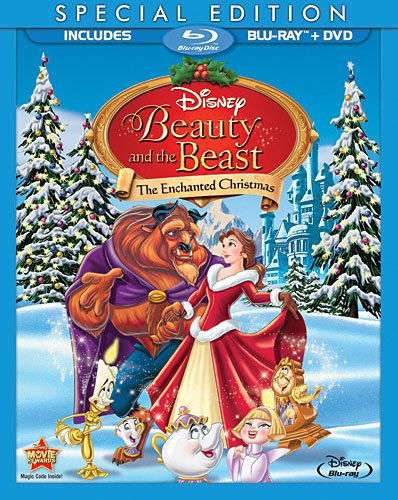
The Disney magic faded for a little while during the 1980s. There were still animated features, but they weren’t the groundbreaking triumphs of the studio’s golden age. All of that changed as we entered the 1990s. The Little Mermaid is considered the first of the new wave of Disney classics. It certainly signaled a change in the direction of animation at Disney. While the change may have begun there, I believe it was Beauty And The Beast that started a wave of productions that would peak with The Lion King. With Beauty And The Beast, everything is cranked up a notch from the mediocre affairs the studio had been churning out for a time. Beauty And The Beast had the epic proportions, fluid animation, and bright colors that set the Disney Express back on track.

With that much importance, is it any wonder that the folks at Disney kept the theme going for as long as they could? There was a television series that featured a live-action Belle who would sing stories to children and teach valuable lessons along the way. There were also some direct-to-video follow-up stories that took us back to the days in the middle of the original animated feature. That in and of itself isn't all too extraordinary. Disney, like any other studio, knows how to milk a cash cow. What is quite extraordinary in this business, even for Disney, is that they kept the original voice cast pretty much intact. It was a bold move that likely cost a few more dollars but was well worth the extra effort. With the return of Jerry Orbach, David Ogden Stiers, Jim Cummings, Robby Benson, and Paige O'Hara, the connection between this holiday film and the original material is unmistakable.

"The party is most definitely on."

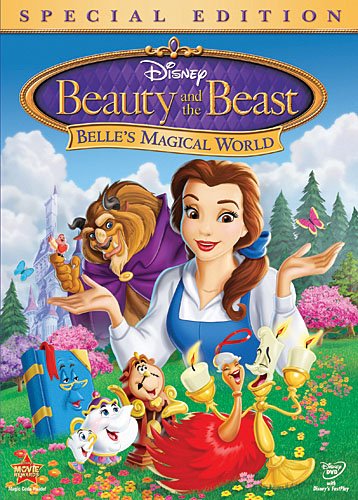
This direct to video sequel of Disney's Beauty And The Beast is a much more low-budget affair than The Enchanted Christmas was to become. While the film did use the voices of many of the original cast including Jerry Orbach, Robbie Benson, Paige O'Hara, and David Ogden Stiers, the production values show the economy of the project.

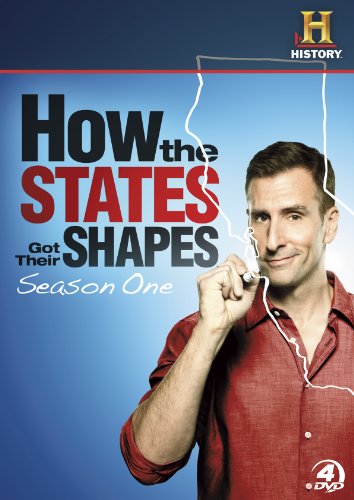
For those who might not already be aware, I am currently living in the state of Texas. I would say great state of Texas but my lack of a straight face would give that away. “Go back to where you came from”. Well, I would love to go back to North Carolina and perhaps the Minnesota transplant that is using four letter words against me can do the same. However, I am very interested in how some of these states got their shapes. Perhaps the first season of “How the States Got Their Shapes” can help.

Most people take the shape of their states for granted. However, the shapes of the United States of America have went through a library list of changes to get to their current shape. Often, the story of that shape is far more interesting than the cracks and bends that many states currently possess. Thankfully, we have our host: Brian Unger who is willing to be our Johnny Cash of cable television and “Walk that Line”.

It is 1979. While filming a Super 8 horror movie, a group of young friends on the cusp of adolescence witness a spectacular train wreck. They later discover that they accidentally captured evidence that there was an alien creature on the train, and it is now loose in their small town. But if the mysterious disappearance of dogs, engines and (increasingly) people wasn’t trouble enough, the military descends upon the community with an agenda far more merciless and inhuman than that of the alien itself.

I was 12 in 1979, and I was shooting Super 8 monster movies, so I get the nostalgia that writer/director J.J. Abrams is going for here, and this is an utterly unapologetic exercise in nostalgia. Abrams is is out to recreate the experience of a Spielberg movie from that era, and with the man himself acting as producer, the mission is accomplished. Super 8 plays like the Lost Spielberg Movie, with all the wonder, thrills, and sentimentality one would expect. There is so much here that works beautifully. The young cast is terrific, the dialogue crackles, the effects are spectacular, and the creature is both menacing and sympathetic, like some unholy version of ET reworked by H.P. Lovecraft.

“You can blow out a candle, but you can't blow out a fire. Once the flames begin to catch, the wind will blow it higher”

Peter Gabriel, the flamboyant original front man for Genesis from 1967 to 1977, left that band to pursue recording his own solo albums. Although none of his early albums scored a top 40 hit, they were deeply loved by the art house music crowd. Gabriel’s penchant for exotic world musical instruments, dark moving lyrics, and complicated arrangements built on his fiercely loyal following.

Let me get this out of the way first off: I am not a big fan of emo-pop, so maybe I’m not the best person to review Placebo. The whiny nasal vocals and amazingly repetitive hooks tend to drag, and I find myself just wanting to slap the band and tell them to man up. That said, I should think if you are a fan of the band, you will love this nearly three hour concert disc filmed at London’s Brixton Academy in September 2010 during the band’s tour for their album Battle for the Sun.

Placebo is not a band that has achieved the same level of popularity in North America as they have abroad. Their “emo” stylings have spawned numerous top ten singles in the UK. The three-piece band is very tight on stage, and their sound is pristine live. The striking stage visuals are complemented by all sorts of digital post effects seamlessly inserted into transitions (maybe a few too many post tricks, as it seems to detract from the show, drawing attention to the video editor instead).

Fishing is fairly foreign to me I admit it. The idea that you have to get up at the crack of dawn just to sit in a rusted over boat without saying a word to only catch not a darn thing seems like a waste of time if nothing else. The television fishing shows on TBS do not make it sound any better either. The only thing appealing to me about it is if you can find some beautiful scenery to fish in. Perhaps a place like Oregon, which is the setting for our new review: The River Why.

There is nothing like fly fishing up in the lakes of Oregon just outside of Portland. At least that is what Gus (Augustine) Orviston (played by Zach Gilford) has always thought. Why even as a baby, he was delivered underwater (in a tub). He would sleep with a pet fish; he would be able to catch his own fish even at ten years old. Gus loves fish and everything to do with fishing, well except his fishing crazy parents.

To say I am a sucker for hard rocking music films is an understatement. One of my favorite films in this genre is Rockstar of which I am still waiting for a good blu-ray release. Other films like This is Spinal Tap or even The Runaways also hold my interest for a good time. So, I was a little interested when I saw Trigger come to my doorstep, a tale about two reunited female musicians who are brought back together for one great night.

Two girls tear up the stage and put on a great performance of rocking their hearts out set to a peaceful piano number. The music ends with some guitar bashing, lead singer boozing and general chaos. Ahhh, so peaceful. We fast forward to ten years later and arrive in a fancy restaurant. Vic (played byTracy Wright) shows up (the guitarist) and is seated at a table. About forty five minutes to an hour later, Kat (lead singer) (played by Molly Parker) shows up and apologizes for being late.

"My name is John Crichton...an astronaut. Four years ago, I got...shot through a wormhole to a distant part of the galaxy. I ending up on this ship...this living ship, populated by escaping prisoners...who became my friends. I made enemies..."

Take a magical journey with me now. I don't mean into outer space. It's a journey back in time to a day when the SyFy Channel was called the Sci-Fi Channel. A day when it was an exciting and promising place on the cable dial. After a few fledgling years showing old repeats it was time to grow, and grow they did. When the powers that be decided to begin making new original programming they teamed up with Brian Henson who was just getting his feet running his late-father's Jim Henson Company. Yeah, the Muppets guys. He believed it was time to do something darker, something with an edge and targeted more to an adult audience. His father began the journey with The Dark Crystal. Now it was time for more of that kind of thing. The two companies found their solutions together in a show called Farscape.

“When you're a Jet, you're a Jet all the way! From your first cigarette to your last dyin' days.”

West Side Story is a masterpiece in film making. Its DNA comes from the greatest entertainers in the business. The great Robert Wise (The Sound of Music, The Day the Earth Stood Still) shares directing credit with one of the world’s greatest choreographers, Jerome Robbins. The music was composed by Leonard Bernstein with lyrics by Stephen Sondheim. Daniel Fapp’s cinematography is epic and evocative. The movie was nominated for 11 Academy Awards and won 10, a record at the time, including Best Picture and Best Director. This is film sets the bar so high for musicals there really hasn’t been a good filmed one since.