Genre

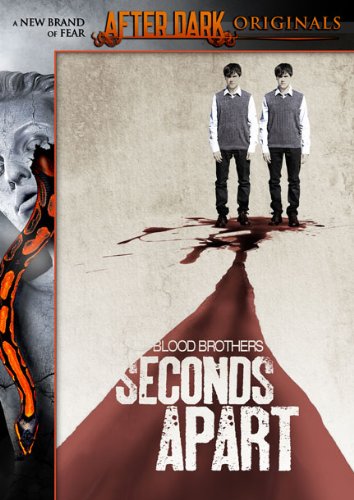
Did you ever see a movie that might have been pretty good, but it reminded you so much of other things that you just couldn't keep your concentration on the film at hand? That was my experience with the After Dark original film Seconds Apart. At almost every turn I couldn't help thinking of other films. Often times it was such a distraction that I'm afraid I never fully appreciated the one I was watching. And, there is a lot to like about Seconds Apart.

The story is pretty simple. Jonah and Seth, played by real-life twins Edmund and Gary Entin, are not your normal twins. They share more than an uncanny fraternal link. Together they can enter inside of a person's mind and cause them to do all sorts of nasty things that usually end in the victim's death. The hold hands to focus the power. It might just be me showing my age here, but I couldn't stop thinking about the 1970's Saturday morning cartoon, The Super Friends. The show featured the powerhouse members of the DC comics universe along with a boy and girl known as The Wonder Twins. One could take the shape of anything made out of water, while the other could become any animal. Every time these guys held hands to perform their evil deeds in someone's mind, I couldn't get that Wonder Twins image out of my head, and I kept expecting them to chant: "Wonder Twins power activate". Silly, I know and it's entirely possible that no one connected with the film was even aware of the image. So the fault is entirely mine, to a degree.

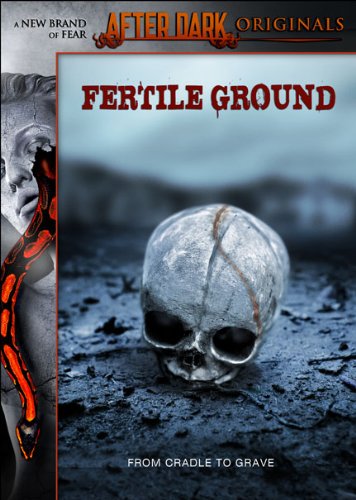
"From cradle to grave."

Lionsgate is really starting to crank out some original horror films under the After Dark label, and if this is any indication of what's in store for us down the road, I'm eager to see a few more of these titles hit the shelves. The films are direct-to-video low-budget films that have a more independent feel. While I wouldn't call the film terribly original, it does offer a slightly fresh face on the haunted house theme. The movie carries a sub-theme of family secrets and histories. Talk about your skeletons in the closet.

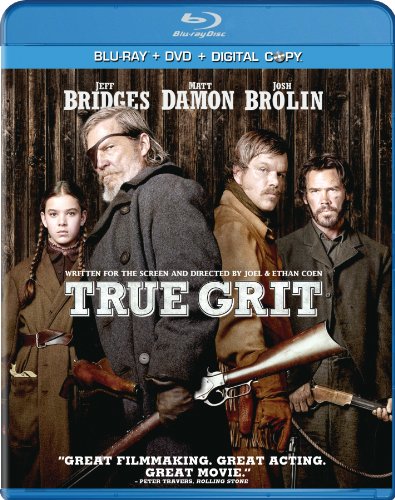
"People do not give it credence that a young girl could leave home and go off in the wintertime to avenge her father's blood. But it did happen."

Just like the book that both this and the 1969 John Wayne film were taken from, the film opens with the sad story of a young girl who has come to Fort Smith to see that justice is done for her father. The words were written by Charlie Portis, a journalist who went on to write a truly great American novel: True Grit.

There are a good number of people who have labeled Oliver Stone as a fan of conspiracy theories, out to destroy foundations of conservative ideology, while at the same time re-visiting 60’s nostalgic icons. Despite the jokes and the stereotyping, one has to admit that, as a filmmaker, he has helped bring to screen some of the most talked-about cinematic experiences of our time, including Midnight Express, Scarface, not to mention Conan the Barbarian. As a director, his works, such as The Doors, Nixon, JFK and Natural Born Killers, have generated discussion both within and aside from the technical merits. Platoon was his most personal work, and is widely regarded as one of the defining films of the Vietnam War.

Platoon relates the experiences of Chris Taylor (Charlie Sheen, Major League), who, like Stone, dropped out of college, and volunteered to serve in Vietnam. His battles are everywhere, be it the enemy, with his surroundings, some of his fellow soldiers, or with his identity. He is thrown into a platoon with several characters, each with their own distinguishing characteristics. Sergeant Barnes (Tom Berenger, The Big Chill) is riddled with facial scars, a veteran of many skirmishes in country, perhaps to the point where emotions have dwindled, as he is left a hard-nosed leader. Sergeant Elias (Willem Dafoe, To Live and Die in L.A.) tries to forget the memories and experiences through drugs, but acts as a spiritual center, if one could find that within a war movie. Other actors in this cast include John C. McGinley (Scrubs), Forest Whitaker (Bird), and a very young Johnny Depp (Finding Neverland), among others. They encounter many things during the time there, including ambushes and firefights. They experience the loss of fellow platoon members, either via combat or by other reasons, either wounded or serving their full tour of duty in country. The story and characters are done so well, when watching the movie, their losses are our own. When Taylor leaves his platoon following an injury during combat, the closing shot of the movie is his sobbing on the floor of the chopper taking him out. You could say the sobbing is due to finally being out, or to the friends that he lost, but it is without question that his (and our) experiences leave him a totally different person that when he arrived.

"1, 2, 3, 4, 5, 6, 7, release the one ignored by Heaven. 8, 9, 10 now run and hide or join her at the Devil's side. 11 comes the clocks will chime, forgotten souls erased by time. Midnight comes, it's not too late. So kill the ghost and seal your fate."

"In the farthest corner of America lies the nation's largest swamp. A hidden world where nature rules and man fights back. Welcome to the swamp."

"What I do requires a certain mindset. I do assignments, designated targets. Some jobs need to look like accidents. Others must cast suspicion on someone else. A select few need to send a clear message. Pulling a trigger is easy. The best jobs are the ones nobody even knows you were there."

Arthur Bishop (Stratham) is an accomplished mechanic. But you don't want to bring your Toyota to him, unless you intend to use the car to get rid of a pesky spouse. You see, he's the kind of mechanic that fixes a different kind of problem. He removes unwanted people from your life. That's the basic set-up for this Simon West remake of the 1972 film that starred Charles Bronson as Bishop. That movie is a kind of classic, at least to Bronson fans. It's noted for a rather unique beginning where there is no dialog for the first 15 minutes of the movie. No such effect here. What you will find is an action-packed film to watch with the guys while you send the ladies off to watch the latest romantic comedy.

Imagine that ‘40s tough-guy detective Philip Marlowe tangled with a billionaire mad scientist, along with the usual quota of thugs, strippers and sarcastic cops. Now suppose that writer Erik Jendresen and director Tony Krantz decided – perhaps over a meal of magic mushrooms and moonshine – to hire a fancy-pants cinematographer, rewrite author Raymond Chandler, and offer up what they obviously hoped would make them film-noir Fellinis for the new century. That would be the apparent cultural intent of The Big Bang, a vividly photographed but otherwise inarticulate effort that offers in-jokes and stylistic novelties that might entertain trivia nuts seeking obscure references, but will otherwise addle anyone seeking coherence or consistency.

Let’s start with the obvious nods to author Chandler. The title reminds us of The Big Sleep, a Marlowe favorite. And the plot kicks off with a direct swipe from another Marlowe mystery, Farewell, My Lovely (also made under the title Murder, My Sweet). In each instance, a hulking goon barges in on our unsuspecting hero – played here by Antonio Banderas as a relatively prim gumshoe named Ned Cruz. The lovelorn lug needs to find his long-lost girlfriend, who promised to stay faithful while he was in prison.

I remember when I first heard that Dead Man Walking was coming out. The first news was that it was a death penalty film that involved Tim Robbins, Sean Penn and Susan Sarandon. I was not very keen to see the movie at that time. All three of these actors are known for their over-the-top liberal antics, and I just knew this was going to be nothing but a rant against the death penalty in the United States. But you see, that's why you just have to watch the movie sometimes. I'm not sure why I ended up going to see the film, but I did. I was very surprised to find that while it certainly was anti-death penalty, the movie showed both sides and didn't hit you on the head with its morality.

The film was based on the autobiography of Sister Helen Prejean (Sarandon). She had been asked to provide some conversation and possibly a little comfort to a death row inmate who was reaching out to the church. She went to meet Matthew Poncelet (Penn) and ended up his spiritual advisor during his final days. She helped to organize a legal team headed by Hilton Barber (Prosky) and tried to get him to take responsibility for what he had done so that he could die with some dignity. Along the way she was shaken by encounters with the parents of the couple that was brutally murdered by Poncelet and his partner. Their pain causes conflicts within her, but she continues to fight for the condemned man.

"Sketch comedy, what is it? What is required? The first thing that is needed is a premise."