Genre

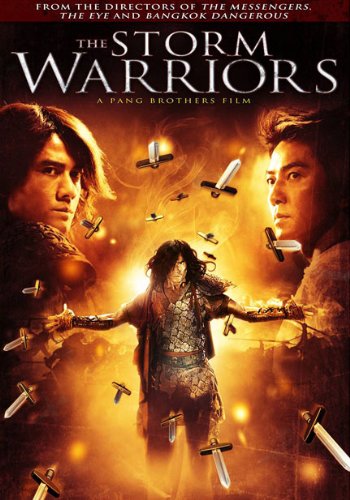
I must admit, I came at The Storm Warriors with very little knowledge of its creators, the Pang brothers, but as someone who appreciates Asian cinema, I felt that I had the sensibilities to enjoy the film. The movie deals with a Japanese invasion of China by a dread warlord named Lord Godless. As the film opens, we learn from an almost impossible to follow title sequence, he has captured China’s mightiest heroes and is preparing to execute them. Being invincible, Lord Godless is almost assured of victory, unless two of the aforementioned Chinese heroes, Wind and Cloud, can combine their power to defeat him and his army.

We learn all this and much more in the first two minutes of the movie.

"Good morning, young Prince."

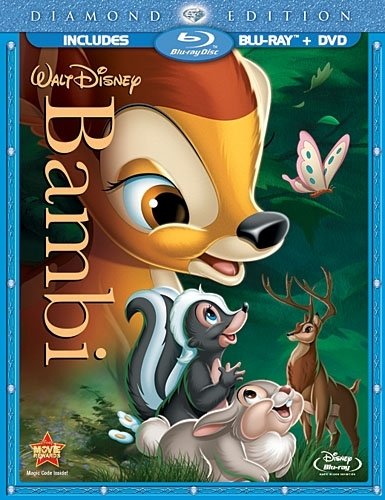
The forest is alive with the news. It travels from tree to tree, from animal to animal. A new prince has been born, and the creatures of the woods gather to welcome the young fawn. His name is Bambi, and he soon wins the hearts of the entire population of the forest. From his first attempts to stand on his wobbly legs to his discovery of the things that surround him in this brand new world, Bambi takes us on an emotional journey through the circle of life.

"Detroit ain't so bad, in fact it's kind of charming."

Director Benny Boom decided to move the S.W.A.T. franchise away from L.A. and bring it to Detroit. But he's not going to be winning any accolades from the Detroit Chamber of Commerce anytime soon. He openly admits that he picked the city because he was attempting to create an environment with a lot of decay. He jokes that by filming in Detroit there was no need to create those conditions because they were free for the taking in the city. The main character begins the film by insulting the city. It'll be interesting to see if Boom is invited back for a future project.

There are two ways to address a familiar film plot. The easy route, of course, is to dismiss it as recycled fluff, reciting the similarities to its predecessors. The more discerning course is to give the newcomer a chance to prove itself as a creative variation on the theme. That’s how you can give Due Date its due. In the first few minutes, you’ll notice the script verges on carbon-copying Trains, Planes and Automobiles, the 1987 John Hughes hit about two utterly mismatched men on a comically catastrophic cross-country road trip.

Check the parallels: One of the guys is an uptight, super-straight, slightly pompous type who has a powerful reason to get home by a certain time. In the original, it’s Steve Martin struggling to make it for Thanksgiving. In the update, we get Robert Downey Jr. , desperate to witness the imminent birth of his first child. Each man’s plans are shattered by a walking disaster – a free-spirited jinx whose apparent sincerity is overshadowed by an uncanny ability to turn any given situation into pain, inconvenience and humiliation.

William S Burroughs was the third hit of the 1-2-3 combo of Alan Ginsberg's Howl, Jack Kerouac's On the Road, and Burroughs' Naked Lunch which closed out the 50s and defined the so-called “beat generation.” This film documents the significance of Burroughs work as a part of this scene, and the influence he had on artists, musicians, filmmakers, and countless others.

Ranging from his birth to his death, this film sets out to simultaneously ask questions and answer them with regards to the arguments about what made Burroughs who he was. It asks if he transgressed sexuality, whether we deserved the mantle of “Godfather of Punk,” would he be the sort of writer he is if he was not a drug addict or if he had not shot his wife dead? To answer, director Yony Leyser interviews his closest companions and sincerest fans.

Dwayne "The Rock" Johnson has made a career out of redefining himself. Of course, we all know that he started as a rather flamboyant wrestling personality. He had a pretty good run, but it was never going to be enough to really satisfy Johnson's own drive to perform. He made the natural transition into movies, faring far better than most of his fellow wrestlers have been able to do. He naturally gravitated toward the action films where his bulk and toughness more than made up for his inexperience. Then he decided to try something a bit different. He began to make family films, often surrounded by cute kids in various situations. The role suited him better than expected, and it looked like he was also having a lot of fun. He even began to drop "The Rock" from his name. It was a good run, and one I hope isn't completely over. But Johnson has found his way back to the kind of movie that gave him his start. Johnson's back in the action game once more. He's bulked up again and eating up scenery in a Clint Eastwood posture for Faster.

The story is a three-ring circus. There are three separate stories going on that play out simultaneously.

Scooby Doo has spanned generations and over 40 years. Since the 1960’s the name and conventions have become a part of the pop culture. The original cartoon series had a series of conventions. The Scooby Gang would drive around in their green Mystery Machine van and solve ghostly mysteries. Fans of the show quickly grew to learn that these spirits and goblins were usually just normal people using scare tactics to get revenge or make a profit. The cartoon classic spawned music albums, live action movies, and several new shows and animated features.

The jokes haven’t changed much, even if the voices have. Frank Welker, who voiced Freddie briefly in 1970, returns as Freddie and Scooby Doo. Unfortunately Don Messick died in 1997, and Welker has been voicing the pup since that time and before. Mindy Cohn has been voicing Velma since 2004, replacing a line of actors starting with Nicole Jaffe. What’s important is that Casey Kasem does not return as Shaggy, a part he’s played since 1969. That part now goes to Matthew Lilard. Don't get me wrong, he does a fine job, but this was the most unmistakable voice in the mix up until now. Older fans will notice the change with sadness. Part of me is very glad to see that Scooby and the gang are still out there working for Scooby Snax. The charm remains, even if the jokes don’t appear quite as funny anymore. Daphne is now voiced by Grey Delise. She's done the voice on and off since 2001. Heather North was the original voice and has come back to the role as recently as 2004.

In the 1930’s and 40’s MGM was trying to get in on the lucrative animation game. The field was dominated at the time by Warner Brothers with their Loony Tunes shorts, and of course, the iconic cast of animated characters coming out of the Walt Disney Studio. For years they had failed to find the right property to take advantage of the market. It wasn’t until the team of William Hanna and Joseph Barbera approached the studio with their first project that the times did change, at least a little, for the fledgling animation department at MGM. The project was far from an original one even for the time. It was a very basic cat-and-mouse adventure featuring a cat named Tom and a mouse named Jerry. There would be almost no dialog on the shorts. It certainly didn’t look like much of a hit to the studio brass, but with no better ideas on the way, they went ahead with the new shorts of Tom And Jerry. There’s a reason why the cat-and-mouse pair is such a classic. It’s because it works. If you can make your characters entertaining and endearing enough, you can have a hit. MGM finally entered the major leagues, and the team of Hanna and Barbera would become one of the most successful animation teams in history. They would go on to create such cherished characters as The Flintstones, Yogi Bear, The Jetsons, and, of course, Scooby Doo.

These were the days of the Golden Age in Hollywood. These shorts were not being produced for television, which hadn’t been invented when they began; rather, they were intended for theatergoers. In those days going to the movies was much more of an inclusive experience. You always got a cartoon short along with an adventure serial, the likes of Buck Rogers, Flash Gordon, and The Lone Ranger. These multi-chaptered serials were the forerunners to the modern television series. It kept you coming back to the movies to see what would happen next. Each chapter ended in a cliffhanger. These early serials were the inspiration for such film franchises as Star Wars and Indiana Jones. Finally you got one, sometimes two movies, all for the price of a single admission.

Paula (Carmen Montes), a dancer at a strip club, is arrested for the murder of Paula (Paula Davis), a fellow dancer. The arresting officer (Lina Romay) questions the near-catatonic Paula, and the rest of the film is a slow-motion, flashback of the dead Paula dancing, the two women making love, and the murder. Once the slow-mo begins, there is no further dialogue, except for a cryptic fable that Paula tells to the camera.

Jess Franco's latest effort is his most minimalist, and in some ways most personal, film to date. There is no set to speak of: the film was obviously shot in Franco and Romay's apartment, which doubles for both the home of the Paulas and, perhaps, the police station. I say “perhaps” because the notion of any definable space is a very tenuous one in this film. The only set dressing consists of a few aluminum screens, which play a role in the zero-budgeted surrealist effects. As has been pointed out elsewhere, there is nothing groundbreaking about the effects the Franco conjures here. The kaleidoscopic images, frequently involving Davis fusing and splitting from her double, would not have been out of place in the 1960s, and aren't going to break the back of even the most basic computer editing suite today.

Cynical, alcoholic ex-musician Paul Newman arrives in New Orleans with barely a cent to his name. Following a tip from scam-artist preacher Laurence Harvey, Newman lands a job as a DJ for WUSA, an extreme right wing/white power propaganda radio station. Newman has no patience for his employers' message, but he's happy to take the money and drink himself into an apathetic stupor. Acting as the unwelcome voice of his conscience are the scarred hard-luck woman he has taken up with (Joanne Woodward) and the twitchy, anxious liberal (Anthony Perkins) who is about to discover that the survey work he has been doing in the city's ghetto is, in fact, in the service of Newman's dark masters.

Very much a reflection of, and commentary on, its turbulent times (1970), this is a film that is messy in its construction but ferocious in its convictions. The plot meanders more than is good for it, the script takes some rather pretentious flights into poetry, and Newman's character changes too little to be very interesting, with the result that the final scene lacks the kick that it clearly wants to have. Perkins, however, is magnificent in his painful, tortured sincerity, and the climax – a WUSA rally that becomes a hellish riot – is a knockout.