Posted in: Disc Reviews by Michael Durr on March 3rd, 2011
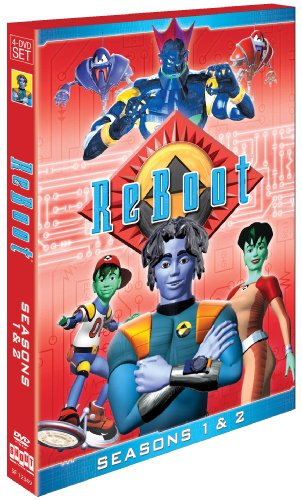
In this day and age, we take computer animation for granted. Pixar, Futuarama? We have seen it a million times. What about if I told you that over 15 years ago, there was a cartoon that was the first of its kind to be one hundred percent computer animation? Well, you might dismiss it or figure it was not much to look at. You would be wrong. Let us take a look at history boys n girls and discover the wonder that can only be known as Reboot.
Bob is a Guardian. He works for the Mainframe safeguarding the vital data and sprites (people and animals) that inhabit his sector. His two closest friends are Dot Matrix and Enzo Matrix. Dot runs a local diner called Dot’s Diner and is in on most of the action in the sector. She is also seen as a leader and tends to help out fellow sprites in need. Enzo is her younger brother and idolizes Bob. He also has a dog named Frisket.
Posted in: Disc Reviews by William O'Donnell on March 3rd, 2011
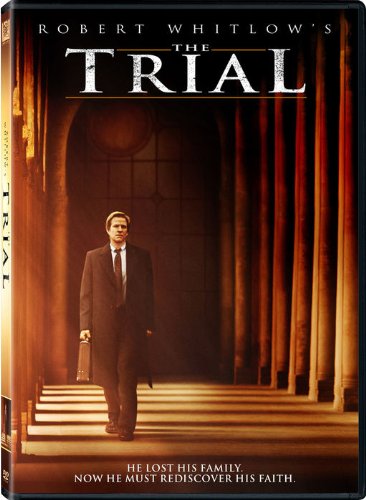
A criminal defense attorney, played by Matthew Modine, has lost all hope after his family dies in an accident. On the brink of suicide, he is called upon for one more case, defending a young man who may face the death penalty on a murder charge.
The story is established very quickly and though each character resists joining forces for the defense, it only takes about a 30 second scene each to convince them otherwise, and then it is straight into the trial (hence the title I suppose).This quick assembly and ever faster exposition makes the story harder to buy. I understand the film only clocks in a bit faster than an episode of Law and Order, but one wonders if it is all necessary if its going to be so hasty.
Posted in: Disc Reviews by William O'Donnell on March 2nd, 2011
Ok...here's the pitch! A movie that's just jokes! Dirty jokes! Story? Maybe sure sure, but its all about jokes! We all love dirty jokes right? We have some actors act them out...one after the other...and that's it...the whole movie is jokes!
That is the theory behind this film, and almost verbatim the opening scene. A sleazy looking producer wants to help resurrect a Hollywood production company with his idea for a movie that is nothing but a series of dirty jokes, played out one after the other. And this is exactly what we the audience received. Chapterised with portions showing the filmmakers trying to create and ultimately punished for making this film, we see a gaggle of actors, and a LOT of topless women, act out dirty jokes. The film compares itself to The Aristocrats in the sense that it is just jokes for the duration of the film, but the main difference is The Aristocrats is a documentary whereas Dirty Movie is almost meta-cinema in how self-aware it is in its presentation.
Posted in: Disc Reviews by Gino Sassani on March 1st, 2011
Everyone knows Charlie Chaplin. For many, he is the symbol of the silent age of film. The stiff figure in trademark hat and twirling cane comes easily to mind. But that wasn't really Charlie Chaplin. That was a character he created called The Tramp, or often The Little Tramp. So, it would seem that Chaplin spent most of his career playing The Tramp, who in turn played many different characters on the silent screen. He was known for his subversive antics and charming stare. He became the champion of the common man, all the while becoming the first elite star in Hollywood. With his troubled life and numerous sex scandals, you would expect that Chaplin would have been the subject of a bio-pic before 1991.
The script is based on two books. One of them is Chaplin's own autobiography. The other is David Robinson's book Chaplin His Life And Art. You get the idea that the material is authentic enough. It doesn't attempt to gloss over the flaws in the man's character. While it obviously spends much of the time on his films and the things that went into them, we don't get an over-stylized idea of Chaplin as anything less than what he was: a flawed human being like the rest of us.
Posted in: Disc Reviews by David Annandale on February 25th, 2011
While the warden is away, the inmates of the isolation block break out out of their cells and seize a group of guards and administrators as hostages. Caught, by pure chance, in the wrong place at the wrong time, is Jim Brown, whose sentence is short enough that he wouldn't choose to become involved. However, before he knows it, he is, along with Gene Hackman, leading the riot. The ruckus is, in fact, a cover for an escape attempt: the inmates are digging a tunnel while, as a stalling tactic, Hackman presents a list of grievances to the authorities. But even as Brown becomes more and more enmeshed in the running of the operation, Hackman becomes more and more engaged with the protest, forgetting that it is supposed to be a charade.
Nice, gritty jailhouse piece, shot entirely at the Arizona State Penitentiary, and featuring not only plenty of real inmates, but the actual warden playing the warden of fictional prison. As one would expect of a film starring both Brown and Hackman, the characters are a tough lot, and the action is brutal. Characterizations are strong, with even the minor figures clearly defined. The only false note is sounded by the clumsy pseudo-Johnny Cash prison song that thuds against the ears several times over the course of the film. Otherwise, this is a bone-crunching good time, and is another example (along with Rosemary's Baby) of how different films merely produced by William Castle were from the films he actually directed himself.
Posted in: Disc Reviews by William O'Donnell on February 25th, 2011
A Wild West overlord is plotting to shrink the world's population. This evil plot is running along smoothly until a shrunken Texas ranger escapes in a whiskey bottle and finds himself saved by a plucky sibling duo named Luke and Lucy, along with their gaggle of wacky friends. The group become honourary rangers and set out to battle evil.
The character design, and over the top sense of adventure, are reminiscent of the Tintin series as these characters are based on those that appeared in Belgian comics under the same Herge banner that Tintin shares. Sadly, the CGI animation takes most all the life out of them with rigid movements and very poor lip syncing. Of course, being originally produced in Dutch, one can forgive some of the mismatched dialogue-to-mouths, but some more work could have been done to smooth it out.
Posted in: Disc Reviews by David Annandale on February 24th, 2011
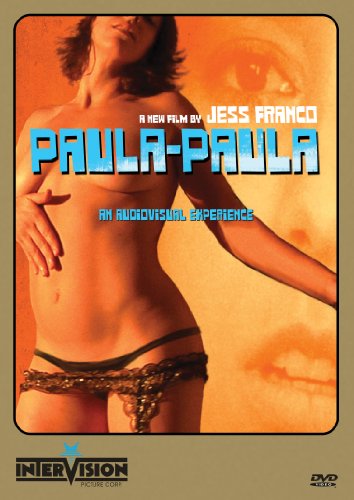
Haunted my recurring nightmares, crippled Melissa (Mona Proust), the heiress to a huge fortune, falls under the care of Dr. Orloff (William Berger). Unforunately, Orloff doesn't have Melissa's best interests at heart. Still enraged over having failed to win the lover of Melissa's mother, Orloff enacts his revenge by using his hypnotic powers to transform Melissa into a killing machine. One by one, the distinctly unsavory members of Melissa's family fall under the knife.
A 1973 effort by Jess Franco, the god-emperor of Eurosleaze, this is a pretty handsome film. Franco doesn't abuse the zoom lens quite as much as elsewhere, and he makes excellent use of his Gothic settings, especially in a remarkably strong stalk-and-kill sequence late in the film. There are quite a number of truly beautiful scenes, showing what Franco is capable of when he's interested. Meanwhile, the violence and nudity are very restrained by Franco standards, but the characters are just as depraved and twisted as ever (that's a good thing). The score (by Franco), meanwhile, varies from the disturbingly effective (abstract soundscapes punching home the nightmare Melissa is trapped in) to the WTF laughable (a folk song so dire it will live forever). This isn't Franco's best work, but it has a lot going for it, and fans are strongly advised to check it out, with two strong caveats in mind. One is that the subtitles are horrendous. The grammar is all over the map, vocabulary is mind-boggling (one character is “condoned as a pedophile”), and the subs go missing altogether for the entire sequence that explains Orloff's motivation! That's helpful! The other problem is the picture quality, about which more below.
Posted in: Disc Reviews by David Annandale on February 24th, 2011
Underwater tremors open up a cave that has been sealed off from the rest of Lake Victoria for millions of years, unleashing a ravenous school of giant piranha. Making short work of a cameoing Richard Dreyfuss (in his Matt Hooper clothes), the fish descend on a resort town in the middle of Spring Break celebrations and so, naturally, the financially-minded authorities Won't Close The Beaches. As Sheriff Elizabeth Shue tries to find out what's going on with all the bodies showing up, her son (Adam Scott) unwisely volunteers to act as location guide for Jerry O'Connell (sleazing it up as the director of a Girls Gone Wild clone production), and winds up far from help when the fish launch their attack in earnest.
Alexandre (High Tension) Aja's remake is nowhere near as clever as the original, but it is highly entertaining, at least once the rampage is properly underway. This is easily the goriest summer movie in recent memory, and everyone involved seems determined to deliver on the trash value as thoroughly as possible. And while I have plenty of fondness for the retro-grindhouse trend, there is something going a little awry when the supposedly arch, self-conscious, post-modern films are more exploitive than the movies they're echoing. So while Piranha does boast one of the best severed penis gags I've seen in ages (one that loses some of its awesomeness by being reduced back to 2D), the endless parade of naked breasts, the obsessive need to mutilate them, and the clear expectation that the audience laugh at the result, is more than a little off-putting coming from filmmakers who surely know better but decide to indulge themselves all the same. In the end, what Piranha does well, it does very well indeed, but its lapses in judgment are pretty noticeable, too.
Posted in: Disc Reviews by Gino Sassani on February 23rd, 2011
"In training they give you an F. Out here you get killed."
When was the last time you saw a good train movie? There have been a few classics. Most of the best merely happened on a train with the drama having to do with what was happening on the train. I can't really remember when I saw a good train film where a train itself was the source of the tension. Yes, there have been several films where terrorists hijack a train and threaten something bad if their demands weren't met. But in Unstoppable, the threat really is just the train. There's no political agenda at all going on here. It's really quite a clever threat when you think about it. The train doesn't "want" anything. It's powered by its own laws of "nature" and can't be talked down or reasoned with in any way. There's no emotion to get in the way. It just drives forward at its own pace. It doesn't care what is in front of it or what it's left behind. It merely is. In fact, Unstoppable can be a metaphor for runaway technology, the machine that can't be stopped. What a rather nice old-school device for one of society's deepest philosophical quandaries.
Posted in: Disc Reviews by Gino Sassani on February 23rd, 2011
"When, in the course of human events, it becomes necessary for one people to dissolve the political bands which have connected them with another, and to assume among the powers of the earth, the separate and equal station to which the laws of nature and of nature's God entitle them, a decent respect to the opinions of mankind requires that they should declare the causes which impel them to the separation."
Of course, that declaration would be heard the world over as thirteen small British colonies began an experiment that would change the face of the world. The words came out of a Continental Congress, more specifically a committee that included Ben Franklin and John Adams. But it is neither of those men from whose pen came the liberating words of the Declaration of Independence. That honor belonged exclusively to the young wordsmith Thomas Jefferson. He would put words to the spirit of rebellion that consumed a small corner of a great continent. He would become our third president and the first to expand the country by more than double with the purchase of the Louisiana Territory from Bonaparte in France. His concept of the separation of church and state would become known as Jefferson's Wall and become one of the most abused and misunderstood rights of the Constitution. He was an inventor. He was a naturalist, cataloging hundreds of new species of plants and animals. He was a meteorologist, leaving us the first accurate records of America's climate. He would die on the Fourth of July at the 50th anniversary of his famous document.