Genre

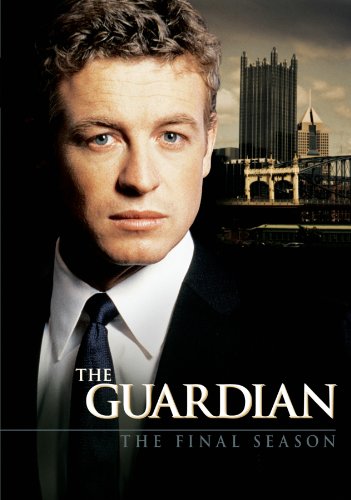
Simon Baker is riding high these days. Last year his new series, The Mentalist, was the highest ranked new drama of the year. That accomplishment got the show paired with CSI in that enviable Thursday night time slot. I’m amazed when I hear folks tell me how the actor appeared to come out of nowhere. A few film roles and he’s Mr. Television. Well, count me in with the small group that isn’t so surprised and saw him coming as far away as 2001 with a sleeper CBS series called The Guardian.

Baker played Nick Fallin, a talented young lawyer who just got busted for cocaine. Nick won’t see the inside of prison, however. His father, Burton (Coleman) is the senior partner at one of Pittsburgh’s most influential corporate law firms. Instead of jail, Nick is given five years probation and ordered to serve 1500 hours of community service. His court ordered assignment is Legal Services Of Pittsburgh, formally Children’s Legal Services. He’s placed under the charge of Alvin Masterson (Rosenberg), an idealist who set up the law clinic originally to speak for children who have no one else to do so. He’s resentful of Nick’s pampered lifestyle and at first wants to make the gig hard enough on him that he might ask to be assigned elsewhere. Eventually they warm to each other as Nick becomes more vested in the job than he thought he would be. Much of the show’s conflict is derived from Nick juggling these two worlds. He still has a duty as a shark attorney for his father’s firm, yet must find time to help these indigents and children that have come to the clinic for help.

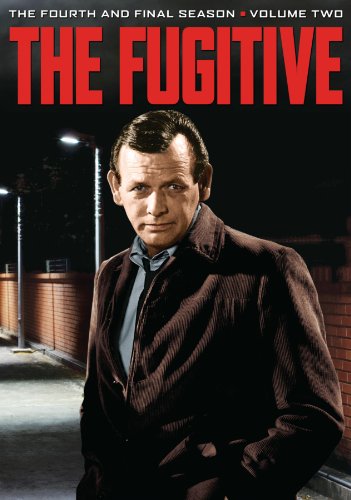
“The man is Richard Kimble, and, not surprisingly, the man is tired. Tired of looking over his shoulder, the ready lie of the buses and freight trains. Richard Kimble is tired of running…”

The elusive “one-armed man” is one of the best-known television icons of all time. The plight of Dr. Richard Kimball has been the subject of numerous imitations and even a feature film staring Harrison Ford as Kimball and Tommy Lee Jones as his pursuer. Tim Daly left the ranks of comedy to fill the shoes of Kimball in a very short-lived revival series. While some of these efforts managed to capture the essence of The Fugitive, none can truly compare to the real thing.

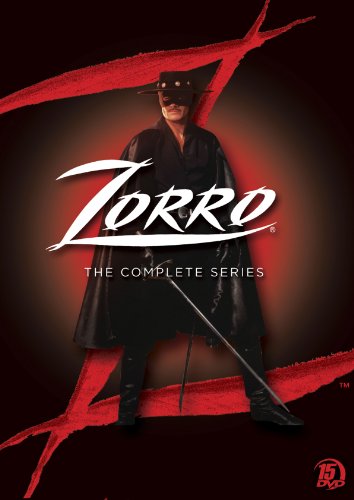
My teenage years were set firmly in the 80’s and early 90’s. As a result, I watched my fair share of cheesy television shows and loved every minute of it. Shows like Sledge Hammer, Silk Stalkings, and Alf. But alas, some shows even escaped my cheese-dar until well into my adult years. One such show is Zorro, yes that Duncan Regehr vehicle where he wore a mask and carved Z into various objects while wooing the ladies. How could I ever miss that one?

Since, I’m dealing with a box set that covers a ton of episodes, I will do my best to break this down season by season with major changes between them. To be honest, from what I’ve seen, the show’s story is the same from start to finish. Even though some of the actors do change, it’s still Duncan Regehr running around in a mask with a sword. Too frank you say? Ha, ha (in best evil guy’s laughing voice)!

Vampires are real. There are millions of them out there. They might drink a little blood, but they're also quite fond of milkshakes and french fries. They don't usually haunt the local cemeteries at midnight because they often have curfews. They don't spend their days lying helpless in coffins deep in hypnotic slumber. They save those hypnotic states for uncomfortable desks. You can't scare these creatures with garlic or a crucifix. They're far more frightened of homework and detention. Yes, vampires are quite real and yes, there are millions of them out there. Just visit any junior high school campus, and you'll find them there not so cleverly mingling with the student body. At every one of these schools there are girls with bite marks on their necks. They consider them a sign of eternal love, but they are far more likely to lead to hepatitis than immortality. For millions of teens across America, vampires are more than real. They're cool.

As I've said many times on these pages, the vampire fad isn't new at all. It's been around for over a hundred years. The Twilight series of books has made the genre sexy and accessible to angst-filled teenage girls and a few boys. The same phenomenon has spread all over the world. In Sweden it came in the form of John Ajvidelindqvist's novel Let The Right One In. Like the Twilight books, the novel became must reading for teens across Europe. And also like Twilight, it was made into a movie that enjoyed incredible success throughout the world. It should come as absolutely no surprise at all that the American filmmakers should want to take a crack at the material. Not only would the film be made in English for the American moviegoers, but it would be the perfect film to launch the rebirth of another horror and vampire staple ... Hammer Films.

"This used to be a gentleman's game."

I must confess that I had not even heard of the comic book titles created by Warren Ellis and Cully Hamner. I think that might have been one of the best things that could have happened to me as I sat down to watch the film Red. With a cast this strong, there was little doubt that they would provide a powerful stamp on these characters. No insult intended toward the graphic novels, but I can't imagine these characters any other way now.

"If I had a world of my own, everything would be nonsense. Nothing would be what it is because everything would be what it isn't. And contrariwise what it is, it wouldn't be. And what it wouldn't be, it would be, you see?"

To be perfectly honest with you, I have never read either of the two Lewis Carroll books on which this film has been based. Under ordinary circumstances, that would put me at a decided disadvantage in both watching the film and certainly in providing an insightful review of the movie. But these are not ordinary circumstances. The characters and their stories, originally told in both Alice's Adventures In Wonderland and Through The Looking Glass And What Alice Found There, have become an indelible part of our culture. One need not have read a word to be intimately familiar with Alice and her fanciful friends and rivals from Underland, which Alice herself interprets for us as Wonderland. There have been animated features as well as other live action attempts. The characters have become iconic and have appeared in advertising campaigns and even an episode of Star Trek. The surprise isn't that I feel like I know this story without having read the source material. The real surprise would be if there was anyone out in the civilized world who wasn't familiar with these characters. They were originally oral stories told to a group of sisters, one of which was Alice Little, the inspiration for the tales. They would only end up in book form at the insistence of the young Alice.

When a film is successful enough, it’s a relatively natural assumption today that a sequel will follow. In that sequel we expect more of the same and hopefully something new as well. Unfortunately, there is a disturbing sideline for the animation sequel. Because the actors aren’t really on camera at all, there is the temptation to replace them so that you can do a much cheaper, often direct-to-video sequel. The folks who did Madagascar didn’t go that route, but the folks who did Open Season did. Gone are the likes of Martin Lawrence, Gary Sinise, Ashton Kutcher, and Debra Messing. These voices are replaced by Matthew W. Taylor, Diedrich Bader and Kirk Baily.The result is a decidedly inferior film that was relegated to the Wal-Mart bins instead of the box office.

Boog is upset because no one wants to join him for guy's trip. Even Elliott has backed out of the annual camping trip. So he sets off on his own. He sees a sign for a circus that is coming to town and decides to check it out. There he runs into a circus bear Doug, who is looking to get out of the circus and live with the animals in the woods as the king of the forest. When Boog encounters Doug, he gets conned into switching places with the bear. Of course, both discover the grass really isn't always greener on the other side.

This series from Comedy Central began as a low-budget film hosting show in a small television station in Minnesota. It was the brainchild of Joel Hodgson. It ended up running for 11 years and a feature film version.

Mystery Science Theatre is an acquired taste. For me, I’ve really got to be in that certain mood to watch it. That’s the beauty of these DVDs. You pop them in when you’re ready. The idea is pretty whacked. Depending on the season you’ve got, Joel or Mike is trapped in space on the “Satellite of Love”. Doomed to spend his life watching very bad films, our hero makes the best of a bad situation. He uses his resources to construct a couple of robot pals. There's Crow T. Robot (Beaulieu), Tom Servo (Murphy), and Gypsy (Mallon). Part of an experiment together, they watch the films from the front row, constantly ranting throughout. If you’re like me, you’ve invited a few friends over to watch a schlock festival. The movies weren’t as important as the banter you created while watching. That’s exactly what you see here. The silhouettes of our host and his robots dominate the lower portion of the screen, where they provide alternative dialog and sometimes witty commentary on the action. The two evil station owners/mad scientists send them a new bad film each week to observe their reactions to the bombs. The films are broken up by off-the-wall skits and fake commercials to alleviate the tedium. This DVD collection is better than some because it includes films from four different seasons to give you a good sample of the overall series.

"Hello. I want to play a game."

"He paws fiercely, rejoicing in his strength and charges into the fray. He laughs at fear, afraid of nothing. He does not shy away from the sword. The quiver rattles against his side, along with the flashing spear and lance. In frenzied excitement, he eats up the ground. He cannot stand still when the trumpet sounds."

Disney has a grand tradition of putting out a certain kind of sports film. You know the type well. There is a champion that must overcome incredible odds and usually their own flaws to rise to the top of their game. Secretariat fits that mold, but only to a point. Usually the movie centers on the athletes themselves, and it's something from within that must change or conquer. With this film, the champion is a horse, and while that often doesn't stop the folks at Disney from allowing us to hear from their perspective, this is based on a true story and remains firmly planted into a reality, of sorts. But, we can't hear from Secretariat himself. Instead this is really the story of his owner Penny Chenery, and it's not a very flattering story at all. I'm afraid that I didn't find myself cheering for the hero this time, and therein lies the fatal flaw of Disney's latest rise-of-a-champion story.