Genre

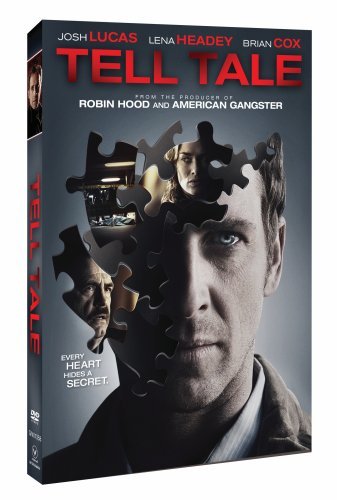
A man dies during what appears to be a botched robbery, and his heart winds up in the needful chest of Josh Lucas, single father to a young daughter with a rare bone disorder. This is obviously a man with more than his share of troubles, but things appear to be turning around. He has a new heart, and his daughter's beautiful doctor (Lena Headey) really likes him. But then, when he crosses the path of a certain paramedic, his heart begins to beat furiously, deafening him. Before long, Lucas realizes that his donor was murdered, and the vengeful heart is leading him to the killers.


Produced by the Scott brothers, Ridley and Tony, this is, as one would expect, a handsome-looking piece, but has none of the editing frenzy that characterizes Tony's work, and for that matter is more of a moody tone poem than is typical of the work of either brother. So director Micheal Cuesta is forging his own identity here, and is aided by genuinely moving performances, especially from Lucas, an actor who seems to be able to move effortlessly between hero and villain roles. Also on hand is Brian Cox, as the detective who realizes what is going on, and for reasons of his own encourages the heart's vendetta. He's always fun to watch, though his hard-boiled character here isn't much of a stretch.

"You may think this silly, but ever since I can remember I had this urge to be a knight. Not in armor or anything like that. Just in spirit. You know, to help the helpless. To find a wrong and right it. Then somewhere around 13 or 14 it sort of all became an urge to save beautiful damsels in distress. I just wish that somewhere in all of those books I read about knights and dragons they'd have warned me about damsels wearing little straw hats."

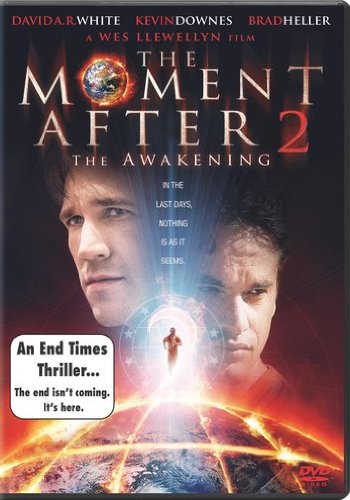
In the previous film, the Rapture (from the Bible) has occurred and two FBI agents were investigating. By the end, each was left in less than desirable situations and we start off with both of them getting into further trouble as the world has become a dystopia run by some sort of “Global Alliance.” One is busted from jail and finds a group of Christians in hiding, and the other is blackmailed into seeking out that same group and revealing their camping location to Alliance bad-guys.

A spin-off from Diff'rent Strokes, The Facts of Life centered around four residents of the Eastland Academy for Girls and their headmistress, Mrs. Garrett (Charlotte Rae). The four girls were characterized in strokes as broad as they way their physical types were presented: Blair (Lisa Welchel), rich, spoiled and blonde; Jo (Nancy McKeon), tomboy and brunette; Tootie, nosy and African-American; Natalie (Mindy Cohn), fun-loving and overweight.

The actual humour in the series is pretty pitiful – in other words, standard sitcom quips that might pass for wit if you're about five. However, like its parent show, it would consistently tackle difficult subjects. In this season, that means the likes of abortion, drunk driving, and hearing loss. Nothing subtle, and much that is painfully earnest here, but at least there is also a little bit of ambition in the stories, so credit where credit is due. The lead-in to the season was the TV movie, The Facts of Life Goes to Paris. While the dire nature of the humour is even more apparent here, now that the laugh track has been stripped away, the shooting was actually done on location, which is, frankly, more than I was expecting.

"I try to believe in as many as six impossible things before breakfast. Count them, Alice. One, there are drinks that make you shrink. Two, there are foods that make you grow. Three, animals can talk. Four, cats can disappear. Five, there is a place called Underland. Six, I can slay the Jabberwocky."

To be perfectly honest with you, I have never read either of the two Lewis Carroll books on which this film has been based. Under ordinary circumstances, that would put me at a decided disadvantage in both watching the film and certainly in providing an insightful review of the movie. But these are not ordinary circumstances. The characters and their stories, originally told in both Alice's Adventures In Wonderland and Through The Looking Glass And What Alice Found There, have become an indelible part of our culture. One need not have read a word to be intimately familiar with Alice and her fanciful friends and rivals from Underland, which Alice herself interprets for us as Wonderland. There have been animated features as well as other live action attempts. The characters have become iconic and have appeared in advertising campaigns and even an episode of Star Trek. The surprise isn't that I feel like I know this story without having read the source material. The real surprise would be if there was anyone out in the civilized world who wasn't familiar with these characters.

"Oh, I've seen fire and I've seen rain. I've seen sunny days that I thought would never end. I've seen lonely times when I could not find a friend. But I always thought that I'd see you again."

After nearly 40 years since they had worked together, James Taylor and Carole King finally see each other again, at least on stage. The two worked together for about two years from 1970 to 1972. They shared each other's songs and played off and on sharing the same musicians as friends and backup band. The era was an important time for each of these artists. It was the time when they were working on what would become their breakout albums and stardom down the road. For Carole King it was her Tapestry album, and for James Taylor it was Sweet Baby James. Part of the memories they created together was a series of gigs at L.A.'s famed Troubadour Club in 1971. This release finds the duo once again back at the Troubadour Club, only 40 years later, 40 years older, and 40 years wealthier. It's a throwback to an earlier time both for these musicians and the fans that drove them to their inevitable stardom.

In countries all over the world, there is still the prevalent issue of not being able to read. Even in advanced countries such as the United States, there are reports that suggest that many adults don’t ever pick up another book after leaving college. This reviewer was fortunate enough to have two adults in his life that read to him all the time when he was an infant and thus developed a desire and ability to read very early on. But for those who don’t have that luxury, perhaps they can find entertaining television programs such as Ghostwriter.

Jamal Jenkins (played by Sheldon Turnipseed) and his father (played by Samuel L. Jackson) are working in the basement of his family’s brownstone. Jamal’s father finds an old trunk that he was looking for and starts to pull it out. The father nor Jamal notices that the trunk knocks over an old book and the pages release a spirit. As they leave, the spirit follows Jamal.

For anyone who still engages in serious debates over who would win, Thor or the Hulk, here is a series that will send you into paroxysms of nerd joy. The premise here, in the spirit of violent apples and homicidal oranges, is to scientifically (more or less) explore who would win in one-on-one battles between an Apache and a gladiator, a viking and a samurai, a Spartan and a ninja, and so on. We even have the IRA versus the Taliban. Weapons, armor, and tactics are all examined, demonstrated, and fed into a computer. The data is then dramatized at each episode's climax.

It really is difficult to respond adequately to this specimen. This is one of those ideas that is utterly whacked, but has also been pretty obviously lurking in the male psyche since time immemorial. The presentation is pure cheese, all flashy graphics and clenched-teeth narration, and the actual battles have more than a whiff of Kirk versus the Gorn about them. If you want great fight choreography to go along with your strange pairings, you're probably better off sticking to playing Soul Caliber IV. All the same, the sheer oddity of the enterprise makes it hard to tear one's eyes away.

“William Banks has saved 257 people from addiction to drugs, sex, and gambling. He’s not a cop. He’s not a superhero. He’s just a man with a calling. This is his story.”

What he is, is Benjamin Bratt, returning from the thespian dead as William Banks, better known to the show’s fans as The Cleaner. Bratt hasn’t been seen much since he left the gig at Law & Order. I almost didn’t recognize him here. But he’s returned in style. The Cleaner has all the characteristics of a police procedural series with a lot more excitement. His methods are often harsh. He’s your worst nightmare of an intervention. When Banks is called in, you haven’t hit rock bottom. Rock bottom has just hit you. The character is a recovering addict himself and does this as a way of making amends. Of course he doesn’t work alone. He’s assembled a kind of Impossible Mission Force-style team that helps with each case. Together they form a private company that a family member can call when they tire of a friend or family member’s addiction. The series was based on the real life story of Warren Boyd, who also acts as one of the show’s producers.

"Compulsive Hoarding is a mental disorder marked by an obsessive need to acquire and keep things, even if the items are worthless, hazardous, or unsanitary. More than 3 million people are compulsive hoarders. These are two of their stories."

The reality television craze has entered its second generation. In the beginning, shows merely found folks who were willing to put themselves in odd circumstances for the chance to earn some big payday. That first wave included such shows as Big Brother, Fear Factor, and Survivor. These shows quickly evolved, or devolved, depending on your point of view into the relationship game. Instead of cash, these contestants went looking to marry, most often a millionaire. It turns out that Chuck Barris actually invented the reality show in 1965 with The Dating Game and later with The Gong Show. He discovered, way ahead of his time, that we wanted to see real people make complete fools of themselves for love or money. When the writers’ strike hit, these shows became a gold mine to network executives looking to fill prime-time slots. That's when everyone noticed just how cheap these shows were to make.