Posted in: Disc Reviews by David Annandale on April 25th, 2010
We are in the mid-60s, when, during the glory days of the Stones, the Who, and other colossi of British rock, the BBC allows almost no airplay of said music. To the rescue comes a group of commercial pirate radio stations, broadcasting from ships off the coast. Priggish minister Kenneth Branagh is determined to shut them down, and our focus is on one particular ship, run by Bill Nighy, and boasting such luminaries as Philip Seymour Hoffman and Nick Frost as DJs. Onto this ship of counter-culture rebels comes a young Tom Sturridge, and this wet-behind-the-ears youth becomes the eyes through which we watch the various eccentric goings-on.
Director Richard Curtis is a dab hand at ensemble romantic comedies, as the sterling likes of Four Weddings and a Funeral and Love Actually more than demonstrate. But though he has a terrific cast here, including such regulars as the always watchable Nighy, this is a misfire. It is surprising, given some of the indelible characters in Curtis' previous films (notably Emma Thompson's role in Love Actually) that the female parts here are so woefully underwritten (the women in this film are little more than disposable sex objects). As well, would-be funny scenes of the farcical, slamming-door variety (such as the scene where Frost tries to get the virginal Sturridge to replace him in bed) are older than the hills and eroded completely flat. So the comedy, the odd line here and there notwithstanding, barely raises more than a mild grin. And the tone is so light and unconcerned that it robs the context of any real rebellion or vitality. This radio station might as well be a standard classic-rock denizen of the FM band for all the edge we feel. Then there's some laziness to the writing. If we are to believe this is circa 1966, why have someone anachronistically talk about “thinking outside the box”?
Posted in: Disc Reviews by Gino Sassani on April 24th, 2010
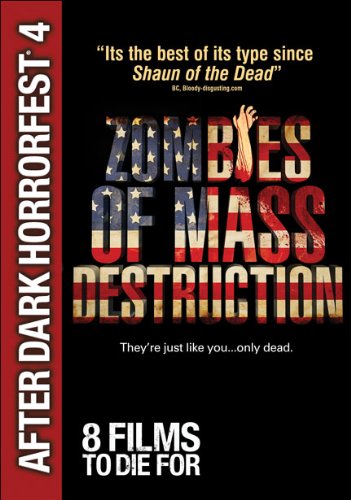
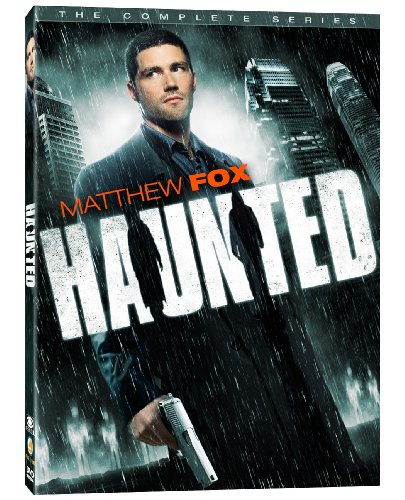
"Two years ago my son was taken from me. Since then I've lost everything: my job, my marriage, even my life. But I came back, and the dead came with me."
Posted in: Disc Reviews by William O'Donnell on April 24th, 2010
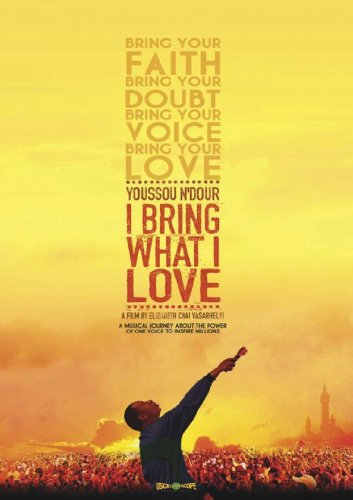
This film is part biography of the immensely popular, African singer Youssou N'Dour, and part documentary of his tour to support his controversial religious album “Egypt.” The film opens with a stirring song that arrives with no context. 2 minutes into the film and Youssou's amazing voice gives me goosebumps...we are off to a great start.
Posted in: Disc Reviews by Michael Durr on April 22nd, 2010
Despite its rather crass and offensive material, Drawn Together lasted three seasons and thirty six episodes before Comedy Central pulled the plug in March 2008. The show featured parodies of popular cartoon characters or archetypes and brought that together in a very funny style that delighted fans who were partial to shows such as Family Guy or Robot Chicken. So it was only natural that when the episodes ended, they would look to other production avenues, like direct to dvd.
*Warning. This review does have a little bit of salty language or describes risque situations. If you are a child, please do the right thing. Clear your browser history and cookies after you read this review. You have been warned, thank you.*
Posted in: Disc Reviews by Gino Sassani on April 21st, 2010
"Nothing worse than an old hippie, man."
When I think of Cheech & Chong, I am brought back to the 1970’s. It was then that the pair had their first success with an iconic brand of “stoner” comedy. Their LPs sold millions across the country. You didn’t have to be a stoner to appreciate the jokes. I was about as straight as they come, but I really loved listening to Cheech & Chong. The material was about more than just getting high. It was timely, at least it was then. It mirrored the culture that we could see from our own windows, and like all inspired comedy, it was relevant.
Posted in: Disc Reviews by Gino Sassani on April 21st, 2010
“Man lives in the sunlit world of what he believes to be reality. But there is, unseen by most, an underworld, a place that is just as real, but not so brightly lit, a darkside.”
Not since the likes of Rod Serling’s Twilight Zone or The Outer Limits has there been a really good sci-fi/horror anthology until 1984’s Tales. Not to say that each episode was a winner. In fact, most were pretty weak and relatively lame, but when this show was good, it was very good. These tales weren’t any ordinary specter spectaculars, but were told by spectacular story writers, directors, and producers. Look at just this first season, and you’ll find some of the top names in the field involved in one way or another. You’ll see the likes of Stephen King, Tom Savini, George Romero, Robert Bloch, Frank De Palma, and Harlan Ellison. The tales often came with a twist, or at least a big finale in the end. Much like a train’s headlight in a long tunnel, you might have seen it coming from a mile away, but it’s hard to avoid the impact.
Posted in: Disc Reviews by Gino Sassani on April 21st, 2010
Erle Stanley Gardner wrote crime fiction, and while many of his 100 or so works are unknown to most of us, he created a character that has become as identified with criminal lawyers as any other in fiction. It was in these crime novels that Perry Mason first faced a courtroom. He developed a style where he would investigate these terrible crimes his clients were on trial for. He would find the real killer, and in what has become a Hollywood cliché, reveal his findings in a crucial moment during the trial. While we may not remember the novels, we all remember the man in the persona of Raymond Burr. Burr had a commanding presence on our screens and enjoyed a well deserved 11-year run as the clever lawyer. What makes this run so amazing is that the show followed pretty much the same pattern the entire time. We always know what’s going to happen, but we wait eagerly for that gotcha moment when Perry faces the witness on the stand. We know when he’s got the guy squarely in his sights, and we can’t sit still waiting for him to pull the trigger. OK, so maybe that’s a little over the top, but so was Perry Mason. From the moment you heard that distinctive theme, the stage was set. To say that Perry Mason defined the lawyer show for decades would be an understatement. Folks like Matlock and shows like The Practice are strikingly similar to Perry Mason. If you haven’t checked this show out, this is your chance. See where it all began.
At this rate, it’s going to be quite some time before you complete your collection. I’m not even sure that DVD will still be a viable format before the end of the series on DVD. It’s another half season, and the episodes continue to fly at us at a snail’s pace. But slow and steady wins the race, and as long as the quality episodes continue to deliver that classic Mason charm and style, I guess folks like us will continue to come back for more.
Posted in: Disc Reviews by Gino Sassani on April 20th, 2010
Flight Of The Intruder is one of those films that appears and disappears off of the film world radar about as quickly as a stealth bomber. It has had its share of accolades but often passes swiftly into that entertainment night of obscurity. While it is at its core a Vietnam War film, the movie never really appears to be about the war at all. It attempts to capture some of the sartorial wit of Catch 22 while still trying to pass itself off as a serious enough movie. Make no mistake. This film leaves no war cliché unused, particularly in the stilted, sometimes gung-ho dialog of its characters.
Jake "Cool Hand" (Johnson) is a bomber pilot during the Vietnam War. He's stationed on an aircraft carrier. He's growing a bit bored with the missions he's being ordered to fly. Instead of taking out the important military installations he's assigned to, the locations end up being just empty jungle, or worse. Some of them are simply civilian farms and villages. His morale is already pretty rock-bottom when one of these useless missions catches his plane some serious fire and kills his navigator. Now Jake wants to do something worthwhile, not to mention get a little payback on the enemy. Commander Camparelli (Glover) is growing concerned with the emotional state of his pilot. He tries to keep him reined in as best he can. Enter Jake's new navigator Lieutenant Commander Cole (Dafoe). This guy loves combat. He's just volunteered for his third tour of duty. Like Jake, he wants to make some kind of a real difference. Jake convinces him that they should fly an unauthorized mission straight to downtown Hanoi where it is believed there is a stockpile of SAMs (Surface to Air Missiles) that are responsible for bringing down a lot of American planes. They know it's likely a suicide mission and that even if they should survive, a court martial is about the best they can hope for from the service.
Posted in: Disc Reviews by Gino Sassani on April 20th, 2010
You've seen me talk with a certain element of affection for the remarkable work that the Walt Disney Studios have done in the way of feature animation. Who can really argue with me when I state categorically that the studio invented that particular medium? The long line of classics could certainly fill a lot of space in this review, but these are things you already know. Left out of the list of classics, and deservedly so, is this 1980's Disney feature. the studio's take on Sherlock Holmes, The Great Mouse Detective.
Now, the first thing that pops into your mind when you connect Walt Disney with a mouse is that studio icon image himself, Mickey. That image is so ingrained in my skull that I at first thought I remembered Mickey being in this film. Obviously I was mistaken and am thinking of some similar role the royal rodent likely performed in another title. The mouse in question here is more your standard-looking mouse without the trademark three circle head and ears. The characters are no less endearing here. Still, this was a transition time for the studio, and they were not putting out their best work in the 80's.
Posted in: Disc Reviews by Gino Sassani on April 20th, 2010
Teddy Roosevelt has been somewhat of a dominant figure in my life these last few weeks. By coincidence, I have just finished reading an excellent collection of the man's letters in a volume entitled The Scarlet Letters Of Theodore Roosevelt. These kinds of books are wonderful opportunities to get to know an historical figure through his own words, often directed at close friends and family with whom he felt comfortable enough to refrain from censoring his words quite so much. Then there's the two Night At The Museum films which I recently watched and reviewed for these pages. I live in Tampa and was recently near the area in which Teddy trained and assembled his famous Rough Riders for their historic contribution to the Spanish American War. Finally, I had just finished watching a more detailed biography on one of those documentary stations. So, wouldn't you know it that I would find at my doorstep courtesy of my local UPS carrier, a copy of The Indomitable Teddy Roosevelt. I'm quite the history buff. I taught years of AP Government and American History. My specialty has always been the presidents. I was really looking forward to watching this one.
This is a documentary unlike any other I've ever seen. The piece is narrated by George C. Scott. The narration script is mostly very surface kinds of things. The program rarely goes into any kind of detail about the man. There's a lot of fluff and bravado descriptions of the subject, but I can't imagine you really getting to know the man himself from anything you encounter here. If you have knowledge about Teddy Roosevelt at all, you already know all this stuff. What the documentary lacks in detailed information it attempts to make up for in dramatizations. Actors portray Roosevelt and his family in reenactments of some of the narration. We're talking mostly family events. While the filmmakers never try to deceive the audience or suggest that this footage is the real deal, the program did catch more than its fair share of heat for the stylistic choice. But in the end, these reenactments appear as trivial as most of the program itself.