Genre

Brian Clough (Michael Sheen) is the manager for the Leeds United soccer team, brought in to replace Don Revie (Colm Meaney), who is off to manage the England team. Clough is young, charismatic, brash, arrogant and opinionated, and has some pretty unflattering (and publicly aired) views about his predecessor and the thuggish style of play he fostered. So begin his 44 catastrophic days in 1974 as the unwelcome manager of United, and the film flashes back to the meteoric rise that brought him to this crucial pass.

This must surely be one of the best sports-related movies I have ever seen. Every conceivable sports movie cliché goes out the window. There are no extended sequences showing the games, just some quick, impressionistic shots that tell you all you need to know. This is not the inevitable story of the Underdog Making Good. It is the reverse: a rising star who takes over the most successful team in the country and becomes a legendary disaster. And yet the film is oddly triumphant. It is very much about Clough's relationships with two men: his obsessive rivalry with Revie, who isn't even aware of him, and his deep friendship with partner Peter Taylor (Timothy Spall), a friendship that might save him from himself, did he but realize it. The performances are superb, with Meaney looking uncannily like Revie (seen in footage at the end of the film), and Sheen astounding yet again, in the wake of his performances as Tony Blair and David Frost, cementing his position as one of the great actors of this generation.

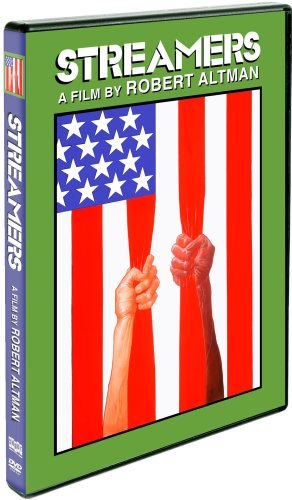
Director Robert Altman here adapts David Rabe's play about a small group of recruits on the verge of being shipped off to Vietnam. The action takes place entirely in the barracks, and here we get to know African-American Roger (David Alan Grier), fitting in as best he can in a white man's army; sensitive and gay Richie (Mitchell Lichtenstein); and possibly-closeted Billy (Matthew Modine). They talk about and dance around their various fears and anxieties, and then into the mix comes the explosive Carlyle (Michael Wright), whose life on the streets and experience with racism have turned him into someone who talks and acts long before he thinks...

Moving from stage to screen is always a tricky business. Some plays open up to the cinematic world quite easily, while others remain stubbornly stagebound. Altman's decision to restrict the film to a single set is a risky one, but it is testament to his skill as a filmmaker that it works. He preserves the claustrophobic, hothouse environment of the play, but keeps his camera and editing so active that the work remains visually interesting and properly cinematic. That said, there is no disguising the fact that Streamers is designed for the stage. The script, with its long, anecdotal monologues, could only be that of a play. What would no doubt be incredibly powerful on stage becomes, well, stagey on the screen, and though it is impossible to remain unmoved by the events in the plot, neither can one ever forget the artificiality of the enterprise, and the suspension of disbelief that would come naturally while watching a liver performance is much more difficult here. The result, then, is ultimately more interesting than powerful.

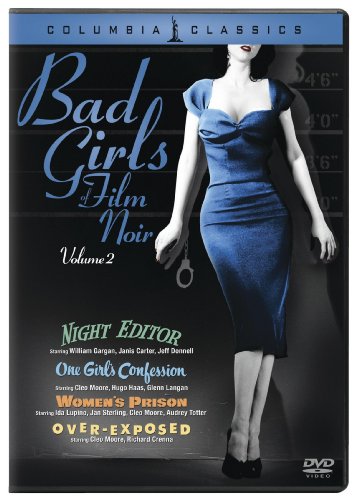
“In the 1940’s and 1950's the juiciest roles for actresses in Hollywood were often in B pictures that explored the dark side of life, staring roles as cool, calculating girls who could stick a knife in a man's back and make him like it."

And so Sony collects 8 of these films as part of what looks like is going to be an ongoing series. But what exactly is Film Noir? You hear the term used from time to time, but what does it mean?

"During the 1980's over 70% of American adults believed in the existence of abusive Satanic cults. Another 30% rationalized the lack of evidence due to government cover-ups. The following is based on true unexplained events."

Anyone who has come here long enough to get to know my likes and dislikes probably knows what a Walt Disney and Mickey Mouse fan I am. The man and the character opened the road for so much of what we have today, from Pixar to Tom and Jerry. But, if you're looking for the kind of cartoons you and I have grown to expect, this one is bound to disappoint you. It's an episode of the current television series Mickey Mouse Clubhouse. It's an animated Sesame Street, however, and not really a cartoon adventure.

While I use the term Sesame Street, I don't mean it literally. You'll find the traditional Disney characters, to be sure. There's Donald Duck, Minnie Mouse, Goofy, Pluto, and even Professor Von Drake. You won't find a Cookie Monster or a Big Bird anywhere. What you will find is that strictly educational style. The characters talk directly to the children watching. They ask questions geared toward teaching such basic concepts as identifying colors and shapes to basic math problems. There's a great deal of shouting encouragement as well. You should be prepared for your young one to answer Mickey's questions and join him in some hollering. There's a particularly annoying repetition as the gang calls for a character named Toodles. Toodles carries objects that the characters need to accomplish various tasks. Whenever they find they are in the need of one of these tools Mickey encourages everyone, including your child, to yell “Oh Toodles”, to bring the character to them with the needed item.

So, this guy goes to see three rabbis....

No, that's not the start of some insensitive anti-Semitic joke. It's the rather offbeat idea behind the latest film by the Coen brothers. Of course, off the wall is business as usual for Ethan and Joel Coen. Fans of the brothers' work already know to expect the unexpected. You're likely not looking for the same kind of logical coherence that you might otherwise demand in your movies. The films often share a modern allegory to some classic fable or tale. There is certainly an element of a parable to this film in particular. It is not at all unlike the biblical tale of Job. Don't look for higher meaning in this tale of a man in search of a higher meaning. Instead, be prepared to become a fly on the wall in a life that is far from ordinary, yet anything but extraordinary.

I have absolutely no doubt that Hilary Swank meant well, but we all know what wise men say about good intentions. It is likely that Amelia Earhart has been a hero and inspiration to the young actress as I know she's been to women of all professions throughout the years. There's no question that she is an influential historical figure and deserving of attention. Of course, she's had plenty over the years. There have actually been quite a few films and television shows dedicated to the heroine since her disappearance so many years ago. Like any subject, there have been some great efforts and some forgettable ones. Recently the character showed up in a much more frivolous and fictional way in the latest Night At The Museum film. From Star Trek to A&E documentaries, there is little danger that she will be forgotten in the world of entertainment. I suspect, from what I've seen from news reels, that she was a passionate and spirited woman full of life and heart. Unfortunately Amelia, the film, has none of that.

From the film's promotional campaign one is left with the definite idea that this is less about the aviatrix and more about the love story between Earhart and George Putnam, played by Richard Gere. At least that's the film I was most prepared to see. I suppose one piece of good news, at least for me, was that this love affair is played quite flatly. Who could have expected that from a Gere romantic film? If that really was the focus, someone forgot to tell the leads that they were in love. The portrayals are so matter-of-fact and dispassionate that you could debate whether there was indeed any love there at all. Perhaps that was the way the relationship was in reality. If that's true, it's a poor choice for a romantic film.

When the UK minister for International Development (Tom Hollander) has the nerve (not to mention lack of political acumen) to opine that war in the Middle-East is “unforeseeable,” all hell breaks loose. The pro- and anti-war bureaucrats in Washington see him as useful to their cause, and descend, talons outstretched. Meanwhile, the Prime Minister's Director of Communications (Peter Capaldi), a Scot who makes Don King look even-tempered and restrained, goes into apoplectic overdrive in his attempts to keep everything on-message.

Though this blistering satire leaves the precise nature, or even location, of the war-to-be is unspecified, it's pretty clear that what the film has in its sights is the collection of mangled information, doublespeak and unstoppable political agendas that led to all the fun and games in Iraq. Filled with sharply drawn characters, wonderfully creative profanity, and a bracingly cynical worldview. Not a film for the optimistic (or naïve, depending on your perspective), but the kind of black political farce that the British excel at – think Yes, Minister and House of Cards and you begin to have the idea.

What we have here is, essentially, a great, heaping collection of public domain material from the classic comedy duo. The menu is as follows:

17 episodes of their radio show: The Abbott & Costello Show (1942-1949);

This film chronicles the career of Maurice “The Rocket” Richard, an NHL player for the Montreal Canadians, from his childhood days in a Junior hockey league, to the season in 1955 where his suspension from playing for the remainder of that season led to violent riots in Montreal. This film is more than just an examination of Richard as a French-Canadian citizen and legendary hockey player (many still argue as the greatest ever to play) but also a look at his impact as an icon and living legend to the people of Quebec.