Genre

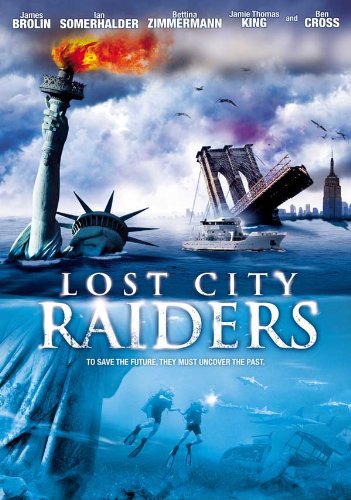
The ice caps have melted, leaving only 10% of the world livable, according to the opening narration of this adventure/disaster film. Salvaging relics from “lost” cities is a means of making money for our heroes, a boat crew that comprises of James Brolin as a Captain with a secret connection to the Vatican, and his two sons. As they pick up goodies to trade or sell they also search for clues towards a grand solution to the global flooding problem that the Vatican is housing.

In the 2006 hit The Devil Wears Prada there was a single line that summed up Meryl Streep’s pitch-perfect portrayal of icy fashion editor Miranda Priestly: “That’s all.” The real-life inspiration behind the character, Vogue editor-in-chief Anna Wintour, has such a commanding presence that even those few words are hardly necessary. Her disapproval is apparent with a single glare.

The September Issue follows Wintour and her loyal band of editors as they prepare for the most important month of the year in fashion. As one employee says, September in fashion is like January for most people: it’s a fresh start. Throughout the 90-minute documentary director R.J. Cutler captures an intimate, surprisingly compelling look behind the scenes of an institution that is synonymous with fashion.

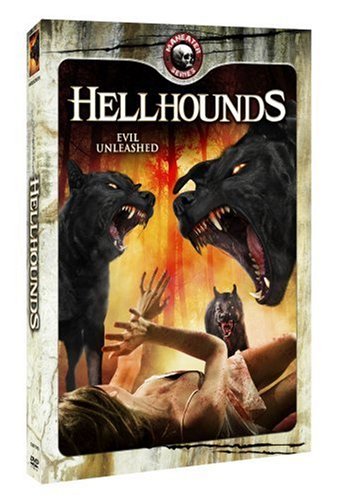
Hellhounds is the tale of Kleitos and Princess Demetria—a “Greek” soldier and his bride to be. When Demetria is poisoned on their wedding day by a jealous friend, Kleitos enlists the help of a witch to travel to Hades and retrieve his bride’s soul. The soldier and his loyal friends—each with their own unidentifiable accents—make their voyage into the underworld only to face the wrath of Hades’ hounds when they arrive. They must escape with Demetria’s soul and reunite it with her physical body before Hades claims her as his bride. All the while, the four-legged beasts are hot on their trail for a taste of blood.

Usually made-for-television movies really aren’t trying to be anything they’re not. Hellhounds often seems like it’s exceeding its grasp due to the script’s melodramatics. You get the feeling director/NYPD Blue actor Ricky Schroeder is trying to tap into that 300 style of storytelling, but it falls short.  If you’re looking for stimulating dialog or even good acting, look elsewhere. Expect plenty of vacant expressions and emotionless delivery from the cast, especially stone-faced lead Scott Elrod.

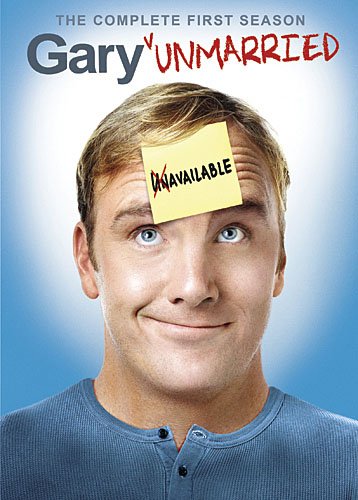
Several years ago, I went through my divorce. We were clearly not made for each other and spent many nights arguing over the simplest things. Despite our constant bickering, our divorce went reasonably smooth and we were able to agree on most things. Thankfully, we did not have kids to further complicate the proceedings. However, if we did have kids and had arranged dual custody, I wonder if it would have turned out like Gary Unmarried: Season One.

Gary Brooks (played by Jay Mohr) is recently divorced. He has his own place and tries to do the best he can. He also takes care of his two kids, Tom & Louise (played by Ryan Malgarini & Kathryn Newton) on alternating weekends and holidays. Most importantly, he is trying to care of his own life and he finds that single life is a very tough struggle. Especially when that tough struggle involves dealing with your ex-wife Allison (played by Paula Marshall) on a daily basis.

Every seven years, thirty assassins descend on an unsuspecting city and slaughter each other, all the while being observed by hijacked security cameras for the benefit of the high rollers who are betting on the outcome. The previous winner was Ving Rhames, and he thought he had walked away from the life after that tournament. But then his wife was murdered, and he learns that the killer is in the new contest (taking place this time in England). Also taking part is the fatalistic Kelly Hu, who winds up being the reluctant protector of drunken priest Robert Carlyle, who even more reluctantly has become a long-shot competitor in the tournament after accidentally swallowing a tracking device that paints him as a legitimate target.

This sounds a bit more complex than the film really is, as the plot is primarily there just to facilitate the spectacular butchery that follows. The action is fast and furious, and the blood is as copious as you're going to get this side of Hostel. All of which is more than passably entertaining, and there are also some surprisingly witty moments, usually courtesy of Carlyle. In its enthusiasm to go over the top, however, the film does dip its toe into some of the same ugly misogyny that so pollutes the Crank films. Still and all, bloodthirsty action fans could do worse than spend 95 minutes in The Tournament's company.

For all intents and purposes, it appears just like any routine Fall day throughout the world. People are busying themselves about their normal concerns. Suddenly everyone on the planet blacks out for exactly 2 minutes and 17 seconds. Just think about that part for a moment. Every human being collapses at the same moment. Think about all of the things that people are doing at any given moment. Driving cars. Flying planes. Performing delicate surgical procedures, or just walking across the street. Pretty much any activity is going to become dangerous as the blackouts occur. 20 million people worldwide die in the event.

Now, what makes this show different from your typical high-casualty disaster series is not the global body count. It's what happens to the folks who don't get killed that sets this series up. During that 2 minutes and 17 seconds, every person has something called a flash forward. It's a vision, if you will. They get a glimpse of the future from their own perspective. Investigation soon reveals that everyone's future vision was the exact same moment in time: April 29th, 2010 at 10:00 PM. Each person experiences that moment in their lives. Further investigation confirms that the visions are accurate and persons that were, or will be as the case may be, together at that time share the same confirmable experiences. Who or what caused these flash forwards, and why? Mark Benford's flash forward finds him looking at an investigation board containing crucial clues to the flash forward investigation. It puts him square in the lead to take the case, because now he's got a sneak peek at what key pieces of evidence will be found. He also has a line on pivotal players in the case. The feds set up a program called MOSAIC, which encourages people to share their flash forwards online. It allows people to make some sense of their visions, while giving the government a working database of flash forwards. Further clues uncover the fact that there were two people who were not effected by the blackouts and were up and around while the rest of the world was knocked out. The images are fuzzy, but their identities are of vital priority.

Oh how the rich can get into mischief. This DVD set is smack dab in the middle of Dynasty's successful nine season run. The mud slinging, both literal and figurative, was at its height in this fourth season, and no $200 haircut or $1000 outfit was left unruffled by the various scandals and plots set into the web of these wealthy Denver residents. In fact, this season was the one and only time this series won a Golden Globe for best TV Drama.

William Conrad was no stranger to audiences when Cannon joined the Quinn Martin stable of television dramas. In fact, most folks knew his voice before they got to know his trademark girth. Conrad was the original Matt Dillon when Gunsmoke was a radio drama. When the drama entered the visual medium of television, even Conrad admitted later that the audience, who thought of him as tall and handsome, would have been disappointed. His voice lent authority to any role he played, and on radio his size was never an issue. He was famous as the voice of the stern narrator in the Rocky and Bullwinkle cartoons who often crossed the laws of the trade and interacted with the title characters. He was also the voice that narrated the struggles of Dr. Richard Kimble on The Fugitive, another Quinn Martin production. He continued to narrate series intros even after his own success. He gave us the informative opening dialog in Buck Rogers In The 25th Century. As a voice, Conrad was one of the best, but when CBS approached Quinn Martin asking for a television vehicle for Conrad, it was a huge gamble. The gamble, of course, paid off… well… huge, and Cannon became an iconic figure in television. Cannon was so popular he was showing up on other shows as well. He appeared on the pilot for Barnaby Jones. The show ran 5 seasons and returned with appropriately enough The Return Of Frank Cannon tele-film in 1980. It is also interesting to note that Conrad, while greatly overweight, lived to be 74.

Frank Cannon was unlike any detective we’d ever seen on television before, or since. He was known as a high priced PI with a taste for the finer things in life, particularly fine food. His appearance was counter to all of the rules about rock-jawed handsome detectives who ran around shooting it out and beating up the bad guys. Cannon was a big man and wasn’t about to do much running and fighting. He wasn’t totally different, however. Cannon had a lead foot and could run a car chase with the best of them. He was smart and often a bit flashy in his technique, if not in his appearance. It was also rare for a series to have a lone regular to carry the … um… weight. Conrad was up to the task and made the show and the character a permanent part of our pop culture.

Just to look at it you would think that My 3 Sons was a Disney production. Its star Fred MacMurray had appeared in many Disney films of the 50’s and 60’s and is most likely recognizable from those appearances. Two of the three boys were also known for work with Disney. The eldest boy, Mike, was played by Tim Considine, who starred with MacMurray in Disney’s The Shaggy Dog. Middle son Robbie was played by a former Mickey Mouse Club Mouseketeer, Don Grady. The youngest son, Chip, was played by Stanley Livingston, the only non Disney alum in that group. Another reason for the confusion is the decidedly Disney-like material the series covered. Steve Douglas (MacMurray) was a widowed single parent who was trying to balance his job with that of raising his three sons. Most of the stories involved the warm and fuzzy heartwarming stuff that Disney had pretty much cornered the market on in the films. Whatever troubles arose, no problem was so bad that a heart to heart talk couldn’t fix it. The style would prosper and continue in the form of 70’s shows like The Brady Bunch. The four guys were also joined by Steve’s father-in-law, Bud, played by I Love Lucy favorite William Frawley. That was no surprise, since the show was actually produced, not by Disney, but the Desilu studios.

My 3 Sons was for some time the second longest running sit-com on television. It lasted from 1960 until 1972. The series would undergo major changes as the boys each grew older and eventually married and led their own lives. Frawley would also become very ill after 5 years and leave the show. His replacement, William Demarest as Uncle Charley, is likely better known in the show. The syndicated version of the show often ignored these early black and white versions of the series, opting for the later color ones that featured the Uncle Charley character. It’s very likely you’ve never seen these early episodes as they appeared infrequently in the syndicated markets. The theme from Frank DeVol became pretty popular in the mid 60’s and even entered the pop charts at one time. The show also originally ran on ABC, but moved to CBS in 1965, also accounting for the different syndication packages. It was during that move that many of these big changes occurred.

Night Court appeared on the docket at NBC in 1984 and was to last 8 seasons. If you thought it looked and sounded a lot like Barney Miller, you won’t be surprised to learn that a number of key people, including creator Reinhold Weege, came from that classic cop comedy. Several key elements of Miller can be found in Night Court. The themes are almost identical, with both beginning with an easily identifiable bass run. The most important imported element from Miller was the constant parade of the kookiest and craziest criminals this side of the Cuckoo’s Nest. From a hick farmer played by then beginner Brent Spiner to hookers with hearts, Night Court relied heavily on the eccentric character to provide most of its laughs.

Harry Stone (Anderson) is a young hip judge who almost blunders into a judgeship of a Manhattan evening session courtroom. The role appears tailor-fit for Anderson’s style of humor. The character even retained Anderson’s flair for amateur magic. He was always trying to bring levity to even the most dire of circumstances. Joining him in his courtroom was prosecutor Dan Fielding, played by the extremely funny John Larroquette. He was a material man with an overactive lust for the ladies. He was self centered and always looking to gain from someone else’s misfortune. He would often find himself having to suck up to the young judge, who he found too footloose with the law. His groveling always brought the judge a perverse pleasure. The court was presided over by two bailiffs. Bull was played by Richard Moll. He was a mountain of a man with a bald head. While he might look and act like a monster who would eat little babies, he was in fact, a gentle and often childish character with an IQ lower than his shoe size. His partner and mentor was Selma, played by the raspy-voiced Selma Diamond. Selma was a no-nonsense, say what she wanted to, chain smoking authority in the courtroom. Unfortunately, Diamond passed away after the second season. Replacing the gruff character and actress was Florence Halop playing Florence Kleiner, but she would only last this season. Charles Robinson joined the cast in the second year as the court’s new clerk. He was likely the most “normal” member of the cast. Throughout its run there were a rather large number of actresses to play the public defender role in the series. Eventually that role went to Markie Post, who kept it for the longest time. In season two it was Billy Young playing a very awkward Ellen Foley. The character never clicks with any of the others, and she would also be gone at the season’s conclusion.