Genre

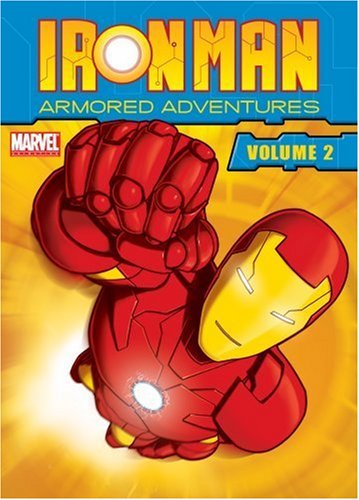
Nestled nicely between the appearance of two blockbuster, live-action films, Iron Man was been made into another half-hour animated show. In the past we have seen the origin and tales of the Stan Lee created Tony Stark and his amazing technology be altered in a 90s cartoon show, the Jon Favreau film(s), and a recent animated film, but the developers of these latest “adventures” take the furthest and riskiest leap from the original source material by making Stark a teenager, along with most all of his friends, and some enemies as best friends Rhodey, Pepper and arch enemy the Mandarin (!!!) are converted to high school chums.

Many of the original talents behind the popular Mel Brooks' spoof Spaceballs have not returned for this sort-of sequel, but its spirit of relentless parody and often corny schtick lives on. While it may not hold a candle to the original source material, this animated series has a few shining moments that will hopefully keep the diehard fans from being too offended.

One of the lesser-known, but more visible, provisions of the Obama administration's stimulus bill is the provision that there must be at least one Sandra Bullock movie in the theatres at all times, regardless of quality. So now, as Bullock collects awards for her turn in the enormously profitable The Blind Side, here is the summer's offering making its home video debut. Our heroine this time around is a deeply eccentric crossword creator whose social skills are somewhere south of Pee-Wee Herman's. Her parents set her up on a blind date with TV news cameraman Bradley Cooper. She is immediately smitten. He is immediately terrified. He heads out on the road, working with reporter Thomas Haden Church. Faster than you can say “restraining order,” Bullock takes off after him. Cue the merry cross-country picaresque chase.

Never let it be said that Sandra Bullock is anything less than gifted when it comes to physical comedy. Her amorous lunge for Cooper, brought up short by a seat belt, is one for the books, echoing the dog-on-a-chain gag from Looney Tunes. She is also very good at inhabiting characters, and she does so very well here. Too well, in fact, as she very convincingly creates a protagonist you wouldn't be able to stand being around for five minutes, let alone the 99 of the movie. Yes, the film is aware of its creepy premise, and yes, it allows a tiny (very tiny) measure of realism to squeeze into the fantasy of its finale, but for the most part, this is a flat, unengaging and unsympathetic would-be romantic comedy.

Weeds started out as something very different from the 13 half hour episodes you will find in the 5th season release. In the beginning Weeds was an offbeat look at a suburban housewife who turns to selling pot to make ends meet. It was a very whimsical change of pace from what was commonly being offered on the networks in that half hour situation comedy dominated world most of us have grown tired of. The characters were certainly outside of the general mold, and their eccentric nature made the show entertaining, if not for the masses, for a tight cult following.

But a lot has changed here, and this series has become a bad parody of itself. Nancy Botwin (Parker) is no longer that suburban housewife. Her husband is now dead, and she's taken her pot selling operation to an international level. By the end of season four, Nancy was involved with big-time drug kingpins and was operating out of Mexico. The fifth season picks right up where those chaotic events left off. Nancy is about to be killed by Esteban (Bichir) when she drops the bomb that she is carrying his child. So for most of the season she lives day to day, under guard from Esteban's thugs waiting for him to decide if and when she finds her way to a landfill. Meanwhile her sons have gotten into the family business as well. Shane (Gould) is selling pot to his high school English teacher. Silas (Parrish) has gone into the medical marijuana business with cousin Doug (Nealon). They, in turn, are paying extortion to the local chubby cop. At the same time Celia (Perkins) has been kidnapped by her daughter and her new boyfriend who is running a rebel camp out in the wilderness. They are hoping for a ransom, but the situation ends up taking a page out of O Henry's Ransom Of Red Chief, and no one is willing to pay a dime to get her back. Andy (Kirk) comes into some money but blows it on video games and the General Lee car from The Dukes Of Hazzard. Still, he tries to take responsibility and is there for Nancy, even if she does tend to just use him. If all of this sounds like a bit of a jumble, it all leads to an off-again on-again romance with Esteban who is running for public office. And it's not his murders, drug trafficking, or police corruption that is holding him back. It's his relationship with a gringo woman. Go figure. I can't.

"In the early 1930's Adolph Hitler and his inner circle became obsessed with the occult, believing that the black arts were the key to their plan for world domination. Nazi agents traveled the globe in search of ancient Nordic relics known as rune stones. They believed if they harnessed the power of these stones, nothing could stop the march of the master race. The symbols inscribed in these stones were said to describe the path to immortality. Almost a century later, the nightmare has awakened."

It is the last month-and-a-bit of Delta Company's tour of duty in Iraq. The IED disposal squad has just lost its leader, and he is replaced by Staff Sergeant James (Jeremy Renner), a brilliant bomb defuser who is also something of a loose cannon, prone to taking foolish risks. What follows is Kathryn Bigelow's best movie to date, as finger-gnawing scenes of bomb disposal and combat alternate with portraits of men's psyches being taken apart by war, both because of what happens to them, and because of what they must do.

The best Iraq war film to date is also, interestingly, fairly apolitical. It takes no real stand on the whys and wherefores of the conflict, and despite the fact that the incidents are very much specific to the situation in Iraq, the theme of the film – the toll war takes on the men who fight it – would be just as true in a WWI setting. James is an intriguing character, one that it is difficult to wholly like or dislike. He is astoundingly good at what he does, yet he puts the lives of his squad mates in jeopardy. He believes in doing the right thing, and yet, in a speech he makes to his infant son (a scene that is the most heartbreaking of the film), he shows how he has been transformed into a specialized machine, unfit for any society other than that of war. This is a powerful film, then, as thoughtful as it is intense. That intensity, however, does come at a certain cost. We are made to feel the paranoia experienced by the soldiers in the visceral way imaginable, but what this does mean is a dehumanization of the Other. The Iraqis, with very few exceptions, come across as unknowable, mysterious, sinister presences, and while this is very likely true to the experience of the point-of-view characters, it does mean that this is another war film that (inevitably, perhaps?) grants us access to the humanity (in its positive AND negative facets) of only one side of the conflict.

As a kid, I was subjected to all sorts of soap operas whether it be during the day or during the night. During the day, it was a steady stream of Young & The Restless or General Hospital. At night, it was two shows as well. The first was Dynasty, which could better be described as a Joan Collins vs Linda Evans wrestling match. Then there was Dallas: J.R. & Bobby at the forefront of oil, cattle, deceit, and general debauchery. How sweet it is.

The twelfth season of Dallas starts with the eleventh season cliffhanger. J.R. Ewing (played by Larry Hagman and Nicholas Pierce (played by Jack Scalia) get into a fight in J.R.’s penthouse. Nicholas Pierce happens to be Sue Ellen’s (played by Linda Gray) new boyfriend. Except that she is still married to J.R. Anyhow, in the struggle Nicholas goes over the balcony rail and falls to his death. Sue Ellen then picks up a gun and shoots J.R. several times before phoning the police to call in a double murder.

"Let me know when the Governor gets here."

Well, he's in the house, and I'm going to get a lot of razzing for this review of Last Action Hero. The person who thought I should see a shrink for looking forward to the next Saw film is going to be calling for my outright commitment to an institution dedicated to covering walls with nice padding so we won't hurt ourselves. I know this film is generally considered "bad" by critics and moviegoers alike. It swept the Razzies in 1993 and has since been only the kind of film 10 year olds would really like to see. Me, I've always simply loved this film. From the first time I saw it at the box office, I was hooked. It was one of the first new laserdiscs I bought back in the day, and I watched the heck out of that disc. I'm not ashamed to admit it. I love this movie.

Sylvester Stallone returned to his roots with 1993's Cliffhanger. No, I'm not talking about his iconic Rocky role here. I'm talking about his ancestral roots. The movie was filmed high in the Italian Alps to achieve many of these incredible vistas and the snow capped mountains. Believe it or not, this was June at the location, and several of the crew were stranded for a time because of a sudden and powerful blizzard.

However, it wasn't really the location along with its harsh weather conditions that caused this film the most trouble. The script was plagued from the beginning with several drafts and many writers. There were so many hands in the stew that lawsuits went on for some time afterwards, leading to several writers getting a paycheck they otherwise weren't getting. I've heard that as many as 12 people had a pass at the script in some form or another. Actor Christopher Walken was set to play the bad guy in the film but left the production just before shooting began. You will also notice that the film is dedicated to Wolfgang Gullich. Gullich was one of the best stunt climbers in the business. He did a lot of those climbs where you see a character without a harness or safety line. He managed to achieve all of this quite safely, only to be killed in an automobile accident in August of 1992, almost a year before the film actually opened. Finally, the film was forced to acknowledge that the harness which is seen to malfunction in the film’s opening scene was rigged to fail and that the actual harness was quite safe. All in all it was a troubled film from start to finish. It did get a lot of hype from Sony and went on to bring in a respectable $85 million at the domestic box office, but it was a much larger hit overseas pulling in almost $200 million. It's still considered much more of a hit in Europe than it has ever been in America.

I made a huge mistake when I sat down to watch this release so that I could write this review. It sometimes happens that one in this business must watch a series from somewhere other than the beginning. In most cases, particularly with older more traditional shows, that isn't very much of a problem at all. Once you get the premise down and learn who the important players are, you can sit back and watch without much concern at all about what you might have missed. Today, however, that is becoming a more and more difficult proposition. In an effort to increase viewer loyalty, and develop more intricate and engaging plots and show mythology, shows are getting that much harder to follow if you miss even one episode. If you've missed a season or more, your odds of understanding get that much worse. If you missed the genesis of the show, those odds slip to near zero. I made a huge mistake when I sat down to watch this release so that I could write this review. Like so many heroes in these action thrillers that have become all the rage, I decided to go up against odds that were, you guessed it, nearly zero. If you are considering watching Damages from the second season, even with the provided season one recap, you're making a huge mistake, too.

The season begins with the immediate aftereffects of the first season's big case and all of the baggage that went with it. While it's true that the case is over, most of the vital things that happen here constantly reference the events of that season. Patty (Close) is using her cut of the billion dollar settlement to start a not-for-profit foundation to feed New York City's homeless. But that foundation is just another way to flex her power. She'll willingly frame a prominent candidate for governor by setting up his daughter for a cocaine bust, just to have him and his money come crawling her way. Most of the episodes give you a short look at the ending, which appears to have a potentially fatal showdown between Patty and Ellen. The rest of the season would be nearly impossible to recount without giving stuff away. Suffice it to say that it's a never-ending series of betrayals, fortune reversals, strange bedfellows, and twisted relationships. Everybody appears to be using everybody else for their own agenda. There are no good guys. Finally, the show travels a lot in time. Each episode builds through short glimpses that take place earlier or later. It messes up your orientation, making it even harder to just drop in for a visit without having seen what occurred previously.