Genre

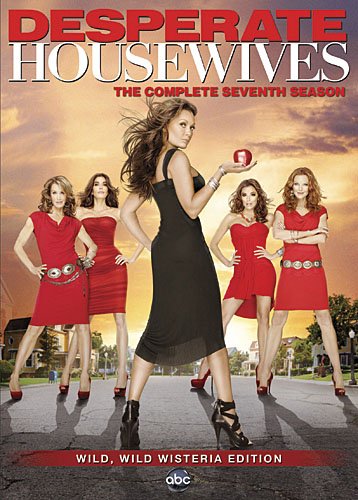
I’m going to admit from the beginning that I had a lot of trepidation going into watching Desperate Housewives. I’ve never seen the show on broadcast television, and frankly don’t know anybody who’s a big fan. The closest I ever got to any of this was the famous T.O. Monday Night Football towel incident that featured the woman from the show lusting after Owens while he was with the Philadelphia Eagles. And like Owens’ tenure with the team, Desperate Housewives was just one of those things I figured we just didn’t talk about. Certainly I’ve seen the hype, and believe, me I’m well aware of the show’s popularity. But I admit to dismissing it as something of a trendy phenomenon and more or less a “chick” show. Now that I’ve finally seen the show I guess I can see what the hype is all about, but my opinion hasn’t changed much. I still think it’s a “chick” show. Not that there’s anything wrong with that.

Eli Stone is a typical corporate lawyer. He admits to being totally self-involved and greedy, that is until he begins to see and hear things that aren’t really there… or are they. These visions appear to be connected with events unfolding in Stone’s life and seem to be leading him toward a mission of sorts. It could be helping a mother whose child was stricken by a harmful vaccine or helping a convict fight prison abuse. In the pilot, Stone discovers that he has a brain aneurism, which might account for the vivid visions he is experiencing. His mentor, Dr. Chen, has another idea. He believes that Stone is being recruited by God as a prophet to help with the world’s injustices. As viewers we’re never quite certain exactly what to believe. What we know is that, like most prophets, the situation isn’t exactly working out great for Stone’s life. He loses his hot fiancée and most of his coworkers see him as some kind of a kook. Of course, it wouldn’t make good television if these visions didn’t often come at the most inopportune moments. He could be in a meeting with an important firm client or involved in the more intimate activities when he’ll hear strange music or see fire breathing dragons. Because the visions are so realistic, Stone can’t help but react to them, even when he knows they’re not real. This leads to many of the show’s awkward moments, as that gag gets old very quickly. There’s entirely too much office romance here as well.


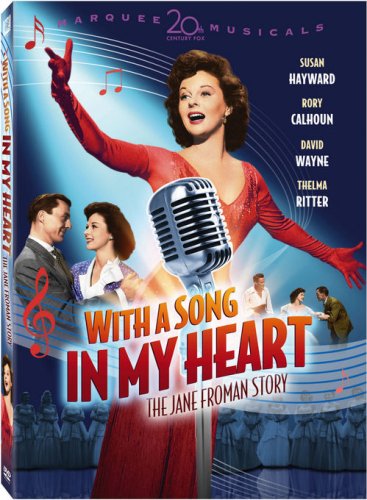
A mixture of biopic and musical, this vehicle stars Susan Hayward as Jane Froman, an incredibly popular singing star in the 40s who had to battle back from terrible wounds suffered in a plane crash after her first performance for American troops overseas during WWII. The film begins with Froman’s triumphant comeback, and flashes back to the events leading up to this. The pic is efficiently put together, and Hayward’s lip-synching (Froman dubbed in her own singing) is unusually convincing. But the crash itself is disappointingly undramatic.

Audio

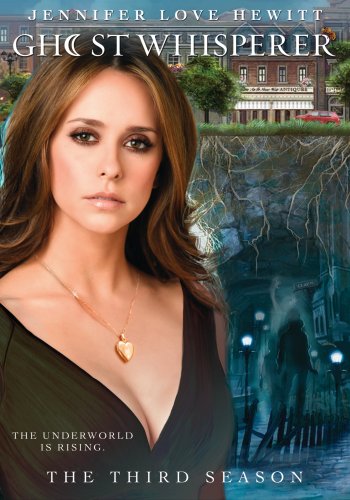
The show’s most basic premise remains intact. Melinda Gordon is a newlywed and owns the antique shop in a quaint New England town. From childhood she has had the “gift” of being able to see the ghosts of those restless departed souls unable to cross over into the great beyond. If this sounds familiar, it should. Remember little Haley Joel Osment from The Sixth Sense? Like his character, Cole, Melinda takes the responsibility of helping these spirits accomplish some unfinished earthly business so that they can move into the light. The series almost always ends with some tearjerker moments as a loved one is connected, through Melinda, with the departed friend or family member.


“You wanna be where everybody knows your name”

“Hey Hey Hey, It’s Fat Albert!”

That’s right, it’s Fat Albert. Bill Cosby invented the portly young Albert for his stand-up and album releases in the 1960’s. The character, like many of Cosby’s stories, is based on elements of his own youth. My parents were huge Cosby fans, so I had heard all about these Cosby Kids long before they hit television in 1972. Fat Albert And The Cosby Kids was an almost instant hit on the Saturday Morning cartoon menu. Unlike most of those early morning toons, this one mixed in some live action elements with Cosby himself. He acts as a host for the stories. The show was also known for its attempt to teach some kind of moral lesson with each episode. Standard lessons like it’s not cool to call someone names, or drugs are bad business, were often the week’s taglines. Cosby would accentuate the lesson himself, and usually the show ended with a song played by the Kids with their junkyard instruments that again played on the moral of the week. Cosby used a staff of educational psychologists for the show and made no apologies for the often heavy-handed lessons. Off and on the series ran for about 12 years, finally ending original programming in 1984.

Denys Arcand’s conclusion to the loose trilogy whose first two parts were The Decline of the American Empire and The Barbarian Invasions takes place in a near-future Quebec of soulless bureaucracy and nonexistent human relations. Our hero (Marck Labrèche) is a civil servant with a wife whose job leaves no time for him, two iPod-dependent teenage daughters, and a giant suburban house that is not a home. He retreats from his dead-end life into a series of fantasies which see him as hero, shiek, rock star, celebrated novelist, and so on, always with women rushing to have sex with him.

There is sour diversion here, but this is not deep satire. The jokes are hardly fresh (smokers hiding from guards and dogs). Then there’s the attitude towards women. While one might argue that the fantasy figures are precisely that, and meant to reflect the character’s problems, not the director’s, the fact that the women in the real world of the film are a clutch of castrating harpies makes one suspect that the filmmaker is rather too sympathetic to his protagonist’s worldview. Of course, there is an absolutely terrific film dealing with a weak civil servant escaping into fantasy while labouring in a future society of absurd, Kafkaesque totalitarian bureaucracy. But it’s called Brazil.

<>“This is Halloween…”

There has to be something wrong with anyone who doesn’t have at least a small soft spot in their hearts for Tim Burton’s A Nightmare Before Christmas. The film will assuredly earn its rightful place as a classic as more years roll by. The film just works on so many levels. Danny Elfman deserves as much credit as Burton here for the wickedly wonderful tunes and songs that accentuate the deviously detailed world of Halloweentown. He also provides the singing voice for Jack, reminding us a bit of his early pop roots with the modestly successful Oingo Boingo.Tim Burton is, perhaps, the only remaining A-list Hollywood director still to embrace stop motion photography. A huge fan of Ray Harryhausen and Willis O’Brien, Burton has worked hard to make sure that the art of stop motion remains unforgotten. He also pays homage to the creatures and monsters from the old Universal days. The puppets are almost caricatures of the creatures and characters we already know and love. You don’t need to look very hard to find the likes of Dracula, The Wolf Man, The Mummy, The Creature, and Frankenstein and his monster. Don’t forget the bride. The devil, so to speak, is in the details.I’ve seen the film a number of times, but there is always some little thing that I find that I simply never noticed before. This is one of those films that you really have to experience to ever understand.

NCIS is a spin-off, of sorts, from the popular military lawyer show JAG. You could say that NCIS is the Order to JAG’s Law. The NCIS is a real government agency that deals with criminal activity inside or involving the US Navy or Marine Corps. The series has an incredibly global feel and honestly looks damn good for television. Production values are high, and the location stuff is out of this world, or at least all over it.


Chris Rock has been one of those comedians that either hits a home run or strikes completely out. I’ve seen quite a bit of his stand-up and found I loved it or hated it. He’s not afraid to play the race card. Hell, Chris plays the whole dang deck at times, and Everybody Hates Chris is no different. The comedy is based, loosely I’m sure, on the young adolescent life of Chris Rock. It’s a black comedy that will bring back memories of those 1970’s shows we all watched as kids. Like Good Times and even Sanford And Son, the show is loaded with stereotypes. All of the white characters are bumbling fools who are often played as racists themselves. Chris’s school teacher, Mrs. Morello (Mazarella), is the most obvious example. She’s constantly trying to talk “hood” with the boys and making politically incorrect observations loaded with outrageous clichés. Of course, it’s all in fun and if you’re willing to overlook the often sensitive language and plots, you’re in for some laughs along the way. I like that the show never really takes itself seriously and challenges the viewer to simply lighten up. Basically, this ain’t no Cosby Show.