Genre

“Who? Or What is the newest, most breath-taking, most sensational super-hero of all?”

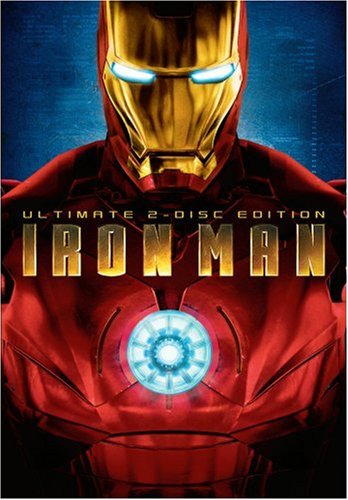
That was the question asked on the cover of Marvel’s Tales Of Suspense issue number 39. Pictured with that buildup was a character quite different from the Iron Man that we would come to know and love over the next 40 plus years. He was all silver and appeared to be wearing combat boots. He was not very slender, and you could almost hear the clunking as he moved. By the next issue he was gold colored. By Issue number 48 of that same series, the new and improved Iron Man look would appear for the first time. He was sporting the red and gold colors that would be relatively unchanged for decades. Certainly the suit evolved over the years, but Iron Man’s basic design was born. It was December, 1963. In issue 53 the book would begin to incorporate the name of Iron Man into its front page header. Finally in May of 1968 Tales Of Suspense gave way to The Invincible Iron Man. The hero would often be teamed with the likes of Captain America and The Hulk. The Marvel universe was extremely fluid, and characters often crossed over into other books. The ultimate result would be the Marvel Avengers book, which was an answer to DC’s Justice League. It didn’t come as any surprise that Iron Man would be a founding member of the team. His alter-ego Tony Stark would become the all important finance, weapons, and gadgets supplier to the group.

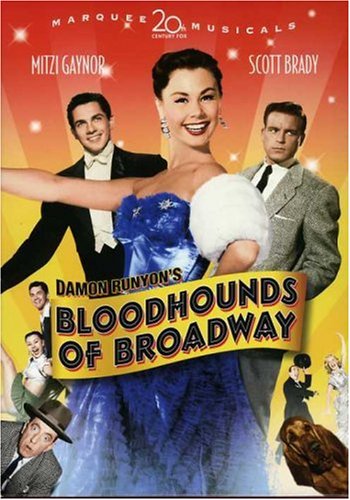
Damon Runyon’s stories would most famously make it into musical form in 1955 with Guys and Dolls. But in the meantime, this 1952 effort featured many of the same sorts of characters – wise-cracking-but-harmless gangsters and their glamorous molls. Here, Numbers Foster (Scott Brady) hightails it out of town to avoid a Congressional hearing, and on the way back, he picks up country songbird Emily Ann Stackerlee (Mitzi Gaynor), much to the displeasure of New York girlfriend Yvonne (Marguerite Chapman). Heavier on plot and lighter on numbers than some other musicals of the period, this is a jovial effort, but understandably in the shadow of its more famous cousin.


Audio

Shonda Rhimes had a big hit on her hands with Grey’s Anatomy, so after five years she did what comes naturally in her situation. You spin the success off in the hope that the fans just can’t get enough in just one night. At first it appeared to me she had chosen the wrong character to put out on her own. I mean, I never considered Kate Walsh as Addison to be one of the show’s more compelling characters. The show was presented as what the business calls an imbedded episode on Grey’s. What that means is that the situation is set up during one of the original show’s episodes. In this case a two parter called The Other Side Of Life. The idea is that you want to be sure that your existing show’s fans at least watch the pilot in the hope that they will consider it a part of their beloved series. I got to watch that episode when I was called upon to review the fifth season of Grey’s. I was new to the whole universe, so I believe I was able to approach the spin-off more objectively. To tell the truth, I didn’t like it at all. And so I considered Private Practice to be doomed even before I saw the first stand alone episode. That wasn’t boding well when I received this truncated season one set to review recently. True, I had warmed up to Grey’s by then, but I was still a bit put off by the new show. I watched it anyway.


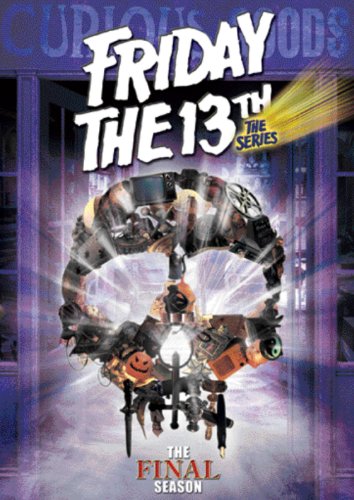
If you come to this DVD set in the hopes of discovering something to do with Jason or even his machete wielding momma, you will be very disappointed. There is no Camp Crystal Lake, and no one’s wearing a hockey mask. The fact is that this series, syndicated from Canada, had absolutely nothing to do with the film franchise. They have no characters in common. They have no connection to the stories in the film franchise. Basically the name is the only thing they share.


It was the best of times. It was the worst of times. No, I’m not having a Charles Dickens flashback or reliving Star Trek II. I’m pondering the release of this new Fan Collective featuring alternate realities. This new 5 disc collection brings together episodes from all 5 live action television Star Trek shows. They all deal with some adventure into a twisted or fabricated reality outside of the Trek universe we already know. Of course, that covers a lot of ground when you’re talking about Star Trek and the over 700 hours of television these shows have combined to produce. The show was always out stretching the boundaries of reality. Still, I guess someone had to pick out a small enough group of episode to fit on a tidy 5 disc set. How did they do? The answer is mixed.


To the point, Criminal Minds is very compelling television. Ever since The Silence Of The Lambs and perhaps long before, we have been fascinated by serial killers and the profilers who try to get inside their heads. To see evidence of the continuing trend, one needs only look toward the success of films like Zodiac and shows like Dexter. Of course, serial killers are not the only prey this FBI team pursues, but they are certainly the marquee item on the agenda. To be sure, there are equally disturbing subjects such as arsonists, bombers, kidnappers, and rapists to give the show a touch of variety, but let’s face it, it’s the killers that keep us tuned so attentively to Criminal Minds.


The Alvin Collection is another group of episodes of The Chipmunks from their popular Saturday Morning series, Alvin And The Chipmunks. The shorts are not theme related as some of the other recent sets have been. The stories range from the film inspired Romancing Miss Stone to the globe trotting episodes like Maids In Japan or The Curse Of The Lontiki. They aired originally between 1983 and 1987, but many of them have sprung up in syndication up to the present day. There are 14 episodes in all, lasting a little over 20 minutes each.


Duckman began life as an underground comic created by Everett Peck. It gathered to itself quite a cult following, and like all such things caught the attention of Hollywood. The USA Network took a chance on the quirky property and cast Seinfeld’s Jason Alexander to voice the crude character. And so Duckman’s wife was killed, and he was forced to rent his own house from his sister-in-law who was left the estate by Duckman’s wife. His life pretty much sucked. Not only was he renting in his own house, but he was also living with his overbearing sister-in-law and his grandma, who basically just sat around and farted all day long. Duckman considered himself an ace private detective and ran an agency with his partner, Cornfed. Cornfed was voiced by Gregg Berger and was a Jack Webb Sgt. Friday clone. He was the actual brains behind the partnership. Crimes either got solved because Cornfed solved them or Duckman literally stumbled into the answer.His conscience would be found in two talking teddy bears he kept at the office, Fluffy and Uranus. Like Kenny on South Park, the bears would often meet grisly demises, only to return again in the next episode as if nothing at all had happened. Women, particularly damsels in distress, were often depicted as large breasted and somewhat dimwitted. Most of the humor was decidedly adult. It was not a cartoon intended for children.


It’s unfortunate that the writers’ strike interrupted the second season of Brothers & Sisters. I was looking forward to finding out if the writers were going to live up to the amazing on camera talent they had speaking their words. What I found was pretty much more of the same, and a quickly eroding patience with the series. I guess the writers had a little more on their mind this year. More’s the pity.


The Godfather films changed storytelling forever. Films before that time, mobster or otherwise, had some very simple but unshakable rules. There was always a fairly clear distinction between the good guys and the bad guys. The good guys always win in the end, and the bad guys always succumb to justice before the final credits. For perhaps the very first time, we were given characters that we knew in our souls were evil men. They killed. They broke laws. They manipulated everyone around them through fear and terrorism to bend to their wills. Somehow, now they are the film’s core heroes, if you will. When Vito is shot, we cheer for Michael, who discards his contempt for his family’s criminal image and comes to his father’s aid. Suddenly this wasn’t just about a gang of mobsters. This was a story about a family. Most of us can’t relate to the mafia ins and outs, but we all have fathers, and even when we dislike what our fathers represent, we will more often than not come to their aid if they’re being threatened. This unique morality paved the way for an entire genre of such characters today. There just couldn’t have been a Tony Soprano or Vic Mackey without The Godfather. While there were certainly protests from aspects of the Italian-American community decrying the violent way our ethnicity was portrayed, most of us from that community saw more than violence and Mafioso. If you’re from an Italian family, you simply can’t help recognizing aspects of your own family in the Corleones. I could see my own grandfather in Vito, sans the mob boss occupation. Many of us took away the strict codes of honor and respect that drive Italian-Americans to this day in very normal lives. We’re a very passionate people, even if most of us are not part of an organized criminal element.