Genre

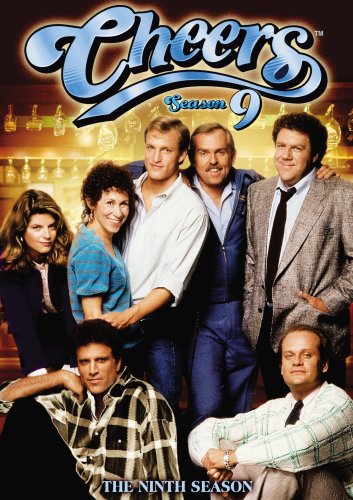
Cheers was that kind of place that songs have been written about. Billy Joel’s Piano Man describes such a place where the patrons are, for the most part, regulars and pretty much family. In the days before huge screen televisions and satellite networks, Cheers would likely have been considered a sports bar. In those days the sports was more the talk of the place and not merely gathering to watch 127 games at a time. The bar’s owner was Sam Malone (Danson). Sam was a washed up baseball player for the local Boston Red Sox. He was a pitcher who liked to drink a bit too much. So, what does he do? He buys a bar. Actually the character has kicked the drinking and is always seen sporting a bottle of water. At first his bartender was his old baseball coach, until Nicholas Colasanto passed away after 3 years. Coach was replaced by Woody, played by Woody Harrelson. Woody was a farm boy with naiveté and small town charm reminiscent of Radar from MASH. His innocence was often the butt of the jokes. In a strange coincidence, the show’s popular theme song, performed by Gary Portnoy, sounded a lot like Harrelson’s voice, and for years it was believed by anyone too lazy to read the credits that Harrelson sang the tune. The barmaid was Carla, played by Danny DiVito’s wife Rhea Perlman. She reminded us a lot of her husband’s Louie character from Taxi. She was abrasive, sarcastic, and more than willing to kick a guy when he was down. She had a soft spot for Sam, however, and was often protective of him. Kirstie Alley played Rebecca Howe, an on again off again romantic interest for Sam and also on again off again owner of Cheers in later years. She replaced Shelly Long who played Sam’s romantic interest and barmaid Diane for the first half of the show’s run. The steady customers offered most of the stories for Cheers. Cliff, played by John Ratzenberger, was a postman who spent more time nursing a beer than actually delivering the mail. He often joked about how hard it was to fire a civil service employee. He was a knowitall and too often bored his comrades with longwinded explanations for even the simplest concepts. His best friend was Norm (George Wendt). Norm was one of the more popular patrons, greeted with shouts of “NORM” whenever he entered the bar. He sat in the same stool, usually griping about his life but unwilling to move off his seat and actually do anything about it. He was married to an unseen wife who worked while he loafed at Cheers. Finally Kelsey Grammer played psychiatrist Dr. Frasier Crane. You might recognize that character the most because he got his own show after 9 years on Cheers which lasted another decade. Frasier was the elitist who acted superior to the others but deep down just wanted to be one of the guys.


I was just a kid when Laverne and Shirley became a successful spinoff from Happy Days in the 1970’s, and while I remember that it was on often in our home I could not have recited any episodes from memory. Like most of my generation, I remembered the enigmatic opening rhyme from the show’s opening segment, and like most kids then I couldn’t pronounce it and still can’t; don’t even ask me to spell it here. The Cyndi Grecco saccharine ballad was a hit for a while, playing far too often during the summer pool months.


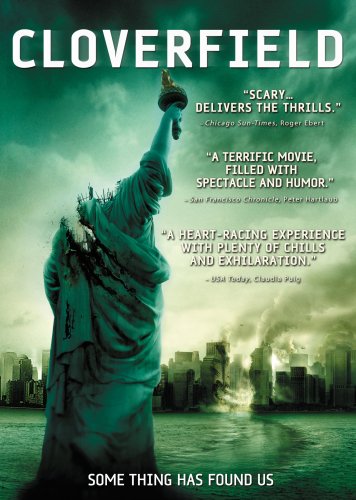
Does ultra realism make for a better movie? There have certainly been examples of startling realistic moments in cinema that have been quite effective, but mostly because they create an experience for us that actually reaches us in a way that we’ll never be able to forget. The storming of Normandy in Saving Private Ryan was one such incidence. Those of us who have never been to war walked away from that scene feeling like we’ve now experienced the closest thing possible without actually being there. It was the kind of movie moment that brought tears to men who had really been there. That’s the kind of visceral moviemaking J.J. Abrams might have been hoping for when he made Cloverfield.

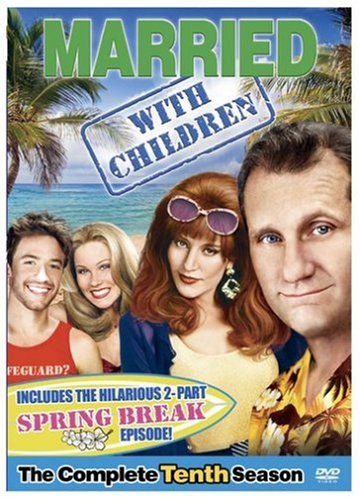
Love and marriage, love and marriage, go together like a horse and carriage, this I tell your brother; you can't have without the other... Chances are if you know this song by heart, you have watched a lot of episodes of Married with Children (or you adore Frank Sinatra ). The Bundys are back for their eighth season of marital hijinx. Once it was just a random trivia question about one of the shows that was first on the little known Fox tv channel (Tracey Ullman and Garry Shandling are two others by the way). Later, it went on to be one of the network's greatest early hits and out lasted almost everything except the Simpsons. So would another twenty six episodes of crass sarcasm and dysfunctionality dilute the product or just keep the laughs coming?


The seventh season of Married with Children had introduced us to an unpopular character known as Seven. This character was written as a way to give the Bundys a third child. However, by the eighth season the character had been written off mostly as a failed experiment. The character would later be referenced in later shows as classic wink-wink jokes to those who closely followed the series but nothing more. The eighth season was more of a return to form for Al (played by Ed O'Neil), Peggy (played by Katey Sagal), Kelly (played by Christina Applegate), and Bud (played by David Faustino) Bundy. Peggy tries to make a free-throw for cash and keeps trying to find ways to make marriage bliss with Al. Bud discovers his cool factor in an episode and suddenly becomes a love machine, at least in his own mind. Kelly is still trying to land a sports celebrity or fill up her brain with useless trivia to win a game show. Then there is Al, who spends episodes starting up clubs against women (No Ma'am) or getting his old Dodge up to the one million mile mark.

Imagine Sheriff Andy Taylor older and now an attorney, and you pretty much have the set up for Matlock. Forget for a second that both characters were played by Andy Griffith. That’s not all they have in common. Matlock is every bit the “southern gentleman” that Taylor was. He might be a little smarter, but he walks and talks like Andy Taylor.


Wings was one of those unusual sitcoms that depended more on the characters than the situations they were in. While the setting was a small Nantucket airline owned by two brothers, most of the episodes had very little to do with flying. Rather, the writers populated this small airline with very distinctive personalities and let these interactions be fodder for the funny. The characters were played by more than competent actors, many of whom have proven themselves beyond this quaint sitcom. Timothy Daly played Joe Hackett, the older, more responsible brother who was often the show’s straight man. His rather adolescent sibling Brian was played by Steven Weber. I wouldn’t exactly say this was Oscar Madison and Felix Unger, but their conflicts over maturity fueled the characters. The airline’s love interest was Helen Chappel, played by Crystal Bernard. She was an aspiring symphony cellist who worked the airport’s lunch counter. For much of the show’s run she had an on again off again romance with Joe. By far the most animated character was mechanic Lowell Mather, played by Thomas Haden Church. It’s still amazing to me that this rather unintelligent character was played by the same guy who brought us Sandman in the latest Spider-Man film. Finally there was cabbie Antonio Scarpacci, played by the current Adrian Monk, Tony Shalhoub. Antonio is an Italian immigrant who has trouble understanding things most of the time, leading to some of the better moments in the series. Fay, played by Rebecca Shull, is the mothering member of the cast. And Roy Biggins (Schram) runs the rival airline and is often engaged in one underhanded scheme or another.


As we know by now, Dragon Dynasty is the Criterion of Kung Fu movies. They take any Kung Fu movie, clean up the audio and video where needed and provide a slew of extras for us to enjoy. From featurettes to commentaries with expert Bey Logan, it always provided the Hong Kong kung fu fans with a presentation second to none. However, as with Criterion classics, the movie isn't always second to none.

Kong Ko (played by Wu Jing (Jacky Wu))was a member of the National Kung Fu Team. He now spends his off time at an opera house performing for the folks a blend of descriptive dance and his fancy moves. A group of thugs come in one night and try to recruit the young warrior to fight in the underground fighting circuit they take care of. At first Kong doesn't wish to participate. However, his co-worker/love interest Siu Tin (played by Miki Yeung) convinces him otherwise after striking a deal with the circuit gang.

Dance movies can be interesting especially when it involves hot sweaty bodies and bodacious moves along a club floor. Did I just say bodacious? "Pauly Shore is on line one, please pick up the white courtesy phone". I'll ignore that for now. Dirty Dancing or Footloose are great examples. Some should be drag into the street and shot. I knew that Feel the Noise looked bad the minute I looked at the cover. What was that clue on the cover you might ask? Produced by Jennifer Lopez would be a very good start.

Rob Vega (played by Omarion Grandberry)is a straight up hip-hop rapper who gets shot at one night while he's trying to perform. His mother decides to send him off to Puerto Rico to live with his father Roberto (played by Giancarlo Espositio)and his family. There he meets his half brother Javi (played by Victor Rasuk) and is introduced to Reggaeton, music that blends Reggae and Hip-Hop. The two team up for a single and eventual album as Rob tries to peace back a normal life which eventually leads him back to his home in New York where he has to face his demons.

I couldn’t find her name anywhere on the credits, but I simply cannot believe that Rosie O’Donnell didn’t have anything at all to do with the film Conspiracy. The film is a thinly veiled pot shot at the current administration, or at least Dick Cheney. Gary Cole plays a guy named Rhodes, who is really intended to represent Cheney. Rhodes controls a multibillion dollar corporation that has managed to set itself up in Iraq making millions from the war thanks to corrupt government officials. His company, Halicorp, is obviously intended to be Haliburton. Rhodes has also taken control of a small Arizona border town. Here his vigilante friends patrol the border, turning back, and even killing, Mexicans attempting to enter the United States. He justifies his deeds in the name of counterterrorism, but the truth his he holds the entire town in fear. Enter MacPherson (Val Kilmer) who recently lost his leg in the Marines in Iraq. When he returns home he comes to Rhodes’s town looking for a Mexican comrade in arms. He finds that there’s no trace of his friend, and his questions have drawn all the wrong kind of attention. After some rather silly plot developments, MacPherson becomes a one man army to challenge Rhodes’s control. Apparently someone has watched Clint Eastwood’s Pale Rider one too many times here. Now Kilmer has grown old and rather obese in recent years, so the film needs to take that into account with his fighting style. After all, no one’s going to believe he’s got any real fight in that couch potato body. He wins his fights mostly by being able to duck really well. And returning a bowl of chili he recently ate on someone’s shoes. Figuring that Eastwood scowl was already done, Kilmer appears to be half asleep during each fight. I know I was. He does pack a mean nail gun, and you should just see what he can do with some rolled up paper. When they finally do put some real fire power in his hands, the rest just gets too comical.


Still grieving over their father’s death, two sisters – the outgoing Dagmar (Stefania D’Amario) and the neurotic, antisocial Ursula (Barbara Magnolfi) – check into an out-of-season hotel. They are almost immediately immersed in a tangled web of relationships and betrayals involving the hotel manager, his estranged wife, a lounge singer and a drug-addicted patron. At the same time, a series of gruesome sex slayings gets underway.

Writer/director Enzo Milioni’s first film is a clumsy giallo. The elements are all there – psychosexual delerium, black-gloved killer, beautiful cast. So too is the aura of misogyny that haunts so much of the genre – the killings here all involve lethal penetration, and while the murders are generally dealt with relative restraint (a hilarious shadow of a looming erection followed by fade to black), there are, late in the film, a number of particularly tasteless shots of naked victims with bloody crotches. Charming. The ineptness of the filmmaking, however, robs these moments of much of their power: the sex scenes are dull and saddled with the same irritating score every time; the editing is rife with nonsensical cutaways (one of which unintentionally suggests that a dog has been masterminding a drug deal); and the story is so choppily told that characterization varies between the risible and the nonexistent. Add to this a resolution that even the most casual viewer of gialli will see coming a mile away, and you have a pretty weak entry. And yet, for all that, there is that delicious ineffable whiff of 70's Italian exploitation that makes even the weakest entries plenty of fun.