Sci-Fi / Fantasy

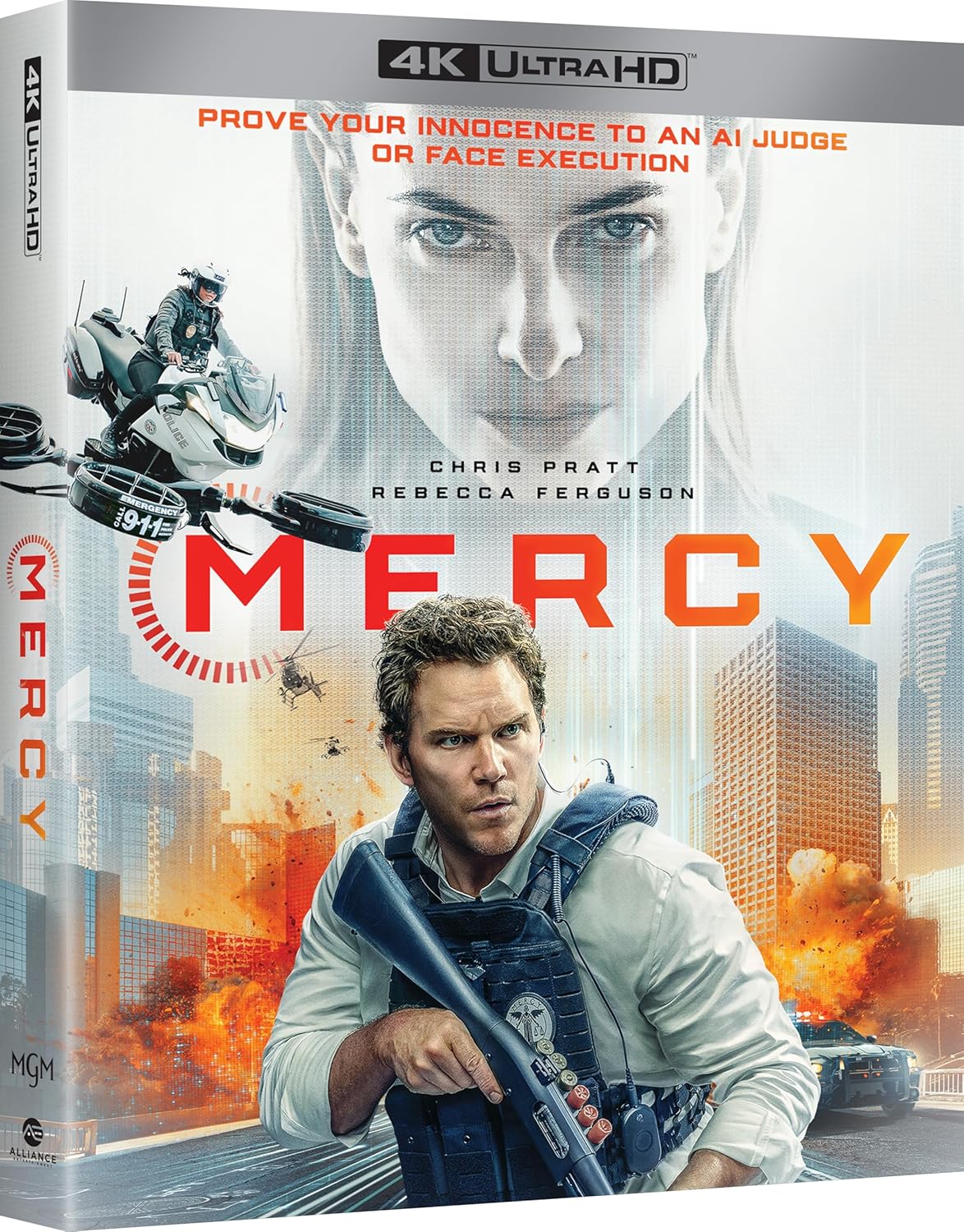
“We just did what we're programmed to do. Human or AI. We all make mistakes ... and we learn.” 

This film feels like what would happen if Minority Report and Source Code had a baby. Chris Pratt and Rebecca Ferguson give it their all, and while the film can be exhilarating at times, it wasn’t a mind-blowing experience. The premise is as follows: in the not so distant future (2029 to be exact), Los Angeles establishes Mercy Capital Court in response to a surge in crime using artificial intelligence (AI) judges to try defendants for violent offenses. To assemble evidence, all devices are registered to the municipal cloud to allow the AI judge to pass judgement. The AI judge also gives the defendants all available resources to find and provide all the evidence needed to prove their innocence in 90 minutes or be executed via a sonic blast. Pratt’s character finds himself in that very predicament, facing execution for the alleged murder of his wife. Rounding out the cast is Rebecca Ferguson as the A.I. judge passing judgement, Annabelle Wallis as Pratt’s character’s deceased wife, Kenneth Choi, and Chris Sullivan.

“Stop filming me!” 

Interestingly enough, this 2025 remake/adaptation is a more faithful reproduction of its source material than the 1987 version. The 1987 adaptation, while popular, took liberties when it came to the main character’s backstory and motivations, such as him being a wrongfully accused and convicted policeman who gets his shot at freedom by participating in a TV game show where convicts called Runners must battle killers for their freedom. In the 2025 remake, Ben Richards, now played by Glen Powell, is a blacklisted blue-collar worker living in dystopian anarchistic police state with his wife and infant Cathy. Unable to afford medicine for Cathy's influenza, Ben attends tryouts for the network's game shows, where his anger, misanthropy, and physical fitness see him selected for "The Running Man", their most popular and dangerous show. That backstory is much more in line with the 1982 Stephen King novel. Rounding out the cast are Josh Brolin, William H. Macy, Lee Pace, Michael Cera, and Colman Domingo. Arnold Schwarzenegger even makes a surprise appearance. It’s quick, though. Blink and you could miss it.

"Imagine, a world without, murder. 6 years ago, the homicidal rates had reached epidemic proportions. It seemed that only a miracle could stop the bloodshed, but instead of 1 miracle, we were given 3, the precognitive. Within 3 months of the precrime program, the homicidal rates in the District of Columbia had reduced 90 percent. 6 Years in the precrime program, and there hasn't been a single murder. Now, the system can work for you. We want to make sure that this great system is what will keep us safe will also keep us free. On April 24, vote yes on the national Precrime initiative."

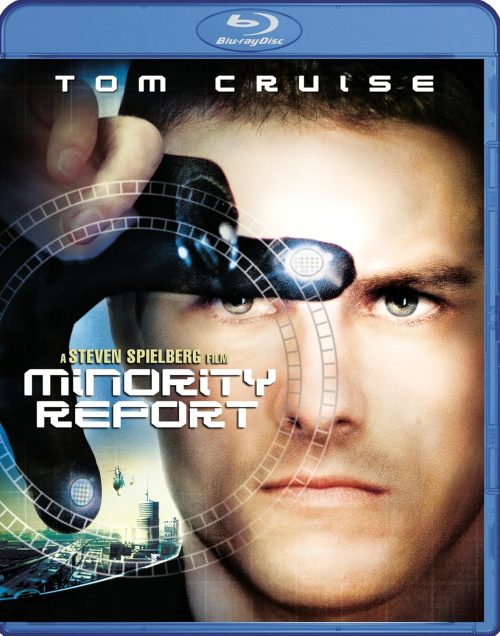
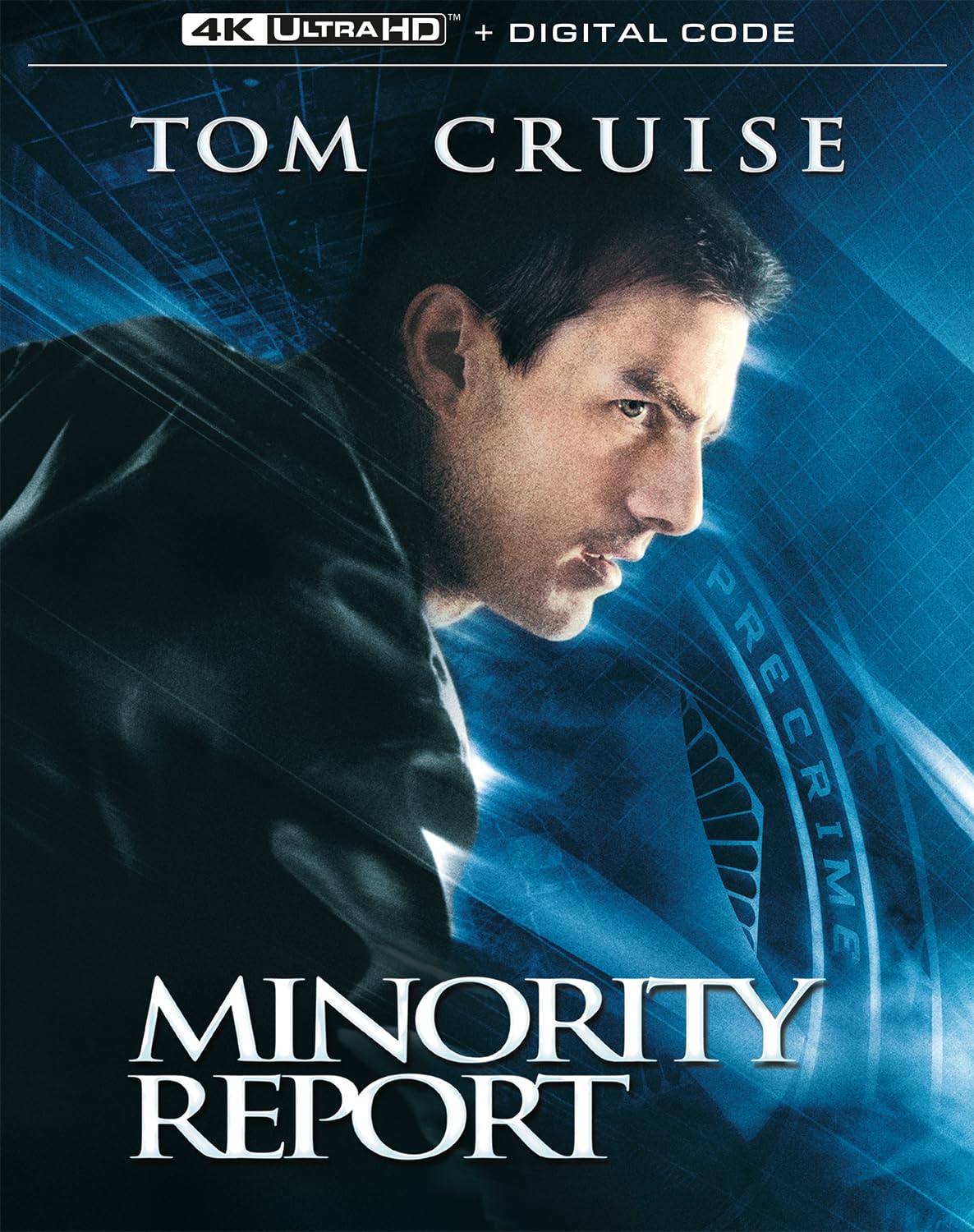
From the mind of Philip K. Dick there was a rush of box office gold that lasted several years. His Do Androids Dream Of Electric Sheep came Bladerunner. From We Can Remember It For You Wholesale came Total Recall... twice. After the first Total Recall there was plans of using Dick's The Minority Report as a sequel. The stories are unrelated but there was a script prepared and somewhere along the way the film got tabled and sat unproduced for decades. It wasn't until both Steven Spielberg and Tom Cruise took an interest in the project that the script was dusted off and taken for a spin. But there had been too much time since Total Recall and so screenwriters Scott Frank and Jon Cohen decided to return to the source material and create the stand-alone movie that would become Minority Report. It was the first time one of Dick's stories would make it to the screen with at least a version of the story's actual title. These guys just added the requisite The and the story was now ready for prime time.

"Imagine a world without murder. Six years ago, the homicidal rates had reached epidemic proportions. It seemed that only a miracle could stop the bloodshed, but instead of one miracle, we were given three, the precognitive. Within three months of the precrime program, the homicidal rates in the District of Columbia had reduced 90 percent. Six years in the precrime program, and there hasn't been a single murder. Now, the system can work for you. We want to make sure that this great system that will keep us safe will also keep us free. On April 24, vote yes on the national precrime initiative."

From the mind of Philip K. Dick, there was a rush of box office gold that lasted several years. From his Do Androids Dream Of Electric Sheep came Bladerunner. From We Can Remember It For You Wholesale came Total Recall ... twice. After the first Total Recall, there were plans of using Dick's The Minority Report as a sequel. The stories are unrelated, but there was a script prepared, but somewhere along the way the film got tabled and sat unproduced for decades. It wasn't until both Steven Spielberg and Tom Cruise took an interest in the project that the script was dusted off and taken for a spin. But there had been too much time since Total Recall, so screenwriters Scott Frank and Jon Cohen decided to return to the source material and create the standalone movie that would become Minority Report. It was the first time one of Dick's stories would make it to the screen with at least a version of the story's actual title. These guys just added the requisite "The", and the story was now ready for prime time.

"Some called Bregna the perfect society. Some call it the height of human civilization. But others know better. The Goodchilds built Bregna to ensure us a future. They built the Relico, a memorial to remind us of what we've survived. They built walls to protect us. They tell us that outside, nature has retaken the world. But the real problems lie within. We are haunted by sorrows we cannot name. People disappear, and our government denies these crimes. The Goodchild regime provides for us, as long as we stay quiet. So we trade freedom for a gilded cage. But there are rebels who refuse to make that trade, who fight to overthrow a government that silences us, who fight in the name of the disappeared. They call themselves the Monicans. I am one of them."

It all started as the brainchild of Peter Chung. It was an adult anime series that aired on MTV from 1991 to 1995. The series looked at a dystopian future where all kinds of "beings" existed, mostly from the practice of too much cloning, which eventually led to mutants and other strange creatures. In this dark future, humanity has fallen to basically two city-states . In Bregna, a scientist-dictator named Trevor Goodchild appears to rule with an iron thumb. They are the blood enemies of the other settlement, Monica. The animated series attempted to take on some highly philosophical themes, and the series was very stylish, calling from both anime and early German Expressionism. While not a huge hit, the animated shows drew in a very loyal following, and it wasn't long before that material would find itself as a live-action feature film. Unfortunately Peter Chung did not have a ton of input, and wasn't a fan of the result. The box office numbers were dismal, and any plans for a film franchise pretty much died in 2005 with the release of Aeon Flux. Now the film celebrates its 20th anniversary with a UHD Blu-ray (4K) release.

"That is where you've always been wrong about me, Lex. I am as human as anyone. I love, I get scared. I wake up every morning, and despite not knowing what to do, I put one foot in front of the other, and I try to make the best choices that I can. I screw up all the time, but that is being human, and that's my greatest strength. And someday, I hope, for the sake of the world, you understand that it's yours too."
I'm much more of a Marvel guy than a DC guy, but there are great characters and stories in both cinematic universes. DC pretty much invented the entire idea of a superhero when two young guys in New York came up with a new idea back in the 1930's. When Superman was first introduced to us, it was in Action Comics #1 back in 1938 from the writer Jerry Siegel and the artist Joe Shuster. Since then the character has become a cultural phenomenon that’s been featured in just about every form of media from radio shows, TV shows, cartoons, movies and everything else in between. The character has evolved quite a bit since those early comic book days, and one of the character’s biggest evolutions came with the Max Fleischer cartoon series. But it wasn't until Richard Donner and Christopher Reeve convinced us that a man can fly in 1978 that Superman truly conquered the world of cinema. Since then DC had another huge win with the Tim Burton and Michael Keaton Batman films about 10 years later. With that kind of a head start, you would think that the DCU (DC Universe) would have left Marvel in the dust. I mean, for decades Marvel couldn't even make the stuff themselves, because they didn't have the studio connection like DC has had with Warner Bros. for decades. Yet the Marvel films have progressed through six phases of films and have dominated the film superhero world.
It didn't help that when Zack Snyder took over, he created this dark place where Superman was a brooding character. Superman was never that in the comics. He was the eternal optimist with a "golly gee" manner that made this almost-invulnerable super-being relatable to the little guys like us. DC has decided to erase the franchise and start over with James Gunn and Peter Chiappetta. Gunn is really the man in charge, and their brand new DCU starts with the 2025 film Superman. He has certainly changed directions, but the question for me remains: did you go too far? Judging by the box office take, I'd say he might have won the fans over. Now that Superman is out from Warner Bros., with this UHD Blu-ray 4K release you can decide that for yourself. Let me be your guide.
James Gunn absolutely got the first part right. Thankfully, a new universe and Superman franchise doesn't start with an origin story. We all know that Krypton blew up and the planet's leading scientist sent his infant son to Earth in hopes of his and the Krypton race's survival. We don't need to see it again. With the likes of Marlon Brando and Michael Shannon putting their imprints on Jor-El (Supe’s Pops), no one is going to do it better. I don't need to see Bruce Wayne's parents killed over and over again. I'm tired of watching Peter Parker get bitten by some messed-up spider, and James Gunn correctly assumes that we don't need to see that story yet again. That's a win in the Gunn column.
The film begins about three years since Superman/Clark Kent (Corenswet) has made himself known in Metropolis. He's already dating Lois Lane (Brosnahan), who already knows who he is. So Gunn saves us from another tired Superman film trope of him just barely staying one step ahead of his Pulitzer prize-winning partner. That's two for Gunn. In fact, after we see Superman after he got his behind kicked and saved by Krypto and his squad of robots, one of the best scenes in the film is this honest and candid exchange between Clark and Lois at her apartment. I'm not into the whole romantic screen stuff, but there is absolutely a dynamic here that sets the playing field and establishes the kind of chemistry these two characters just have to have. As much as I love Chris Reeve's version, I did not feel the chemistry between him and Margot Kidder That could be because the actress turned out to be bat-crap crazy. I'm not sure about that one. But here Gunn made good choices in his cast. I'll give him a half point here and explain later.
What is a superhero without a supervillain? Gunn did go for the obvious path here and, once again the bad guy is Lex Luthor (Hoult). They already hate each other, and Lex, again of course, has been plotting to defeat the Man of Steel. This time he intends to ruin his reputation. Luthor manipulates Superman into "invading" another country and using it as an excuse to unleash his havoc on Metropolis. There are stories of pocket universes and a series of henchmen characters, and we know Superman will win the day. The story is fine, if not a bit overcomplicated by the inclusion of too many central characters. Some of these, however, are quite good.
Great Caesar's ghost. If you're a fan of The Wire you know who Wendell Pierce is. Gunn cast Bunk as the Daily Planet's editor-in-chief (but don't call him chief). He's terribly underused here, but that's the problem when you have so many characters that you are trying to be faithful to. Gunn uses them all. Only the comic fans know who Steve Lombard (Bennett) is. He brought over Otis (Rosemore) and Miss Teschmacher (Sampaio) from the Donner films, and you have to have Superman's pal, Jimmy (Gisando). He also uses the film to introduce sometimes-bad-guy, sometimes-good-guy Metamorpho (Carrigan). He also plants the seeds of the eventual Justice League who go by the Justice Gang right now by giving us the first feature film versions of Green Lantern and all-around pain in the butt Guy Gardner (Fillion). He imagines himself the "guy" in charge, and Fillion is the perfect choice to play him, and I liked him even with the classic comics bowl haircut look. Maybe this is another half point, OK? We get Hawkgirl (Merced) and a really dynamic version of Mr. Terrific (Gathegi), but the problem is none of these characters have more than a few minutes to shine. There are a ton of other "Easter egg" characters and elements, but the film's own kryptonite is that it's too much all at once. There's even Krypto, and I'm taking away a point here, because Gunn decided to use the design of his own dog instead of his classic white shepherd look from the comics. I mean, come on, James. You pay attention to the details of Guy Gardner's haircut, but you turn Krypto into a yip-yip dog? Yeah. OK. A yip-yip dog with superpowers.
In tone the film reaches for camp more than dark and serious, which is fine with me. The Donner films were loaded with camp. I will admit it's a promising beginning, but if I could say one thing to the new DC boss: slow down your roll. You can't catch up to Marvel in a single movie. Give it time to evolve. If you load so many elements into each movie, it won't matter how well-cast they are, and these really are. The pace is almost manic because it has to be, and I suspect there's a 4-hour version of it out there somewhere. Cue The Gunn Cut.

Superman is presented in its original but odd aspect ratio of 1.90:1. The ultra-high-definition 2160p  image is arrived at by an HEVC codec with an average bitrate of 75 mbps. This is a very colorful film, and that's quite appropriate for a comic book movie. The HDR/Dolby Vision allows for wonderfully vivid and bright reds and blues, which are crucial to the character. I'm particularly impressed by the white levels here, as much of the film takes place in the Arctic, although filmed all the way south in the Antarctic. It was a really good idea, because the snow and ice textures are pretty good here. That also means it's a little too easy to spot the moments where the environment is not at least completely real. Still the f/x blend quite nicely an issue Marvel has been fighting in recent releases. Contrast wins the day with solid delineation between bright and inky black elements. Sometimes the film is a little too glossy. I also loved the contrast of the warm colors of Lois's apartment against the frigid cold colors of the Arctic. It's close to a show-off piece for your setup.

"I can guarantee your safety ... more or less." 

Some things cannot be beat, and they sure as heck can't be repeated. An old vintage cola commercial used to tell us, "Ain't nothing like the real thing, baby." And Jurassic World Rebirth is going to do anything it can for 134 minutes to try and tell you that isn't true, but we know better, don't we? Anyone who has seen the original Jurassic Park has their favorite moments, but one scene has always stood out for me and so many other film fans I've spoken to. When the camera pans to that peaceful swamp pasture and you see tons of dinosaurs walking about without a care in the world. If you didn't know how to react there, Sam Neill as Dr. Grant showed you how. His expression matched ours, and it was a wonderful cinematic moment of magic and wonder. You can never repeat that ever again. No matter how many Jurassic franchise movies or any other dinosaur movies might attempt to bring you that single moment, they never will. And that's OK. There are moments in Jurassic World Rebirth were it is quite obvious that director Gareth Edwards attempts to repeat that moment. He telegraphs it particularly in a scene where we get a wide shot of dinosaurs and we hear that old John Williams theme, and Edwards is pulling hard on our heartstrings. Sorry, Gareth. It didn't happen for anyone there. It's not your fault. You did everything right. But, you see, Steven Spielberg already took us there, and we will never have it again, but truly, man, thanks so much for trying. You did deliver the best of the Jurassic World films and the best franchise film since the original. You're just going to have to settle for that.

"I'm not feeling motivated to be valuable to anyone but myself."

When Alex Kurtzman took over the television side of Star Trek, he started with Star Trek: Discovery.  Michelle Yeoh played one of the better characters on the series. She started as a ship's captain and was soon killed off. But then the ship heads into the Mirror Universe, where Yeoh's character of Philippa Georgiou wasn't a Starfleet officer. She was the emperor of the Terran Empire. She ended up on our side of the looking glass and had some rather interesting stories. It turns out that almost from the beginning Yeoh had some ideas of a spin-off she hoped to do. That series was Section 31, which involved a black-ops agency within the Federation, and she thought our kind of evil emperor might be a perfect fit. Section 31 was first explored on Deep Space Nine during the Dominion Wars and was left alone for decades. Now it's back in the form of a Star Trek feature film instead of the series. Why the drastic change, you may ask? A lot of things happened since the idea was first proposed.

"So a psychopath walks into a bar and sees this famous clown sitting there all alone. Totally drunk;, it's pathetic. "I can't believe you're here," he says. "What a disappointment. I used to watch you on TV. What can I get you?" And this clown turns and says "Well, if you're buying you can get me anything." "Perfect," the psychopath says. "How about I get you what you f'in deserve?"

Folie a Deux. French for madness of two. From the moment that title was an announced, it was presumed that Harley Quinn would be making an appearance, and I applaud Lady Gaga’s selection as Joaquin Phoenix counterpart. However, I suspect that the reason for her selection was twofold given the decision to make the film a musical. Perhaps not an official musical, but in my humble opinion, I don’t think it could have been any more official. Unfortunately, this was among my issues with the film. It was too long, and there were too many songs. The film felt like it was movie promoting the soundtrack rather than vice versa. I’ve never been one for musicals, and this sequel did not move me off that mark, as the film essentially fell apart towards the end with a bittersweet ending. I think I preferred the ending to the first film.

"The machines rose from the ashes of a nuclear fire. Their war to exterminate mankind had raged for decades, but the final battle would not be fought in the future. It would be fought here in our present ... tonight."

The idea for The Terminator came to James Cameron in a feverish dream as he was struggling and about to get fired from Piranha II: The Spawning. He was overworked and stressed and ended up in bed. He immediately wrote a treatment with then-wife Gale Ann Hurd, and they approached Arnold Schwarzenegger quickly to make sure they retained control over the property. Eventually he lost it anyway, and that's why so many franchise films that were out of his control.