Posted in: Disc Reviews by Gino Sassani on January 16th, 2008
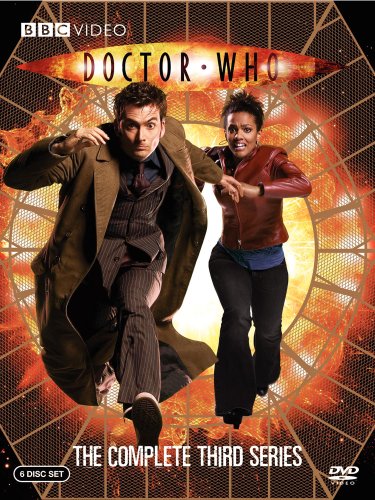
Imagine a world where William Shakespeare is being controlled by creatures akin to witches, a place where Santa is a deadly menace, and a rather eccentric fellow travels about in a police call box with a rather deceptively spacious interior. To Dr. Who fans of all ages, this is all very familiar territory. I fell in love with Dr. Who as played by Tom Baker from 1974 – 1981. He was the fourth actor to portray the Doctor and arguably the most popular. With a pocket full of jelly babies and a trusty sonic screwdriver, The Doctor rather muddled his way about with a massive wool scarf around his neck, all the while solving the mysteries of the universe. It was through PBS stations in the late 70’s that Americans were first introduced to these adventures on a regular basis. Before long The Doctor would develop a cult following of sorts, particularly at college campuses. The Doctor was an alien from the planet Gallefrey. A time lord, he traveled through space and time in his TARDIS, disguised as a police call box by a chameleon device. He was accompanied by a line of companions that would serve as the representative of the audience. These women provided a place for The Doctor to bounce his ideas off of, and from time to time they would more often than not require a bit of rescuing. The show was noted for its low budget f/x and over the top villains. The cardboard sets often appeared as if they would collapse at any moment. All of this created more than a little bit of campy cheese. But for some reason there was a charm to the entire play that was oddly compelling. To ensure longevity, the character was able to regenerate when faced with death. The new Doctor would not only look different, but he would sport an entire new range of mannerisms. This way the series would continue through several changes in the actor playing him. It all worked, and Dr. Who became the longest running scripted science fiction show ever in the world. Of course all good things do come to an end, and so did Dr. Who, in spite of an American television film attempt to bring the character back. But what started with Peter Cushing in a couple of films finally ended for good…
Posted in: Disc Reviews by Archive Authors on January 12th, 2008
When Close Encounters of the Third Kind came out in 1977, a young Steven Spielberg was coming off of the unexpectedly phenomenal success of Jaws. This was the director's chance to solidify his career as a well-respected filmmaker, and build a lifelong career. While most directors would have either gone the route of making Jaws II or picking up a no-brainer script from a proven scriptwriter, Spielberg wagered his success on the odd tale of a possibly mentally deranged individual's belief in extra-terrestrial life. What he came away with was a film that won an Academy Award for Best Cinematography, was nominated for four Golden Globes (including Best Picture and Best Director), and has become synonymous with the legacy of the famed director.
Normally I would take this opportunity to go over the basic plot of the film, but this is a classic. Most film buffs are already well versed in the plot of this film, and those who are not should be ashamed of themselves. The real story here is not the fact that this film has been released yet again. The story is the manner in which it has been released. In addition to Spielberg's original version of the film, he also re-cut the film into a Special Edition in 1980. In 1998, the film was re-cut yet again, in a version that the Director considers to be his definitive cut. All three versions are included on this three-disc set, so there is plenty here to warrant a purchase for any Close Encounters fan. All versions have been completely remastered, and the set is packaged in a box that reminds one of the excellent packaging of The Soprano's sets.
Posted in: Disc Reviews by David Annandale on December 24th, 2007
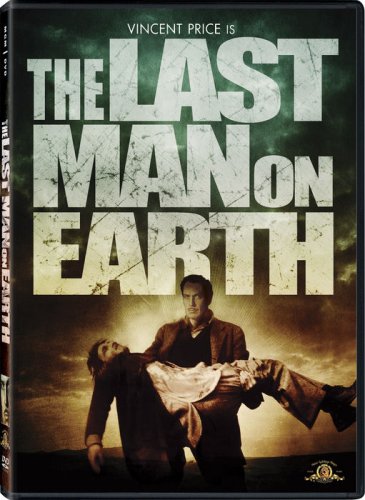
Robert Morgan (Vincent Price) is the lone human survivor in an LA devastated by a worldwide plague that killed most of the global population and turned the rest into vampires. For three years he has survived on his own, mourning his lost family and systematically staking every vampire he can find, working his way block by block through the city. Then, one day, he sees what appears to be another survivor...
Richard Matheson wrote a screenplay adapting his novel I Am Legend, but by the time the film was actually made, his script had been sufficiently changed that he replaced his name in the credits with a pseudonym. There is no denying that the film has its share of flaws. The dubbing of the Italian cast members is hit-and-miss, the action scenes are indifferently staged, and one feels a bit too acutely the monotony of Price’s lonely existence. On the other hand, there is a completely convincing vision of a deserted city achieved on a small budget, and a couple of genuinely creepy moments (most notably when Price’s wife returns from her grave). Furthermore, this remains the adaptation closest to the original novel, and the only version to retain the idea of the hero actually being a villain from the perspective of those he is exterminating. That alone gives this somewhat clunky effort a bit of an edge of its slicker successors (The Omega Man and I Am Legend).
Posted in: Disc Reviews by Gino Sassani on December 19th, 2007
In 1959 Rod Serling changed the face of television. This unimposing thin man stepped in front of a camera and told us we were entering a world of shadow… the Twilight Zone. The anthology series ran for 5 years and included some of the best genre tales ever told. We all have our favorites, and my list is too long to go into here. Even years after when Serling himself had passed it never truly died. Syndication found a huge new following for the series, and it inspired not only revivals of itself but a long list of other anthology shows over the years like Tales From The Crypt and Tales From The Darkside, but none of these imitators ever came close. Serling was a genius in not only picking out great material, but he was a master presenter as well. So in 1983 when 4 of the world’s leading genre filmmakers banded to do a Twilight Zone Movie, the expectations went through the proverbial ceiling.
Posted in: Disc Reviews by David Annandale on December 18th, 2007
TV reporter Jason Behr is the reincarnation of warrior from 500 years ago, charged with protecting a woman (Amanda Brooks, also a reincarnation) whose destiny is to sacrifice herself so that a mystical giant serpent (an Imoogi) can become a dragon. Unfortunately, an evil Imoogi named Buraki wants the power for itself, and summons a giant reptilian army that lays waste to LA in the search for Brooks.
The most elaborate South Korean project ever isn’t a patch on the far superior The Host, but is still a very entertaining monster mash. Though shot in English with an American cast (including Robert Foster as a kind of Obi Wan Kenobi), the hilariously nonsensical dialogue sounds very translated indeed. The plot has very little flow to it, what with our star-crossed lovers fleeing Buraki in one scene, but taking time out for a meeting in a coffee shop in the next. Then there’s the fact that the gigantic Buraki seems to be able to arrive in large urban areas without anyone noticing his 200-metre presence. One can also chuckle at the flashbacks within flashbacks that set up the back story. But a great deal can be forgiven thanks to the copious monster footage. This is a film that delivers on its promises, and once the rampage starts, the action is non-stop. The CGI nature of the beasts may be pretty obvious, but the creatures are also very detailed. As a strange cross-cultural mix of period fantasy and urban monster rampage, this is pretty infectious fun.
Posted in: Disc Reviews by David Annandale on December 11th, 2007
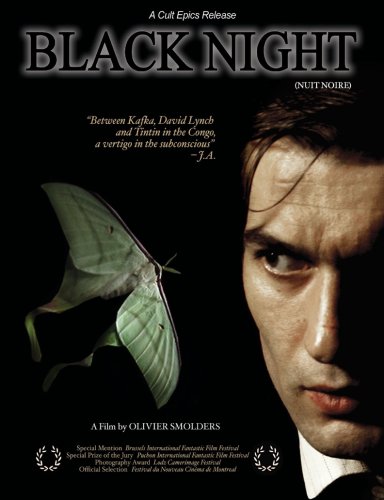
Belgian filmmaker Olivier Smolders, after a successful run of gorgeous and disturbing shorts, here makes a feature debut that is just as gorgeous and disturbing. Strongly reminiscent of the works of David Lynch, but far darker overall, the film is set at a time when the world is shrouded in the night of a perpetual eclipse. Day only comes for 15 seconds at 12:23 pm each day. Oscar (Fabrice Rodriguez) is a museum entomologist haunted by traumatic dreams involving the death of a sister who might or might not have every existed. He returns home one night to find a dying and pregnant African woman in his bed, a woman who is somehow linked to his father’s colonial past.
Trying to summarize the film’s plot is like trying to describe a dream: either case involves imposing linearity where none exists. Don’t try to figure out exactly what is going on here. Think of it as fevered nightmare inflected by guilt of Belgium’s gruesome colonial history, served up as a stunningly beautiful meditation on death, sex and insects.
Posted in: Disc Reviews by Gino Sassani on December 5th, 2007
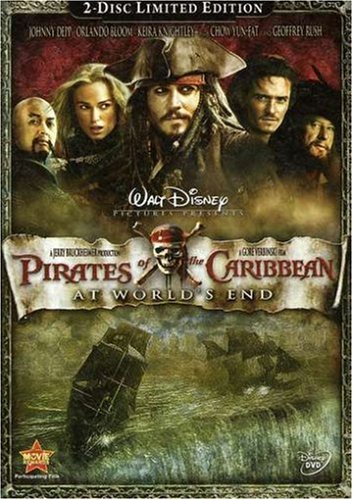
Avast ye mates, Jack’s back, and did ye ever doubt the return of Cap’n Jack Sparrow? Johnny Depp once again transforms himself like no other actor in
Posted in: Disc Reviews by Archive Authors on December 3rd, 2007
A friend that I work with said that if Hollywood ever ran out of creative and original ideas, and that if a studio managed to make a sequel about pirate zombies that lasted three hours long, it would clean up at the box office. But the fact of the matter is that if we survived a nuclear winter, we would be well prepared about what to do when zombies took over the land, because of the prep we had from guys like George Romero. So even though Danny Boyle’s 28 Days Later might have presumably sealed the deal when it came to this particular interpretation, someone decided to dredge it up for whatever reason.
The sequel, appropriately titled 28 Weeks Later was written by several Spaniards, including Enrique Lavigne (Sex and Lucia), who also produced the film, and Juan Carlos Fresnadillo (Intact), who directed. After the viral epidemic and the subsequent pronouncement that “all was well” in England, the U.S. led NATO troops helped to clean and repopulate the London area. That is slightly down the line of the film’s opening, which has Don (Robert Carlyle, The Full Monty) and his wife Alice (Catherine McCormack, Braveheart) separated when some of the infected invade their countryside cottage, and he manages to get away. Flash forward to the period that shares the film’s title, and Don is a key part of the repopulation effort when his children come back to England. But you know how sequels go, through divine effort or circumstance, London becomes infected again and everything goes straight to hell.
Posted in: Disc Reviews by Gino Sassani on November 2nd, 2007
This box set of three movies tries to take advantage of a college course theme to generate interest for films already available in these same editions. This collection uses Astronomy to bunch together three lighthearted science fiction adventures. The films are Killer Klowns From Outer Space, Spaceballs, and The Adventures of Buckaroo Banzai Across The Eighth Dimension. The lesson we’re really learning here is how corporate quests for profits can reach almost ridiculous proportions. Many studios are running low on the films in their libraries that have yet to be released but still have a market to sustain a DVD title. The obvious answer to this dilemma is double, triple, and beyond dipping. The idea is to repackage a film, maybe add an extra or two, often not, and put it in a newer, shinier package. In theory we unsavvy buyers are like wild raccoons who can’t resist putting their hands on that new glittering design and will buy products which we already own. It would sound silly, except that it works. Record companies have been doing it for decades. Elvis has been dead for almost 30 years, but there’s still at least one new Elvis CD every year since. OK. Rant out of the way. Let’s talk about the three films in the package.
Posted in: Disc Reviews by Gino Sassani on October 15th, 2007
I had a decided advantage going into the