Sci-Fi / Fantasy

Denys Arcand’s conclusion to the loose trilogy whose first two parts were The Decline of the American Empire and The Barbarian Invasions takes place in a near-future Quebec of soulless bureaucracy and nonexistent human relations. Our hero (Marck Labrèche) is a civil servant with a wife whose job leaves no time for him, two iPod-dependent teenage daughters, and a giant suburban house that is not a home. He retreats from his dead-end life into a series of fantasies which see him as hero, shiek, rock star, celebrated novelist, and so on, always with women rushing to have sex with him.

There is sour diversion here, but this is not deep satire. The jokes are hardly fresh (smokers hiding from guards and dogs). Then there’s the attitude towards women. While one might argue that the fantasy figures are precisely that, and meant to reflect the character’s problems, not the director’s, the fact that the women in the real world of the film are a clutch of castrating harpies makes one suspect that the filmmaker is rather too sympathetic to his protagonist’s worldview. Of course, there is an absolutely terrific film dealing with a weak civil servant escaping into fantasy while labouring in a future society of absurd, Kafkaesque totalitarian bureaucracy. But it’s called Brazil.

"Space...The Final Frontier. These are the voyages of the Starship Enterprise. Its 5-year mission: to explore strange new worlds, to seek out new life and new civilizations, to boldly go where no man has gone before !"

Paramount was bold indeed when they undertook the remaster project of the original series. Not only did they clean up the prints, but they took the decidedly risky option of redoing most of the f/x shots from the original prints. We all know just how cheesy the old work looked when compared to today’s computer abilities. You could see a box around space craft that allowed the obvious cut-out to maneuver through a cardboard star field. There were often mixups where phaser shots would be used for photon torpedo commands and the opposite. The planets often utilized matte paintings that look somewhat ridiculous now. We forgave these flaws with a complete understanding of the limitations the crew had at the time. While Star Trek showed us computers that were remarkably similar to the PC’s we use today, down to the floppy drives of our own yesteryear, the use of computers to create f/x was still many years away. So Paramount decided to “fix” these “flaws” and make much of the show look like it might have had it been produced today. It was a serious risk because of the extreme possessiveness fans have for these kinds of shows. Just ask George Lucas how much fans like their sci-fi tinkered with. The project encompassed a few years, and the results are quite attractive. But how do they stand up for the fans?

If you’ve followed my reviews, you know that I love Stargate. SG-1 or Atlantis; I can’t get enough of them. When the collection of Stargate Infinity discs arrived at my doorstep, I tore into them like a Wraith into a red shirt. Now the Stargate might be an incredible mystery that delights a legion of fans. What is not much of a mystery is why this children’s cartoon version of the franchise only lasted one year. I missed the original broadcast window and having watched these DVD’s I’m glad I did. I found the series to be an insult to Stargate fans. I understand that the show has been dumbed down and is geared toward the very young, but there’s no excuse for the preachy nature of the stories and the lack of respect shown toward the original material. Unfortunately, even the animation is sub par looking like an early 1980’s Saturday morning cartoon.


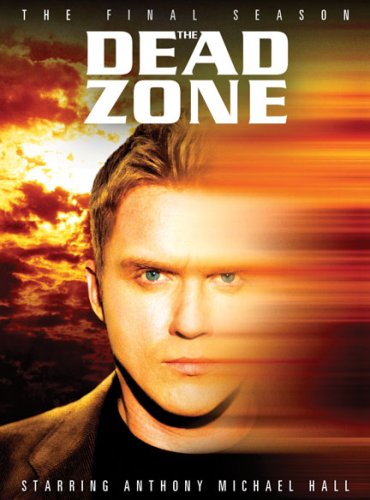
I wonder if Johnny Smith could have seen it coming. After 6 short seasons the USA Network series based on Stephen King’s The Dead Zone has finally closed up shop. The series is based very loosely on the early Stephen King novel or the film with Martin Sheen. Johnny still goes into a coma and comes out with psychic abilities. He even meets the infamous Senate candidate destined to destroy the world. The similarities between the original tale and this surprising series end there. This show is more about Johnny using his abilities for good whenever he can. We find out that it was meeting Bruce, a physical therapist who was not in the original story, that kept him from the self-destructive path King had outlined for him. What makes this increasingly compelling storyline work is twofold. Fans of the original finally have some beef to sink their canines into. The second benefit is a direct payoff of this being a series instead of a single film. While we may think we know where Johnny’s headed, we now get to see it have a profound impact on his life. We get to see the character develop, heading inevitably toward the dark future he has caught glimpses of for several years now.


Come on, admit it, you want to say that Hayden Christensen was the worst part if the latest trilogy of Star Wars films, and yeah, the guy did bring the suck, to be sure, but he wasn’t really that bad, right? Well yeah, he was, but he’s not the only thing wrong when it comes to Jumper, the latest film from writers David S. Goyer (The Dark Knight) and Jim Uhls (Fight Club), who adapted the Steven C. Gould novel. Directed by Doug Liman (The Bourne Identity), Jumper features Christensen as David Rice, a man who grows up with a genetic gift, the ability to ”jump” from place to place, Christensen’s performance was his first major role since transforming Darth Vader from an ominous, silently rueful and dominating presence, to a dude who thought his girl was cheating on him, so he started hanging out with a creepy old guy as a result.


David is unsure about his ability when he first discovers it but then starts to use it to his advantage, going to places ‘round the world, walking in and out of banks unnoticed, pretty much getting a chance to do whatever he wants. He leaves his Dad (Michael Rooker, Mallrats) early on in his life, and his mother (Diane Lane, Untraceable) had long since abandoned him, so the world is pretty much his oyster, right? Wrong. There’s a guy out there who captures and kills “jumpers,” a guy named Roland, played by Samuel L. Jackson with a grey wig, which, if I may, pretty much tells you it’s going to be a bad movie. Honestly, outside of a Quentin Tarantino movie, have you seen a really good movie that he’s in where he’s wearing some stupid hair prosthesis? Thank you. Soon, David finds someone else that can jump, a British guy named Griffin (Jamie Bell, King Kong), who, aside from telling David he’s not completely unique, also tells him that Roland is part of a group who hordes and kills jumpers named “Talismans,” so he’s generally got to watch his butt around them.

The Minutemen was not a theatrical release. I get the impression it did run on the Disney Network at one point, but I never saw the broadcast. So, for most of us, this release is pretty much a direct to video affair. The film is strictly for the kids, which is a little bit of a missed opportunity here. The subject matter lends itself to the inclusion of some wonderful references that might have been enough to keep the adult in me interested more. Instead Disney decided on the strictly youth oriented course. Unfortunately for Disney, that market isn’t usually the one with the twenty bucks to bring home the bacon, or in this case, the DVD. All of the adults are pretty much bumbling idiots. There’s plenty of popping music to keep the energy level high enough to keep the kids into it and wear out the adults. There are plenty of teen stereotypes to go around.


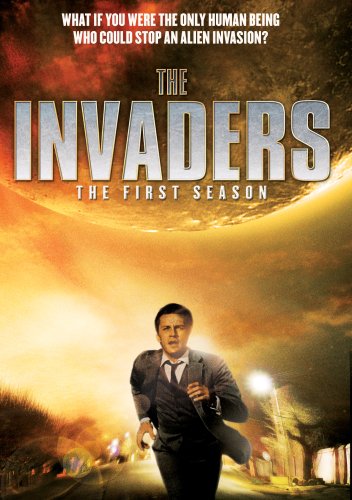
Just because you’re paranoid doesn’t mean they’re not really out to get you. That old axiom has never been more true than for David Vincent in the Martin Quinn series The Invaders. Quinn was best known for his police procedural shows like The FBI. At the time of the The Invaders Quinn was going into the final season of one of his most popular shows, The Fugitive. While most people over the years have compared The Invaders to that Quinn production, they were really not as similar as all that. In The Fugitive, the hero, Richard Kimball, played by David Janssen had a very specific mission. He was wrongly convicted of killing his wife and was on the trail of the real killer, whom he had witnessed. The “one armed man” became an iconic figure in television history and provided Dr. Kimball with his “Holy Grail”. David Vincent’s mission was far more complicated and seldom so cut and dried. He was honestly more akin to Dr. Bennell, played by sci-fi favorite Kevin McCarthy from Invasion Of The Body Snatchers. In both cases you had one man who knew that aliens were invading and even replacing humans. As I watched this collection of Invaders episodes, I couldn’t help but be reminded of McCarthy’s famous scene running down the street trying to convince the world of the impending invasion.


There really was nothing like the Italian film industry in full exploitative steam. The Beast in Space is a perfect example of what I mean. From where else but Italy in 1980 could there emerge a low-rent rip-off of both Walerian Borowczyk’s high-end erotic epic The Beast and Star Wars? Even the poster somehow manages to conjure thoughts of both films. And the title shamelessly implies that it is some sort of sequel to the former. So what kind of alchemy do these elements produce?

Nothing particularly enticing, beyond its considerable value as demented trash novelty. The plot is a surprisingly convoluted bit of nonsense involving and expedition to a planet that has been producing far too much of a supposedly rare mineral. Meanwhile crew member Sirpa Lane (of The Beast) is having bad dreams about being ravished by some sort of satyr-like creature. None of this ever makes any sense, nor is the combination of gruesomely bad FX and costume design with gruesomely boring sex scenes particularly entertaining. But the release is still worthwhile, if only to prove that There Are Such Things.

In the first season of The 4400 we are introduced to 4400 people who, we are led to believe, have recently returned from being abducted by aliens. Before you can look for Samantha Mulder among the group, we eventually discover that it was in reality the future that abducted these hundreds for nefarious reasons of their own. Some abductees have returned with mysterious powers and abilities. No, this is not Heroes or X-Men; in fact it’s a lot more like The X-Files than anything else, particularly in this the final season. Up to this point the government has developed a vaccine that inhibited these powers. Again we seem to be treading on X-Men territory here, don’t we. When the third season left us we were introduced to another drug that can reverse the effects of the inhibitor, but it carried an almost even chance of death. It is here that season four begins its likely final stories to tell.

If you are a regular reader here, you know how much I love Ray Harryhausen. Over the years I’ve had the chance to spend many casual hours with him and his wife. They are both extraordinary people, and I’m always amazed at how modest Ray always acts. After over a half century, he still acts surprised that so many people continue to be affected by his work. I was lucky enough to have been invited by Ray personally when he finally received his star on the Hollywood Walk Of Fame. With that said, I’m going to avoid repeating myself and spend less time here talking about Ray. You can see more details of my talks with him and just some great Ray Harryhausen information by looking at my previous reviews.