Sci-Fi / Fantasy

The third entry into the X-Men franchise turned out quite a bit better than I expected. Early script turmoils were only overshadowed by cast problems. It seemed the bottom fell out when Bryan Singer decided to take on The Man of Steel instead of X3. Enter Brett Ratner, best known for the Rush Hour films. Give the man credit for overcoming a ton of problems to deliver a pretty good thrill ride film. Ratner adapted quickly to the f/x driven world of X-Men and managed to fashion a rather compelling tale. The idea of a...“cure” for mutancy is likely the best plot element in the franchise. Ratner was smart enough to not tinker much with the formula already established by Singer. The problem is, he played it entirely too safe. The story has the potential for a hell of an emotional tale which it never quite delivers. Don’t get me wrong. I enjoyed the film a lot, and I have nothing against these amusement rides, but I couldn’t shake the feeling that this film wanted to be something more than it was. In the greatest traditions of shows like Star Trek, there was a powerful message to be mined here. Instead, it sat there more like a clever plot device, which it certainly was. Ratner did a fine job of dealing with so many characters all wanting their own moments to shine. Hugh Jackman still steals the show as Wolverine, but this time Berry’s Storm and particularly Famke Janssen have meaty roles, if not too much dialogue. The real cast surprise has to be Kelsey Grammer. Who could have guessed that barfly Frasier would make such a fine Beast? Patrick Stewart’s death scene was visually stunning but a bit of a letdown. (Stay tuned after the credits for more on this situation.) The Golden Gate Bridge sequence is a very impressive display. Finally, I expected to see more humor coming from Ratner. The fact is, I guess I expected that there would be too much humor. Perhaps he tried too hard not to create X3:Rush Hour.

For the most part this will be the last X-Men film for at least a little while. A Wolverine project will most certainly be the next related film. There is talk of a young Magneto film. I wouldn’t expect to see Berry return to the franchise, as she was not exceptionally happy with her role. When the X-Men do return, I would expect to see more time spent on different mutants. The three films do work well together as a satisfying trilogy. Any future films will likely take a fresh approach to the franchise.

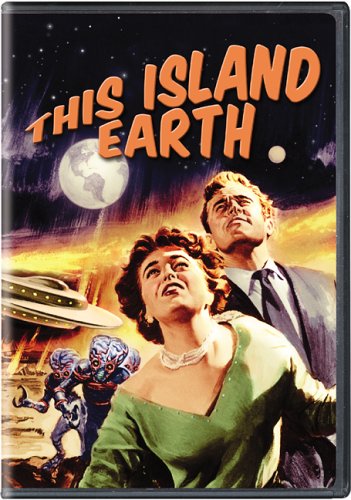
By the middle of the 1950’s Universal was playing out its long string of monster movies that started over 20 years earlier with Dracula and Frankenstein. In the next year their last iconic monster would take its last bow in The Creature Walks Among Us. This Island Earth was a bit of a crossover film. Like many of the alien invasion films of the 1950’s the film capitalized on the growing belief that we were not alone. Contrary to the DVD’s misleading box art, these aliens were here to find answers to their own survi...al. The famous Mutants were shown all too briefly and were not the driving force of the story. The Metalutan Mutant was, perhaps, the last of the Universal creature designs. The large tan heads of Exeter and his alien cronies is a hoot compared to today’s images. The film was state of the art for its day and one of the first color science fiction films. Faith Domergue has almost become a stereotype today, but it was a meaty and progressive role for the time. A pleasant addition of Gilligan’s professor, Russell Johnson, adds to a strong cast that includes Rex Reason and Jeff Morow.

Video

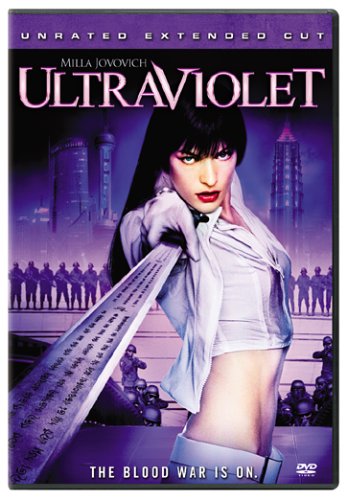
There is no shortage of vampire stories out there. There’s certainly no shortage of kick butt chicks dressed as sparsely as possible running around in depressed future populated worlds. Underworld, without a doubt, does the combination better than anyone. Ultraviolet makes a grand attempt that really ends up being more of a ride than anything else. Now, I can usually follow the most convoluted storylines, but this one gave me some trouble. It seems that while trying to create a super soldier (where is Mulder and Scully when you need them) the government made a big oops and created something akin to a vampire. Those infected with HGV, (I wonder what connection they’re going for there?), possess extraordinary strength. They also develop light sensitivity and a thirst for blood. After realizing these new hybrid beings weren’t going to quite fit in socially, the plan was to round them up and kill them all. That was the plan, anyway, before the likes of Violet. As part of an underground hemophage movement to survive the genocide, Violet finds herself having to protect a child whose blood might contain a cure or a plague. The inevitable chase through a futuristic city serves more to show off some expensive CG f/x than really further any plot.

Ultraviolet makes the fatal flaw of trying to serve too many purposes. There’s nothing wrong with a thrill ride with plenty of eye candy. Still, Ultraviolet is trying to make too many statements. The obvious HIV inferences, combined with the concentration camp mentality of the totalitarian future, overwhelm us most of the time. Another problem is the f/x are often too slick. More often than not the film just doesn’t appear believable. Now I don’t mean “That’s just not possible” unbelievable. I mean, the picture just doesn’t look real. This is what happens when color correction becomes manic. Everything is so smooth and shiny it looks as though it might as well all have been CG. The action is also almost comical. We’re talking Kill Bill on the believability gauge. She just takes on hundreds of enemies at a time. Before long you’re thinking, Who cares? She’s indestructible. Don’t get me wrong, I rather enjoyed it at times. It’s an over-ambitious thrill ride and nothing more. The problem is, it obviously wants to be so much more than that.

Synopsis

Over 400 years in the future, the remnants of humanity live in one last city. This is under the total control of the Goodchild regime. Innocents are constantly disappearing. The government is fought by the Monican resistance, and super-assassin Aeon Flux (Charlize Theron) is sent to assassinate supreme leader Trevor Goodchild. At the moment of her victory, however, she hesitates, and it soon becomes apparent that nothing is as she though it was.

Battle For The Planet Of The Apes was the last of the original Apes films. It has been far too frequently maligned. While I will admit that some of the high concepts are a little too undisguised, there was still some life left in the franchise. Of course, the novelty had worn off by now. It didn’t help that the films’ budgets kept falling as Fox was looking for cheaper ways to sell the same ideas. “Battle” was a violent film, but it was really a film about peace and the violent rite of passage often necessary to ac...ieve any long-term tranquility.

Roddy McDowell was, in fact, Planet Of The Apes. He appeared in four of the original films as well as the short-lived television series. The series was a victim not of its viewership, but rather a strong anti-violence movement aimed at the television industry at the time. While it was no more violent than most shows, it seemed to draw the most fire. Whether playing Cornelius in the first film, Caesar in the final two, or Galen in the series, McDowell had an uncanny ability to bring emotion and strength of character to the Apes make-up. He brought a realistic animation to a risky business. The Apes films might have easily become farces with laughable characters that no one took seriously enough to listen to the social commentary being offered. With the help of brilliant makeup artist Chambers, these characters were real. Paul Williams was a surprising cast choice. Better known for writing syrupy love songs, the singer did a fine job as the cynical brain trust, Virgil. Claude Akins brings the gruffness of gorilla Aldo exactly what it needs. The cast is pretty solid.

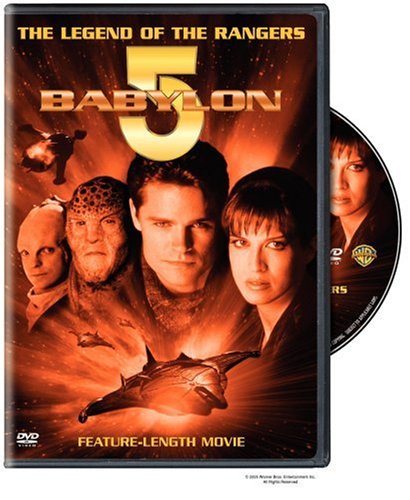
Where is Chuck Norris when you need him? The Rangers alluded to in this Babylon 5 film aren’t anything like Walker’s bad boys. These Rangers talk tough but are pretty much dull when it comes to action. The problem with Babylon 5 has always been the convoluted and complicated mythology of the show. I’m a huge science fiction fan who has always wanted to get into this show but just couldn’t wrap my mind around the premise. The Rangers are no exception to this flaw. These guys are charged with basically protecting the...helpless in the Galaxy. Instead they mostly spill out Yoda-like nuggets of wisdom. Die hard fans will probably get most of this, but apparently there weren’t enough of them. This was intended to serve as a pilot for a Babylon 5 spin-off that never got off the ground. Check out this film and you’ll understand why.

It appears the most important element in the Ranger code is to never retreat. Echoes of Galaxy Quest’s “Never give up. Never surrender” abound. It’s almost as comical. Captain Martel (Neal) has broken this sacred oath when he retreated with a crippled ship from an imposing enemy. He’s now out of favor with the council. When Ambassador S’Ka speaks up for him his career is spared. Still… Hell hath no fury like a council scorned. Martel is given command of a cursed ship that isn’t even ready to launch. His duty is to escort the Ambassador to a mysterious meeting about a new threat in the Galaxy. Of course, things go wrong, but the hopelessly outgunned Martel manages to save the day. What an original plot that was. And they all lived happily ever after in cancellation land.

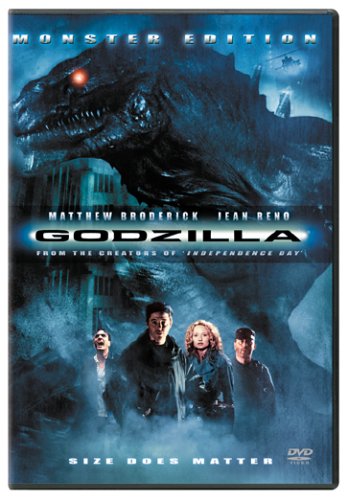
Synopsis

French nuclear testing (?!) in the Pacific leads to the mutation of iguanas (!?), and giant one makes its way to New York to nest. Scientist Matthew Broderick hooks up with old-flame TV journalist Maria Pitillo and French secret service guy Jean Reno to try to stop the rampage.

Neil Gaiman’s Mirrormask is just the sort of mixed bag I expected. While parts are mesmerizing and the performance of Stephanie Leonidas is a joy in itself, the plot fails to make room for credibility when it’s desperately needed. The holes left behind from this weak story cause the film to masquerade as art while carefully avoiding admission to what it really is – a product of sloppy writing. Gaiman is a talented scribe, but with Mirrormask, he’s dangerously close to believing his own hype. Judging fro... the work, it’s as if he’s looking back at his own accomplishments and thinking his minions of fans will like whatever he first puts down on paper; and for the most part, I think his hunch will prove correct. But that doesn’t mean it’s good just because his followers refuse to see the fault. It’s not that his words and sentences aren’t impressive. They are. No one can fault the man’s abilities with the mechanics of the language, but on issues of plotting, it’s as though he came up with three-quarters of a good story and refused to develop it to completion. Of course, the excuse for such disjointedness is that he’s attempting to create a dreamlike quality with the work. He does succeed, but he gives up too much ground when it comes to credibility.

Still, Mirrormask is not a bad film. The imagination, which goes into every aspect of the feature, is wild and vividly rendered. The effects are spectacular and proof an eye candy piece can be made for less than $5 million. The one-eyeball spiders, the black mass of destruction, the vicious four-legged riddle-loving creatures with human faces – all these characters are rendered beautifully, and do a great job of appealing to older children on the cusp of junior high or high school. And I admire the way Gaiman doesn’t underestimate his audience’s intelligence. At its core, the film has a positive and useful message for kids, and it’s able to relate it without talking down to them. Last but not least, Leonidas will hypnotize you with her grace and beauty. She emits a sexuality that will disturb older viewers until they discover she’s really in her early twenties. But that speaks even more of her talent. Here she is, playing a convincing adolescent, while still oozing sensuality. She’s a talented young actress, who will leave you with some bizarre feelings. To borrow a line from Steve Carrell’s sexually charged boss in The 40-Year-Old Virgin, she will haunt your dreams.

Utter the simple phrase of Harry Potter to any age, and it is nearly guaranteed that they will know what you are speaking about. Since becoming a worldwide phenomenon in 1999, the Harry Potter series have been turned into everything from video games to bathing products. Most notably, the series have been turned into a set of excellent films that are successful, for the most part, in recreating the major elements presented in the novels by author J.K.Rowling.

With this being the fourth film in the series of ...even, I had a few fears going into this film. With this book being the longest of the four books at this point, I was worried that new director Mike Newell would’nt be successful in presenting all the ideas Rowling went over in the book. While the film does not mention every little detail (the most notable gripe is the lack of the Dursley’s), Newell is very successful in bringing the action, suspense, fear, emotion, and growth of the characters to the big screen in stunning style.

David Lynch's Dune has an extremely odd past, which some might say is just how David Lynch likes it. This cult classic came out in 1984 to the joy of sci-fi fans everywhere. Some time after the film's release, the studio tried to get Lynch to take all of the extra footage that he had shot for the film, and re-cut the product into an extended TV-appropriate film. Lynch refused, but since the studio already owned the footage, they went ahead and cut it together themselves. The result is an "Alan Smithee" directe... version of Dune. (For those that may not know, "Alan Smithee" is a pseudonym often given to films that directors want to totally remove their names from, as a result of their films being re-cut by the studio against their wishes. A search for Alan Smithee on IMDB is a fascinating and often-times humorous look at what happens when the "business types" get involved in the creative process.)

Lynch further expressed his displeasure with this new cut of the film by crediting the screenwriter as "Judas Booth", a cross between the Judas from the bible who betrayed Jesus, and John Wilkes Booth, who assassinated Abraham Lincoln. In this way, Lynch made the statement that the studio had betrayed him and killed his film.