Posted in: Disc Reviews by David Annandale on August 23rd, 2010
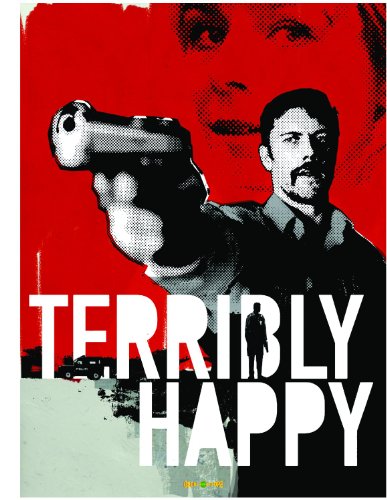
Robert (Jakob Cedergren) is a Copenhagen police officer exiled from the big city for a misdeed that is initially mysterious. His new position is as marshal in a small town in the marshlands. Though it seems at first as if he won't have much to do here, things are looking more than a little weird. The locals all have their assigned seats at the pub, and resent any deviation from the way things are done locally. Shoplifting kids are expected to be beaten. The bicycle merchant has disappeared, but no one seems interested. A little girl in a red coat pushes a squeaky pram through the streets at all hours of the night. Then there's the girl's mother, the extremely flirtatious wife of the local bully. Robert is attracted to her, wants to protect her from her husband's beatings, and one night succumbs to temptation. The consequences are deadly.
The jacket copy compares the film to the work of the Coen brothers and David Lynch, and rightly so. This would be Coen and Lynch at their darkest, though, and if there is some leavening humour here, it is low key and never breaks the mood of unease and imminent doom. The town and its flat, desolate, boggy countryside are uncanny: there is enough recognizable here to be familiar, and to connect (at some level) with the real world, but there is enough that is twisted out of true to make one very anxious indeed. An excellent noir.
Posted in: Disc Reviews by Gino Sassani on August 18th, 2010
"I remember once going on a school trip to the top of the Empire State Building. When I looked down at the crowds of people on the street, they looked like ants. I pulled out a penny and some of us started talking about what would happen if I dropped it from up there and it landed on somebody's head. Of course, I never crossed that line and actually dropped the penny. I don't think Early Grayce even knew there was a line to cross."
Posted in: Disc Reviews by Michael Durr on August 18th, 2010
Some of you are aware of this but my favorite movie of all time is Escape from New York. To me, John Carpenter and Kurt Russell represent the perfect director/actor combination. The director knows how to play the actor’s strengths (and minimize weaknesses) and the actor knows how to bring out the best in the direction. It is my sincere pleasure to cover this film on its first trip to the Blu-ray format.
In the year 1988, it was reported that crime had increased by four hundred percent. Things got so bad that they decided to turn Manhattan Island into one giant maximum security prison. Only prisoners live on the island and there are no police. Furthermore, if you are sent to the island, you are there for life. Exit from the island is impossible due to mines on all major bridges and a large 50 foot wall.
Posted in: Disc Reviews by Michael Durr on August 10th, 2010
After watching plenty of terrible horror movies in my life, I start to wonder if this is easiest thing in Hollywood to produce. Work with a small budget, come up with a scare and hire some shapely actors to play the ones in peril. Oh, and make sure you have plenty of fake blood. Our example today is Open House, a recent horror movie directed by Andrew Paquin.
We open to a couple being shown a house by Carl (played by Gabriel Olds). During the showing, a stranger comes into the house and then hides in the basement. When Carl leaves, he has a strange feeling that somebody is there. However after looking in the basement and garage, he doesn’t find anything. EXCEPT DEATH. Okay, not really just we know what’s coming. We are soon introduced to Alice (played by Rachel Blanchard) who owns the house.
Posted in: Disc Reviews by Michael Durr on August 9th, 2010
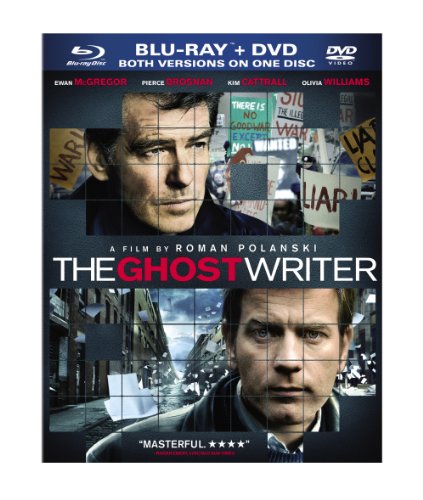
A good thriller is something that has been absent from my recent viewing experience. One of my favorite thrillers of all time is a movie named Ninth Gate. This movie is directed by Roman Polanski. As luck would have it, Roman Polanski also directed the thriller I am bringing you today, The Ghost Writer. My fingers are crossed and I can only hope that this film is just as good.
When the movie opens, we learn that Ghost (real name never revealed) (played by Ewan McGregor) is made aware of a ghostwriting venture by his agent Rick Ricardelli (played by Jon Bernthal). It involves writing the memoirs of Adam Lang (played by Pierce Brosnan), the former British Prime Minister. Ghost also learns that his predecessor before him was unfortunately found dead, drowned aboard a local ferry.
Posted in: Disc Reviews by William O'Donnell on July 2nd, 2010
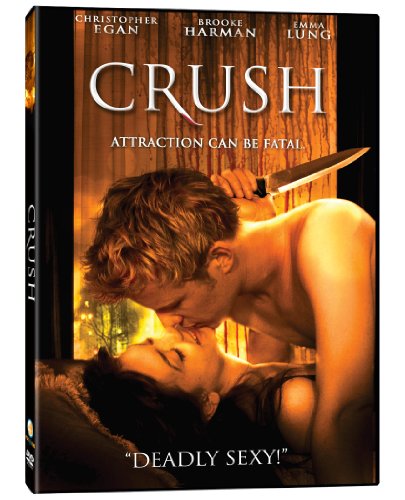
A young man, who is struggling as both a Tae Kwan Do tournament contestant and University student on a shaky student visa, is house sitting at a mansion as a favour for the friend that helped him obtain said student visa. While staying there, a mysterious young woman seduces him, and turns his life into a literal hell.
Posted in: Disc Reviews by David Annandale on June 24th, 2010
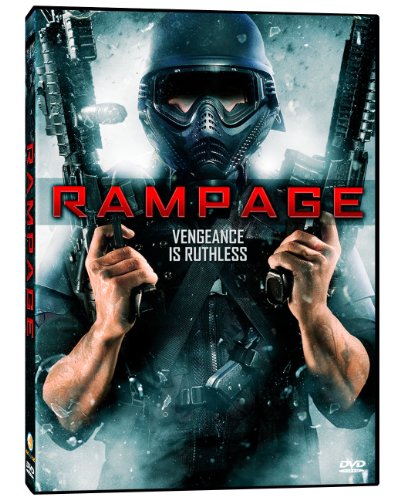
Bill Williamson (Brendan Fletcher) is an angry young man. His boss treats him badly, he can't get good service at the local coffee shop, and his parents are trying, none too subtly or smartly, to get him to move out. He hangs out with a friend who talks a big talk about changing the world, but does nothing. Bill, by contrast, is about to do something: gearing up with so much body armor he becomes a walking tank, he begins a gigantic massacre in town, beginning by blowing up a police station, and going on to gun down anyone who crosses his path. There is, however, rather more method to his madness than might appear.

The indefatigable Uwe Boll here brings us a film that echoes the likes of Falling Down, Targets and Elephant. (And in typically modest fashion, on the commentary track he feels he has improved on Falling Down.) This is one of Boll's better films, blessed by an excellent lead performance by Fletcher, convincing improvised dialogue (which does produce a couple of grammatical howlers, but hey, so does real-life dialogue), and intense hand-held camerawork. There are some genuinely witty moments, too, such as the scene where Bill enters a bingo hall, and is completely ignored by its denizens. Even at a brisk 85 minutes, however, the film doesn't have quite enough plot, and thus the rampage itself feels a bit too long. There is also too much reliance on flash-forwards, which ultimately telegraph the resolution too far ahead. As for that resolution, it isn't without a certain cleverness, but it does tend to muddy the film's social commentary. But social commentary there is, and there is quite a bit to admire about this effort.
Some of the reds are bit too strong, but otherwise the colors are excellent, as are the contrasts, blacks and flesh tones. There are moments where the film shifts to webcam footage, and the difference is clear and convincing. The overall look of the film is rich without venturing too far outside of a realist aesthetic (the exception being a gigantic explosion early on, but as far as the transfer goes, everything still looks very nice). The aspect ratio is the original 2.35:1 anamorphic widescreen.
Posted in: Disc Reviews by David Annandale on June 9th, 2010
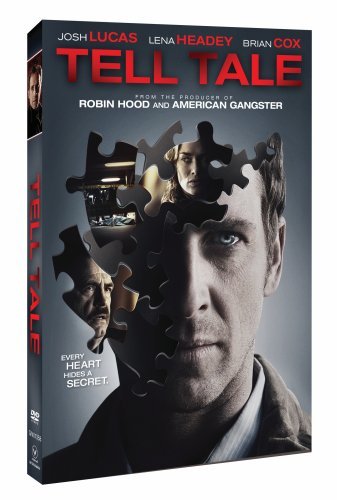
A man dies during what appears to be a botched robbery, and his heart winds up in the needful chest of Josh Lucas, single father to a young daughter with a rare bone disorder. This is obviously a man with more than his share of troubles, but things appear to be turning around. He has a new heart, and his daughter's beautiful doctor (Lena Headey) really likes him. But then, when he crosses the path of a certain paramedic, his heart begins to beat furiously, deafening him. Before long, Lucas realizes that his donor was murdered, and the vengeful heart is leading him to the killers.
Produced by the Scott brothers, Ridley and Tony, this is, as one would expect, a handsome-looking piece, but has none of the editing frenzy that characterizes Tony's work, and for that matter is more of a moody tone poem than is typical of the work of either brother. So director Micheal Cuesta is forging his own identity here, and is aided by genuinely moving performances, especially from Lucas, an actor who seems to be able to move effortlessly between hero and villain roles. Also on hand is Brian Cox, as the detective who realizes what is going on, and for reasons of his own encourages the heart's vendetta. He's always fun to watch, though his hard-boiled character here isn't much of a stretch.
Posted in: Disc Reviews by William O'Donnell on June 8th, 2010
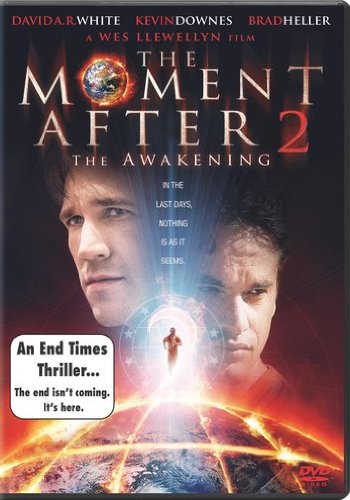
In the previous film, the Rapture (from the Bible) has occurred and two FBI agents were investigating. By the end, each was left in less than desirable situations and we start off with both of them getting into further trouble as the world has become a dystopia run by some sort of “Global Alliance.” One is busted from jail and finds a group of Christians in hiding, and the other is blackmailed into seeking out that same group and revealing their camping location to Alliance bad-guys.
Posted in: Disc Reviews by David Annandale on May 9th, 2010
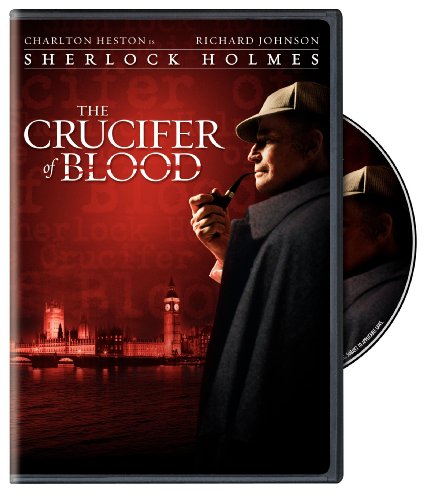
During the chaos of a mutiny, three British officers in India get their hands on a great treasure. They do not do so honorably, however, and, mistrustful of each other, make a blood pact, which cannot be broken without suffering a terrible curse. Decades later, the three have experienced very different fortunes, and vengeance has come to call. Irene (Susannah Harker), the daughter of one of these men, seeks the help of Sherlock Holmes (Charlton Heston!) and Dr. Watson (Richard Johnson). There are many dark deeds to unravel, and along the way, Watson and Irene fall in love.
The reason for this obscurity's arrival on home video is obvious, what with the Guy Ritchie movie doing the same. While this effort is far less problematically revisionist than Ritchie's, it still presents much for the Holmes fan to struggle past. Apart from the squirm-inducing age difference between Johnson and Harker, there is, of course, the supremely odd casting of Heston as Holmes. In fact, Heston had played the part in the stage version of this story, and to his credit, he does have a solid grasp on the character, and his English accent is serviceable. His angular features are also right for the part, though there is also a muscular physicality to Heston that makes his Holmes seem just as likely to punch through a wall as solve a mystery. And Heston is one of those stars who never disappears into a role, and so one is always conscious of watching Heston, not Holmes, on the screen. As for the film itself, its stage origins remain obvious, despite the many locations. This is an entertaining enough oddity, but no more.