Suspense / Thriller

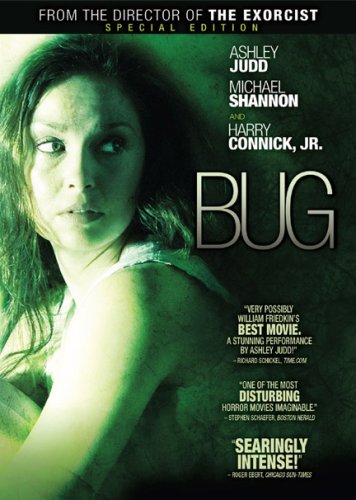
Director Peter Bogdanovich has a theory that you can make almost any movie better by cutting the first 20-minutes off of it. Exposition is intended to set-up the background of the characters for the audience, but it usually just ends up slowing things down until the conflict eventually arises. After watching Bug, I would be willing to accept Bogdanovich's argument, and double it.

Bug is the story of a down-on-her-luck waitress (Ashley Judd, doing her best impression of Charlize Theron from Monster) who lives in a cheap motel and works as a waitress in a honky tonk bar in Oklahoma. Her only friend comes by one night to party, and leaves a drifter behind when she leaves for the evening. The drifter turns out to be a pretty interesting character, though clearly of mysterious origins. The two form a quick bond, and as the drifter's pre-existing mental illness starts to present itself, the waitress buys in to his delusions, with disastrous results.

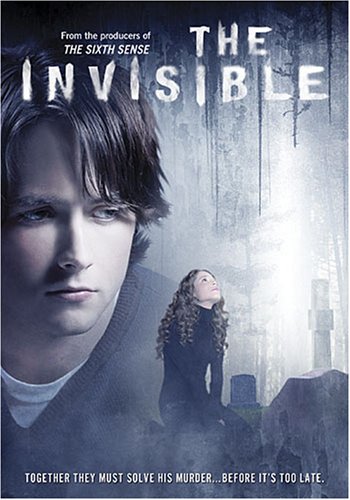
The Invisible requires far too much setup before we really get into the major ideas of the film. The first 40 minutes of the film is a complicated series of events that place a heavy burden on our patience. Finally, in an unfortunate series of events that would rattle Lemony Snicket, two lives are placed on a collision course.


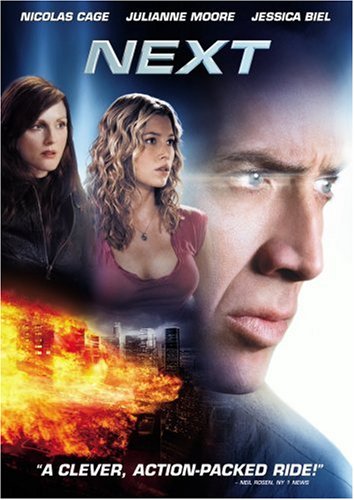
“Here’s the thing about the future. If you look at it it changes, and every time you look at it it changes again…”


If Nicolas Cage had Chris Johnson’s ability to see into the future, he might have avoided his latest film, Next. At the very least he might have been tempted to monkey with it in order to get a better box office take than it ultimately received. The film was in and out of theatres faster than I could blink, let alone catch it. If Cage had foreseen the film’s demise, it would have been unfortunate for us who got to see this film on DVD for the first time. The fate of the film is a bit of a mystery. The sci-fi trade and fan magazines were all over this one in pre-release hype. One explanation can be found in the way the film depicts the flash forward moments. While I am aware it is intentional and I understand the purpose, it was often too difficult to get your bearings. An audience doesn’t like to feel stupid. We don’t mind being surprised, but we want to be able to figure it all out so that we can feel smarter. Films rarely succeed when they leave the viewer feeling like an idiot. A subtle hint as to “when we were” might have gone a long way in making this easier on the audience. I think I have more patience than most in this regard, but even I felt cheated sometimes by the presentation of the various timelines.

(Supplemental material portions of this review are culled from Gino Sassani's review of said film in the Blu-ray format, so enjoy or read elsewhere.)

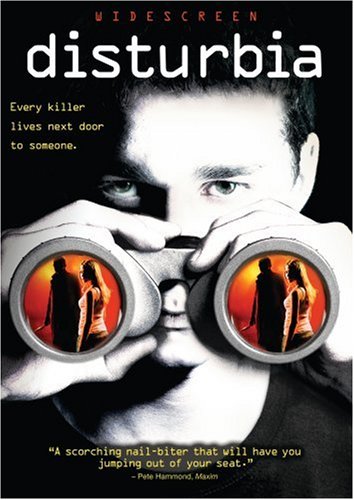
I've always enjoyed Hitchcock's Rear Window, and I've gotta say I was more than a little disgusted when I saw that it was going to be remade and modernized, with no less than Shia fricken' LaBeouf in the main role. Oddly enough, LaBeouf carries the role pretty well.

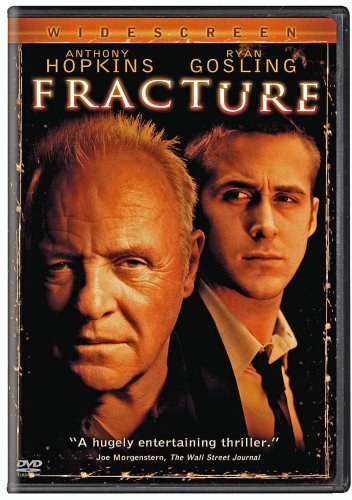
Ted Crawford (Anthony Hopkins, The Silence of the Lambs) is a successful engineer who recently discovers his wife’s infidelity. He becomes aware that she has been sleeping with a police detective, which pushes Ted to the point of shooting his wife. Initially he confesses to the crime, and it looks to be an easy win for rising star district attorney Willy Beachum (Ryan Gosling, The Notebook). This is of course until Ted redacts his confession and engages in a battle of wits with Beachum. After enticing the arresting officer and adulterer into attacking him in the courtroom Ted’s case begins to look optimistic. Eventually he is acquitted of his charges and Beachum becomes obsessed with the case knowing that Ted is guilty. He literally puts his career on the line to find out what happened and even tries speaking with Ted’s comatose wife.

Fracture is one of those movies that I really wanted to like, but I couldn’t. The story wasn’t very intriguing and it just seemed to drag on and on with no real closure. As well, for a movie claiming to be suspenseful I can’t even recall one time where I was holding my breath. But despite the film having what I thought was a pretty weak script, the acting all around was quite impressive. In each performance he makes Ryan Gosling gets better and better, I think this Canadian native has quite a bright future ahead. I don’t think I need to mention that Anthony Hopkins played a terrific role as well, and they really paired up nicely. But great acting couldn’t save Fracture which was ultimately to stale. Not to say it was a complete waste of time either, this movie is worth checking out once but I couldn’t recommend it being worth a purchase.

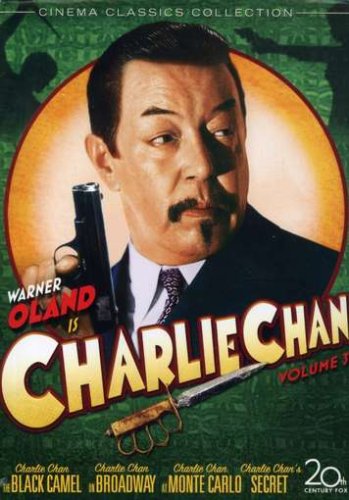
The third volume of classic Charlie Chan mysteries is a great package of treats, and of course gives us, once again, Warner Oland, the definitive Charlie Chan.

The Black Camel (1931) only one of the films in this set actually to take place in Honolulu, Chan’s home turf. A beautiful movie star is murdered, and among the suspects is none other than Bela Lugosi as a clairvoyant with murky motives. He and Oland have many scenes together, which is no small part of the pleasures of this entry.


Volume 4 of Warner’s Film Noir Classic Collection series raises the bar over its wonderful predecessors by doubling the number of movies on offer: ten this time around.

Very briefly:

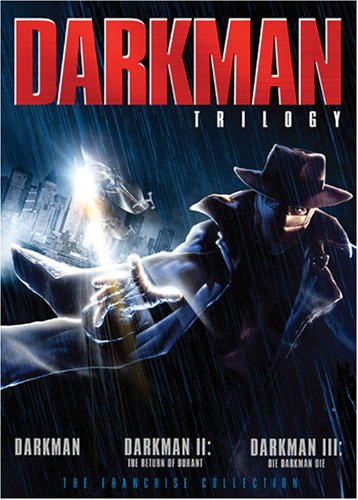
There are often stories about burn patients who lose part of their face or leave their other body parts horribly disfigured. It is sad and unfortunate. But what if you had horrible chemical and fire burns and had to take refuge in warehouses and underground? You had the strength of ten men, but could create a mask that you could use to duplicate your enemies or be the man you used to be? However, that face only lasted 99 minutes. This is the story of Darkman. A trilogy of movies that developed a cult following for its subject matter and campy presentation. Part action, part sci-fi, part thriller. But a great time as long as you left your brain at the door.

The first film directed by Sam Raimi (Spiderman, Evil Dead) features Liam Neeson as Dr. Peyton Westlake, a brilliant scientist on the verge of finding the solution to liquid skin cells or synthetic skin. This in time would help burn patients or disfigurements replace unwanted and dead skin tissue. The problem is he can only make it last for 99 minutes. One day his lab gets ransacked by a group of thugs led by Robert G. Durant (played by Larry Drake) who are in search of a memorandum. Peyton is horribly burned in the fire and presumed dead when his body can't be found in the explosion. He later resurfaces as a John Doe burn victim who is given a radical new treatment that cuts off his nerve impulses. He breaks out of the hospital and retreats to a condemned warehouse. He then goes back to the wreckage of his lab and tries to salvage his work. Using what is left of his work and vigilante money that is collected from thieves and bad guys that he fights he attempts to recreate faces of his enemies so that he may take revenge on the Durant crime syndicate. He also attempts to get back in touch with his girlfriend (played by Frances McDormand) by putting on his face and spending time with her. However, he realizes he can only put on the charade for so long and continually he descends back to the darkness as Darkman. He prevails over Durant, but the pain and suffering he endures from day to day stays with him.

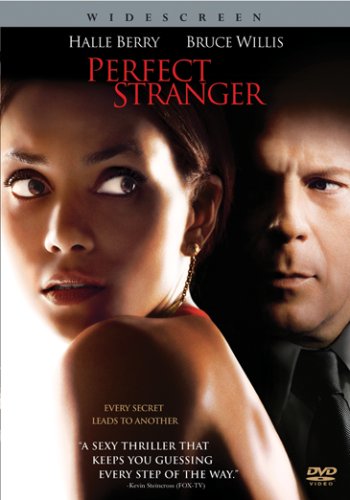
As much of a Bruce Willis fan as I am, I have to admit that this movie has no initial appeal to me. Still I am a fan of thrillers and hope I can be surprised by this one as it has a good enough cast including the previously mentioned Bruce Willis, Halle Berry, and Giovanni Ribisi.

The movie opens with the death of Grace, best friend of Rowena Price (Halle Berry, X-Men). We don’t learn much about her so it’s hard to garner up any feelings towards Rowena’s plight in tracking down the killer. But nonetheless as the story plays on Rowena enlists the help of her good friend Miles (Giovanni Ribisi Gone In 60 Seconds) and narrows down the list of potential killers to Harrison Hill (Bruce Willis, Live Free or Die Hard). The rest of the movie consists of Rowena following a trail of evidence that in the end is irrelevant in a twist ending that is quite common of modern day film.

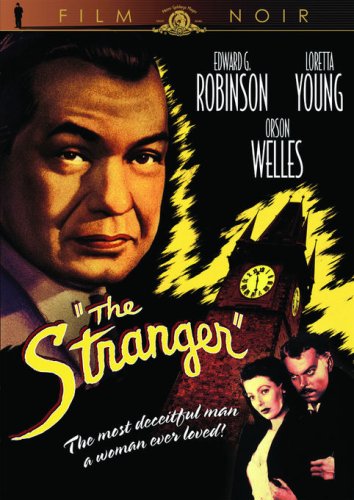
Edward G. Robinson is the war crimes investigator on the relentless hunt for the fugitive Nazi who masterminded the Final Solution. He arranges for the one man who knows his face to escape imprisonment, and follows him to a small Connecticut town. There he loses his quarry, but evidence soon points to Orson Welles, who, under the identity of Charles Rankin, is now a college professor and new husband to Loretta Young. Welles stops at nothing, including murder, to protect his secret, but little by little Young is forced to realize who her husband really is.

Welles’ third film as a director is far more conventional than Citizen Kane or The Magnificent Ambersons, and it isn’t quite up to its predecessors. Robinson is terrific as a detective who must become almost as cold-blooded as his prey, but Welles’ performance is too big: his character might as well be wearing a “NOT A NAZI WAR CRIMINAL” name tag. That said, the suspense is powerful, and the cinematography pure, gorgeous noir.