Suspense / Thriller

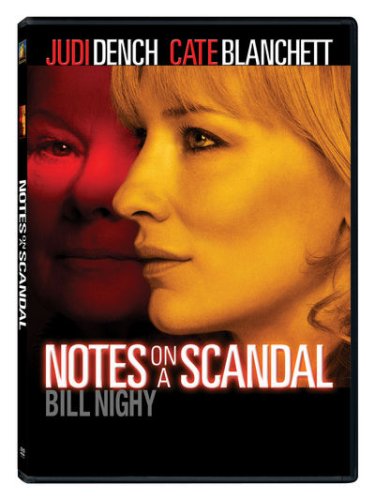
Notes on a Scandal is an unsettling film, uncomfortable to watch because it highlights some of the darkest aspects of the human condition. It’s a film about loneliness, secrecy and obsession, and thanks to incredible performances by its leading ladies, it succeeds as a thriller.

Barbara Covett (Judi Dench, Mrs. Henderson Presents) is an aging schoolteacher and a voracious diarist. When young, beautiful Sheba Hart (Cate Blanchett, The Aviator) shows up as the high school’s new art teache..., Barbara initiates a friendship. Sheba invites Barbara to lunch with her husband and two children, and although Barbara comes off a bit odd about the friendship, all seems to be fine. That is, until Barbara discovers Sheba’s dark secret: she’s having an affair with one of her students, a 15-year-old boy. Revealing a dark side to her intentions for Sheba’s companionship, Barbara promises to keep the illegal affair under wraps, in hopes that the shared secret will bind them together forever. She asks only one price for her secrecy – Sheba must end the affair.

Edward Wilson (Matt Damon) believes in all that America stands for and will do whatever he must to protect what his country stands for. As one of the founder members of the CIA in 1939, Wilson is also one of the most trusted members of this group of secrecy. When the idea that a mole may be working within the CIA is found, Wilson is told to find out which member is the mole. The path Wilson must take to discover this mole will lead him to question not only the CIA as a group, but also his personal life.

The biggest enjoyment out of this film is that it demands that you pay attention to every little detail present on the screen. As Wilson struggles to balance his personal life with his life of secrecy inside the C.I.A., we experience a story about a man who tries to uncover the ultimate secrecy inside a group of secrets. De Niro, having only directed The Bronx Tale before this, shows that his craft in the directing chair has improved (no one really needs to question his acting talents though). Most of the characters he presents (with the exception of his role, Baldwin�s role and some of the more minor roles) felt in place, adding to the tenseness of the story as it unfolded before our eyes.

Misery (Awards Series) is the 2000 DVD version re-released with a cardboard slipcover. (Cover art pictured is the 2000 edition)

Of the many films based on books by prolific writer Stephen King, Misery ranks near the top. Falling somewhere between the horror and thriller genres, this film about a twisted obsession is frightening because the premise seems very real.

He's one of the most compelling villains of modern fiction. Disturbing, disgusting and absolutely captivating at the same time, Hannibal Lecter can really get inside your head.

You may not have read the novels by Thomas Harris, or even seen all of the films, but I'm willing to bet you're familiar with The Silence of the Lambs. One of the greatest thrillers in film history, the film in which Sir Anthony Hopkins became Dr. Lecter is the cornerstone of this three-movie set.

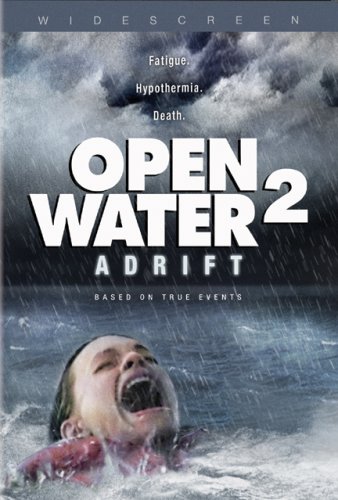
The first Open Water film was one of those underdog stories that keep the filmmaking industry alive and vibrant today. I was pleased with the simplicity of it all and the emotional effect that kind of storytelling could have. The film provided hope that an Indie film shot on weekends and vacations on an almost nonexcistant budget could have something important to say. While this sequel attempts to reproduce all of these elements, it only further demonstrates how sadly they are missing. There's no small production feel to the process. The only thing small here is the script. Unlike our original couple, these swimmers are in peril not because of someone else's negligence, but due to their own stupidity. When three couples out on a yacht to celebrate one of their birthdays, they all slip into the water without first checking to be sure the ladder or a landing was put out so they can get back on. Add a baby left behind, and I still can't get too worked up about whether or not these idiots survive. The stupidity continues as each stage of further danger is only brought about by one moronic action after another. Finish it off with an ending that tries to be mysterious but only ends up being the idiot cherry on top of this idiot sundae.

Video

Posted in Disc Reviews by Joshua Noyes

Lady in the Water is the latest film offered from M. Night Shyamalan. In its opening weekend (21-23 July 2006), the film grossed a total of $18.2 million, placing third in the United States box office results for that weekend. It was M. Night's lowest opening for any of his five major films. Due to negative reviews and poor word-of-mouth, its second week fell sharply to $7.1 million, pushing its total to only $32.2 million. Its third weekend was no better, falling another 62.1% to $2.7 million. As of September...14, 2006, its total was $42.285 million. In addition, the film only made $30.5 million in the foreign box office, pulling its tally to approximately $72.785 million internationally. The movie had an estimated budget of $70 million for production and a further $70 million in advertising costs.

The Prestige surprised me like no other film has since The Usual Suspects. The entire film plays out like a good bit of misdirection, slight of hand and illusion, with some pseudo-science thrown in for good measure.

Robert Angier (Hugh Jackman, X-Men) and Alfred Borden (Christian Bale, Batman Begins) are rival magicians, both inspiring to be the best the world has ever seen. They began as partners, working together as assistants to an established magician, but when a trick goes terribly wrong, their relationship is forever changed. When each man sets out on his own, their rivalry grows as fast as their individual careers, with each of them suspicious of the other, and always striving to learn the other's secrets. The question is, who will win in the end, and what will be the cost of victory?

Synopsis

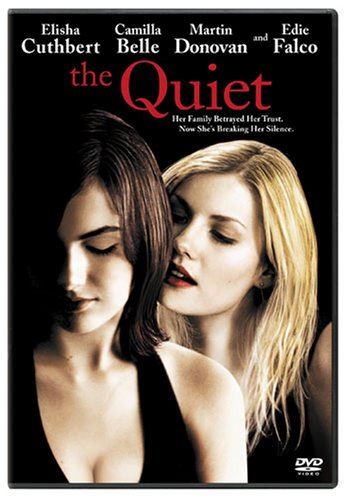
The filming world seems to be full of un-original ideas. Everything from endless sequels to the same types of films repeated and repeated until one falls into a deep dark slumber. The Quiet staring Elisha Cuthbert(24, Girl Next Door) as Nina Deer & Camilla Belle(When A Stranger Calls) as Dot from the cover and box description appears to be another teenage high school drama about some new girl and sexual tension sans Cruel Intentions. How...ver, this is not the case once you go through this brilliant movie. It really is the story of a Dot, a deaf and mute who is dealing with the pain of just losing her father in a car accident (and lost her mother to cancer many years ago). She has been sent to her god parents; Paul & Olivia Deer played by Martin Donovan (Weeds, Dead Zone ) & Edie Falco (Sopranos). However, the family is not as they seem. All of them including the daughter Nina (Cuthbert) & Dot harbor deep secrets as it comes together to a satisfying conclusion.

These are the other four films featuring Peter Lorre as the mysterious detective Mr. Moto. All but the first are from 1939.

1938's Mr. Moto’s Gamble began life as a Charlie Chan film, but difficulties with that franchise’s star (Warner Oland) led to Fox putting the Chan films on hiatus. Keye Luke, Chan’s Number One Son, is here anyway, as is plenty of footage shot for the Chan film. Luke and comic relief ex-boxer Slapsie Maxie Rosenbloom do their best to help Moto solve a case of murder in a boxing ring.

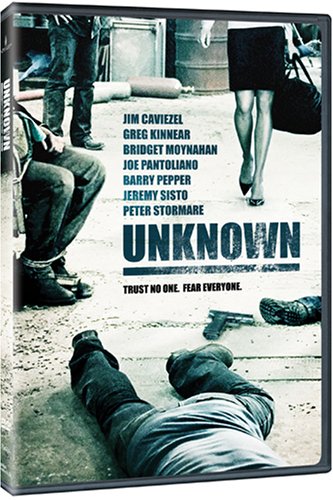
Five men wake up in a middle-of-the-desert chemical warehouse. Some of them are tied, some are wounded, and all have no memory of who they are or how they came to be here. They soon discover that they are part of a kidnapping plot, but who is victim and who is kidnapper remains a mystery. What they do know is that the rest of the criminals are on their way back, and if they don’t escape the warehouse, someone is going to die.

Though the opening had me worried this was going to be Saw II with a prestige cast (Jim Caviezel, Greg Kinnear, Joe Pantoliano, etc.), it quickly developed into a tight thriller whose premise made up in niftiness what it lacked in plausibility. The paranoia is played out to the fullest, the twists come fast and furious as fragments of memory return, and frequent cuts to the police investigation of the kidnapping prevents the film from becoming a claustrophobic play. We’ve certainly seen variations on this concept before (everything from Reservoir Dogs to House of 9 is swimming in the same waters), but that doesn’t prevent this from being a very fun hour-and-a-half.