Television

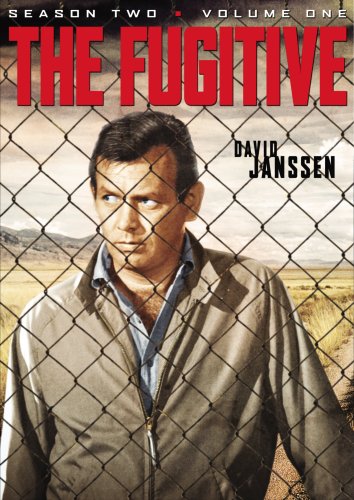
The man is Richard Kimble and, not surprisingly, the man is tired. Tired of looking over his shoulder, the ready lie of the buses and freight trains. Richard Kimble is tired of running…

The elusive “one armed man” is one of the best known television icons of all time. The plight of Dr. Richard Kimball has been the subject of numerous imitations and even a feature film staring Harrison Ford as Kimball and Tommy Lee Jones as his pursuer. Tim Daly left the ranks of comedy to fill the shoes of Kimball in a very short lived revival series. While some of these efforts managed to capture the essence of The Fugitive, none can truly compare to the real thing.

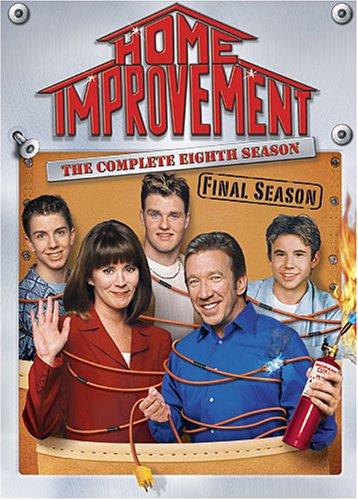
What time is it? That’s right, Home Improvement fans, it’s once again Tool Time. Unfortunately for the show’s followers, Season 8 would be its last outing. It’s always nice to see shows go out on their own terms and in their own time. Home Improvement is one of those series. It leaves a void. This was one of those rare shows that didn’t rely on sex and innuendo for cheap laughs. Don’t get me wrong, who can forget Debbe Dunning as Tool Time girl Heidi, but there was never any attempt to debase the character. We all knew she was there mainly for her looks, but it fit the theme of the cable tool show. No, most of the laughs came from Tim’s over the top manly man humor. As much as we were laughing at Tim, we were really laughing at ourselves.


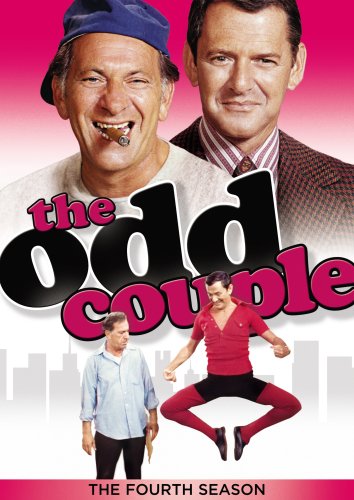
Felix and Oscar return for a fourth year of laughs in The Odd Couple. Not much has changed in the world of Oscar and Felix, but isn’t that what you were hoping to hear? What I found interesting in this somewhat weaker season is that even when the actors were beginning to realize that the show was slipping, the pair never missed a beat in their own chemistry. Often it seems they lacked interest in the material when their characters were apart, but something always happened when they were together. I get the impression they genuinely enjoyed each other’s company. It’s the saving grace in season four.

Working in Hawaii on one of televisions hottest shows in the 1970’s was too good a job for most of the cast and crew of Hawaii Five-0. This meant that there was very little cast turnover for the series in general, and none going into the fourth year. Jack Lord saw his star rise considerably, and while he began to see some serious pay hikes, even he wasn’t about to kill the golden goose. With this kind of consistency, fans were never disappointed or turned off by drastic changes in the cast or formula. With this cop show it was all about tropical locations and formula. The fourth season was no exception to the rule.


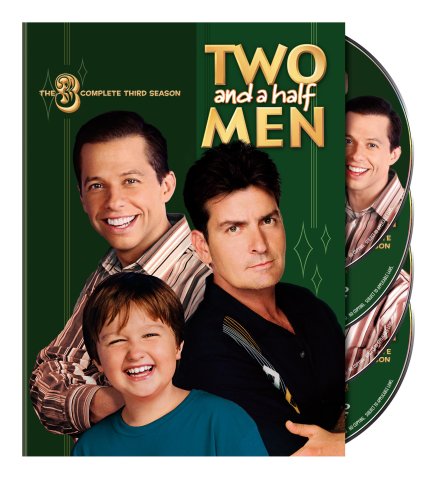
Charlie Sheen is an unlikely actor to star in a television sit-com. Even after watching the show, I’m not sure how anyone came up with the idea in the first place. He has little to no comedic timing and he’s about as funny as a funeral. The thing that works here, however, is that he really doesn’t need to be all that funny to make this show work. Sheen pretty much deadpans his entire performance, which generously enough works rather well teamed with the more manic comedy of Jon Cryer. Throw into the mix a rather extraordinary young child actor in Angus T. Jones, and suddenly a show that looks terrible on paper turns out to be pretty dang funny. We’re not talking Fred Sanford funny, but I caught myself laughing far more often than I expected to. I had only caught the show before in bits and pieces and was never all that fond of what I saw. Watching these DVD episodes from the third season shed some new light on the show for me.

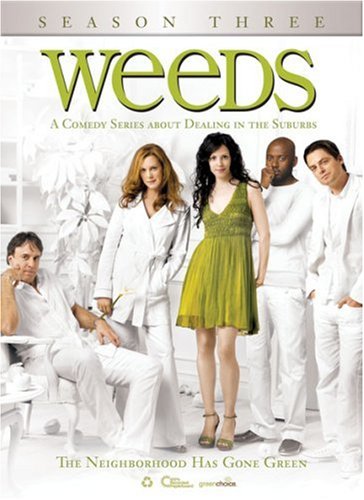
When last we left the fine folks of Weeds, Nancy Botwin (Mary-Louise Parker, Saved!) and her herb-growing buddy Conrad (Romany Malco, Blades of Glory) were being held at the mercy of two rival drug groups, both of which were very interested in Nancy’s stash and her cash, but it was taken by her son Silas (Hunter Parrish, Freedom Writers), who was arrested by Nancy’s friend Celia (Elizabeth Perkins, 28 Days). I’m not even close to discussing how things got to this point, and needless to say, the twists and turns sound a little soap operatic at times, but when you’re invested into the characters’ fates as you are, they provide for some memorable experiences.


One of the things that Weeds does is push things to the edge of the envelope, and I‘m fine with that. What I’m not fine with, and what my wife and I get into debates about from time to time, is that in Season Three, Nancy’s transformation from widowed mother in a upper/middle class suburban neighborhood to full-fledged marijuana dealer becomes full and complete. In the previous two seasons, Nancy mixed her Caucasian naivete rather well with her cold and precise drug dealing livelihood. In Season Three, she becomes much more cold and precise, particularly around people she knows and calls friends. She takes care of her feelings first, particularly in one episode where she sleeps with her boss (played by Matthew Modine of Vision Quest lore), despite Celia’s urge to be with him. Her rendezvous with Conrad, one the show had been waiting for for almost three seasons, was more for her convenience than anyone else’s. She becomes much more distasteful than in previous seasons, and all the sweetness of sucking on an iced coffee straw isn’t going to help things.

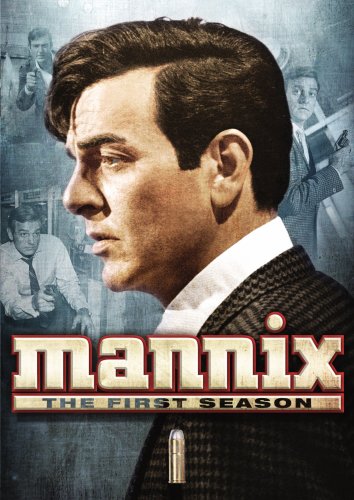
It sounds like nothing new. Hard boiled detective uses computers and other forms of technology to solve cases. It isn’t anything new, except the detective in question is Joe Mannix and the series aired in 1967. The computer that Mannix used took up an entire room and was queried using cardboard punchcards. This wasn’t science fiction. We’re not talking some newly discovered Irwin Allen series. Mannix didn’t go after aliens or robots. This was a down to earth gritty detective show. Mike Connors played the tough as nails detective. He was perfect for the part and blended into the role seamlessly for 8 years.


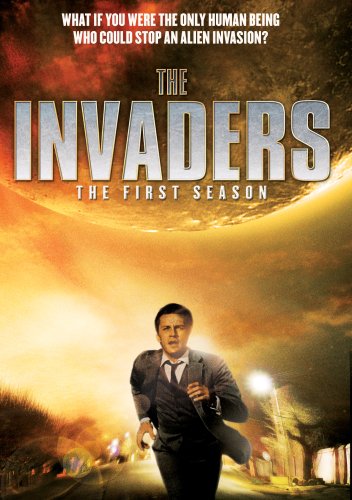
Just because you’re paranoid doesn’t mean they’re not really out to get you. That old axiom has never been more true than for David Vincent in the Martin Quinn series The Invaders. Quinn was best known for his police procedural shows like The FBI. At the time of the The Invaders Quinn was going into the final season of one of his most popular shows, The Fugitive. While most people over the years have compared The Invaders to that Quinn production, they were really not as similar as all that. In The Fugitive, the hero, Richard Kimball, played by David Janssen had a very specific mission. He was wrongly convicted of killing his wife and was on the trail of the real killer, whom he had witnessed. The “one armed man” became an iconic figure in television history and provided Dr. Kimball with his “Holy Grail”. David Vincent’s mission was far more complicated and seldom so cut and dried. He was honestly more akin to Dr. Bennell, played by sci-fi favorite Kevin McCarthy from Invasion Of The Body Snatchers. In both cases you had one man who knew that aliens were invading and even replacing humans. As I watched this collection of Invaders episodes, I couldn’t help but be reminded of McCarthy’s famous scene running down the street trying to convince the world of the impending invasion.


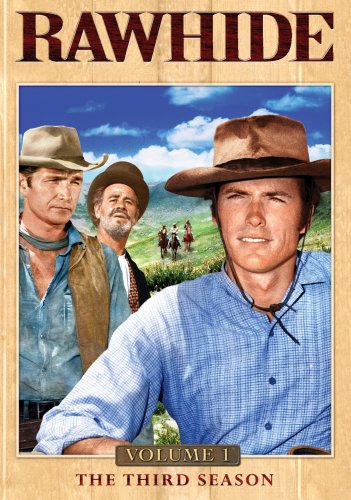
This is the first half of the third season of Rawhide. Long before Clint Eastwood was making our day as Dirty Harry or even roaming the badlands without a name for Sergio Leone, he was working the cattle drive on Rawhide. Rawhide was created to take advantage of the huge Western film and television wave that Hollywood had been riding for nearly a decade. With huge ratings for Gunsmoke and Bonanza among others, Rawhide was a bit of an unlikely success. Here the show explored the West on an endless cattle drive to get a few thousand steer to market. Along the way the crew would find themselves involved in someone else’s troubles or meet trouble head on themselves. The cattle drive theme would rely on the changing landscape to distinguish the show from other more sedentary westerns. More like Wagon Train, the constant movement always gave a sense of action even when there wasn’t much. Of course, there was a large number of changing support players along on the drive. Every operation needs cooks, ropers, and red shirts.


The set comprises the second half of the second season of Gunsmoke. The show was still in black and white and in the half hour format. Some of the best episodes of the set included Bloody Hands. For once a western dealt with conscience. When Dillon begins to have haunting dreams and pangs of guilt over killing three bad guys, he tries to back down from a fight. Has Dillon gone yellow? Arness does a better than average job on this rather thought provoking episode. When a man comes from Washington to question Dillon’s methods, he finds out who his friends really are in The Bureaucrat. A man turns up dead in Chester’s Murder just after a fight with Chester so bad Dillon had to break it up. Now Dillon’s got to prove Chester wasn’t the killer, but he’s the worst witness against him. Modern technology reaches Dodge City in The Photographer. Many residents get their first introductions to a camera. But is the stranger with the fancy new camera a killer? Ever notice how a story gets out of hand with each telling? In What The Whiskey Drummer Saw, a story gets out of hand when Dillon’s told he’s about to die. In The Man Who Would Be Marshall, an Army officer wants Dillon’s job; that is, until he finds out just what that job really entails. All in all, this is a solid collection of episodes and certainly won’t be a disappointment to fans who haven’t seen them in decades.