Television

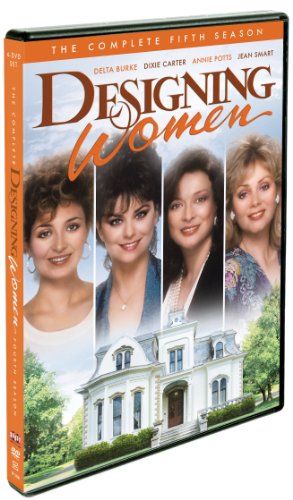
Good grief, these people again. I had previously shared my thoughts on this program when reviewing the third season on this site: https://upcomingdiscs.com/2010/03/13/designing-women-season-3/ I shall expand on this but assure you that little has changed in my sour opinion.

This season was the last to feature Delta Burke and Jean Smart, who comprised of half of the leading cast. This does not mean there are any climatic finale moments where the friends become sentimental for one and other. This season seems to stay the course of mediocre comedy it had for 4 seasons previous, except perhaps for a little more applause added character's entrances.

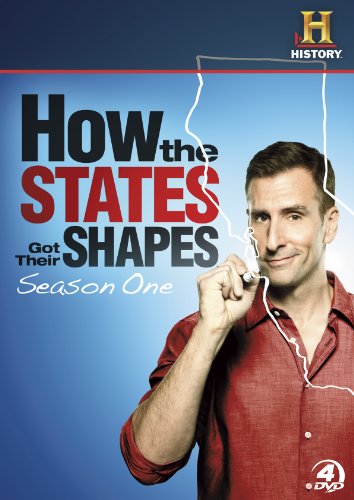
For those who might not already be aware, I am currently living in the state of Texas. I would say great state of Texas but my lack of a straight face would give that away. “Go back to where you came from”. Well, I would love to go back to North Carolina and perhaps the Minnesota transplant that is using four letter words against me can do the same. However, I am very interested in how some of these states got their shapes. Perhaps the first season of “How the States Got Their Shapes” can help.

Most people take the shape of their states for granted. However, the shapes of the United States of America have went through a library list of changes to get to their current shape. Often, the story of that shape is far more interesting than the cracks and bends that many states currently possess. Thankfully, we have our host: Brian Unger who is willing to be our Johnny Cash of cable television and “Walk that Line”.

"My name is John Crichton...an astronaut. Four years ago, I got...shot through a wormhole to a distant part of the galaxy. I ending up on this ship...this living ship, populated by escaping prisoners...who became my friends. I made enemies..."

Take a magical journey with me now. I don't mean into outer space. It's a journey back in time to a day when the SyFy Channel was called the Sci-Fi Channel. A day when it was an exciting and promising place on the cable dial. After a few fledgling years showing old repeats it was time to grow, and grow they did. When the powers that be decided to begin making new original programming they teamed up with Brian Henson who was just getting his feet running his late-father's Jim Henson Company. Yeah, the Muppets guys. He believed it was time to do something darker, something with an edge and targeted more to an adult audience. His father began the journey with The Dark Crystal. Now it was time for more of that kind of thing. The two companies found their solutions together in a show called Farscape.

"It finally happened – Comedy Central messed up and gave me a show."

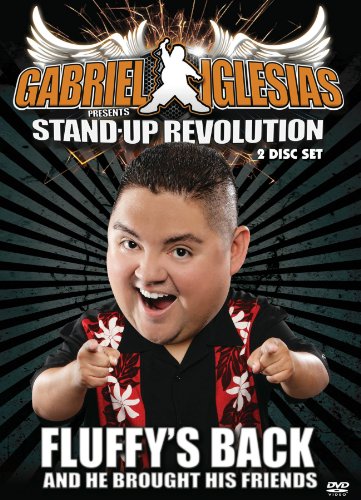
I have to admit that I had not heard about Gabriel Iglesias before I saw a recent Blu-ray concert film. Gabriel is a rather rotund comic. For him, it's not a liability at all. Honestly, he's turned it into a cash cow, of sorts. It's a huge, pun intended, part of his routine. In fact, to understand his nickname "Fluffy" you have to be clued into one of his signature routines. He identifies six levels of obesity. They range from Big, Healthy, Husky, Fluffy, Damn, and the latest level, Hell No. As you might guess, Gabriel considers himself in the Fluffy category. Still, for all of his pounds he has quite a bit of energy, and he moves along the stage quite well for his weight. His body and child-like face make him disarming and more than a little bit charming on stage.

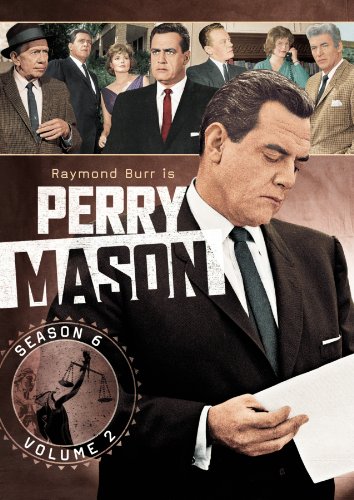
Erle Stanley Gardner wrote crime fiction, and while many of his 100 or so works are unknown to most of us, he created a character that has become as identified with criminal lawyers as any other in fiction. It was in these crime novels that Perry Mason first faced a courtroom. He developed a style where he would investigate these terrible crimes his clients were on trial for. He would find the real killer, and in what has become a Hollywood cliché, reveal his findings in a crucial moment during the trial. While we may not remember the novels, we all remember the man in the persona of Raymond Burr.  Burr had a commanding presence on our screens and enjoyed a well deserved 11-year run as the clever lawyer. What makes this run so amazing is that the show followed pretty much the same pattern the entire time. We always know what’s going to happen, but we wait eagerly for that gotcha moment when Perry faces the witness on the stand. We know when he’s got the guy squarely in his sights, and we can’t sit still waiting for him to pull the trigger. OK, so maybe that’s a little over the top, but so was Perry Mason. From the moment you heard that distinctive theme, the stage was set. To say that Perry Mason defined the lawyer show for decades would be an understatement. Folks like Matlock and shows like The Practice are strikingly similar to Perry Mason. If you haven’t checked this show out, this is your chance. See where it all began.

Raymond Burr did not carry the show on his own. There was a very fine cast of supporting characters. The most famous has to be his faithful secretary Della Street, played by Barbara Hale. The two were inseparable. Perry had the help of a good private investigator in the Raymond Chandler style. William Hopper played the tough-as-nails Paul Drake. One of Orson Welles’ famous Mercury Theater Players took on the part of Police Lt. Tragg. Ray Collins starred in Citizen Kane as the political party boss Gettys. He was a fine example of top talent working in television.  Mason was often pitted against prosecutor Hamilton Burger, whose name too often reminded me of hamburgers. There wasn’t anything funny about Burger, however. He was a worthy opponent who drew the short straw most of the time because he was up against Perry Mason. The task was accomplished with a lot of style by William Talman, a one-time evangelistic preacher.

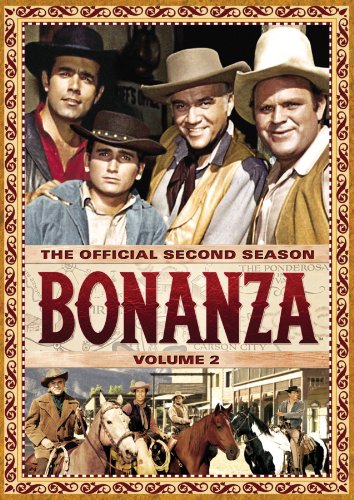
The Cartwright boys continue to do right on the Ponderosa Ranch in the state of Nevada. Having lasted 14 seasons, the series was relatively young in Season 2 but had already established Ben Cartwright and his three boys (from three different mothers) as household names on American television.

Plot wise, a good chunk of the stories revolve around the importance of having land. The Cartwrights hold the most lucrative plot in the area, and many a villain tries to find devious methods of taking it from them. Unlike fellow Old West programs like Gunsmoke, Bonanza took a sometimes comical approach to the resolving these conflicts, and guns were hardly ever drawn.

"Soldiers, Sailors and Airmen of the Allied Expeditionary Force: You are about to embark upon the Great Crusade, toward which we have striven these many months. The eyes of the world are upon you. Good Luck! And let us all beseech the blessing of Almighty God upon this great and noble undertaking." - General Dwight D. Eisenhower, Supreme Commander of the Allied Forces."

World War II was a turning point in American history unlike any other in the 20th century. America went from being an industrial power to becoming a world superpower. It came at great sacrifice, and we lost almost half a million people in the effort. The war to end all wars didn't quite live up to its promise, but the sacrifices of the men and women who served shaped the world for the decades that would follow. There have been many films about the war. They run from the patriotic to the bravado. Steven Spielberg perhaps gave us the closest thing to actual combat with Saving Private Ryan. It shouldn't come as any surprise that he would team up with his Ryan star and develop what is perhaps the most important mini-series in television history ... twice.

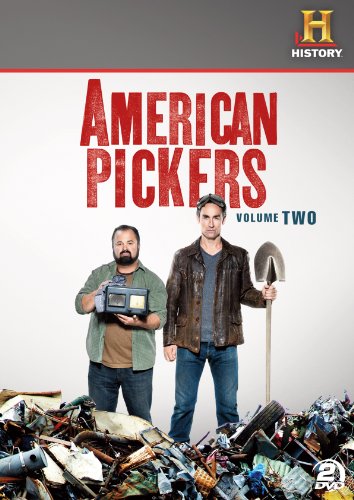
Personally, I do not watch much reality television. Most “realities” they present is quite boring or scripted. However, as of late I have started to watch reality shows that I have dubbed, “One Man’s Junk is another Man’s Treasure.” My two favorites are Storage Wars and Pawn Stars. The idea that just because one person might think it is a piece of crap, the next might think it is worth a ton of money. Today’s review is the second volume of American Pickers. Will it be another diamond in the rough?

So, as I asked myself when I unwrapped this sucker, what exactly is American Pickers about? Well, there are these two guys, Mike Wolfe and Frank Fritz who roam the United States in search of knick knacks, car parts, collectibles, anything that will bring them money. A picker. Their method is somewhat unorthodox as they actually visit people’s homes, storage sheds, and any other place where somebody have stored their collection.

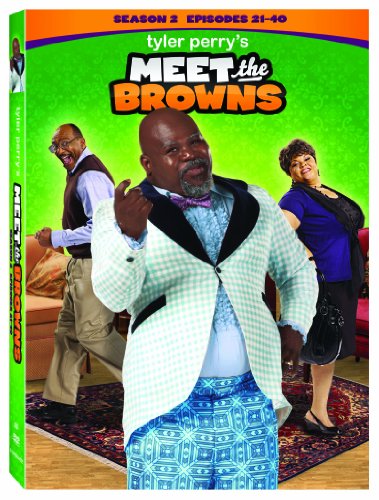
Season 2 of the Tyler Perry-created series continues misadventures of Leroy Brown (David Mann), who, last season, opened up a seniors’ residence. This season has all the characters firmly in place, and the stage is set for no end of misguided schemes and misunderstandings, all of which conclude with lessons learned and heartstrings tugged.

If the above sounds a little generic, that’s because so is the series, and furthermore, I’m referring to an archaic quality to this series’ generic nature. Put another way, this is an unapologetic (though it should be deeply ashamed) throwback to situation comedy’s dismal era of the 1980s. The performances broad, unfunny caricatures, all squealing yelps and bugging eyes. The laugh track comes in on every other line, underscoring just how desperately unfunny the dialogue is. As for the plots, I cry mercy. Brown hopes to get rich marketing his family’s barbecue sauce, Brown becomes an over-demanding patient after being grazed by a bullet, Brown wins twenty bucks in a lottery and becomes a gambling fiend, and so on and so on and so forth. Storylines that would creak even if the main character were named Ralph Kramden, overlaid with thudding sanctimony and Real Social Issues.

Ken Burns has achieved a rare feat in the world of filmmaking: he makes clean, concise, uncontroversial documentaries and yet has somehow become a household name, or as close as any documentarian can get in this society. It also depends, I suppose, on the ratio your household's television is tuned in to PBS compared to, say, Spike TV. Burns has made his name making huge, sweeping films that take in gigantic aspects of American history and culture, like The Civil War, Jazz, and my personal favourite, Baseball. His latest documentary, which he co-directed with Lynn Novick, ranks right up there with his best work. Prohibition is vast, covering a huge time period in American history, contains tons of detail, and still manages to be focussed, concise, and tremendously entertaining.

The first part, A Nation of Drunkards, starts its story before the Civil War. It sets the scene by painting a picture of a nation obsessed with alcohol. Saloons are such an integral part of the landscape that huge numbers of the working class and immigrant labourers were giving up most of their pay buying liquor. Spousal and child abuse was rampant, and Temperance Unions grew out of the need to protect and shelter women and children from abuse and neglect as much (or more) than they did out of religious zealotry.