Television

I say old chap, I do fancy a good British TV show. Maybe, it is because I grew up with more than my share of shows like Monty Python and the Black Adder. Maybe, I just like their funny accents. There is probably a bloke in the next alley who is willing to give me a beating for that comment. However, I will hold out and share with you my take on Man in a Suitcase, a late 60’s British drama that aired on ABC. Could I possibly bribe this bloke with some fish n chips?

McGill (played by Richard Bradford) used to be a former US Intelligence Agent. In one of his assignments from six years, he saw the writing on the wall that a top American scientist was going to go work for the Russians. Mac tried to prevent the situation by trying to intercept. The agent was told to stand down by his superior. However, shortly after the superior disappeared in a sailing accident and the scientist defected, leaving McGill to hold the bag.

"They rob, kill, and terrorize, and they've left their mark on our nation's history."

"How did The Bible come to be? The Bible wasn't always a book or even a series of books. In the beginning there wasn't even a written language. The prophets and holy men who roamed these lands seeking the truth and preaching God's word as they perceived it were talking to illiterate audiences who could only be reached by the witnessed testimony and the spoken word."

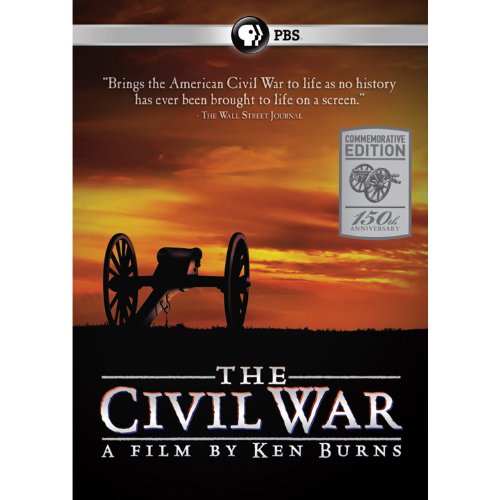
I have been reviewing various discs for plenty of years now. As a rule, I’ve stayed away from most documentaries as I know that unless they involve video games, I will probably use them for a sleep aid. That is not to say I can’t enjoy them, I just know my track record. Then, I received the grand mother of all documentaries, The Civil War by Ken Burns with an anniversary edition to boot. Yep, this is going to be a long and bumpy ride, let’s hold on shall we?


“To understand our history is to understand the Civil War”, Shelby Foote (Writer and Historian).

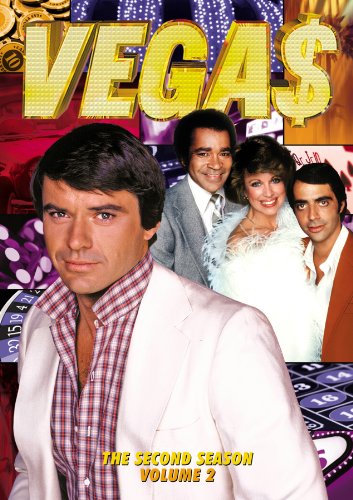
By 1978 the television detective model had been nearly complete and possibly already a cliché. Dan Tanna might have well been the complete model as far as the formula goes. It was almost as if you could go down a checklist and, like Dr. Frankenstein creating a monster, check off the necessary elements. The scripts could then almost write themselves, and you let the show fly on autopilot for three seasons or so until someone decides to look behind the curtain.

So let’s go down that checklist, shall we?

The Virginian set itself apart from the others in two ways. The first was found in the source material. The series was based on a 1902 novel by Owen Winsler, a man who actually lived in the Wyoming badlands during the time the series was set. The source material helps to add a sense of authenticity that might well have been a slight step ahead of the rest. It wasn't as violent as the others, again reflecting a more realistic sense of direction.

Thus was the heart of the original novel. The stories were less about gunfights and more about the obstacles and challenges that these earlier settlers faced. Each, with different interests, tried to carve out a home in the vast wilderness of the open West. These challenges came from many places, and often from his fellow man, but not always. That's the type of tale captured in this long-running western series.

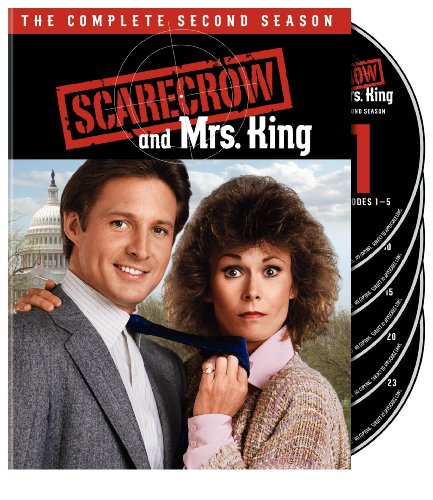
While Scarecrow And Mrs. King first aired in 1983, this show is really one of the last of the 1970's crime dramas. It was an early attempt to bring in more of the female audience that seemed reluctant to join the popular detective shows of the era. While not really a "detective" show (they were spies), it employed a lot of the 1970's conventions. Even the film footage has that distinct style from those days and type of shows. The idea worked, and the series did bring in a sizeable female audience, but it never really caught on with the guy crowd who found it a bit too relationship-heavy. The two leads were chosen less for their character appeal than for their apparent "easy on the eyes" look. Again more fodder for the chick crowd. The show was always rather lighthearted, even if the material was somewhat serious cold war espionage. The two shared a banter that revealed a kind of love/hate relationship and the expected sexual tension that would eventually lead to the two getting hitched. And while the series only lasted four seasons, the formula would end up being tweaked to bring us the more successful Moonlighting with Bruce Willis and Cybill Shepherd, which took the idea into the 80's with slicker production values but still a mainly female appeal.

Amanda King (Jackson) is a recent divorcée with two sons and a nosy mother (Garland) who lives with her. She has a boyfriend named Dean who works as a meteorologist at a local Washington DC television station, whom you never actually get to see. While at the train station, she suddenly finds herself embroiled in an espionage plot when a package is handed to her on the platform. Then she meets government agent Lee Stetson (Boxleitner) who works under the codename Scarecrow. She's intrigued by Scarecrow and agrees to help him in his current case. Of course, she ends up in a more permanent role with "The Agency", taking a job at their cover corporation The International Federal Film Company. Every week we find Amanda trying to balance her new role as a spy with trying to raise her kids, have a normal dating relationship, and keep her cover safe from her particularly prying mother. The results are often quite funny. There is also Scarecrow's partner, Francine (Smith), who is somewhat jealous of Amanda and Lee.

"I guess if this is the first you're hearing about it, I know how this must all sound."

Unless you've been in a coma like the lead character of The Walking Dead, you've been hearing a lot about this AMC television series of late. It's no wonder. I'm amazed that it's taken so long to see a zombie television series. The show has incredible visuals. There's a courtyard scene at the beginning of the pilot that is as impressive as anything you've seen in a movie. And when a character has to shoot a 6-year-old girl in the head, you understand instantly that this is going to be something unique.

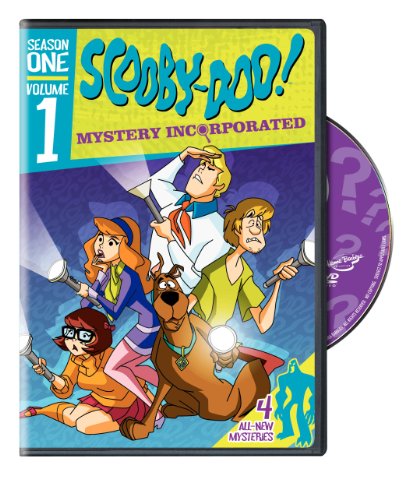
Scooby Doo has spanned generations and over 40 years. Since the 1960’s the name and conventions have become a part of the pop culture. The original cartoon series had a series of conventions. The Scooby Gang would drive around in their green Mystery Machine van and solve ghostly mysteries. Fans of the show quickly grew to learn that these spirits and goblins were usually just normal people using scare tactics to get revenge or make a profit. The cartoon classic spawned music albums, live action movies, and several new shows and animated features.

The jokes haven’t changed much, even if the voices have. Frank Welker, who voiced Freddie briefly in 1970, returns as Freddie and Scooby Doo. Unfortunately Don Messick died in 1997, and Welker has been voicing the pup since that time and before. Mindy Cohn has been voicing Velma since 2004, replacing a line of actors starting with Nicole Jaffe. What’s important is that Casey Kasem does not return as Shaggy, a part he’s played since 1969. That part now goes to Matthew Lilard. Don't get me wrong, he does a fine job, but this was the most unmistakable voice in the mix up until now. Older fans will notice the change with sadness. Part of me is very glad to see that Scooby and the gang are still out there working for Scooby Snax. The charm remains, even if the jokes don’t appear quite as funny anymore. Daphne is now voiced by Grey Delise. She's done the voice on and off since 2001. Heather North was the original voice and has come back to the role as recently as 2004.

Simon Baker is riding high these days. Last year his new series, The Mentalist, was the highest ranked new drama of the year. That accomplishment got the show paired with CSI in that enviable Thursday night time slot. I’m amazed when I hear folks tell me how the actor appeared to come out of nowhere. A few film roles and he’s Mr. Television. Well, count me in with the small group that isn’t so surprised and saw him coming as far away as 2001 with a sleeper CBS series called The Guardian.

Baker played Nick Fallin, a talented young lawyer who just got busted for cocaine. Nick won’t see the inside of prison, however. His father, Burton (Coleman) is the senior partner at one of Pittsburgh’s most influential corporate law firms. Instead of jail, Nick is given five years probation and ordered to serve 1500 hours of community service. His court ordered assignment is Legal Services Of Pittsburgh, formally Children’s Legal Services. He’s placed under the charge of Alvin Masterson (Rosenberg), an idealist who set up the law clinic originally to speak for children who have no one else to do so. He’s resentful of Nick’s pampered lifestyle and at first wants to make the gig hard enough on him that he might ask to be assigned elsewhere. Eventually they warm to each other as Nick becomes more vested in the job than he thought he would be. Much of the show’s conflict is derived from Nick juggling these two worlds. He still has a duty as a shark attorney for his father’s firm, yet must find time to help these indigents and children that have come to the clinic for help.