Television

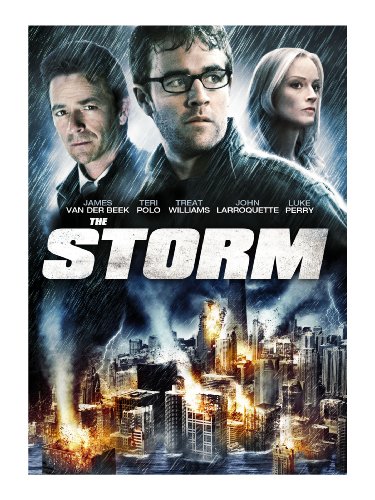
It’s really hard to explain but I feel like I have shared a small lifetime with a director named Bradford May. At first, it was a couple of Darkman sequels that were simply good doses of cult sequel fare. I didn’t expect much and I received back exactly that, so I was satisfied. But then as I continued to review more and more movies, as his films started to pop up in my queue. First there was Ring of Death & then Mask of the Ninja. Both could be described as typical action beat-em up movies. Then Bradford decided to take on direction for The Storm, a mini-series that was shown on NBC and somehow it ended up in my review pile. I’m starting to think that this is no mere coincidence anymore.

The title pretty much speaks for itself. Here are four episodes of the sequel that surpassed its inspiration in television longevity. They are as follows: “Relics” (which sees Scotty revived in this brave new world, and finding himself redundant), “The Inner Light” (an amnesiac Picard lives out an entire lifetime on a strange planet), “Cause and Effect” (the Enterprise and crew wind up stuck in a time loop, and must struggle to escape their repeated collisions with another ship) and “Tapestry” (where Picard winds up in the afterlife, which is certainly more than Kirk could say). It's a bit trickier yanking episodes of ST:TNG out of their season contexts than with the original show, given the former's greater emphasis on continuity, but these stories here are all good standalone adventures.

Here is a rather strange fish. Imagine a series of very economical Blair Witch-style mockumentaries, featuring a different creature each week (giant lizards, giant snakes, werewolves, you name it). The “found footage” is interrupted every few minutes by actual footage of real animals related to the supposed monster while factoids parade on the screen. Most peculiar. Individual episodes have a certain ripe-cheese entertainment value, but you'll want to watch them in widely separated screenings, as the mockumentary approach feels repetitious and tiresome quite quickly. Viewers expecting to get their monster fix in will also likely be disappointed by the brief and unconvincing FX.

When we left J.D., Turk, and the rest of the staff of Sacred Heart Hospital at the end of their seventh season, there were good reasons to believe we had seen the last of Scrubs:

1) The show had suffered the lowest ratings in its history.

2) It was widely considered to be the show’s least funny season, at times treading perilously close to levels of cloying sentimentality not seen since the last few seasons of M*A*S*H*.

3) NBC had announced that they would not be renewing the show.

“It’s almost Christmas. Get into the spirit.”

Ever wonder what the kids of South Park might be like if they ever made it to adulthood? While I’ve not seen that many episodes of the FX series It’s Always Sunny In Philadelphia, that was the first observation that came to mind. These are the South Park kids all grown up. They’re crude, raunchy, mean, and most importantly, they are as politically incorrect as ever. If you need an example, I can offer one right from this episode.

For those Star Trek fans who can't afford the complete season box sets, here's an economical alternative: a single-disc collection of four popular episodes from various seasons. Present here are “Where No Man Has Gone Before” (a propulsion expert's change to the Enterprise's engines propels the crew to the edge of the universe), “Space Seed” (the episode, it need hardly be said, that brought us Khan), “A Piece of the Action” (wherein our gang gets to dress up like 20s gangsters) and “Journey to Babel” (a diplomatic mission turns into a disaster when, among other things, Kirk is stabbed and Spock's father has a heart attack). Strong episodes from a strong series.

So here we are for the third season of the farcical political adventures of NYC Deputy Mayor Mike Flaherty (Michael J. Fox) and his crew. We follow them work to keep the buffoonish mayor (Barry Bostwick) in power and out of trouble, while finding plenty of time to get themselves into all sorts of predicaments. This is one of those shows that, back when it aired, struck me as clever, but not as clever as it could be, and that impression remains. The cast is a crack team of wits, and they bounce off each other with great energy and snap. There are numerous situations and plenty of lines that are funny indeed. And yet, there is a certain laziness to the humour, too. This is a comedy set in a the world of politicos and spin doctors, for crying out loud.

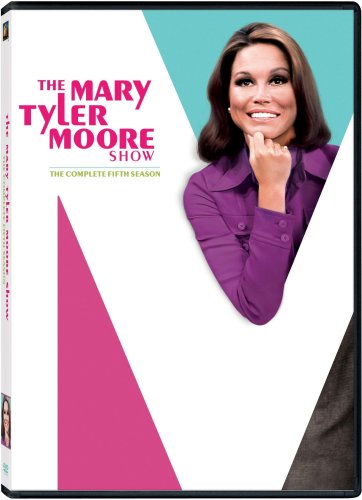
This is the fifth of seven seasons, so we are well into the series. Its groundbreaking nature (an unmarried, professional woman as a central character) has obviously long since ceased to be a novelty, and the show is, by this point in its existence, what one might call a fixture. This is merely by way of observation, and not a criticism, because the writing remains as strong as ever, and the show has stood up well to the test of time. Not every joke is a winner, of course, and there are plenty of situations whose outcomes are visible a mile off. So name the sitcom for which this isn't true. But it was the characters more than anything else that won audiences over, and the terrific chemistry of eccentricity and camaraderie is very much in evidence here. A good example of that camaraderie is in “The Outsider,” where a consultant is brought in to boost the ratings, and disrupts the easy functioning of the newsroom by imposing all sorts of unpopular changes. The wrap-up, which emphasizes humanity over ratings, is typical of the show's philosophy and spirit.


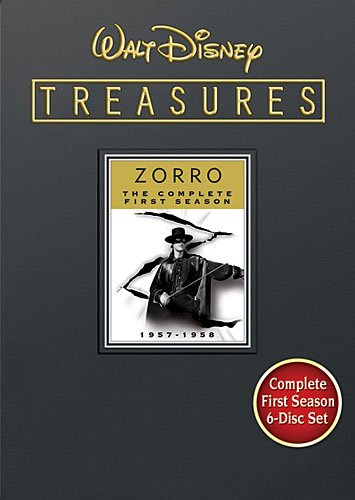
“Out of the night when the full moon is bright comes a horseman known as Zorro. This bold renegade carves a “Z” with his blade, a “Z” that stands for Zorro. The fox so cunning and free, Zorro who makes the sign of the “Z”. “

Zorro first appeared in pulp magazines in 1919 written by Johnston McCulley. He told the story of a talented swordsman who masqueraded as a dull, inept, and spoiled young rich man. But, when he put on his trademark black cloak and mask he took to the countryside of Spanish California in 1820, fighting for the peasants and anyone treated unjustly.

Finally, this show has really gotten to me. I don’t know what it is about this 8th season, but I was far more interested in the show than I had ever been. Maybe I’ve spent so long with these characters that they started to come alive for me. Maybe I was resistant to a slightly different way of telling stories. Maybe it was that the stories became less about who was with who that I was finally able to enjoy the great courtroom drama and investigation elements of the series. Whatever it was, I am finally a fan.