Disc Reviews

“Gaze too long into the abyss and the abyss gazes back at you…”

The original Pulse film was a remake of an Asian horror film, part of the recent trend of converting many of these titles into American retellings. That trend appears to also include strong warnings against technology and linking ghostly apparitions with some form of technology, from video tapes to cell phones. I’m pretty sure they’re right about the cell phones. In Pulse it was pretty much all technology that could act as a conduit for the restless dead to come to the world of the living. The internet and such access ports as laptops became the real killers. The second film brought us the complete breakdown of society, and now 7 years from that point we have Pulse 3. By now what remains of humanity lives in scattered rural areas. The cities have been abandoned, left to the dead. Technology is now the stuff of evil in the almost religious culture that has developed in the remaining people. If you haven’t seen either of the earlier films you might be a little lost, but not so much that you can’t get into this film. The problem is that this film, like its previous incarnations, isn’t good enough for you to want to get into. In case you need to know here are some basics: Ghosts can’t pass red barriers. Something in that wavelength traps them. They are all restless and drain the life force from anyone they encounter. They travel through electronic equipment. Mostly they appear to inhabit the internet.

Based on the true story, Coach Carter follows the tale of a high school coach who was once an All-American athlete himself. He is brought in to coach basketball at his old school where he still holds a few records. He accepts a challenge to turn around a program that has become mired in a tradition of defeat. He takes a no nonsense approach to the players from the moment he meets them He insists on being called sir and insists that they demand the same respect from him. He puts them through workout drills that seem almost impossible, exhausting the entire squad. A few leave, unwilling to meet the high standards. In addition to the physical shape he is whipping them into, he has brought about a higher level of team spirit. That spirit is evidenced when one of the walkouts asks to return. Carter requires him to complete an impossible number of tasks. When the player comes up short as the deadline approaches, the team offers to take some of the load and do it on their own time. Lesson learned. Carter requires them to sign detailed contracts that outline his expectations which include a 2.3 GPA, .3 above the state requirement. The method pays off as the school goes on an incredible winning streak. But when Carter discovers that several of the team members are failing in their academic responsibilities, he makes a controversial call to lock the gym, canceling all practices and games until the GPA is met by everyone on the team. The community becomes outraged, but Carter holds steady, willing to be fired rather than relent. To his surprise, the team stands behind him, and they help each other reach the goal in time to make a run at the championship.

Coach Carter is really two films in one. It is certainly a sports film with many of the clichés that entails. You’re going to get a good dose of sportsmanship and plenty of basketball action. There is a second film here that makes this one rise above the many chumps to champions type movie you know you’ve seen a hundred times, if you’ve seen it once. Carter, as played by Samuel L. Jackson, is a dynamic character. In a way Jackson takes something away from the accomplishments of the real Ken Carter, because he’s so powerful that for us, it’s no wonder these kids were willing to follow him into Hell and back. I’m sure the real Ken Carter had a much tougher fight, simply because he’s no Samuel F’n Jackson. The second film here deals with the neighborhood the school is in. These kids deal with drugs and violence on a daily basis. Their lives outside of the school are likely more trying than anything they’ve encountered in school or basketball. This “second” film really begins after the first hour when the lockout begins.

Shia LaBeouf and Michelle Monaghan are on the run from a series of carefully orchestrated catastrophes. All are ominously foretold by a rather humorless young lady that may or may not be a robot in the new thriller Eagle Eye, a film that purports to be “from Stephen Spielberg.” Spielberg-lovers, don’t get your hopes up. Authorial rights belong more to director D.J. Caruso and a smorgasbord of writers that include John Glenn, Travis Adam Wright, Hillary Seitz, and Dan McDermott. Oh yeah, and a dozen other tent-pole blockbuster action films. Sound like a hodgepodge Hollywood mess? It is.

Caruso’s direction does its best impersonation of Michael Bay’s, whooshing about from one impossible set-piece to another. His snarky heroes immediately hate each other, even before they have a clear-cut reason. We know this from the snippy dialogue peppered throughout, and their forced reluctance to accept the other’s story. The concept, while not altogether weak, feels like a worn-out retread of Enemy of the State. Sure, the technology is better, and much more precise; but it doesn’t feel as innovative, cutting-edge, or thought-provoking as it did in that first effort.

The series known as Duckman can be explained in one phrase. Guilty pleasure. The series ran on USA during the 90’s before they decided to re-brand themselves as something more serious. Though for some reason they still tend to show the dog show every year. Anyhow, as I remember it came on right before another guilty pleasure of mine from the 90’s, Rhonda Shear and Up All Night. I miss Rhonda deeply, plastic never looked so good. Heck Tupperware was jealous. Duckman was a series like no other; full of debauchery and indecency just like Grandma intended. Grandpa will never be the same. Paramount has brought us forty-eight episodes over seven discs to compose season 3 & season 4. One has to wonder if it will hold up after all of these years.

(*BTW, this review is written in inspiration to Duckman, so if you are easily offended by suggestive commentary and terrible jokes at the expense of others, then perhaps you might want to skip to a recent review of Petticoat Junction. However, if you read my weekly gaming column and are actually entertained enough to read my reviews, then you will be right at home. Enjoy!)

Ghost Town, the new romantic comedy from writer-director David Koepp, succeeds in not only introducing its British star Ricky Gervais to a wider audience but also in telling a simple, familiar story with an addictive charm all its own. Gervais plays Jack Nicholson in As Good As It Gets without the extreme OCD. What he lacks in this, however, he makes up for in his hatred of humanity. While Nicholson’s character was a chauvinist, Gervais is what I would call a “no”-vinist… he hates both genders equally. (Sometimes I can relate, especially around the holidays.)

Using the familiar construct of dead people needing someone to take care of their unfinished business, the script could get bogged down in all the familiar pitfalls: tug-tug moments of single moms and their children, families feuding over simple misunderstandings, and boneheaded tough-guy biker-types with hearts of gold looking out for the women they leave behind. It does venture into these areas; however, it doesn’t forget who its main characters are, and as a result comes across as something fresh and original.

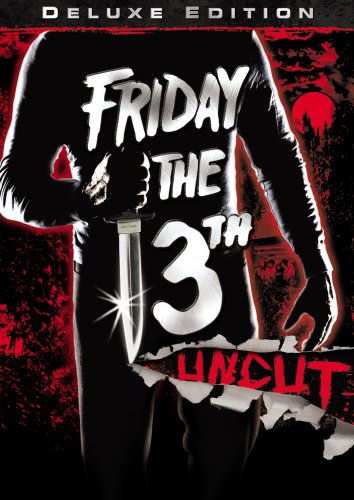
Visits – “an anthology of bone-chilling horror”? Well, it has its moments, I will say that. The most effective scenes are the ones that don’t call attention to the scare elements. Scenes that involve one or two little things out of the ordinary that don’t smack you in the face, but actually force a double-take in considering what it was you just saw – that’s when this quartet of horror tales is at its peak. Too many hack horror movies nowadays come pre-packaged for disaster, placing all their little synthetic jumps in the same places they’ve always put them, signifying to the audience, “It’s okay to be scared now.” What happened to films like Bob Clark’s original Black Christmas, where the director lays it all out and lets the audience use its brain to decide what is (and isn’t) scary?

I blame Carpenter’s Halloween, with its simple, creepy musical score, and its stunning musical “stabs.” Grant it, Halloween did this effectively. But that’s because Carpenter knew what the hell he was doing. Unfortunately, the imitators that came after did not.

Let me begin by saying that I was a child of the 1970’s, which tends to make me approach these era shows with some caution. After such shows as That 70’s Show, to name the likely most popular, I find myself not recognizing the setting as the same 70’s I remember living. Granted I was pretty young, so the subject of swingers and sexual revolution were not exactly part of my everyday culture. So, I might be a little more forgiving if Swingtown doesn’t exactly hit on all of my memory circuits. I was 15 in 1976, living near Philadelphia, where we were all pretty much obsessed with that whole Bicentennial thing. The last thing on my mind was whether the neighbors, or, God forbid, my parents, were doing the bump and tickle with rotating partners. I’m pretty sure I’ll leave that question unanswered. Even with all of that said, about the only solid piece of nostalgia I got from Swingtown was the often sweet 70’s soundtrack. To the credit of whoever picked the music, all aspects of the 70’s music scene are represented. You get a good dose of folk, rock, summer pop, and even disco, which any self respecting child of the 70’s considers the death of what was otherwise a fine decade of music. Props to the music guy for not falling into the disco all of the time trap that these shows so often do. One minor complaint, however. Fleetwood Mac didn’t release their famous Rumors LP until Feb of 1977…Ooops. Outside of the music, it really could have been any time, any place.

It’s July 4th weekend, 1976 and Bruce Miller (Davenport) and his family are movin’ on up. Money’s been good at his options trading job, so he’s packing up his wife Susan (Parker), teen daughter Laurie (Collins) and young son BJ (Howles) and moving a few blocks over to a bigger house in a better neighborhood. For Susan, it’s a bittersweet time because she’s leaving her friend of 10 years, Janet (Shor) and her husband Roger (Hopkins) and their son for a new neighborhood. Friends, it turns out, won’t be a problem. The first night they are introduced to new neighbors Trina (Parrilla) and Tom Decker (Snow). They’re invited to a party that turns out to be a swinger’s event. The two end up swapping spouses for the night. It’s an exciting, somewhat dangerous thrill for the Millers. From then on they try to balance their new lives and friends with their old. Janet is good for most of the laughs as this super conservative girl is exposed to her old friend’s new friends. As if that wasn’t enough, Laurie Miller is in love with her 24 year old high school teacher, and BJ’s hung up on a cute little girl with a drugged out lush for a single mom. Every week’s episode features a new party. You’ll get everything from a surprise birthday party for Janet, to a night out at the Playboy Club. There’s even a Tupperware party. I do remember my Mom had those. Before it’s done everybody’s spouse is falling for somebody else, and you never know who’s going to end up with who. It all ends in a cliffhanger that is not likely to ever be resolved. The jury’s still out on next summer, but ratings are marginal, so I wouldn’t hold my breath for a second Summer Of Love.

This modern retelling of the classic fairy tale is brought to you by a division of the Jim Henson Company called Unstable Fables. I think that whoever came up with this idea is the unstable part. This is actually causing me some pain to write. I never thought the day would come when I would be totally disgusted by a Jim Henson labeled release. Anyone who remembers the charm and soul that Henson used to put into his work, or appreciates the work that son Brian has continued, might be lured into this awful trap. Daughter Lisa should be ashamed of herself for having the audacity to put her father’s name on this drivel.

The Unstable Fables are intended as a modern retelling of popular fairy tales. I can’t speak for the first two entries, but if they are anything like this I don’t want to see them. It’s far from a retelling of anything. The names are the same, but the faces and their stories have been changed to protect the ignorant. The animation is pretty shoddy. None of the animals look even remotely cute, realistic, or interesting. They are not recognizable for what they are intended to be, but they’re not humanized versions, either. They are Aunt Esther ugly.

When I was a lot younger, I took a particular fancy to two martial art superstars: Raphael of the Teenage Mutant Ninja Turtles & Hong Kong Phooey. There was also another guy running around at that time named Jean Claude Van Damme. Two of his first movies namely Bloodsport and Kickboxer solidified him as a complete badass and eventually landed him a role in Street Fighter: The Movie as Guile. Eventually when he started making duds such as Double Team& Knock-Off, most people stopped watching his high flying kicks. Soon Van Damme was headed for the direct to dvd releases. One of those movies was the 2003 release, In Hell.

Van Damme plays the role of Kyle Le Blanc. Kyle is an American working overseas and has a beautiful wife named Grey (played by Marnie Alton) who is somewhat happy but lonely to be the housewife. Late one night while Kyle is coming home, the lights go out in the Le Blanc house. Grey goes to the switchbox and flip the breaker only to find her face to face with a robber named Sergio (played by Mihail Elenov) who attempts to rape her. Kyle hears the commotion via cellphone and rushes home to save her.

Power Rangers come, Power Rangers go. By the time Power Rangers: Jungle Fury had come into existence, some incarnation of Power Rangers had been around for sixteen seasons. The series however was unique due to two qualities. The first was that it centered on three Power Rangers where as other series typically encountered five. The second differentiating characteristic was that it was written during the 2007-2008 Writers Guild of America strike. Written by non-union writers, would the series still have the appeal that the Power Ranger shows had in prior runs?

The Order of the Claw has selected six students as potential guardians of Dai Shi’s prison. Dai Shi was an evil spirit who roamed across the earth waging a war against any human that stood in his path. The Order was able to secure his spirit and lock it away in a box that would be guarded by those who were up to the task. The six students were paired into three couples and squared off in mortal kombat. Wait, wrong show. Fatalities in a kid’s show could be uncomfortable.