Special Edition

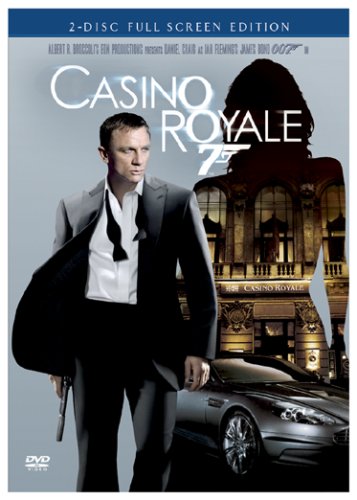
In the same fashion as Batman Begins, Casino Royale the 21st Bond film ït starts over the franchise with a new outlook. Daniel Craig stars as James Bond in this film based on the 1953 novel by Ian Fleming, which hopes to rejuvenate the series by getting rid of some of franchise trademarks as well as the gadgets they supply. Grossing nearly 600 million dollars worldwide, Casino Royale was commercially a great success, but does the new bond fall short of past expectations, or does this reboot on the series provide for good cinema?

James Bond isn't yet an agent of double-0 status, but in order to accomplish this he is sent to Prague to assassinate a rogue agent who has been selling British secrets, as well as his associate. After accomplishing this, the film opening begins in traditional bond fashion with a fresh gun barrel sequence followed by the opening credits. Already the film appears to be a lot darker than past Bond films, and I have yet to hear a corny catch phrase as well.

"Soldiers, Sailors and Airmen of the Allied Expeditionary Force: You are about to embark upon the Great Crusade, toward which we have striven these many months. The eyes of the world are upon you. Good Luck! And let us all beseech the blessing of Almighty God upon this great and noble undertaking." - General Dwight D. Eisenhower, Supreme Commander of the Allied Forces."

World War II was a turning point in American history unlike any other in the 20th century. America went from being an industrial power to becoming a world superpower. It came at great sacrifice, and we lost almost half a million people in the effort. The war to end all wars didn't quite live up to its promise, but the sacrifices of the men and women who served shaped the world for the decades that would follow. There have been many films about the war. They run from the patriotic to the bravado. Steven Spielberg perhaps gave us the closest thing to actual combat with Saving Private Ryan. It shouldn't come as any surprise that he would team up with his Ryan star and develop what is perhaps the most important mini-series in television history ... twice.

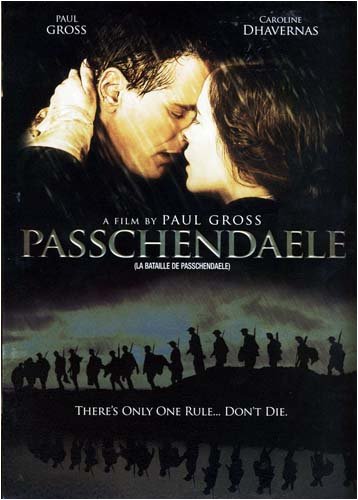
We are in the midst of the Great War. Michael Dunne (Paul Gross) is a Canadian solider recovering from physical and psychological wounds. He falls in love with his nurse (Carline Dhavernas), and when her asthmatic brother enlists, Dunne heads back to the trenches to protect him, and the two men wind up at the gigantic, murderous battle that gives the film its name.

Writer/director/star Gross has an almost messianic commitment to Canadian film and Canadian history, and here he combines his obsessions in a 20-million-dollar effort that is, by the standards of the Canadian film industry, nothing short of gargantuan. And to his credit, the battle scenes are impressive. The editing is frequently startling and brutal, in keeping with the events themselves. On the other hand, the romance is painfully hackneyed, and the naked appeals to national pride can be rather wince-inducing.

In my lifetime, I’ve really only liked five zombie movies. There is Shaun of the Dead, the three Resident Evil movies, and Zombieland. Most of the other zombie type films either belong in the “Way too Gory” or “Nonsense” designation. So, naturally when I receive a zombie movie like Dead Snow, there is some apprehension. However, in this case I can say that this movie belongs in both of those designations and delightfully so.

The movie opens with a lady (played by Ane Dahl Torp) and she is chased through the snowy mountains of Norway. The creatures ultimately corner her and eat her alive. We notice that the zombies have strange costumes as we fade to black. We re-open with seven medical students who are spending their vacation at a cabin up in what appears to be the same mountains.

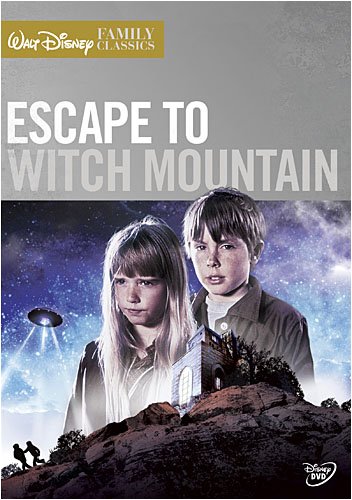
There’s a lot to want to love about this film. You have the return of the super powered Malone children, and more importantly, the same actors to portray them. Director John Hough returned to direct the sequel. The film also includes Christopher Lee and Bette Davis as the villains. Like I said, a lot to want to like. Something went terribly wrong along the way. Neither Christopher Lee nor Bette Davis take their roles seriously at all. I don’t think I’ve seen either accomplished thespian show so little effort in a performance. It’s very obvious they considered them to be throwaway roles. Davis remarks she did it only because she wanted to be in a film her grandchildren would like. She’s particularly bad in a role that has her so caked in makeup that she could be a Jack Pierce creation from the Universal horror days. What’s worse, the children spend about 80% of the film apart.

It’s three years later, and the children are returning from their home on Witch Mountain for a holiday, of sorts. They’re placed in a cab and sent off on a destination that they never do reach. Instead they play a prank on the cab driver and disable the engine. Believing he has run out of gas, he sets off to get some. In the meantime Tia has another vision of yet another unfortunate accident. For the second time, the children try to save the day only to be exposed to those who would profit from them. Victor (Lee) is a mad scientist who was experimenting with mind control at the time. When he sees Tony hold his subject in mid air to prevent his death from falling off the roof, he decides he wants to control that power. Along with his rich patron, Letha (Davis) they drug Tony and take him away before Tia knows what happened. Now Tia has to find and rescue her brother. Fortunately, Tony has advanced since the first film. He no longer needs the harmonica and he can now communicate with Tia, but the drugs are interfering. Tia encounters the Earthquake gang, a group of young boys who wanna be tough and bad, but aren’t. With their help she has to rescue Tony, who has fallen under Victor and Letha’s control. They use his powers to their own ends, eventually to hold the world hostage at a plutonium plant.

Walt Disney has always had as a main theme in its movies the idea of empowering children. It didn’t matter what circumstances the children might find themselves in, Disney always found a way to bring them out of their predicaments with an inner strength that they never really knew or believed that they had. It’s likely one of the reasons the studio has been so successful with children’s films over the decades. Escape To Witch Mountain is one such film. It’s certainly not the greatest from the Disney vaults, but you could do a lot worse. The film holds a certain element of charm that I remember from my own childhood, and it appears to still have some miles in it 30 years later.

Tony (Eisenmann) and Tia Malone (Richards) are orphans. They have no memory of their real parents or of anything that happened to them when they were much younger. Now they find themselves, yet again, transferred to a new orphanage, after their latest foster parents were killed. They may not know about their past, but they are aware they have special powers that other kids don’t have. They have the power of telepathy and molecular manipulation. Tia’s powers are a bit stronger. She can put her thoughts in Tony’s mind, and she can use her levitation powers almost limitlessly. Tony must still move his lips to send thoughts to Tia. He also relies on an external force, in this case a harmonica, to focus his powers. They make no secret of these abilities, at least to the other children. Almost at once, Tony uses his abilities to defend himself against the orphanage bully. When the kids are on a field trip, Tia exposes her ability to predict the future when she saves the life of a man about to have a tragic accident. Unfortunately, the man, Lucas Deranian (Pleasence) has been on the lookout for psychic powers. His wealthy employer and benefactor has an obsessive desire for such things. When Aristotle Bolt (Milland) hears of the encounter, he desires to possess the children. Deranian poses as their long lost uncle with forged papers in order to get the children. Once at Bolt’s mansion, they are tempted by a life of luxury and excess. But the men did not anticipate their telepathy skills. When the children learn of their plans for them, they escape with the help of an ornery horse. It appears the children can also communicate with animals telepathically. They are aided, at first unwittingly, in their escape by a kindly, but rather gruff on the outside old loner, Jason O’Day (Albert). The three bond, and eventually they work to unravel the mysteries of the children’s’ true nature, and where home really is. But to get them home, the trio must evade Bolt, Deranian, and the police.

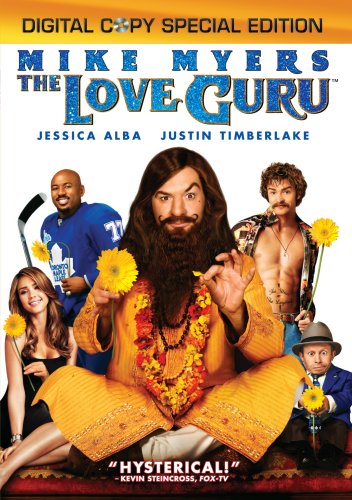
I like Mike Myers. I think he’s really talented, and I’ve enjoyed him in films like Wayne’s World, So I Married an Axe Murderer and Austin Powers: International Man of Mystery. That’s why I didn’t want to see The Love Guru. Seeing the trailers for this latest Myers project, I had the distinct feeling it was going to be a black mark on his filmography.

What an understatement — 20 minutes into The Love Guru, I wanted to punch Mike Myers in the face.


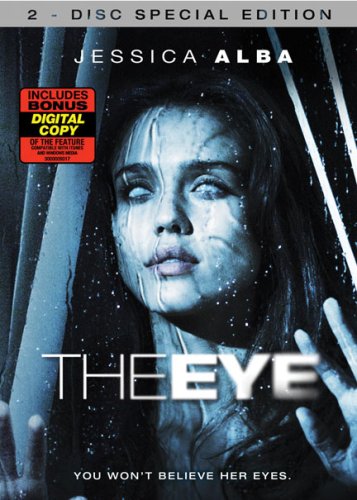
Why god must you do this? Why does Hollywood in all its limited wisdom try to remake any and everything with the hopes that it will be good, when it just winds up becoming another EPIC FAIL? They’ve done it with The Grudge, they’ve done it with The Eye, and now I hear they might be remaking Oldboy and The Host. We’re coming up on sacred cow territory here, and quite frankly, I don’t know why these films have to be “Americanized” to appeal to the unwashed masses; I thought the whole point of them was to be appreciated on their own merits. But sure enough, the horror film genre is guilty of cannibalizing product like anyone else. See what I did there?

Moving on, The Eye is based on the 2002 Hong Kong film Gin gwai, but Tom Cruise’s CW Production studio bought the American rights, and Sebastian Gutierrez (Snakes on a Plane) adapted the screenplay for American audiences, in a film that David Moreau and Xavier Palud (Them) directed. Sydney Wells (Jessica Alba, The Love Guru) is a classically trained violinist who has been blind most of her life. Upon receiving a corneal transplant (the eyes people, work with me here), she starts to see visions that shock and terrify her. Her sister Helen (Parker Posey, Best In Show) doesn’t know what to do for her, and her doctor (Alessandro Nivola, Grace is Gone) thinks she’s crazy, even though she walks around with strange markings on her hands and arms. So she tries to find out where her donor eyes came from, and the person who had them before saw unimaginable horror, and those visions are transferred to Sydney.

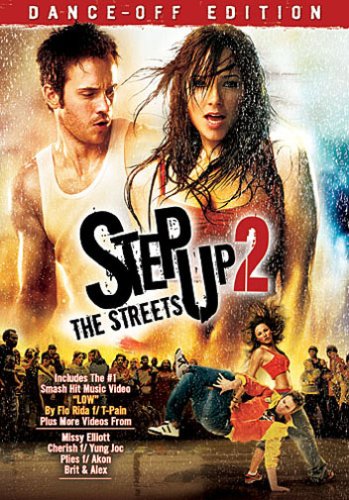
For as much as I might viscerally disagree with the creation of a film or its sequel, I lay much of the blame at you, the viewer and movie-going public. You created the furor around the Step Up series of films. You all went in droves to the first film when it was released in August 2006, when movies were winding down in the blockbuster season and thus helped it make $65 million domestically and more than $110 worldwide. It’s your fault that another film was inevitable, so in the down-turn of this past February, we got a second one. That one made about the same domestically, but made $30 million or so more and almost brought in $150 million worldwide. Count on the fact that another 90-minute film about teens dancing will be made and that the Step Up trilogy (I threw up in my mouth a little when writing that) will be complete.

Step Up 2 was written by Toni Ann Johnson (Mean Father) and Karen Barna, which begs the overall question of why TWO people needed to write a movie about dancing, but I digress. John Chu (When The Kids Are Away) directed. Andie is played by Briana Evigan, and if the name is familiar to you, she’s the daughter of Greg Evigan of BJ and the Bear fame. Briana does not look like a chimp, for the record. She decides to become friends with Chase (Robert Hoffman, She’s the Man) at a school the two go to in Maryland. They try to join an exclusive dance crew named the 410 and are rejected, so they start their own dance crew to go against the 410 in a dance competition. That’s the story, but the main focus is on the film and the dancing. The dancing carries the film from beginning to end and is peppered excessively throughout, and that’s what people cared for and what people saw.

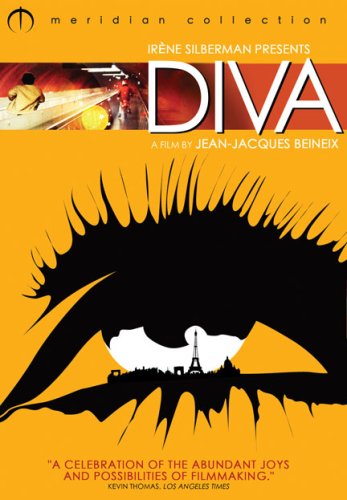
I don’t remember that much about Diva growing up; it was a film that I heard about as a kid, and a lot of people liked it, but that was the first time I can honestly say I was exposed to the arthouse film, and that it was something that I wanted to find out more about. Through the years, I’ve seen many a foreign or independent film, however the one that started all of it off for me I hadn’t seen, until now.

Diva was adapted from the Daniel Odier novel by Jean-Jacques Beineix, who previously directed a documentary version of The Diving Bell and the Butterfly long before Julian Schnabel put together a dramatic version of Jean-Dominique Bauby’s life. The story of Diva is a little complicated, but I’ll give it a go; a young messenger attends the concert of an opera singer, and creates a recording of the performance, which is a rarity for the singer, who normally frowns on recording her work. A line is said in the film along the lines of “art shapes itself around business, when business should actually shape itself around art.” A woman is murdered and drops a separate recording that is criminally linked to the police, and the tape winds up with the messenger. When the messenger, named Jules, is spotted recording the singer’s concert, they threaten him and demand to obtain the tape, so that it can be sold to the highest bidder. Unbeknownst to Jules, the participants of the other tape include a crooked police chief, who wants to try and get the other tape by any means necessary.