Special Category

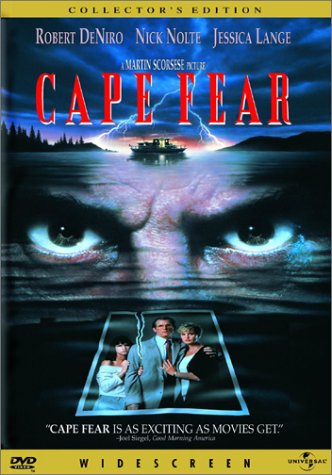
Once in a blue moon, though, there’s a re-make that not only takes the original to a new level of appreciation, but actually improves upon it. In musical terms, it’s Ike and Tina’s “Proud Mary.” In the cinematic forum, Martin Scorsese’s 1991 re-work of the B-movie thriller Cape Fear is another.

Max Cady (Robert DeNiro, lost the Oscar to Anthony Hopkins) is a recent parolee, fresh out of the joint after serving a fourteen year stretch for aggravated assault. During his trial, his lawyer, public...defender Samuel Bowden (Nick Nolte, the rich man’s Gary Busey) had pled the charge down from rape and aggravated sexual battery, which could have earned Cady a death sentence. Why, then, would Cady have such a vendetta toward the man who may have saved his life? In his fourteen years in prison, Cady has basically done two things: covered his body in tattoos, mostly scriptural and threatening in nature, and learned to read law books. After his conviction, he dismissed Bowden and acted as his own attorney and found something in his file that he feels Sam buried, and has since focused every fiber of his being on one final goal: to make his lawyer pay for the fourteen years he lost. As soon as he is released, Cady immediately sets about getting his long-planned revenge with an almost Ahab-ian fervor, making Bowden and his family the white whale, the perpetrator of his anguish.

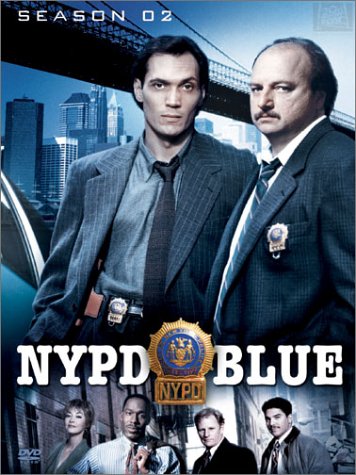
The second season of the gritty cop show turned out to be an important test: could the seriessurvive the departure of important cast members? In particular, could it survive the departureof David Caruso? As it turned out, it survived without him much better than he without it. This season includes such turning points as the trial of Amy Brennerman and attendant consequences(i.e. bye-bye Caruso), the wedding of Dennis Franz, and the arrival (and his gradual acceptance of) his new partner (hello Jimmy Smits).

Audio

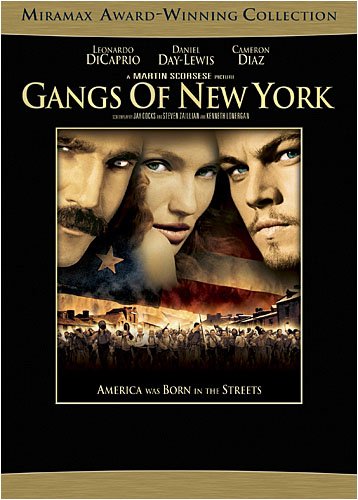
In 1927 Herbert Asbury published a book entitled The Gangs of New York: An informal history of the Underworld. This book would prove to be the inspiration for Martin Scorsese’s Gangs of New York. This film was originally supposed to start filming in the late 1970’s, and after numerous delays and many financial issues, the film finally came to fruition in 2002.

It is an epic film of staggering proportions about a little known part of the history of the United States and New York City. We follow a story filled with both real and fictional characters through the slums of the lower Manhattan’s Five Points. A young Irish immigrant played by Leonardo Dicaprio returns to the Five Points to seek revenge against the man who killed his father Bill Cutting played by Daniel Day Lewis.

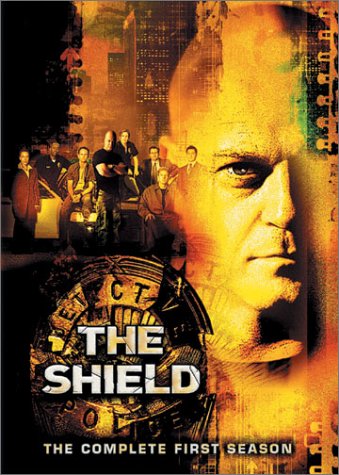
FX decided to jump on the cable bandwagon last year and come up with their very own original series, The Shield. The show stars Michael Chiklis, formerly of The Commish, as Vic Mackey, a hard-nosed Los Angeles detective that gives bad cops a good name – but in a bad way.

Mackey is head of a tactical Strike Team that is comprised of plainclothes officers working in one of the most crime-ridden areas of Los Angeles - the Farmingdale District. Mackey’s group shows impressive results however – s...fer streets, high conviction rates, and tons of arrests – and he has the trust and respect of the men who work for him to boot. He’s ten feet tall and bulletproof within the department and because of that, he roundly ignores those who disagree with his somewhat questionable methods. One of those not in Mackey’s fan club just so happens to be the new captain at his precinct, David Aceveda (Benito Martinez) - a politician at heart and one who has higher aspirations than that of police captain. Being a political animal however, he manages to look the other way when it’s politically expedient for his desires and he knows that Mackey, regardless of his methods, produces and in turn, makes him look good.

Film

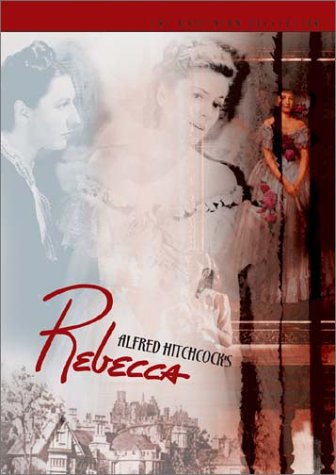
To film fans, the clause “Directed by Alfred Hitchcock” has almost become an adjective in and of itself. It has come to mean suspense created by using the viewer’s imagination and mind as a part of the film, first and foremost. These films didn’t have the freedom of CG, and consequently had to invent ways to achieve visual effects (Watch the documentary on Birds or Rear Window for example). Besides the lack of freedom of creation that digital filmmaking now provides, the filmmak...rs had to tip toe around the Hays code, not only restrictive on sex and sexual undertones, but also on content (as we learn in the featurettes here) and gore. The phrase, and the adjective that bears the director’s name, has grown to include a certain quality of characters and meticulous film crafting in every phase of the production. Rebecca, therefore, can rightfully be called “classic Hitchcock.”

Film

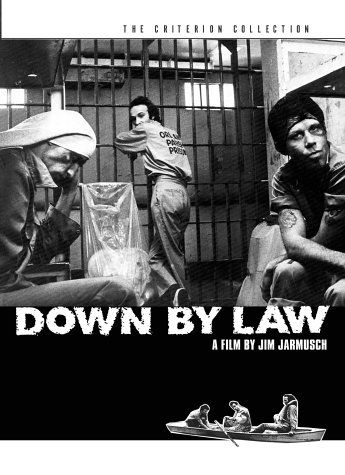
Jack, a pimp, ends up in prison when a competing pimp frames him for child prostitution. Zack, a down-on-his luck deejay, is there because an associate paid him a thousand dollars to drive a car across town, unaware of the contents of the trunk. In the same cell, they bemoan their situation: each man innocent of their crimes, but vaguely guilty of something, we’re never sure what. When a third man shows up, an Italian tourist named “Bob,” he seems to brighten the dour men as much as can ...e expected.. He’s also very up front with them: he isn’t innocent. He’s there because in a barroom fight, he killed a man with a pool ball. He accepts responsibility for his crime, and seems determined not to live in total misery. Even though he’s the only one who is admittedly guilty, Bob seems the most ‘essentially’ innocent of the three.

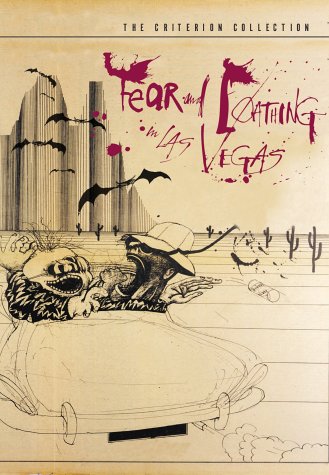
Fear and Loathing in Las Vegas can be and has been described in many ways, but one of the things that this movie isn't is a Cheech and Chong road movie about a couple of whacky buddies on a drug binge in the city of sin. There’s no going to strip clubs, no hilarious misunderstandings that make one of them have to dress in drag and be involved in a stage show, in fact, there isn’t even any gambling. This movie is more accurately described as a scalding epitaph to the counterculture of the sixties, a re...ognition that the “Peace and Love” generation’s collective ideas about changing the world had largely failed. Fear and Loathing is a disdainful look in the rear view mirror at a generation's potential unfulfilled, lying on the side of the road embarrassed and worthless, like a 52 year old groupie trying to fit in with the youngsters, doing balloon hits at a Dead concert. In a more critical sense, I can describe it in a single word: overrated.

The movie has cultivated an impressively large cult following its release in the summer of 1998, and after three viewings, I can’t really put my finger on why. By design, it doesn’t follow any real solid narrative structure. We know we’re watching a couple of totally altered guys try to stumble their way through a weekend in Vegas, but their adventures basically include getting really high on something, freaking out somewhere, then returning to their trashed room to recover. Sure, some things actually happen; Azocar meets and has sex with a minor, Duke goes to the motorcycle race, meets some strange people, quits his assignment, there’s an ironic DA convention in town. None of these events are here to prop up a story structure; they’re true events, so they just sort of happen and move on. It’s never long before he’s just getting whacked out again and the story returns to its strange “stagnant wandering” roots. Usually, I’m pretty good at connecting with the European-style, open-ended, non-traditionally structured films, but this one just left me flat.

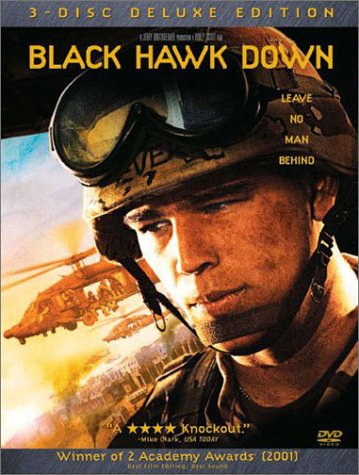
We are all familiar with the so called “great wars” of American history. Hollywood has supplied more hours of World War II film than the actual war itself. From classics like Torra Torra Torra to Saving Private Ryan, we have gotten to know every inch of those wars. Vietnam became a popular subject by the mid 80’s with films like Apocalypse Now and Full Metal Jacket. “Peace-keeping” missions like the U.N. directed effort s like the one in Somalia in the 1990’s isn’t the “stuff” of heroes it seems. Leave it to Ridley S...ott to change all of that forever. One of the most intense missions in our military history occurred without a full scale war when a Black Hawk helicopter went down in a hostile neighborhood in Somalia. We lost 19 officers and thousands of Somalians lost their lives. This film never lets up. Once Black Hawk goes down, the action literally never ceases until the end credits. Credit a well-cast collection of actors and this film is one of the best.

Synopsis

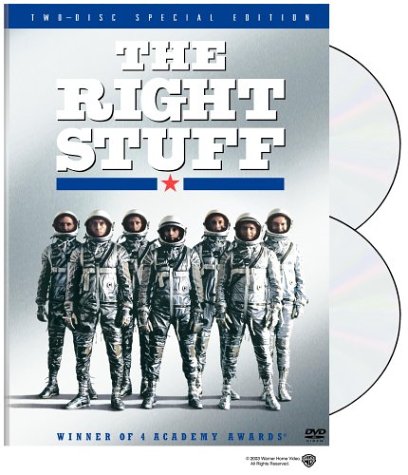
Converting Tom Wolfe’s classic book The Right Stuff was undoubtedly a difficult task. The original 7 Mercury astronauts were epic figures in American history. Perhaps the last of Earth’s true explorers, astronauts are the stuff that every kid’s fantasies are made of. It seems nearly impossible to capture such incredible bravery and charisma in the scope of even a 3 hour movie. Philip Kaufman somehow achieved the impossible. It starts with one of the most dynamic casts since The Godfather. Names like Jeff Goldblume, Dennis Quaid and Ed Harris were all relative unknowns at the time. Kaufman also paid great attention to detail. The crafts and locations brought the audience directly in contact with a world long gone from reality. Chuck Yeager’s technical input provided a solid foundation to the spectacular set designers and location scouts. Many members of this cast have since gone on to become acclaimed actors, a true testament to the casting job done on this film. You simply cannot be an American and not see this film at least once. It should be required viewing in every junior high school in America.

Synopsis

In 1939 Warsaw is invaded by Nazi Germany, Wladyslaw Szpilman is performing live on a radio station as it is dive bombed by the Luftwaffe. He continues to play until he is almost killed. This opening scene sets the tone for the story of a man so driven by his passion for music even in the face of adversary. As the film continues we watch the establishment of the Warsaw ghetto and the beginning of the reign of hate towards the Jews by Nazi Germany.

The Warsaw ghetto is full of stark contrasts we watch as people die in the streets from hunger and others prosper by bribing guards and importing goods, we see Germans helping Jews escape from the ghetto and Jews who join the ghetto police in an attempt to save themselves. At one point in time the ghetto contained over 500,000 people, as the war continues Wladyslaws family and most of the residents of the ghetto are loaded onto trains and shipped off to concentration camps never to be seen again. Those who are left over are formed into work camps by the Germans and start an uprising. Threw all this Wladyslaw survives even when he comes face to face with a Nazi officer who finds him hiding in their headquarters. The officer knows that the war is almost over as the Russian army is fast approaching and brings him food in exchange for listening to him play.