Posted in: Disc Reviews by J C on September 16th, 2012
As I was watching the new Ocean’s Eleven for the 185th time — it’s the last movie I saw twice on the same day in theaters — it occurred to me that the stakes were entirely too high. Three casinos…$160 million…the threat of being caught and glared at by Andy Garcia. The Babymakers, on the other hand, builds up to a heist with absurdly low stakes. It’s basically like Ocean’s Eleven, only the exact opposite.
After a few years of marriage, Tommy (Paul Schneider) and Audrey (Olivia Munn) decide they want to have a baby. We then watch Tommy try to get Audrey pregnant — strategic camera angles keep Munn mostly modest — without any success. Since it appears that Tommy is shooting blanks, the couple decides to visit a fertility clinic after receiving a bunch of advice from their respective groups of friends that I’m not sure I’m allowed to repeat on this site.
Posted in: Disc Reviews by David Annandale on November 8th, 2011
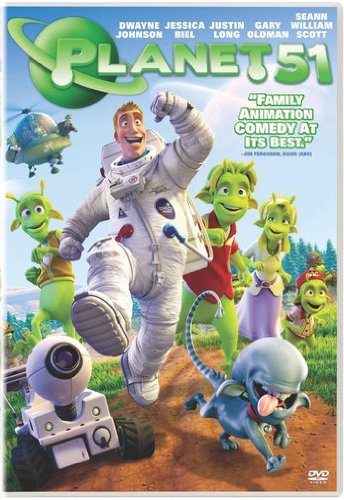
This is the DVD release of the film whose Blu-ray incarnation was reviewed by Gino, so I’m going to let him take it away for the review of the film itself. I’ll check back in for the specs.
"It’s back to the 1950?s with its telltale alien invasion science fiction matinees. There’s Doo Wop coming out of the radio. The cars have tail fins and plenty of color and chrome. That’s right. This is 1950?s Americana. Well … almost. You see, the alien invaders are humaniacs. They turn the helpless population into mind-controlled zombies, and they eat brains for breakfast. Those sure are the classic cars, all right. But they’re rounded, and instead of wheels they ride on a cushion of air. And then there’s the “people”. They’re green. They have tentacles for hair. And they have only 4 fingers and toes on each hand or foot. Can anyone say, “Give me a high four”?
Posted in: Disc Reviews by David Annandale on November 1st, 2011
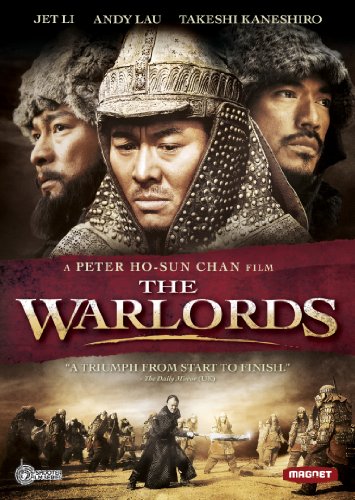
His troops defeated and massacred, General Pang (Jet Li) staggers away from the battlefield, more dead than alive. After a brief by intense overnight encounter with a mysterious Lian (Xu Jinglei), he falls in with bandits headed up by Er Hu (Andy Lau) and Wu Yang (Takeshi Kaneshiro). He finds a renewed purpose in life with this group, and forges the band into a formidable fighting force, one that will play an ever greater role in shaping the conflicts that are dividing China. But the fellowship he forms with his blood brothers has a fatal flaw: as fate would have it, Lian is promised to Er Hu. Betrayal and tragedy lurk in the wings.
First, the positives: this is a very handsome production, with a visual sweep that is appropriately epic. The battle scenes are expertly staged, whether these be small-scale skirmishes or grand campaigns. These are spectacular, exciting moments in the film. The characters and their story, however, are far less interesting. The love between Pang and Lian is difficult to empathize with – we don't really understand why these two are obsessed with each other, and must take it on faith that they are. All of which makes it difficult to care about the relationship, and thus its consequences are more irritating than tragic. And while Pang's internal conflicts are sometimes compelling, Lian's characterization is so perfunctory that she comes across as little more than venal, misogynist caricature. In the end, then, the film seems to drag on longer than its 113 minutes, as one finds one's eyes glazing over between the battle scenes. This is a beautiful movie, but an uninvolving one.
Posted in: Disc Reviews by David Annandale on October 30th, 2011
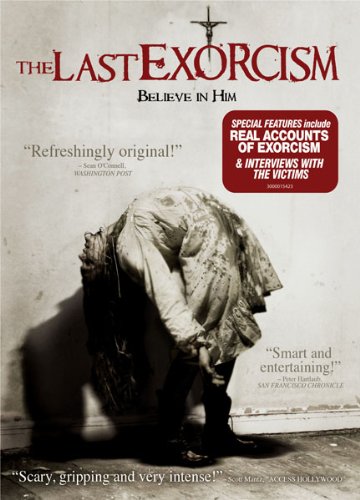
The Reverend Cotton Marcus (Patrick Fabian) has made a tidy living preaching the Gospel and working his specialty: exorcisms. But he has lost his faith and, along with it, his willingness to fleece the gullible. He does, however, acknowledge that an exorcism can prove psychologically beneficial if the recipient believes in the ceremony. All that said, Marcus wants out of the business, but he takes on One Last Case, and a film crew tags along with him to the backwoods (where else?), where the devout Louis Sweetzer (Louis Herthum) is convinced that his daughter Nell (Ashley Bell) is possessed. Marcus slips into his routine, but soon discovers that there is is much more afoot here than he could have imagined.
The first half or so of The Last Exorcism is not without interest. It does, in some ways, handle the faith-vs-reason question more interestingly than The Exorcism of Emily Rose, and it does a credible job of gradually building suspense. But as we approach the climax, the cracks in the found-footage conceit begin to show, and the resolution blasts straight past “frightening” and into “ridiculous” and makes nonsense of the entire mockumentary premise. Maybe it’s time to retire what is rapidly becoming a tiresome cliché. In the end, then, the film is a misfire, but kudos to Ashley Bell for her disturbing physical performance – she does all the back-breaking double-jointed shenanigans without the benefit of special effects.
Posted in: Disc Reviews by William O'Donnell on October 8th, 2011
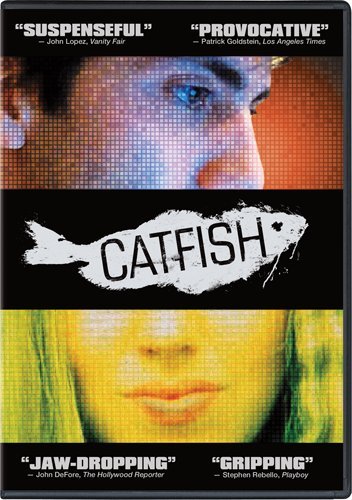
Two young filmmakers from New York city, Ariel Schulman and Henry Joost, start documenting the burgeoning relationship between their roommate (and brother in the case of Ariel) Nev and a family from Michigan. Said relationship exists only through online correspondence and phone calls. As a romance seems to be arising between Nev and Meghan, who is oldest daughter in the family, the filmmakers decide to make a trip to meet the family in person.
As the months pass, the story becomes so elaborate and strange that many critics have questioned the authenticity of this film as a documentary. I personally find it is worth looking past any doubt or beliefs and simply enjoy the mystery bubbling under the surface of the romance plot, as well as surprising level of pathos and intriguing character drama one receives from this story.
Posted in: Disc Reviews by Archive Authors on July 5th, 2011
Dear John centers around a soldier, John Tyree (Channing Tatum) who falls in love with a college student, Savannah Curtis (Amanda Seyfried) while he is back home on leave. This film is adapted from the Nicholas Sparks novel of the same name and directed by the melodramatic romance aficionado Lasse Hallstrom. If you are looking for a romance tale that offers very little surprises, look no further.
Hallstrom and Sparks seems to be a match made in heaven. For the better part of a decade, Hallstrom has entirely dedicated himself to romantic films: Chocolat, The Shipping News and Casanova. These films do not really demonstrate a form of versatility. Usually, I am fascinated with directors or writers that stay in their proverbial lane. They are not interested in writing or directing anything other than the genre that has garnered them any form of success. Sparks churns out the same romance novels because there is an appetite for them. Hallstrom provides the same service with romance films. Therefore, from a studio’s perspective, why wouldn’t you want to make film with these two?
Posted in: Disc Reviews by William O'Donnell on June 20th, 2011
Brendan Fraser plays Mo, a man who has the special power of a “silver tongue” which means he has the ability to bring characters and elements from books into the real world by reading their stories out loud. There is a serious catch to this power. Someone from the real world must go into the book in exchange. Mo discovered this by accidentally reading his wife into a story called Inkheart while pulling three of its characters out. Nine years after this event, and with his daughter and a couple of heroic literary characters at his side, he finally tracks down a copy of the rare book to try and bring her back.
The mashing of literary references does not get its legs until the monstrous climax of the film. Until then, the adventure seems a bit light and lacking in the essential energy to gain our full interest. There are also issues with establishing the mood of the film. The disappearance of Mo's wife seems tragic at times, as indeed the loss of a loved one should be, but at other s\times it simply seems like a reference in their fantastic quest amongst outrageous characters of fiction. No character seems to get enough times to dwell on the uncanny, such as an author meeting one of his characters face to face, or the heartbreaking, such as the aforementioned disappearance.
Posted in: Disc Reviews by William O'Donnell on April 29th, 2011
Craig, played by Keor Gilchrist, is facing a lot of stress in his sixteenth year on this planet and he becomes convinced that he wants to kill himself and checks himself into a psych ward. During his mandatory 5 day trial stay he undergoes a less-than common journey of self-discovery with the aid of his fellow patients.
What could have easily been a very contrived teen comedy turns out to be a refreshing coming-of-age tale that does not need to pander to the audience with an over-abundance of lowbrow humour and/or romance drama. Mind you, it is not that this film is lacking in either of those departments completely as we do get a couple naughty jokes snuck in, and our protagonist does find himself in a “girl trouble” dilemma that motivated his self-institutionalizing. Thankfully the focus continuously draws back to Craig and his attempts to heal, making him the ever present nucleus of the film for interesting character subplots to float around him.
Posted in: Disc Reviews by William O'Donnell on April 25th, 2011
(What follows is my cohort Gino Sassani's review, as it was written for the Blu Ray release of this same film. I have only added changes for the Video and Audio sections as DVD is naturally different than Blu Ray).
The Picture Of Dorian Gray was actually Oscar Wilde’s only full-length novel. It was quite a controversial subject when it first arrived on the scene in 1890, but not because of the horror element. The book is often sexually explicit and contains more than a flirtation with homosexuality. The main themes have survived, but much of the work itself has been forgotten. We know the work almost exclusively from the classic film from 1945 where Hurd Hatfield played the title character. The more notable members of that cast included Peter Lawford, Donna Reed, and Angela Lansbury. That film downplayed the debauchery elements and focused on the one element that appears to remain strongest in our collective memories, that of the picture aging instead of the man. It’s that deal with the devil that most of us think about when we hear the name Dorian Gray, or Dick Clark for that matter.
Posted in: Disc Reviews by William O'Donnell on April 25th, 2011
Dicky Eklund was the pride of Lowell, Massachusetts. While he constantly reminds the neighbourhood of his glorious fight against Sugar Ray Leonard, he has descended into a crack addiction that is breaking his family apart, and hindering the training of his up-and-coming brother, Mickey. As Micky inches closer to big opportunities in the fighting world, he must also battle the demons his family place upon him.
Part sports movie, and part character drama, this film's story is the sort of underdog tale that will be familiar to Rocky fans, and being a boxing film, it is readily susceptible to being compared to that series. If I may start with a focus on the sports movie angle, it diverges from the Rocky series most obviously by having less focus on the training (no big musical montages here) and the 'big' fights. Another divergence involving the fights this film has, one that is even more important to me,is a difference in how the actual fights were choreographed. I have never cared for the simplistic trading of head-shots, with little blocking, in the Rocky films. The Fighter has blood and blocking the way a true fight would have. The camera quality changes to something hand held looking when inside the ring with Micky and Dicky, and there are frequent flashes to the real life fight of Eklund vs Leonard, both of which help to make it seem like Mark Walhberg (who plays Mickey) is in an actual bout.