Alliance Films

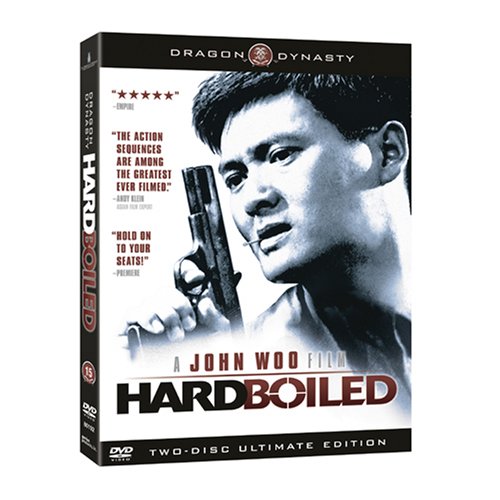
In the United States, we tend to take for granted; influences. In the case of movies, we take certain film styles for granted. We just figure that they always existed. Doesn't really matter where they came from, we just know we like that style of movie; over and over and over again. Enter Hard Boiled, a 1992 film directed by John Woo. This featured Chow Yun-Fat as Tequila, a hard nosed cop who is on a quest to derail an arms smuggling ring that has both cops and innocent civilians dead in its wake. The movie also featured Tony Leung as Alan, an undercover cop who is in deep cover as a Triad hitman who tries desperately to keep his sanity and protect his true identity. But what set Hard Boiled apart from other films and that was duplicated time and time again was over the top action and no-nonsense gunplay. In the first five minutes alone with the teahouse scene, you see more dead bodies fly across the screen than most action movies deliver in a couple of hours. But it wasn't just dead bodies, you can rent George Romero Dead movies if you want to see lifeless bodies. It was the style, you had the imagery of three guns emptying from the bottom of a birdcage, Tequila jumping in the air and killing two gangsters with a gun in each hand; and sliding down a staircase with such grace. This would continue in other scenes where similar heroics would come into play. For over two hours, your breath would escape you and somehow return by the final bell.

Hard Boiled was a film that made no apologies and has only amassed popularity as time goes on. The term cult classic would be more of an insult to the film as it has gone beyond that premise. In addition to two fine leading roles, the film included many popular supporting roles; primarily on the villains' side. Anthony Wong played the devious Johnny Wong, a character that had no morals and whose only real mission was to control the arms smuggling ring of China and get all the money in the process. Phillip Kwok (also known as Cheung Jue-Luh) played the role of Mad Dog (or One-Eye), the action counterpart to Wong's character as he enforced what Johnny didn't want to dirty his hands on. These characters developed a chemistry that produced memorable dialog with and without words. This was especially true when it came to the characters of Tequila and Alan once they get on-screen together. It was a flow of actions and reactions that had you enthralled for every last phrase that was used. The film's only negative would be the scenes where they decide to spend an inordinate amount of time surrounding getting the infants to safety. Once you dive into the extras on Disc Two, you start understanding that the babies actually were to be the main plot point or original concept of the film. So as a result they contributed to a major scene. The movie is still a masterpiece even with that small discordance with its amazing action and a hard running story that lead to be an influence of many future Asian and American action movies.

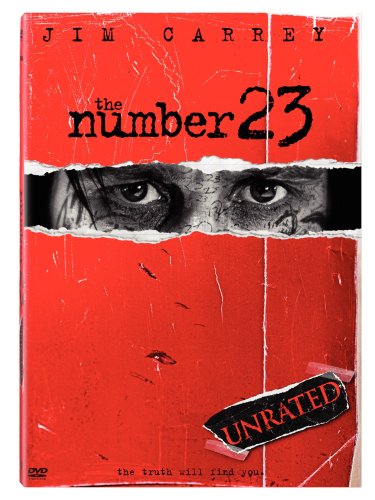
Jim Carrey is an animal control officer whose wife (Virginia Madsen) gives him an odd crime novel for his birthday. The book is narrated by a police detective who becomes violently obsessed with the recurrence of the number 23 in all aspects of life. The book has plenty of strange similarities with Carrey's life, and he becomes consumed with finding the author and knowing what it's all about, not to mention descending into the 23 obsession himself.As with so many Joel Schumacher films, there is less here than meets the eye. The film is pretty, slick, and superficially interesting, but ultimately rather empty. The whole 23 thing has been kicking around in popular culture for a while, and there is something neat that could be done with it, but most of the notions of mystery or conspiracy evaporate as the film reaches its climax, and everything disintegrates into a muddle of endless expository voice-over and platitudinous moralizing. The unrated version of the film runs three minutes longer than the theatrical version (also present).

Audio

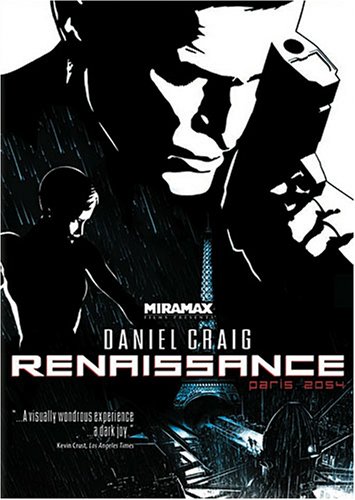
Style over substance. Why is it so rare that we find quality in both at the same time? I suppose I might be showing my own age here, but Renaissance is an extremely hard film to watch. The high keyed image offers no middle tones at all. The result is a stark black and white that offers a strain on my eyes. I understand the idea was to recreate the experience of reading a graphic novel (that’s comic book to my generation). Still, I wasn’t reading a comic, was I? It took the French film crew 7 years to create this film. I wouldn't have minded waiting longer. The concept isn’t even an original one at all. Sin City and the more recent 300 both utilized a graphic novel style. In those films there was a balance between the style and being careful to allow for a cinematic experience as well. Both of those films carried it off perfectly. Not so with Renaissance. There were no compromises made to make the film work as a film.

The story is also quite convoluted. This was a mistake, particularly when the images themselves would be such a distraction. The tale actually feels like a science fictional James Bond. That idea is further enhanced by casting the voice of Daniel Craig in the lead. The character of Karas even looks, likely intentionally, like an early Sean Connery. It seems that a kidnapped geneticist holds the key to immortality. Officer Karas becomes obsessed with finding her with little apparent support from his superiors. In the end he must make a rather difficult moral decision. Throughout the film we are treated to bizarre characters that often have little to do with the plot. Again, it’s style supplanting substance. Too much “see what we can do” with very little good ever getting done. I will admit that some of the locations are drawn brilliantly and often work better than the live action later animated work.

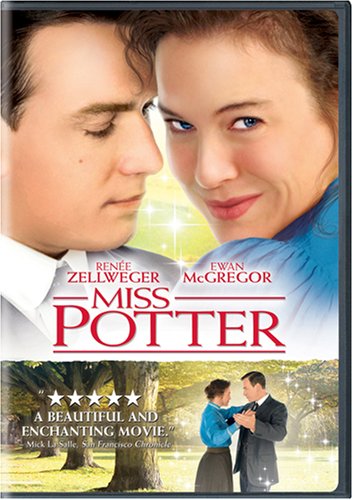
Where was I when Miss Potter was in theatres last year? I don’t recall hearing much about it, and that’s a shame. This is one of the most charming, infectiously light-hearted films I’ve seen in long while.

It’s the story of Beatrix Potter (Renée Zellweger, Chicago), the 19th century British creator of the famous Peter Rabbit children’s stories. When we first meet Beatrix, she’s an unmarried woman in her early thirties, lugging her portfolio of paintings and a story to potential publishers. In meeting with two crusty older gents, it seems she’s not going to have any luck. They flip through her drawings of rabbits dressed in human clothes, while she insists they, the rabbits, are her friends. She must be crazy. Lucky for her, these guys have an annoying younger brother who’s insisting he be allowed into the family publishing business. They decide to give him this “bunny book” to minimize the harm he would surely do to their serious business.

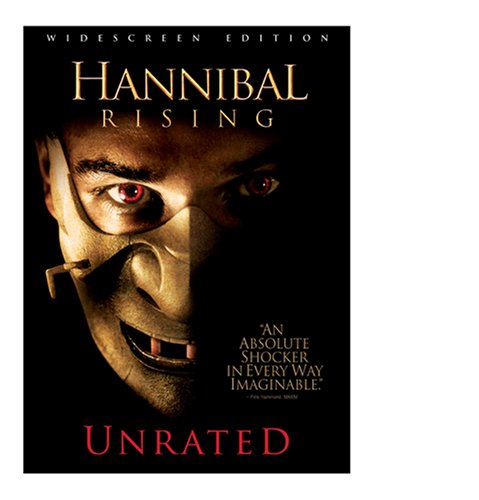
Hannibal “the cannibal” Lecter is widely recognized as one of the most compelling villains in modern fiction. This film, Hannibal Rising, based on the Thomas Harris book of the same name, presents the origin of the cannibalistic psychopath.

Quick context for this review: I’ve seen all of the Lecter films, and read none of the books. I liked Silence of the Lambs best, followed closely by Manhunter and more distantly by Hannibal and Red Dragon, the 2002 Manhunter remake. As such, I’ve certainly wondered about the story behind the madman. Was he born, or made? Or was it nature amplified by nurture?

The Butterfly Effect 2 is a direct-to-video release, and for good reason. While the original film was a surprise hit back in 2004, this sequel is nothing more than a quick cash-in.

At least, that’s what I thought I’d be writing for this review. I definitely had low expectations for this film, especially since while I’ve heard good things about the original, I’ve yet to see it, and I still question its somewhat-acclaimed reputation. So surely this sequel must be a piece of junk, right? But it’s not.


I started my review of season four by remarking how little CSI had changed over its first four years. In its fifth year the powers that be decided to muck up the works a bit. The team is split between day and night shifts and Catherine is given the supervisor position on days. This actually leads to probably the show’s largest continuity flaw. It seems that the shifts overlap not just once in a while but almost all the time. I found myself really confused about this whole shift deal. Mostly I think the change takes away from the character interactions that I have come to love so much about this show. CSI has been able to find the perfect formula. There’s enough interaction and private life to make things interesting. Still, the relationships do not devolve into casual romances that tend to bog even quality dramas down. Season 5 created some serious challenges to that wonderful system. You’ll still find the same good quality procedural drama episodes. The look of the show remains untampered with. Perhaps the changes will appear fresh to many long-time fans. We’ll see.

I do like the use of the Greg character more as he becomes a full time member of the field team. A new team member, Sofia, also helps to make up for the changes.

CSI hasn’t changed much in its first four years. Expect more of the same here. The unique photography and f/x material is pretty much as solid as it was in the first episode. I’m not sure I like the “scruffy” Grissom look, but the show is as good as it’s ever been. As in each of the previous season, Gil Grissom leads a team of Crime Scene Investigators (CSI) on the night shift in Las Vegas.

Audio