Posted in: Disc Reviews by David Annandale on November 24th, 2010
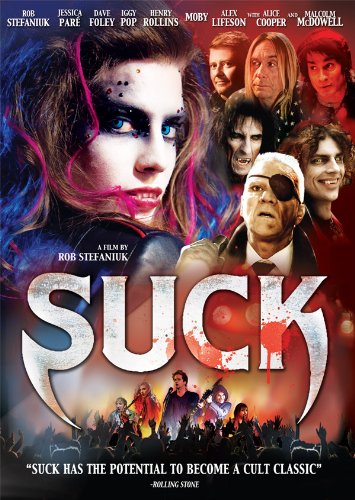
The Winners are anything but, being an undistinguished rock band playing to tiny, apathetic audiences in nowhere bars. Their time has not only passed, it never arrived. But just as they seem headed for the scrapheap, their bass player (Jessica Paré) is bitten by a vampire. Though her newly acquired taste for blood is a bit of an inconvenience, leading to some extremely messy murders to clean up, she now mesmerizes audiences, and the band catches fire. Leader Rob Stefaniuk is so desperate to catch a break that he is willing to turn a blind eye to just about anything. But complications loom, not least of which is Malcolm McDowell in full Van Helsing mode, heavily armed and sporting an eye patch.
“Suck has the potential to become a cult classic,” reads the blurb from Rolling Stone, and that might well turn out to be the case. But Suck also rather desperately wants to be a cult classic, and that desire can stand in the way of its becoming the genuine article. It pulls all the right moves – black humour, full musical numbers, rock star cameos, outrageous gore, Malcolm McDowell – but those moves feel just a bit too self-conscious. The songs are rather bland, and the humour is hit and miss – though to its credit, when the film is funny, it is very funny (Iggy Pop's deadpan turn is one highlight). The flashback scenes of McDowell's traumatic first vampire encounter are very well done, cleverly incorporating repurposed footage of a young McDowell. In the end, while not everything works here, what does work, works well enough to make this worth a rental.
Posted in: Disc Reviews by Archive Authors on October 22nd, 2010
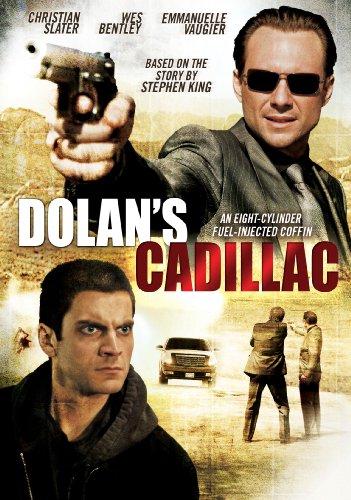
Wow, someone took Dolan’s Cadillac, one of my favourite Stephen King short stories, and made it into a movie! Awesome! Cool, not a bad cast either. Christian Slater and Wes Bentley. Good actors. A little bit of edge to them. This might be alright. What’s that? It’s a straight to DVD release? Well that’s not promising. Hmm? It was made in Saskatchewan? By a Canadian sit-com director? Okay, now you’re just messing with me…
As it turns out, it’s all true. King’s sun-scorched tale of madness and revenge has indeed been brought to the screen, even if that screen is the one hooked up to your DVD player.

Posted in: Disc Reviews by Archive Authors on October 11th, 2010
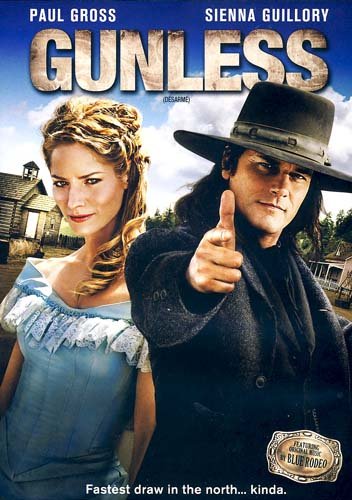
In the opening scenes of Gunless, a horse trots into what appears to be a tiny western town. Atop the horse is an unconscious man, slumped backwards in the saddle with a noose around his neck attached to a large tree branch that drags along behind them. An iconic Western opening if ever there was one. Reminiscent of Clint Eastwood in High Plains Drifter or Hang ‘em High. However, things soon begin to stray from formula when we realize that this tiny town is actually in "The Dominion of Canada" and the man turns out to be the Montana Kid, a notorious American gunfighter.
The ‘Kid’ is soon helped out by a polite bunch of Canadians, and before you can say “American stereotype” he has tried to start a gunfight with the kind local blacksmith. The reason? Why, the blacksmith had the gall to shoe the Kid’s horse. Unfortunately (or fortunately, if you are the blacksmith) he has no gun and therefore, according to the code of the West, can’t be shot. The solution? Why, the Kid will get the blacksmith a gun. But since this is Canada, there are no guns in the area, except for a broken antique owned by the local Brit-accented hottie widow.
Posted in: Disc Reviews by David Annandale on October 5th, 2010
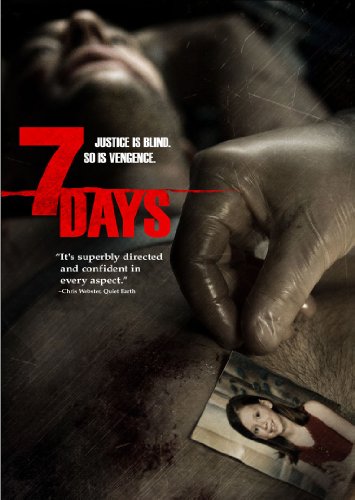
Bruno Hamel (Claude Legault), a surgeon, and his wife Sylvie (Fanny Mallette) enjoy an afternoon tryst while their young daughter Jasmine (Rose-Marie Coallier) heads off to school. Tragedy strikes, though, when Jasmine is assaulted and killed by pedophile Anthony Lemaire (Martin Dubreuil). Bruno and Sylvie are devastated, and each deals with the tragedy an unhealthy way, with Sylvie withdrawing from the world and her husband, and Bruno plotting vengeance. Lemaire is caught, but doesn't remain in police custody long, since Bruno kidnaps him and carries him off to a secluded cottage in the forest. His plan: torture Lemaire for the seven days leading up to what would have been Jasmine's birthday, and then kill him. The police investigation becomes at least as much about saving Bruno's soul as it is about saving Lemaire's life.
Rightly or wrongly, so-called “torture porn” is one of the more reviled subgenres of horror film. While there is no denying that the worst films of this type can be among the most mind-numbing and depressing bits of celluloid stupidity, aesthetically as well as ethically bankrupt, it is just as true that the best can force the viewer into some extremely uncomfortable, but artistically and philosophically vital, territories. One should also bear in mind that though the term “torture porn” is new, that type of story has been around forever. No less a figure of classic horror than Bram Stoker himself wrote a short story called “The Squaw,” wherein a character experiences a sexual thrill by installing himself in an iron maiden (until, of course, things go rather wrong). And if we go all the way back to the birth of literary horror, with the arrival of the Gothic novel at the end of the 18th century, the Marquis de Sade was right there at the start, penning works that articulated what the English Gothics only hinted at, and that depicted horrors that go far beyond anything Eli Roth has dared put on the screen.
Posted in: Disc Reviews by Archive Authors on August 1st, 2010
Extraordinary Measures is a moving story about family and a father’s perseverance to find a cure for his children. John Crowley (Brendan Fraser) seeks out the help of an irritable medical researcher (Harrison Ford) whose theory cannot be fully developed without extensive funding. As the time ticks away, so does the probability of finding a cure. This film requires an emotional investment and audiences will be surprised at how invested they become.
Coming from emotionally charged source material, the filmmaker (Tom Vaughn) was given the difficult task of conveying personal emotion to a mass audience. Too often stories similar to this are made into low budget made for TV films which are downtrodden for their ineptitude. It is difficult for audiences to shed that stigma from the marketing of this film. However, on a positive note, Extraordinary Measures is executed quite well. The momentum of the film is driven from the story and less on aesthetics. The shot selection, editing and score of the film are all pedestrian at best. However, there is something to be said for a film that has an arbitrary execution and still manages to maintain the audience’s attention.
Posted in: Disc Reviews by David Annandale on July 31st, 2010
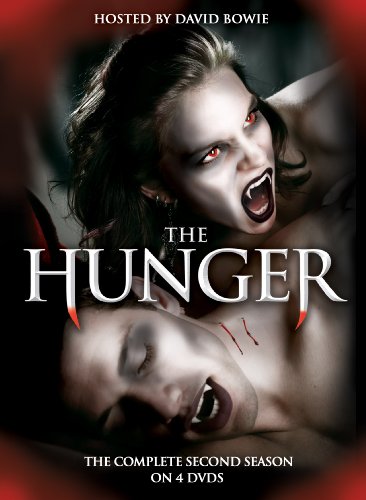
The second (and final) season of this erotic horror anthology series follows the pattern set down by the first. David Bowie replaces Terence Stamp as host, and takes up the job of briefly uttering portentous statements before each story rolls. These stories star such luminaries as Giovanni Ribisi, Eric Roberts, Jennifer Beals and Lori Petty, and are based on tales by a pretty impressive line-up of line-up of writers: Poppy Z. Brite, Kim Newman, David J. Schow, Gemma Files and Ramsey Campbell, to name but a few.
As before, the erotic fixations give the series a clear identity, but also narrow its focus so that a marathon viewing of episodes would be a bit tiresome. But again, as before, the talent involved means horror fans would be remiss to pass the series up without giving it a serious look.
Posted in: Disc Reviews by David Annandale on July 31st, 2010
In 1983, director Tony Scott wasn't quite as prone to self-caricature as he is today, but he was already enamored of glossy, pretty surfaces, and if nothing else, his vampire movie The Hunger was glossy and pretty. The film arguably remains the most high-profile mixture of eroticism and horror, its place in libidinal history cemented by the love scene between Susan Sarandon, Catherine Deneuve, and Deneuve's body double. The film's lasting cult appeal resulted in a short-lived TV horror anthology series, presented by brothers Tony and Ridley Scott, and running two seasons (1997-8 and 1999-2000). Here we have Season 1, hosted by Terence Stamp.
The series' mandate was to present glossy sex-and-horror tales in a half-hour format. In this respect, it follows in the footsteps of The Hitchhiker (1983-91), but the intervening years mean generally better production values for The Hunger. An annoyingly long opening credit sequence leads to an enigmatic 30-second intro from Stamp (everything set to the sort of flashy cutting and visual excess that sure feels like it was directed by Tony Scott, even if it wasn't). The actual stories are notable for their talent on both sides of the camera – directors such as Russell Mulcahy, Patricia Rozema, and Tony Scott; actors like Daniel Craig, Karen Black, and Jason Flemyng. Even more interesting is the fact that just about every story is either adapted from a short story by a notable writer (Robert Aickman, F. Paul Wilson, Brian Lumley, Edgar Allen Poe) or scripted by one (Harlan Ellison, David Schow). The limitations of TV and budget are still present (beware some extremely ill-advised CGI), and the centrality of sex to the narratives mean that things can feel repetitious if you watch many episodes back to back. On the other hand, there is also some genuinely disturbing imagery here (check out the climax to “Necros”). In small doses, then, worth watching.
Posted in: Disc Reviews by David Annandale on July 28th, 2010
Woody Harrelson is Arthur Poppington, a child-like adult who fights crime by night in the guise of Defendor. His costume and weapons are DIY: a helmet that records his adventures on VHS, a duct tape “D” on his black turtleneck, a trench club, a slingshot, marbles, lime juice. He is obsessed with tracking down “Captain Industry,” a mythical figure whom he blames for the death of his drug-addicted mother. He runs afoul of corrupt cop Dooney (Elias Koteas at his scuzziest best), beating him and “rescuing” prostitute Kat (Kat Dennings), and the latter convinces him that the crime boss Dooney works for is, in fact, Captain Industry. Arthur sets out on his crusade, and the question is whether his naiveté will triumph, or get him killed.
A quirky, charming take on the super-hero genre, Defendor deftly mixes pathos and laughs. There is enormous fun in seeing Koteas taking one improbable beating after another, but there is also real sadness and drama in Arthur and Kat's stories. For all its “real world” patina, Defendor is ultimately no more realistic than The Dark Knight, but that in no way detracts from the deeply human, deeply moving, character-driven tale that unfolds. Quite the wonderful little movie.
Posted in: Disc Reviews by William O'Donnell on July 23rd, 2010
Several years ago comedian Doug Benson made a joke about wanting to parody the film Super Size Me, after watching it while high, by smoking pot continuously for 30 days. A filmmaker heard that joke and decided to make it a reality. Upon making the film, there was an added catch to Benson's plan of 30 days being “Super High,” as he would have to be stone sober for the 30 days leading up to it.
Posted in: Disc Reviews by David Annandale on July 6th, 2010
Nick Twisp (Michael Cera) is a 16-year-old in terminal virgin mode. His home life with his mother and piggish boyfriend (The Hangover's Zach Galifianakis) is a nightmare, but when said boyfriend runs afoul of a trio of sailors, an enforced vacation is mandated. At the trailer park, Nick meets Sheeni (Portia Doubleday), a girl who not only speaks to him but shares his tastes. But Nick has a rival for Sheeni's affection, and in order to win her heart, he must be bad. Conjuring suave alter ego François as his guide, he embarks on an escalating campaign of mayhem designed to unite him with his beloved.
Michael Cera turns in a patented Michael Cera performance: the sensitive, intelligent, shy teen. What could feel too familiar, though, is kept fresh by his hilarious incarnation of François, and the humour depends to no small degree on bouncing off the Cera's established screen persona. And work the humour does. There are great sight gags here, some terrific slapstick, and no end of sharp verbal wordplay. The script is an intelligent delight, and the characterizations are quirky and sharply drawn. I have essentially two reservations: Sheeni is a pretty unsympathetic character, unworthy of Nick's devotion, and the more we see of her, the more his love becomes inexplicable; and there are a number of appealing characters who simply drop through cracks in the plot, never to be seen again. Still, all told, this is one sharp, funny comedy.