BBC

"The Earth has immense power, and yet that's rarely mentioned in our history books. I'm here to change all that."

The BBC has a reputation of putting out some very high quality documentaries, particularly recently in the high-definition age. Planet Earth became an award winning series lauded all over the globe for its stunning photography and epic tales. Most recently I watched and reviewed their Life series. Once again the series was dominated by startling images, many never before captured on film, all in wonderful high definition. Now I have a chance to visit yet another recent BBC project: How The Earth Changed History.

"Three years of filming. Seven continents. 70 camera crews. 3,000 shooting days. 200 different species. Groundbreaking technology. It all adds up to the most ambitious natural history series ever created."

The BBC has been at the forefront of natural history documentaries since the 1950's. Each decade the teams from the British unit have traversed the globe with what has always been, for the time, the latest in technology. The images that have been captured have entertained and educated the world for more than half a century. In today's high- definition world, the BBC has not failed to impress with its acclaimed Planet Earth series, among other notable projects. The latest of these is the three-year project, Life.

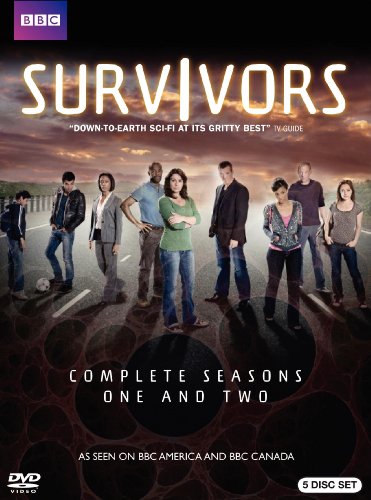
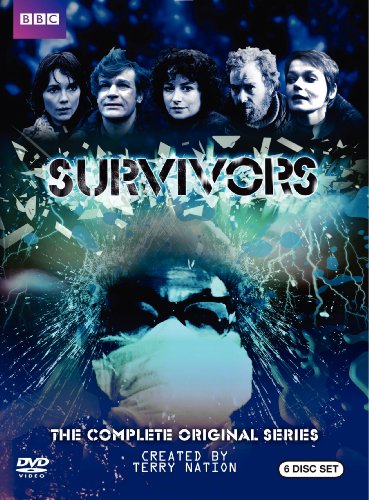
"Most of the world's population has been wiped out by a virus. Civilization, as we know it, has come to an end. For the few survivors, every day is a fight for life. But sinister forces threaten their future."

Right from the opening credits, you can see that a lot has changed since 1975 and the original series. I'm guessing that my watching them back to back allows for even more dramatic notice of the changes. Everything is cleaner here. The production values are light-years away from what they were. Even the disc menus reflect the higher-tech edge of the 21st century production values. The credits claim that this series is not really based on the original show, but more on Terry Nation's novel. I never read the novel, but it appears there is some truth to that statement. The episode titles no longer have individual titles. They are merely listed as Episode One, Two... and so on. Once you begin to watch the show, you will find that you recognize many of the characters by name and, at times, circumstance, but these are not the same people at all. More on that later.

"You know, I never thought what happens to a city ... well ... if it breaks down, all at the same time. There's no power. There's no lighting, or cooking. And food, even if you can get it into the city, you can't distribute it. Then there's water and sewage, things like that. You know, it just never occurred to me when I lived in London. The city's like a great big pampered baby, with thousands of people feeding it and cleaning it, making sure it's all right."

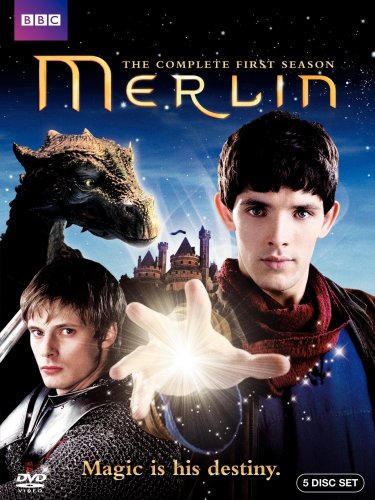
"No young man, no matter how great, can know his destiny. He cannot glimpse his part in the great story that is about to unfold. Like everyone, he must live and learn. And so it will be for the young warlock arriving at the gates of Camelot. A boy that will, in time, father a legend. His name ... Merlin."

Merlin. You know the name. It conjures up images of a white-haired old man with a long gray beard and a long pointed hat. His story is indeed legend. In the myths of Arthur and his Knights of the Round Table, he is destined to be the mentor to the King of Camelot. We've all heard the stories of the Sword in the Stone and the Age of Chivalry. Perhaps it is totally appropriate that this telling of Merlin come from British television. England is, after all, the origin of the fanciful legends.

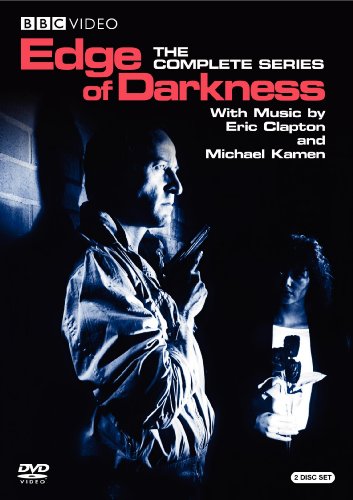
"One year ago, the MOD test system at Eskmeals confirmed radioactivity of above normal background levels at the Corry Reservoir, Craigmills, Yorkshire. The usual emergency procedurals were activated under NAIR arrangements, and the reservoir was shut down. An independent inquiry was set up under the chairmanship of Dr. Anthony Marsh."

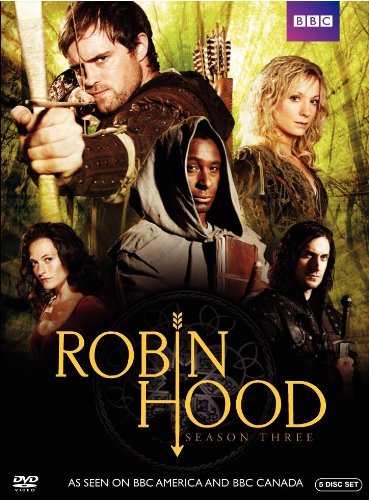
Robin Hood is a fantastic tale, and one that can be re-told again and again without fail. The story begins with a man that steals from the rich and gives to the poor. This is a great way to give us a hero to cheer for and has worked for Errol Flynn and even Kevin Costner. This summer, Russell Crowe tries his hand at making the arrow stick for a successful box office run. But will Jonas Armstrong make a viable enough Robin Hood for a third season of this BBC series? We will just have to see.

The second season of Robin Hood ended in a shocker: Marian (played by Lucy Griffiths) has been murdered at the hands of Guy of Gisborne (played by Richard Armitage). Robin Hood (played by Jonas Armstrong) is outraged and seeks Gisborne’s head on a silver platter. His only desire is vengeance and he won’t be held back by anything to achieve his revenge.

“Yellowstone. Volcanic wonderland. Two million acres in the heart of North America, Yellowstone is deep in the Rocky Mountains, an isolated high plateau defended by rugged peaks; in the middle is the National Park. The park and the surrounding mountains form one of the most important and spectacular wilderness areas on Earth.”

There have been a lot of these nature shows coming to Blu-ray high definition lately. No less than two of them cover the beauty that is Yellowstone National Park. While there is a lot to learn about the natural treasure, more in fact than I suspected, it’s not going to be the facts that will drive you to watching this particular three part feature. It’s the absolutely stunning images that make this all that you could want in a travelogue documentary. You’ll soon find yourself completely mesmerized by images that look almost impossibly brilliant in color and sharpness to be real. If you’ve been to the park, this might serve as the ultimate way to recapture such a personal experience. If, like me, you’ve never witnessed the place with your own eyes, now you have. Everyone knows about Old Faithful, but Yellowstone National Park is about so much more.

“Its cold outside, There's no kind of atmosphere, I'm all alone, More or less.
Let me fly, Far away from here, Fun, fun, fun, In the sun, sun, sun.

I want to lie, Shipwrecked and comatose, Drinking fresh, Mango juice, Goldfish shoals, Nibbling at my toes, Fun, fun, fun, In the sun, sun, sun…”

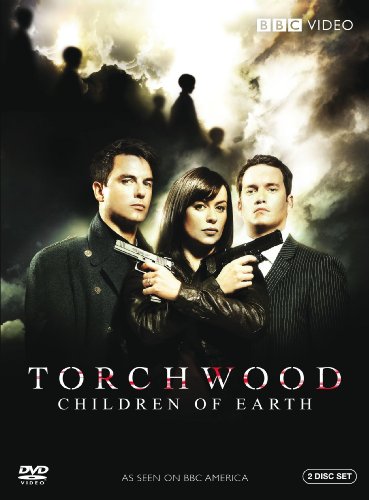
“There’s one thing I always wanted to ask Jack back in the old days. I wanted to know about that Doctor of his, the man who appears out of nowhere and saves the world, except sometimes he doesn’t. All those times in history where there was no sign of him, I wanted to know why not. But I don’t need to ask anymore. I know the answer now. Sometimes The Doctor must look at this planet and turn away in shame.”

It all started some decades ago with the BBC’s immensely popular television series, Dr. Who. The show was a national phenomenon in Great Britain, but in the 1970’s PBS stations here in the States started to pick up the show. Tom Baker was the Doctor at the time, and it became a huge hit, particularly across college campuses. Eventually, like all good things, the series wound down and disappeared from the airwaves. But in 2005 the BBC decided to resurrect the Doctor once again, and lightening did indeed strike twice. The show’s new format and style appeared to pick up right where the old show left off.