Posted in: Disc Reviews by J C on August 3rd, 2015
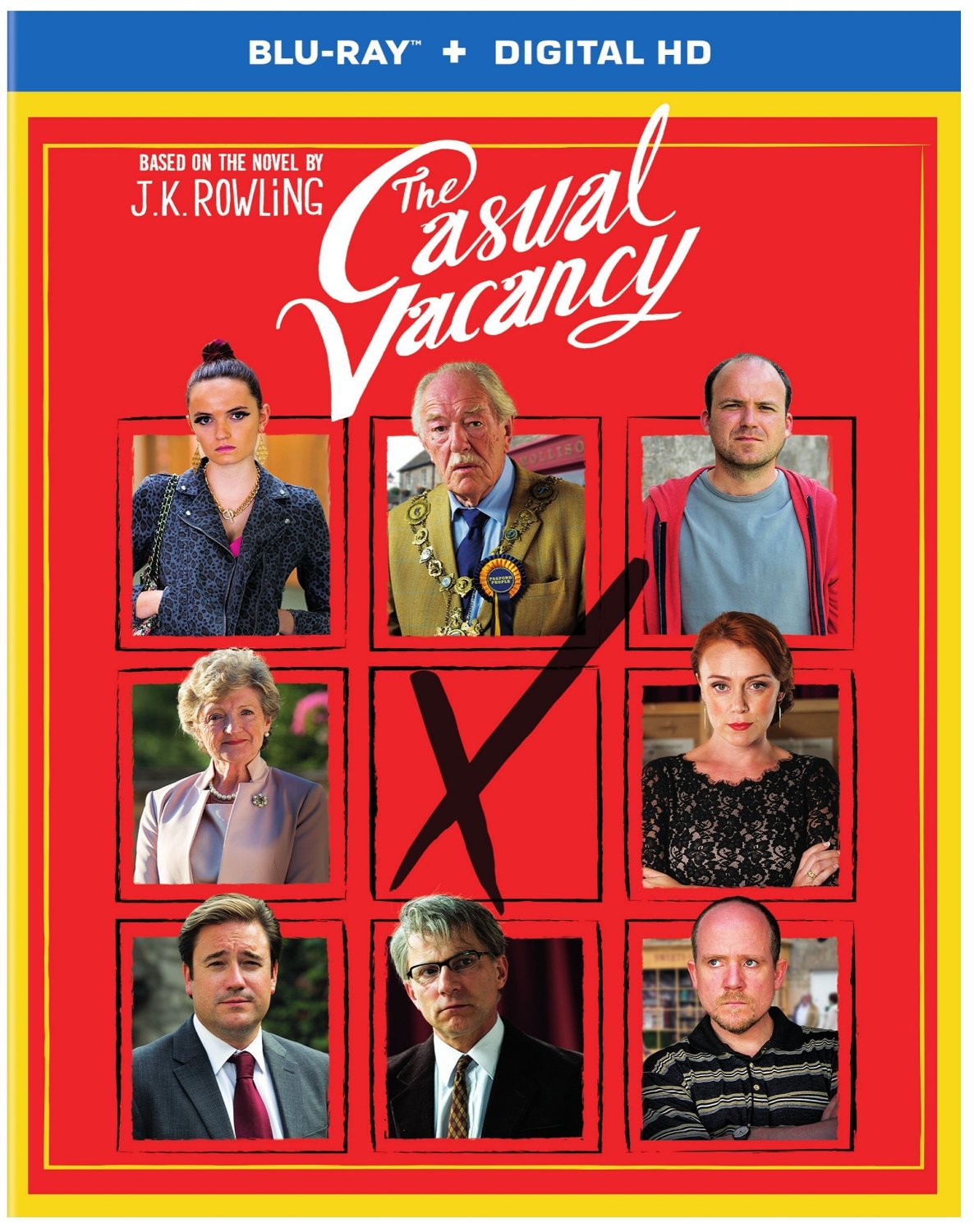
How do you follow up the biggest publishing phenomenon of the last 20 years? Well, if you're J.K. Rowling, you excise all talk of horcruxes and Hogwarts and supplant it with warring parish council members and the idyllic village of Pagford. That's the setting for The Casual Vacancy, Rowling's 2012 follow-up to the Harry Potter series. The book has been adapted by BBC and HBO into a three-part miniseries. With its small-town setting and 23(!) main characters, the series simultaneously feels quaint and sprawling. It also made me wish I was able to spend more than three hours with these people.
“Everyone's got skeletons rattling in their cupboard.”
Posted in: Disc Reviews by J C on April 14th, 2015
The longest-running crime dramas tend to be “case of the week” mysteries where the perp is comfortably caught within the hour. It’s a formula for sure, but it’s one that’s easy to replicate and works quite well if you have the right talent and personalities involved. In reality, of course, there are many cases when the crook isn’t captured before the end credits…or ever. The accompanying anger and uncertainty is much trickier (and messier) to convey dramatically. The Missing — a limited series from England that aired on Starz — isn’t the first show to tackle that territory, but it’s certainly a compelling recent example.
“It’s no use going back to yesterday because I was a different person then.”
Posted in: Disc Reviews by J C on May 29th, 2012
"This Martius is grown from man to dragon. He has wings. He's more than a creeping thing. There is no more mercy in him than there is milk in a male tiger."
There's a certain hierarchy when it comes to the amount of cinematic interpretations of William Shakespeare's plays. At the top tier, we have the endlessly adapted Romeo and Juliet, Hamlet, Othello and Macbeth the Scottish Play. A step below that, you've probably got your King Lear, As You Like It, A Midsummer Night's Dream and a few more. And about a dozen tiers below that, we finally come across Coriolanus.
Posted in: Disc Reviews by Gino Sassani on December 6th, 2011
"On every world wherever people are, in the deepest part of the winter, at the exact midpoint, everybody stops and turns and hugs. As if to say, "Well done! Well done, everyone! We're halfway out of the dark." Back on Earth, we call this Christmas, or the Winter Solstice. On this world, the first settlers called it the Crystal Feast. You know what I call it? I call it expecting something for nothing!"
In 2005 the BBC decided to bring back the gone-but-never-forgotten character. Christopher Eccleston would become the ninth Doctor, and a brand new series was started. The Doctor was revived in a more traditional hour long episodic format. Gone were the cheap f/x, and now with the use of CGI and a more respectable budget, Dr. Who could be given the high-end treatment it deserved. But would all this new slick production be able to retain the magic of the original? As it turns out, much of that charm remains, and a brand new generation has gained access to Dr. Who. Sadly, Eccleston would retain the part for only a year. In the second season David Tennant would take over the role. It is this tenth Doctor who has changed twice more to the one you’ll find in this sixth season (or series as the British like to call them). The old theme is back but far more modernized and performed by the National Orchestra of Wales.
Posted in: Disc Reviews by Gino Sassani on May 10th, 2011
In the 1970's the critically acclaimed Upstairs Downstairs was a television mainstay in England. American audiences were soon introduced to the series through PBS broadcasts in the late 1970's and beyond. It was a unique kind of drama that served both as a period piece and an examination of the class lifestyles. The series began at the turn of the century and led up to the events of World War I and the period that soon followed. We were witness to the wealthy Bellamy family who occupied the estate at 165 Eaton Place. The family lived in the upstairs rooms, while the servants who kept the place in order occupied the rooms downstairs. Each episode would bring the dramatic events of the world to the doorstep of the home and we would see how they affected the two classes. We got to know members of both classes, and as the series progressed, observed the stark differences while also seeing the common humanity the two worlds shared. It was a huge hit and has lived on in syndication in all of the years since. The original series ran from 1971 until 1975 and covered the years of 1903 until the market crash of 1929 and the death of the patron of the estate. The whole thing had to be sold and the characters dispersed to their own lives from there.
Enter Heidi Thomas, who was eleven when the original series ended. The show stuck with her, and she made it a sort of life mission to bring the series back. In 2010 that's exactly what she did. The result is the three episode run that we have in this release.
Posted in: Disc Reviews by Gino Sassani on May 10th, 2011
"Only one creature has carved out a life for itself in every habitat on Earth. That creature is us. All over the world we still use our ingenuity to survive the wild places, far from the city lights, face to face with raw nature. This is the Human Planet."
Posted in: Disc Reviews by Gino Sassani on December 9th, 2010
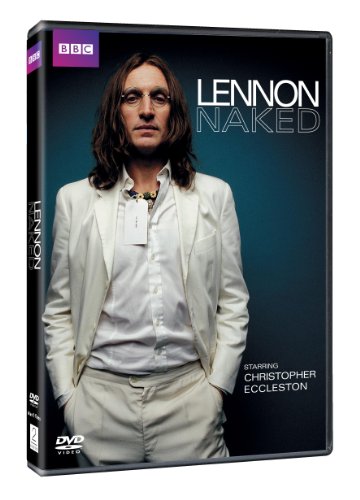
In December of 1980, John Lennon was gunned down by a crazy man who was trying to get the attention of yet another celebrity. In 2010, the BBC assassinated the man's character in this dreadful television film called Lennon Naked. I had such high hopes for the film. I rather like star Christopher Eccleston. I enjoyed his take on The Doctor from Doctor Who. He was also quite good in the zombie thriller 28 Days Later with a run as a man who can become invisible on Heroes. What made such a fine actor stoop so low as to take a gig like this is beyond my understanding. If it was the temptation to maybe play an idol from his childhood, I would have hoped he would have stopped short once he'd read the script. As the aforementioned warning tells us, this film is actually a hodgepodge of speculation that doesn't fail to kick the singer at every point.
I'm not a huge John Lennon fan. In fact, I only have mild feelings about The Beatles in general. I respect what they have done but have leaned more toward Paul and George in their years after the super-band. I have no illusions that Lennon was anything but a spoiled brat, particularly at the height of his career. His famous, "We're bigger than Jesus Christ" statement said a lot about his immaturity at the time. It should be expected. The "lads" were mere teens when their music caught fire. Before they had a chance to start shaving, women were throwing themselves practically faint at the band, and money was coming in as if it were the most common thing in the world. It's really no wonder that the band members had a feeling of entitlement and were a bit rough around the edges. There is certainly a bit of fairness to some of this portrayal.
Posted in: Disc Reviews by Gino Sassani on November 22nd, 2010
Imagine a world where Winston Churchill battles deadly machines from space intent on dominating the universe, a place where Santa is a deadly menace, and a rather eccentric fellow travels about in a police call box with a rather deceptively spacious interior. To Dr. Who fans of all ages, this is all very familiar territory. I fell in love with Dr. Who as played by Tom Baker from 1974 – 1981. He was the fourth actor to portray the Doctor and arguably the most popular. With a pocket full of jelly babies and a trusty sonic screwdriver, the Doctor rather muddled his way about with a massive wool scarf around his neck, all the while solving the mysteries of the universe. It was through PBS stations in the late 70’s that Americans were first introduced to these adventures on a regular basis. Before long the Doctor would develop a cult following of sorts, particularly at college campuses. The Doctor was an alien from the planet Gallefrey. A time lord, he traveled through space and time in his TARDIS, disguised as a police call box by a chameleon device. He was accompanied by a line of companions that would serve as the representative of the audience. These women provided a place for the Doctor to bounce his ideas off of, and from time to time they would require a bit of rescuing. The show was noted for its low budget f/x and over-the-top villains. The cardboard sets often appeared as if they would collapse at any moment. All of this created more than a little bit of campy cheese. But for some reason there was a charm to the entire play that was oddly compelling. To ensure longevity, the character was able to regenerate when faced with death. The new Doctor would not only look different, but he would sport an entire new range of mannerisms. This way the series would continue through several changes in the actor playing him. It all worked, and Dr. Who became the longest running scripted science fiction show ever in the world. Of course all good things do come to an end, and so did Dr. Who, in spite of an American television film attempt to bring the character back. But what started with Peter Cushing in a couple of films finally ended for good…
…but not so fast.
Posted in: Disc Reviews by Gino Sassani on November 22nd, 2010
In 1887, readers of the popular periodical Beeton's Christmas Annual were to receive quite a special treat. There wasn't much fanfare or hype to the event. Inside the pages of the magazine was a story called A Study In Scarlet. It was a detective story, perhaps like many published before, except for the detective himself, a certain Mr. Sherlock Holmes. Together with his faithful companion and chronicler Dr. Watson, Holmes would win the hearts of those holiday readers. It might have been an ordinary day, but the world was about to change. Sherlock Holmes would become the most famous detective in the world. His stories would remain in print nearly 130 years later. Over 100 films would be made featuring the character. There would be television shows and cartoon spoofs. No other character has appeared in more productions. When his creator dared to kill the beloved detective in order to move on to newer stories, his very life was threatened. It would seem that Doyle was on the verge of becoming a victim much like those in his stories. There was only one man who could save him from such a grim fate, and he did just that. It was Sherlock Holmes himself.
Today, Holmes has enjoyed a bit of a resurgence. There's been a stage production of Hounds Of The Baskervilles. Robert Downey, Jr. played a more modern action-figure version of Holmes in a very successful blockbuster film. A sequel is on the way. It seems that Holmes has more lives than a cat.
Posted in: Disc Reviews by Gino Sassani on November 22nd, 2010
“Things never happen the same way twice.”
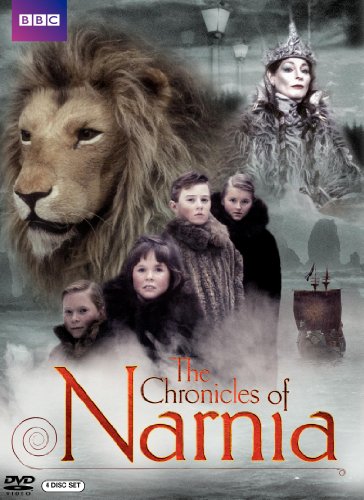
C.S. Lewis created an incredibly imaginative world when he wrote his Chronicles Of Narnia. The stories were an escape, of sorts, from a war-torn Europe. They integrated elements of Christianity in an effort to provide a semblance of hope in the form of a children’s fairy tale. And like all such tales, the world of Narnia was first and foremost a place of magic and bewilderment. It was a place where fantastic creatures of both good and evil thrived, living out epic lives of adventure. It was also a world where only children could enter. The stories became hugely popular, first in England, and eventually around the globe. Since that time we live in a different planet than the one Lewis was attempting to offer a respite from. Still, the images and ideals are remarkably relevant today. With such sweeping grand adventures and marvelous creatures, it’s no surprise that the franchise has found its way into films. The only real mystery is why it took so long. Perhaps it was necessary for the technology to finally catch up, providing a far more realistic and captivating experience. Some credit must also go to the enormous success of the Harry Potter and even the Lord Of The Rings films. With the investment of time and money required to bring such a world into existence on celluloid, there must be some reasonable assurance that, if done correctly, there was a large enough profit to be found. These earlier, and continuing, franchises have overwhelmingly proven that point. It was only a matter of time before the studio that practically invented movie magic would find such a place as Narnia and claim it for their own. When you combine these extraordinary histories together, can there be any question as to the results?