Criterion

Film

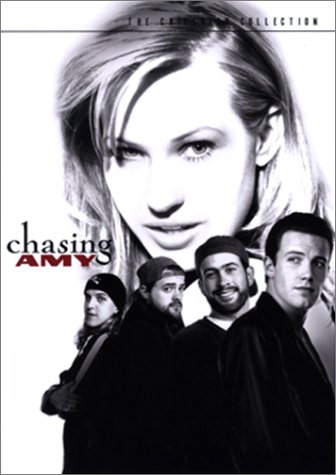
The film starts out in a comic convention, where we are introduced to Holden McNeil (Ben Affleck) and Banky Edwards (Jason Lee), the co-creators of the smash hit book “Bluntman and Chronic.” Holden is an artist who feels trapped into his commercial success, afraid he’ll always be known as “the guy who invented Bluntman and Chronic.” His partner and best friend of 20 years, Banky, is justifiably unapologetic for their success; he likes having his name on something that everyone recognizes. It’s ...t this convention that Holden has his first encounter with the endearing Alyssa Jones. A week after the encounter, a phone call from their mutual friend and fellow author, Hooper, informs Holden that Alyssa has invited him to a bar in the city.

Film

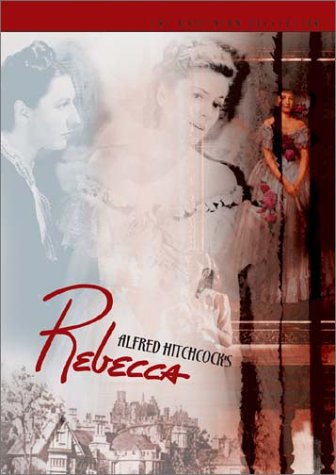
To film fans, the clause “Directed by Alfred Hitchcock” has almost become an adjective in and of itself. It has come to mean suspense created by using the viewer’s imagination and mind as a part of the film, first and foremost. These films didn’t have the freedom of CG, and consequently had to invent ways to achieve visual effects (Watch the documentary on Birds or Rear Window for example). Besides the lack of freedom of creation that digital filmmaking now provides, the filmmak...rs had to tip toe around the Hays code, not only restrictive on sex and sexual undertones, but also on content (as we learn in the featurettes here) and gore. The phrase, and the adjective that bears the director’s name, has grown to include a certain quality of characters and meticulous film crafting in every phase of the production. Rebecca, therefore, can rightfully be called “classic Hitchcock.”

Film

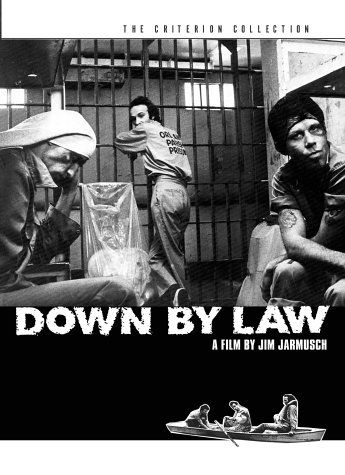
Jack, a pimp, ends up in prison when a competing pimp frames him for child prostitution. Zack, a down-on-his luck deejay, is there because an associate paid him a thousand dollars to drive a car across town, unaware of the contents of the trunk. In the same cell, they bemoan their situation: each man innocent of their crimes, but vaguely guilty of something, we’re never sure what. When a third man shows up, an Italian tourist named “Bob,” he seems to brighten the dour men as much as can ...e expected.. He’s also very up front with them: he isn’t innocent. He’s there because in a barroom fight, he killed a man with a pool ball. He accepts responsibility for his crime, and seems determined not to live in total misery. Even though he’s the only one who is admittedly guilty, Bob seems the most ‘essentially’ innocent of the three.

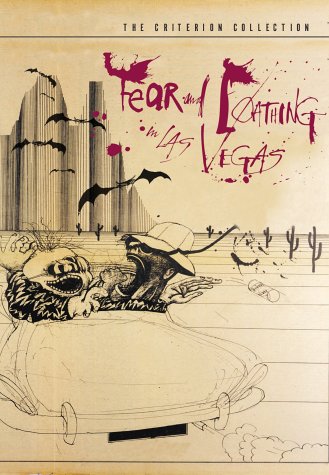
Fear and Loathing in Las Vegas can be and has been described in many ways, but one of the things that this movie isn't is a Cheech and Chong road movie about a couple of whacky buddies on a drug binge in the city of sin. There’s no going to strip clubs, no hilarious misunderstandings that make one of them have to dress in drag and be involved in a stage show, in fact, there isn’t even any gambling. This movie is more accurately described as a scalding epitaph to the counterculture of the sixties, a re...ognition that the “Peace and Love” generation’s collective ideas about changing the world had largely failed. Fear and Loathing is a disdainful look in the rear view mirror at a generation's potential unfulfilled, lying on the side of the road embarrassed and worthless, like a 52 year old groupie trying to fit in with the youngsters, doing balloon hits at a Dead concert. In a more critical sense, I can describe it in a single word: overrated.

The movie has cultivated an impressively large cult following its release in the summer of 1998, and after three viewings, I can’t really put my finger on why. By design, it doesn’t follow any real solid narrative structure. We know we’re watching a couple of totally altered guys try to stumble their way through a weekend in Vegas, but their adventures basically include getting really high on something, freaking out somewhere, then returning to their trashed room to recover. Sure, some things actually happen; Azocar meets and has sex with a minor, Duke goes to the motorcycle race, meets some strange people, quits his assignment, there’s an ironic DA convention in town. None of these events are here to prop up a story structure; they’re true events, so they just sort of happen and move on. It’s never long before he’s just getting whacked out again and the story returns to its strange “stagnant wandering” roots. Usually, I’m pretty good at connecting with the European-style, open-ended, non-traditionally structured films, but this one just left me flat.


Synopsis

Film

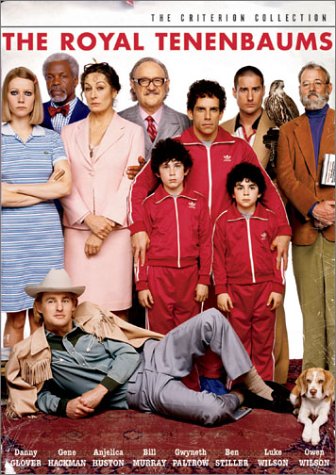
Criterion has done it again! Along with Buena Vista, Criterion has transformed this flawlessly executed film into a masterpiece on DVD. For you Rushmore fans out there, you will absolutely love this film… I actually liked this film more then Rushmore. If you have not seen any works by Wes Anderson (director), you should really check this film out.

Film

Fritz Lang became one of the earliest masters of filmmaking. Known mostly for such classic silents as Metropolis and Spies, Lang delivers a startling film definitely ahead of its time with M. This is also the very first film for the talented Peter Lorre who would later shine in Corman’s Poe series, and of course, along-side Bogart in The Maltese Falcon and Casablanca. M is a disturbing film that constantly assaults the viewer with stark images of a city’s underworld life. Th... portrayal of a child serial killer was incredibly bold for the time and is unsettling even today when audiences are almost numb to horrific acts of violence on our movie screens.

Starting a few years back with Out of Sight and continuing on with The Limey and Erin Brokovich, director Steven Soderbergh had been riding a remarkable streak of winning films that fulfills the blazing promise of his first film, sex, lies, and videotape. With his most complex film to date, Traffic, Soderbergh once again proved that he is one of America’s most inventive filmmakers. He doesn’t play it safe – with each and every new outing, Soderbergh proves that he’s not afraid to ...ake chances. It seems as if he thrives off of the challenge and manages (so far) to hit a home run every time he steps up to the plate.

Based on the British mini-series “Traffik”, Soderbergh’s film tackles America’s complex “war on drugs”, ultimately declaring it a draw, if not a futile endeavor. It interweaves three separate storylines, each with its own trailing threads and allows Soderbergh, and screenwriter Stephen Gaghan (Rules of Engagement), to detail various aspects of the drug trade in America, Mexico, and in homes all across America. The film is many stories and no center – a drama that describes a condition in which symptoms far outnumber any possible cure. We see smart, affluent teens smoking, snorting, and shooting-up under the noses of parents you would think are most likely to realize it. We see the high living that drug money can afford you and we wander the streets of dusty Tijuana to see the beginnings of the drugs making their way across our borders. The film retains a personal touch for viewers by making the cops, crooks, and users into individuals with strong personalities and credible motives for their actions.

Written By Kelly Stifora

Intro

posted by Marc Atonna

Everything must either be high in something or low in something else. You have to love a film where a priest defends, “the tit was spread with peanut butter!”