Criterion

Synopsis

In Akira Kurosawa’s later years, it was almost criminal that a director with his resume was forced to practically beg for financing. Kurosawa was in the midst of a career drought, having made only two movies in almost 15 years with Dersu Uzala and Dodesukaden. This coming after a run of films that has proved influential to even today’s filmmakers. While Kurosawa did have to obtain foreign financing for his movies in later years, Francis Ford Coppola and George Lucas, both of whom cite...Kurosawa as heavy career influences, agreed to finance his next film, 1980’s Kagemusha (or The Shadow Warrior).

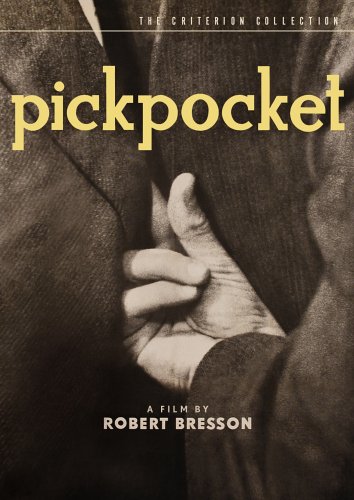
Pickpocket is precisely the kind of film that could never have been made in Hollywood in the 50's. The Hays Code was a set of morality guidelines that dictated what was and was not acceptable to be shown in motion pictures. Amongst many other things, the code would not allow a criminal to be depicted on screen in such a way as to induce sympathy from the audience. It also said that criminals must always be punished for their actions. (For a complete copy of the code, visit http://www.artsreformation.com/a...01/hays-code.html.)

Luckily, the Hays Code only applied to films made in the US, giving foreign filmmakers certain freedoms that were not awarded to those in here the states. Robert Bresson made the most of his freedoms with Pickpocket, a film that, as one might deduce, tells the story of one such nimble-fingered miscreant, and his evolution into the business. His first attempts are quite clumsy, but with time, practice, and the help of a tutor, he soon becomes quite handy. Of course, nobody can break the rules of law forever, and consequences almost inevitably follow a crime.

Synopsis

Three of E.T.A. Hoffmann’s fantastic tales were made into an opera by Jacques Offenbach, and that opera was in turn transformed into this 1951 film by Michael Powell and Emeric Pressburger. Robert Rounseville takes the lead as a fictional version of Hoffmann himself. While pining after a ballerina, whose love is being stolen from him by an evil aristocrat, he spins three tales of unrequited and doomed love, where in he falls in love first with an automaton, then a soul-stealing (literally) c...urtesan, and then with a consumptive singer. Light as the music often is, and explosively colourful as the fantastic sets are, there is still a lot of darkness in the film, as befits the subject matter (the automaton story, for instance, is based on “The Sandman,” possibly Hoffmann’s creepiest tale). An entirely sung film won’t find favour with every audience, but this is a very effective transposition to cinema (it isn’t stagy at all), and is a visually unique work of art.

Synopsis

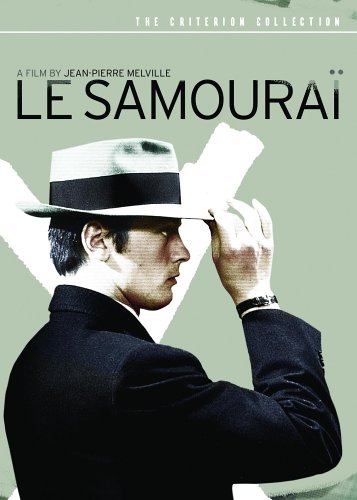
Alain Delon is a cool-as-ice contract killer. After pulling off his latest contract, he is picked up by the police on suspicion, but is released for lack of evidence. The gangsters who hired him consider him a liability, however, and attempt to have him killed. He must now evade the police long enough to track down his killers before they get him.

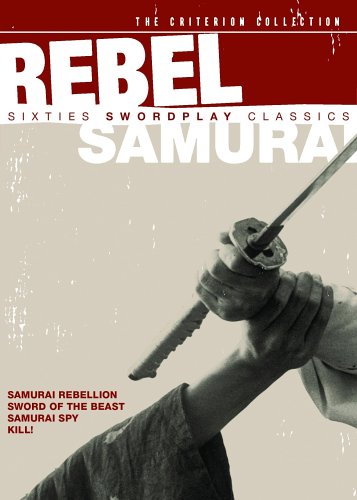
Criterion doesn't put out too many box sets, so you know that when they do, it is really going to be something special. Their Brazil set is a benchmark release that all other single-film, multiple-disc sets are measured against. The Wrong Men & Notorious Women – Five Hitchcock Thrillers set is a brilliantly-themed way to showcase five of the director's most devious films. They have taken that same approach with Rebel Samurai – Sixties Swordplay Classics. The four films in this set, Samurai Re...ellion, Kill!, Samurai Spy and Sword of the Beast, represent unrelated productions that turn the proven conventions of the samurai film genre on its ear.

In the sixties, rebellion was occurring worldwide; not just in the United States. These films show how revolutionary thoughts of freedom were affecting the citizens of the East. While each of these films is different in its style and tone, the unifying message is the same. The Japanese were starting to see that the ruling class may not be the flawless entity that it had been perceived to be for so many hundreds of years. It is not only a citizen's right, but their duty to question authority, and to stand up for injustice, even when that injustice comes from within. These are powerful and controversial ideas in a culture devoted to duty, honor and respect. The examination of the fall of the samurai through film may have been the best way to safely share these new national feelings. The films in this boxed set may be one of the best examples that I have ever seen of the power of art to affect and change the collective conscious of a society.

In an odd sort of way, Samurai Spy has the feel of one of the Sean Connery Bond films. The plot seems to be more convoluted than it really needs to be, and there are many scenes that show a character quiet and alone, as they discover a new piece of the plot puzzle for themselves. I would say that parts of the film could be a bit too complex for some American audiences to follow, as so much of the story is driven by Japanese character and clan names. It seems that Criterion anticipated this problem, as they hav... included a character gallery in the extras, complete with brief character bios.

However, as is the case with many of Criterion's releases, patience is well rewarded. Those that put in the effort will find a film that is rich in its message and quite modern in its tone. While most samurai films up until this point rested on the fact that a samurai can always trust completely in his shogunate, this film is full of double-crosses and wavering allegiances. No longer is what is good for the community always best. Sometimes, this film teaches, personal interests are more noble than those of the collective.

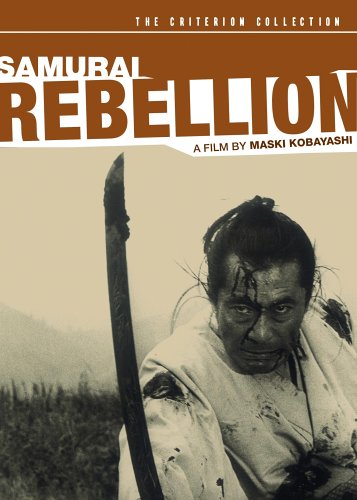
First and foremost, it is important to note that this is a large, “A” list film. While many samurai movies are low budget stories, everything about this beautiful film is first rate. As you can see by the two hour running time, the story comes first in this piece, with the swordplay coming in later, merely to serve the story.

And an important story it is. In 1967, World War II was still fresh in the minds of many Japanese citizens. These people, who had never questioned authority in thousands of years, had j...st begun to wonder if blind loyalty to authority was always the best path. This film dares to place the honor of the family unit over that of the ruling clan. The brilliance of the film lies in the fact that even the act of disobedience is performed with the utmost respect for the ruling class, and violence is considered absolutely as a last resort.

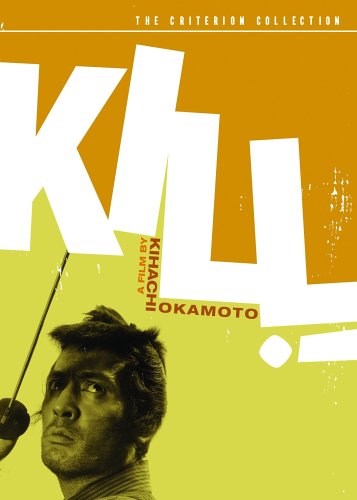
Kill! plays like something of a dark spaghetti western comedy. Honestly, how many times have you heard that line before? A warrior with no master wanders into a ghost town, tired and hungry, to find the only restaurateur in town dead. As he begins to contemplate where he will find his next meal, a farmer wonders into town under similar circumstances. The two form a loose partnership as they discover that they have placed themselves in the middle of a standoff between the local samurai and yakuza clans. As they...find out more about what is going on in the seemingly-deserted town, their loyalties shift and they begin to concentrate more on doing what is right than on their original selfish desires.

Fans of the Kill Bill films will find much to enjoy in this film, as it will give them an opportunity to see some of the history behind Tarantino's films. This piece is an unconventional take on the same book on which Akira Kurosowa's film Sanjuro was based. I always enjoy the opportunity to see different takes on a theme, and this 1965 film is quite fascinating in its disregard for traditional samurai film conventions.

Call me crazy, but I came away from this disc feeling like I had just watched a samurai western. On one side, the film is filled with Japanese warriors, fantastic swordfighting and talk of honor and revenge. On the other hand, a major subplot of the film revolves around panning for gold in the mountains, and fighting over the claims. This excellent 1965 film has much in common with great westerns, such as The Good, The Bad and The Ugly, including interesting plot twists and a complicated-yet-comical sidekick t... the main character that is surprisingly similar to Eli Wallach's character in the Italian epic.

Of course, there is plenty of samurai action in this film as well. It is interesting to see the rapid zooms that are such a trademark of this style of film used in a black-and-white format. These conventions are even more interesting when juxtaposed with some of the other delicately framed deep focus shots in the film. The cinematography alone is enough to elevate this film out of the category of a basic samurai film and into that of art, but the script and the wonderfully-choreographed fight scenes really put this film into a whole new level.

The great thing about DVDs produced under the Criterion moniker is that they can't really be compared to much else. Usually, I can just whip out a peppy little monologue about the film I have just watched, but Criterion always makes things a bit more difficult... which is great for film fans that have seen it all before.

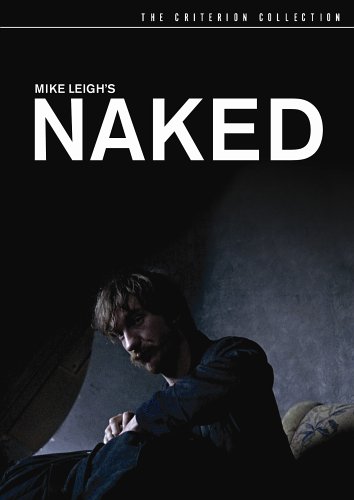
Naked is, of course, no different. There is no easy summation for this piece of art, which won awards for Best Actor and Best Director at the 1993 Cannes Film Festival. This is ... simply fantastic dark comedy, filled with superb performances and brilliantly witty dialog. While many American audiences live and die by the easy-to-follow plot, this is more of a collection of character studies, with Johnny (played by David Thewlis) serving as the tour guide. Microcosms of relationships, criminal minds, malicious intent and the curse of intelligence are all explored here, in a film that may severely expand the viewer's beliefs about those that live on the fringe of society, and their own lives.