Posted in: Disc Reviews by Sean Boelman on July 23rd, 2024
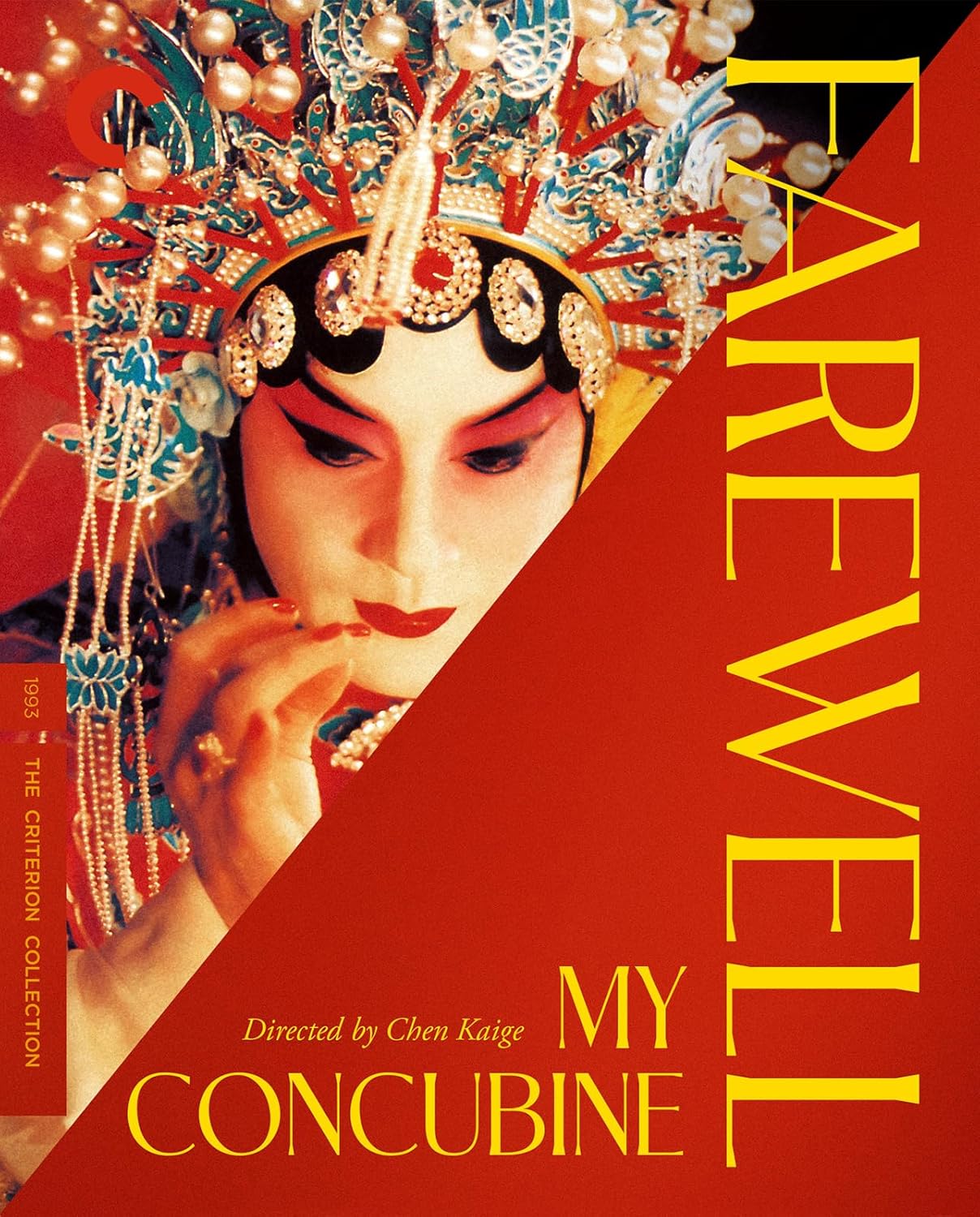
When a new 4K restoration of the 1993 Palme d’Or winner Farewell My Concubine — the first Chinese film to ever take home the top prize at the Cannes Film Festival — debuted at the 2023 Toronto International Film Festival, physical media collectors were waiting for the announcement that it would be released through the Criterion Collection. Well, fans did not have to wait long, as the Academy Award nominee for Best Foreign Language Film is being released by Criterion on both 4K and Blu-Ray, and this gorgeous restoration alone makes this edition worth picking up. That’s not even to mention the quality of the movie itself, which is considered a seminal film in Chinese cinema for both its content and form.
Based on the novel of the same name by Lilian Lee, Farewell My Concubine follows a decades-long friendship between two boys who meet at an opera training school in Peking in 1924, growing up through some of the most tumultuous times in Chinese history. Lee and Wei Lu use the story of a love triangle to frame this exploration of identity, cultural expression, and other themes that serve both as a cultural time capsule and a commentary on issues that are unfortunately still relevant today.
Posted in: Disc Reviews by Sean Boelman on July 16th, 2024
Given that Glauber Rocha is considered one of the most important filmmakers in the history of Brazilian cinema — and Latin American cinema in general — it’s surprising that it took this long for one of his films to be released by the Criterion Collection. The filmmaker’s sophomore feature, Black God, White Devil, one of his most acclaimed works, takes the honor of being his first movie to get the Criterion treatment. Black God, White Devil is considered one of the most influential films of the Cinema Novo movement, which happened in Brazilian cinema as a reaction to other social filmmaking movements like Italian neorealism and the French New Wave. In Criterion’s recent quest to expand the label’s Latin American cinema offerings — Victims of Sin and Soy Cuba are notable recent releases — the Cinema Novo movement marks a necessary addition.
The Western follows a Brazilian ranch hand who, after killing his oppressive boss, goes on the run with his wife, leading them to a group of bandits and a messianic figure who preaches violence and revolt. Like many Latin American films of the era, Black God, White Devil is focused heavily on socioeconomic issues.
Posted in: Disc Reviews by Gino Sassani on May 11th, 2009
“Your life is defined by its opportunities... even the ones you miss.”
F. Scott Fitzgerald is one of those great American writers from the classic age. In school most of us were required to read various works from the writer. For many students those works included The Curious Case Of Benjamin Button. The original work is a mere 20 page short story. For the last 15 years Hollywood has made one attempt or another to bring the classic story to the screen. The closest anyone got was Ron Howard who expected to bring in John Travolta as Benjamin Button. The one reason or another these attempts never made it past screenplay drafts. Along comes one of the best and most diverse directors, David Fincher. Fincher’s work needs little introduction and spans the genre spectrum from Se7en to Fight Club. The original short story would be adapted by Eric Roth. That left many, myself included, to expect a remake of Forrest Gump. When you consider that Roth wrote both screen adaptations and that he was once again working with a character spanning many years of history, the concerns were not unfounded. Would Roth take Benjamin Button on a journey through the 20th Century that would find him present at crucial moments in history as he did with Gump? Fortunately, Roth resisted such temptations and delivered a story relatively faithful to the original work, where the main character was a silent witness only to the major events of his life. Of course, I say relatively faithful because Roth also turned that 20 page story into an epic 3 hour film.
Posted in: Disc Reviews by David Annandale on May 10th, 2007
Synopsis
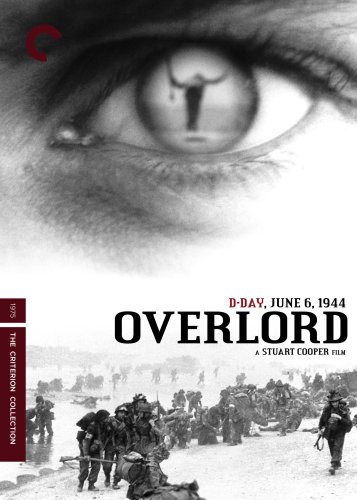
Produced under the auspices of the Imperial War Museum, Stuart Cooper’s unusual film tells the story of a young private (Brian Stirner) undergoing basic training and experiencing premonitions of his death in the days and weeks leading up to the D-Day invasion. This narrative is intercut with extensive archival war footage.
Posted in: Disc Reviews by Archive Authors on March 29th, 2007
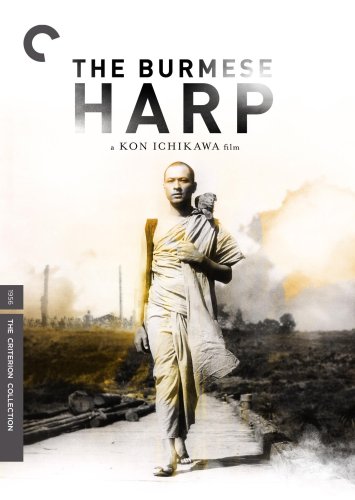
Criterion has surprised me once again with this beautiful film. It amazes me ow they continue to find these “diamonds in the rough”. Films that couldn't possibly exist, yet here they are, widely available on the mas market. The Burmese Harp is a Japanese war film that is decidedly anti-war, and features some truly beautiful music.
At the end of World War II, a group of Japanese soldiers find themselves in Burma, held by British forces as prisoners of war. One soldier from the party has spent his free t...me in Burma learning to play a native harp. This skill proves valuable upon capture, until an unfortunate incident leaves him in a state where he is thought to be dead. Upon recovery, the soldier finds true enlightenment, and takes the viewer along on the journey.
Posted in: Disc Reviews by Archive Authors on March 7th, 2007
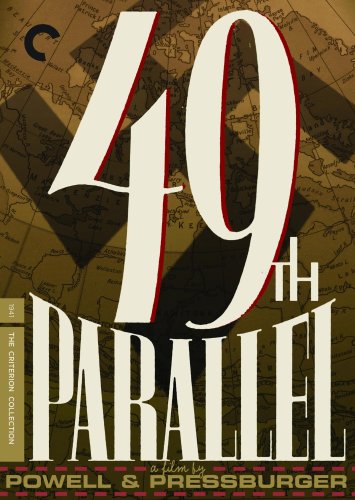
49th Parallel is a film that I had heard mentioned in passing on occasion, but never really had any practical knowledge of until now. Having now seen the film for myself, I find it to be one of those rare productions that only Criterion seems to be able to find. This is something that I would have never dreamed existed. While the idea of war films told from the Axis point of view are almost commonplace today, such a thing was practically unheard of in 1941, with the United States on the brink of entering World...War II themselves.
This is just part of what is notable about this film however. The truth is, the film stands on its own merit in any time frame. This is an epic feat of filmmaking that would qualify as a big budget project even today. The film follows the crew of a German U-boat as they make their way into Canadian waters. When they sink a Canadian tanker ship, the crew becomes the target of a massive manhunt. In an effort to evade capture, the crew take to land and move from hideout to hideout, eventually making their way to the United States.
Posted in: Disc Reviews by Archive Authors on February 11th, 2007
Portions of this review were lifted from the previous Criterion Collection edition review. Now on to the review...
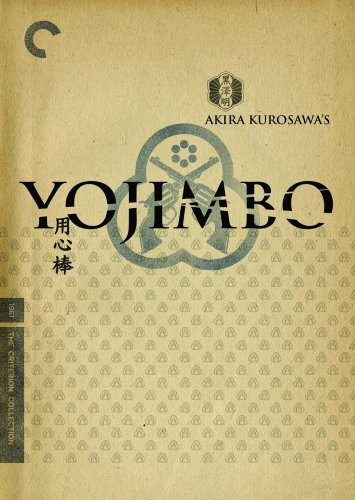
After making such internationally renowned samurai period films such as Rashomon and The Seven Samurai, Akira Kurosawa did make another film, Yojimbo, with a decidedly different tone, bordering on dark comedy. The opening shot is of Sanjuro (Toshiro Mifune, Throne of Blood), a samurai without a master, who look at a mountain, and suddenly scratches his head, as if his hair is on too tight. It's almost the breaking down of a facade, helping to show you that the film will be bit different from other Kurosawa samurai films. The introductory cards say that the film is set in the 1860s, and the samurai comes into a town ruled by rival gangs. He doesn't know this when he comes in, but the first thing he sees in town is a dog carrying a human hand. People have said that the way that this film was told reminds them a lot of the Clint Eastwood/spaghetti westerns that came out several years later, and it's easy to understand why, with the quiet main character whom you can never really tell if he's a hero or villain. He deals with some situations with a toothpick in his mouth, reminding me of Chou-Yun Fat in Hard Boiled. Kurosawa does action flicks? That's probably the best way to characterize it, but he does it well, without a lot of one-liners or lack of common sense seen within a lot of today's action films.
Posted in: Disc Reviews by Archive Authors on February 10th, 2007
Let me get this out of the way right up front; I really enjoyed Memoirs of a Geisha. Now, I am certainly smart enough to understand that the film was not entirely realistic, and there were some plot developments that pushed suspension of disbelief pretty far, but I wound it charming and entertaining. It was so charming, in fact, that it was often times easy to forget that you were essentially watching a movie about whores. You can romance it all you want, but at the end of the day a Geisha is really nothing mo...e than a high-paid escort.
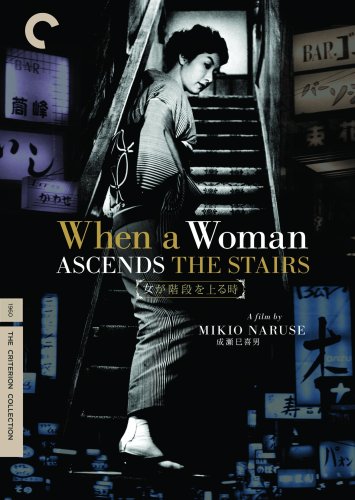
When a Woman Ascends the Stairs is sort of the realistic companion piece to Memoirs. The story here revolves around a modern-day Geisha, where the lifestyle has moved out of the Geisha-houses and into the bars. The lifestyle is still basically the same; women are “companions” to wealthy male bar patrons, making long-term relationships with one woman. The women pay a portion of their income to the owner of the bar, and keep the rest for themselves (though most of it is spent on kimonos and personal upkeep). Our heroine, Mama, is a Geisha that is well-respected amongst her peers, but she is starting to feel the pressure of age. As she is advancing in years, she is not able to rely as much on her youthful good looks. The time has come for her to either get married or open a bar of her own. As she is so well liked, it is not too long until she has suitors offering to pay for her own bar. Now she must decide how she is to proceed with the rest of her life.
Posted in: Disc Reviews by Archive Authors on January 9th, 2007
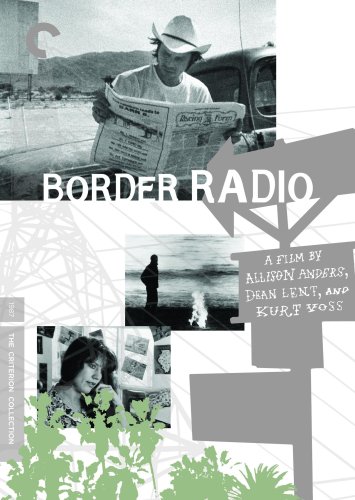
Border Radio is an independent film written and directed by Allison Anders, Kurt Voss and Dean Lent. The film serves as more of a curiosity than a great film on its own merits. Released in 1987, the film fell in amongst the wave of indie filmmakers making an impact at the time, including Quentin Tarantino and Robert Rodriguez. In fact, Anders directed one of the segments in the film Four Rooms, which also featured stories by these two filmmakers, in addition to Alexandre Rockwell. While Tarantino and Ro...riguez have gone on to amazing success, many of their contemporaries never took off on a grand scale. Anders, Voss and Lent fall into this category, with Lent and Voss later directing a string of "B" movies, and Anders turning her efforts toward directing television programs.
Still, this film is an excellent example of the advice that all indie filmmakers give to aspiring filmmakers; "just make your movie!!" The goal of a debut feature is not always to make the next Reservoir Dogs as much as it is a chance to gain experience and show the world that you can handle the strain of a feature-length production. Maybe neither director went on to direct a $30 million blockbuster film, but they created a career for themselves through their work in a self-funded production.
Posted in: Disc Reviews by Archive Authors on October 18th, 2006
Japanese horror films are all the rage these days, with the originals hitting DVD in the States, and the remakes showing up in the theaters. Therefore, it stands to reason that even Criterion would get in on the trend, offering up a film from famed director Nobuo Nakagawa, widely regarded as the father of the Japanese horror film.
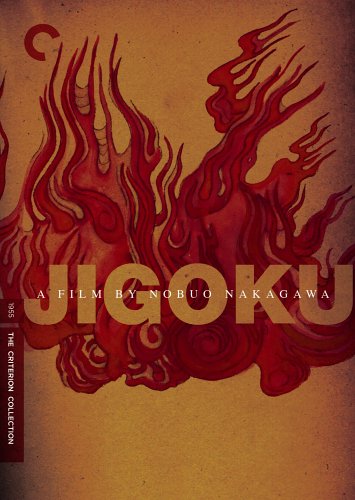
Jigoku is both strange and fascinating. The film tells the story of two friends that are involved in a hot-and-run accident. While one of the young men is cool, calm and collected, the other is wracked with guilt over their actions. While the family of the murdered man begins to close in on the guilty parties, strange things begin to happen to the man with a conscience.