Cult Epics

Director Rene Daalder is best known in cult film circles as the man who gave us Massacre at Central High. But now Cult Epics has released a pair of his films (this and Here Is Always Somewhere Else) that seem more in keeping with his real interests. A long and twisting road led to this effort, starting with an abortive collaboration with Russ Meyer and the Sex Pistols, which brought Daalder into the world of punk rock. In that field he met Tomata Du Plenty, vocalist for The Screamers. After funding for their proposed collaboration Mensch collapsed and Du Plenty’s HIV-positive status became apparent, they put together the present film out of a mixture of footage from the abandoned project, plus new elements. The striking result is Du Plenty as the last survivor of nuclear holocaust, holed up in his bunker, declaming/singing poetic rants about the history of the United States, all the while surrounded by a phantasmagoria of bizarre sights. Whether the result is compelling or pretentious (or both) will depend on one’s sympathies with respect to the art scene from which it emerges, but that it is a work that rigorously works out its conceptual and artistic premises all the way to the end cannot be denied.

Audio

This is another of Cult Epics’ entries in their new Rene Daalder Collection. His most recent film, it’s a documentary about conceptual artist Bas Jan Ader. The brief body of work he left behind is best known for using gravity as a medium (so, for instance, he did a number of filmed pieces of himself or objects falling). He was lost at sea in1975 while attempting to cross the Atlantic in a minuscule boat as part of a piece to called “In Search of the Miraculous.” Daalder’s 68-minute film retraces Ader’s life, but does so in part through the filter of Daalder’s own parallel experiences as an expatriate Dutch artist. The film is very interesting, though I would have like a bit more analysis of Ader’s work, in order to have a better understanding of exactly what it was doing, and Daalder’s speculations about what Ader’s final thoughts might have been are a little too definitive. Still, a strong documentary.

Audio

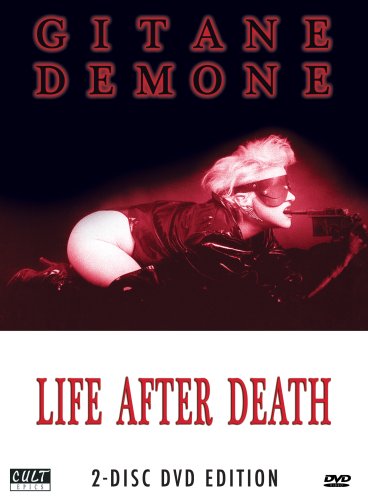
Gitane Demone was one of the lead singers for seminal deathrock band Christian Death before going solo in 1989.  This 2-DVD set is a record of her various solo efforts, tracking various incarnations, most notoriously (and most prominently featured in the release's packaging) being the fetish performances for the likes of the DeMask club and Skin Two magazine. Present here is a mix of television interviews, one video, and a raft of live footage.

Given the necessarily raw, semi-underground nature of the material (more one the picture and sound quality below), this is not really a release for the previously unconverted. The fuzzy picture and muzzy sound is not likely to draw in viewers who don't already have an investment in the subject. That said, the interviews are interesting, with Demone, in most articulate fashion, clearly situating herself within various scenes and phases of her life, and explaining how all this has affected her art. As for those who are fans, this is a very valuable record of a decade of performances.

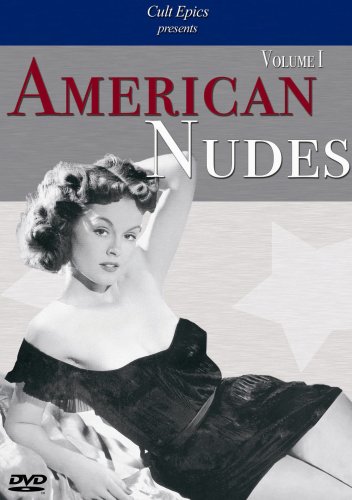
Cult Epics continues its erotic archival work with these two collections of short films. Volume 1 consists of pieces from the 1940s (with at least one from 1938 thrown in), while Volume 2 deals with the 50s. The former has such amusing “documentary” shorts as “They Wear No Clothes” (*gasp*) and various comedy routines. The latter has the inevitable Irving Klaw shorts. None of these films are by any definition “good,” but they are fascinating records of the state of American sexuality at that time. Watching all of these at one sitting would be quite the chore, but then, when was the last time you read an encyclopaedia straight through? There is a similar documentary value here.

Audio

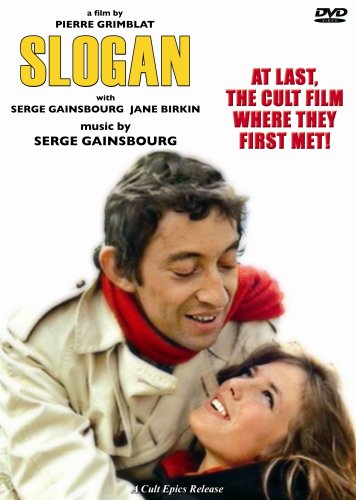
Serge Gainsbourg and Jane Birkin were the “it” couple in France during the late 60s and early 70s. This is the film that brought them together, their To Have and Have Not, if you will. Musician Gainsbourg (who, for the uninitiated, had a singing style that was a cross between Leonard Cohen and Tom Waits) plays a married director of successful TV commercials. He begins an affair with an 18-year-old (Birkin). Their relationship hits most of the predictable moments of such movie romances from that period.

And it is almost completely uninteresting. There is zero chemistry between the leads, but neither has much by way of screen presence to start with. Gainsbourg is startlingly ugly, and Birkin is strikingly beautiful, but that's hardly enough to keep us watching. Neither character is remotely likeable, and the self-referential moments in the film were smug clichés already in 1969. The film holds some interest as a pop culture trivia answer, but for anyone unfamiliar with Gainsbourg and Birkin, it's an intolerable bore.

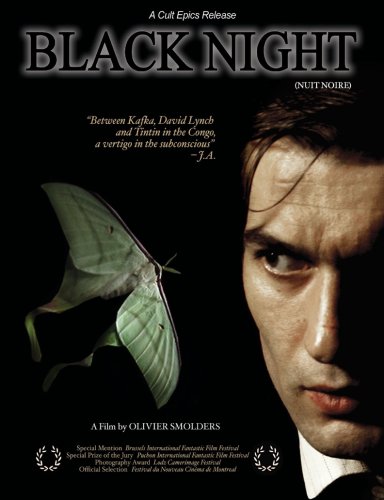
Belgian filmmaker Olivier Smolders, after a successful run of gorgeous and disturbing shorts, here makes a feature debut that is just as gorgeous and disturbing. Strongly reminiscent of the works of David Lynch, but far darker overall, the film is set at a time when the world is shrouded in the night of a perpetual eclipse. Day only comes for 15 seconds at 12:23 pm each day. Oscar (Fabrice Rodriguez) is a museum entomologist haunted by traumatic dreams involving the death of a sister who might or might not have every existed. He returns home one night to find a dying and pregnant African woman in his bed, a woman who is somehow linked to his father’s colonial past.

Trying to summarize the film’s plot is like trying to describe a dream: either case involves imposing linearity where none exists. Don’t try to figure out exactly what is going on here. Think of it as fevered nightmare inflected by guilt of Belgium’s gruesome colonial history, served up as a stunningly beautiful meditation on death, sex and insects.

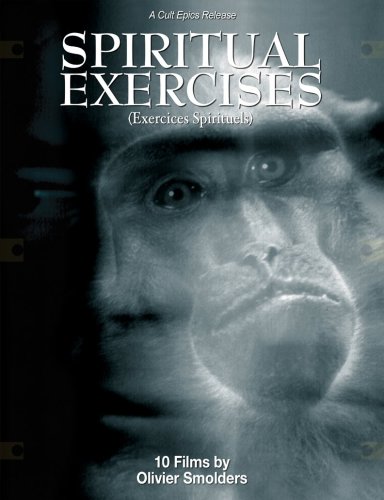
Olivier Smolders is a Belgian filmmaker with a sensibility as distinctive and challenging as his artistry is developed. Cult Epics has done North American audiences a huge service by bringing his films to Region 1 DVD release. This disc has ten short films. Each piece has its own distinct identity, yet they are all very clearly the work of a singular creative talent. The frequently disturbing shorts range from a tale of murder and cannibalism in “Adoration” (previously available on the Cinema of Death collection), to the heartbreaking “Mort à Vignole” (where Smolders narrates a family tragedy filtered through home movies made by his and his wife’s parents, along with his own family footage), to an extended yet elegantly filmed practical joke (“Point de Fuite”) to a most unusual adaptation of Sade with “La Philosophie dans le Boudoir.” The films are invariably gorgeous and clinical in the precision of their observations. The blurbs on the case invoke Lynch, Greenaway and Bergman, and the comparisons are apt, though Smolders is also very much his own man.

Audio

After going all the way back to the 20s with the last entry in this series, now Cult Epics gives us a collection from 1960s, a period that marks the beginning of the end for this kind of pornographic short. Theatrical hardcore is just around the corner, and things will never be the same. In the meantime, though, things are remarkably the same. Other than some clothing styles (in those brief moments when clothes are actually on), it’s interesting to note that there is very little to distinguish these twelve entries from those of any other decade, a point driven home by the bonus short from the 1940s, which doesn’t feel very different from the rest of the offerings. Artistically, there is not much going on here (surprise, surprise), but the star rating indicates the fact that, despite this, there is some clear archival value here.


Audio

In the manner of the 1920s release, the audio track that had been standard for the rest of this series (the sound of film running through a projector) has been replaced with a music score. In this instance, it’s a series of swinging grooves, very much in keeping with the 60s, and acting as one of the only reminders of when these movies were actually made. The music is treated well by the 2.0 mix. The movies themselves are, of course, silent.

Video

Cupt Epics here presents five films identified as "underground" (a fluid term at the best of times). Certainly, they are all deliberately transgressive, though not all are equally successful. Two are by Nico B. - the perviously released "Pig" and "Hollywood Babylon." The former has been reviewed here before, but briefly, its catalogue of murder and S&M horrors, working out a killer's fantasies, is rather too self-conscious about its own transgression. The latter is a 4-minute tribute to Kenneth Anger, taking in exhibits at the Museum of Death. It's not a bad little piece, but it is interesting to note that its existence confirms once and for all that now even the underground film community has an established history to look back on. "Dislandia" is a half-hour, plotless portrayal of a little girl (whose face is covered in a mask) doing odd things and moving through a gritty, disconnected landscape. Interesting visually, the film is sufficiently obscure in its goals that one's mind does begin to wander. "Adoration," on the other hand, is gruelling, brutal, intelligent and effective. Based on an actual case, we see a young man invite a woman to his apartment, record her reading poetry, then kill and eat her. All of this is seen through the eyes of a camera he has place on a wall. The unblinking gaze is explicitly equated with the audience's own, and many uneasy questions about art and voyeurism are thus raised. Finally, "Le poéme" is the one that most viewers will find hardest to deal with: we watch an actual autopsy while listening to the poem "Le bateau ivre" by Arthur Rimbaud. Difficult though the film is, it is also, like "Adoration," quite beautiful.Audio

The sound is 2.0, and the actual sound quality depends primarily on the source material. In fact, "Adoration" is largely silent. But at any rate, the overall audio quality is perfectly satisfactory. There isn't too much by way of surround, and what emerges from the rear speakers isn't always perfectly placed, but the job is generally quite effectively done.

Long the bad boy of French novelists, Jean Genet directed this 25-minute short in 1950. Borderline pornographic, it is a silent portrayal of (literally) imprisoned desire. Two prisoners convey their longing for one another through the prison walls, while a voyeuristic guard watches, becoming aroused and frustrated to the point of violence. Poetic, fetishistic, and intensely personal, it is a startling and historic piece of underground cinema.Audio

Consider the rating a place-holder, because we don't have a star equivalent for "Not Applicable." This is a completely silent film. Not even a score. As for the extras, they are clear enough.