Fox

Synopsis

Jane Fonda plays Lilliam Hellman. She is living in a beach house with Dashiel Hammett (Jason Robards), struggling with a play (The Children’s Hour, though the film is ridiculously coy about mentioning its title). She is also worried about her childhood friend Julia (Vanessa Redgrave), who is caught up in the struggle with the rising tide of fascism in 1930s Europe. Hellman loses contact with Julia, but on a trip to Europe in the wake of her play’s success, she is contacted by friends ...f Julia’s, asking her to take on the risky job of transporting bribes to Hitler’s Berlin.

One of the unfortunate responses to the emergence of a successful movie is the appearance of copycat films. When Gladiator won the Academy Award for Best Picture, all these sword and sandal flicks went into production. Now we have epics such as Troy, Kingdom of Heaven and Alexander to show for it. Sometimes, the backlash is even worse when the hit film is a bit of a surprise hit. Such was the case with The Fast and the Furious. Now, I really enjoyed Furious, but I knew on the...front end of my viewing experience that I was not in for a serious filmgoing experience. The point of the movie was hot cars, over-the-top action and plenty cool shots of Vin Diesel and Paul Walker doing stuff in slow motion. My expectations were met, it was a fun popcorn flick, and I went home happy. When The Fast and the Furious 2 came along, it was a much worse film, but just as the trailer suggested, the film was both faster and furious-er.

Then even more copycat flicks began popping up. I was hoping that this trend had hit rock bottom with the release of Torque, but Steve Boyum (whose only notable films up until this point were Meet the Deedles and Slap Shot 2: Breaking the Ice) has somehow managed to find a level somewhere below the lowest common denominator with Supercross. Anyone with half a brain could churn out this plot in moments. A reckless kid and his “play it safe” brother work hard, but only one of them makes it to the big time in supercross racing. Once he gets there, he looses sight of what is really important, and he has to find his way back to his brother, and what they loved about the sport in the first place, thus making their deceased father happy... wherever he is.

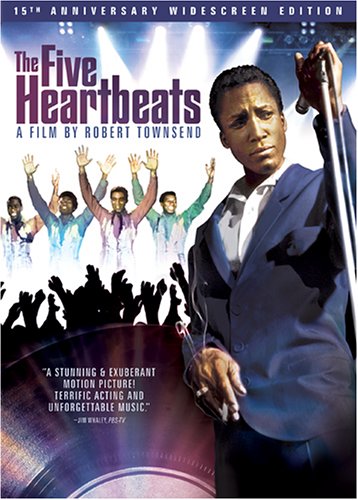
The concept of the musical biopic is nothing new. We have seen many films come and go, some good and some bad. A majority of these musical biopic films try to tell the rising of a group, whether or not the group is a reality, in a manner that will connect with the audience. Robert Townsend’s The Five Heartbeats is a prime example of a film that connects with its audience by taking this concept of the musical biopic just that one step further than we might expect from a film like this.

The Five Hea...tbeats are a nineteen-sixties Motown type singing group that consists of lead singer Eddie (Michael Wright), songwriter ‘Duck’ Matthews (Robert Townsend), ladies’ man J.T. Matthews (Leon), bassman ‘Dresser’ Williams (Harry J. Lennix), and tenor ‘Choirboy’ Stone (Tico Wells). These guys start out by singing on streets corners. Enter big shot manager (Chuck Patterson). Potter nails them a record deal and gets them to perform everywhere leading to super exposure and stardom. Naturally with stardom, comes the rocky road one travels on. The road consists of internal conflict between the band members and producers, drug addiction, racism, and even a close death. This all occurs before the groups untimely end in the mid nineteen-seventies.

Synopsis

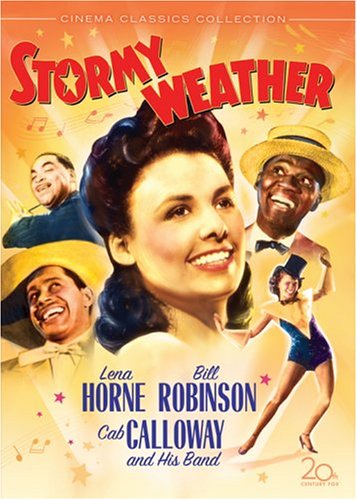
Knowing that Stormy Weather is the title of a song that helped vault Lena Horne (The Wiz) into celebrity fandom, I had very little other ideas about her. But the cool thing that I discovered while watching the film is that, for the age of this film, it’s better than anyone would possibly think.

“Let’s be careful out there…”
The men and woman of Hill Street Station, a fictitious police precinct in Chicago, have found it rather difficult at times to live by their sergeant’s admonition. Steven Bochco’s award winning police drama changed most of the rules for a one hour television drama. Some of Hill Street’s trademark style has become rather ordinary over 20 years later. Bochco protégés now dominate the scene. Dick Wolf (Law and Order), David Kelley (The Practice), David Milch (Deadwood), Scott Brazil ...The Shield) and Ken Olin (Alias) all came from the tutelage of Bochco.

Captain Furillo (Travanti) runs one of the toughest precincts in the inner city. The streets are inundated by gang violence. Furillo also often finds himself under fire by city politics, a bitter ex-wife, and even his own girl: ADA Davenport (Hamel). The squad includes veteran sergeant Esterhaus (Conrad), scrappy biter Belker (Weitz), Redneck cop Renko (Haid), playboy detective LaRue (Martin), Gung ho SWAT leader Hunter (Sikking), Detective Goldblume (Spano), Detective Washington (Blacque). A more diverse and entertaining cast has never been assembled anywhere.

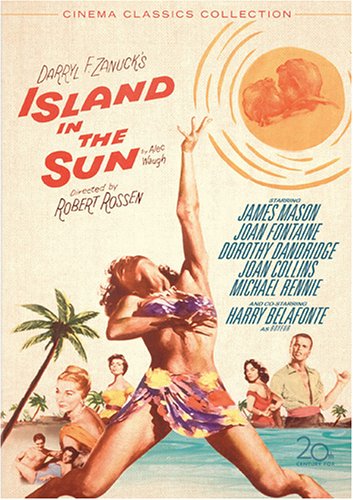
Harry Belafonte stars as an ambitious young politician, who refuses to fear the white majority that holds a foothold over his island home, in Island in the Sun. Along the way, he strikes up a romance with Joan Fontaine. Incidentally, we are supposed to believe Ms. Fontaine’s character is younger than Belafonte’s, despite the fact that she looks ten years older. Dorothy Dandridge also stars as a pharmacy clerk, who falls in love with the white aide to the island’s governor. If this seems like it’s all over the ...lace, that’s because it is. While the film was ahead of its time in factors such as race relations (with the two interracial romances above to speak of), it took a huge leap back when it came to the old standbys of narrative logic and a well-developed plot. But while I clearly did not enjoy this film, I will admit it has its values when viewed in the proper context.

The role of Island in the Sun as a classic is largely dependent on its subject matter and the time period in which it was released. A drama tackling interracial love in 1957 was hardly something that would go unnoticed, or be easily forgotten. However, when dissected by today’s audiences, the film proves to be pretty lightweight. For one, affection between interracial couples was limited to only the occasional embrace. In no way could the couples share an on-screen kiss, even if it were simply a peck on the cheek. Secondly, the story wanders about with no real plot to speak of. It’s as if the filmmakers had some ideas of what they wanted and forged ahead without the security of a well-constructed script – truly disappointing for a motion picture considered so groundbreaking. You can tell this film had Oscar aspirations. It simply didn’t realize how important a story was to achieve such lofty goals. Of course, today such omissions would not disqualify it, so long as it had an Academy-friendly agenda to support. However, there were higher standards in those days, and producer Darryl Zanuck relied on his message – and an admittedly incredible cast – to do all the work for him. The results are mediocre at best.

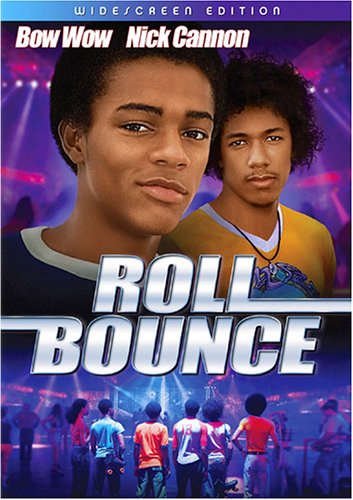
If you aren’t familiar with what Roll Bounce is, you will be pleasantly surprised by some of the tricks this small coming-of-age film pulls out of its hat. I expected horrendous acting, a poorly written script, and a story that cared more about racially motivated laughs than honesty. What I got was just the opposite. First of all, the film’s success begins and ends with a top-drawer screenplay that perfectly captures teen angst as well as the fears and traumas of growing up. Not something one would expect abou... a young boy and his wisecracking friends, who seem to care about nothing more than boogie-oogie-oogie’n down at their local roller rink. Admittedly, the device of roller-skating does get a bit silly, but the interpersonal relationships draw the material away from farce.

Other strong points are the performances of virtually everyone with a speaking role – also not expected for a film whose two major stars are Bow-Wow and Nick Cannon. The relationship of Xavier (Bow-Wow) and his father (Chi McBride) skyrocket every other aspect of this feature, turning Roll Bounce into a much better effort than anyone could have ever expected. And the laughs – while not taking center stage – are certainly present, thanks in large part to the interplay among Xavier and his friends and the scene-stealing performances of Mike Epps and Charlie Murphy as the smart-mouthed garbage men. Last but not least, the story more often than not takes the road less traveled, and that keeps everything fresh and interesting. While competition films simply cannot end in a non-cliché method, this one avoids predictability up to the conclusion.

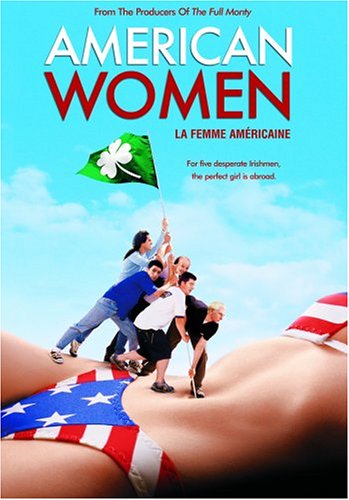
American Women is a difficult film to write about because it evokes such little passion from its viewer. By no standards is it a good film, but pinpointing its frailties becomes quite the daunting task. Set in a small Irish village, the story centers on a group of sexist men, who want to import girls from America because the ones accessible to them do not meet up to the appropriate standards. The plot is farfetched, even as goofball comedies go, and none of the male characters are likeable. Also, with so many ...torylines going at once, the scope of American Women wanders aimlessly, like a small child with ADD roaming about the countryside.

It’s the worst kind of comedy – the kind that, while well-made, never manages a single chuckle from its viewers, and presents us with a cast of characters that have no arc. When the happy endings do come, they do not feel deserved, and the concept of everyone falling in love at once feels too forced, like the filmmakers are trying to resolve as much as possible at one time with no eye for plot or character development. It does not even succeed at being bad, and thus becomes the cinematic equivalent to the buzzing fly that won’t go away, despite its short running time. Though not an incompetent travesty of filmmaking and acting, I can’t help but feel American Women would have been more entertaining if it were.

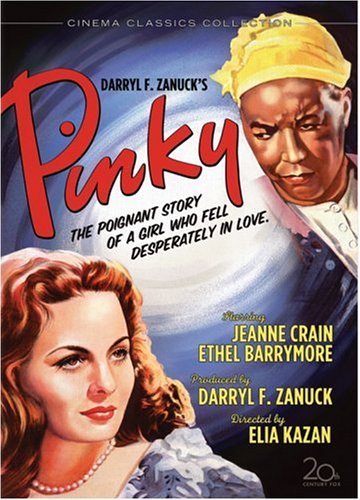
Obviously, the idea of making a film about mixing races in 1949 was a topic that was quite taboo. Nobody can fault Pinky for being groundbreaking in its subject matter. However, this is the very definition of a timely film. Being viewed almost 60 years later, it comes across as silly, almost like a midnight viewing of Refer Madness. Just as the kids in Reefer are obviously not under the spell of some horrible mind-altering herb, so Jeanne Crain is about as convincingly “colored” as Bill Gates on ...now skis. Not only does she not have a single black feature, but her very mannerisms betray her, making her a figurative outcast even among the other black characters in the film.

This is not a film that would change the mind of any pre-existing racist, as it is just too absurd for rational thought. No, this is most certainly not To Kill A Mockingbird. Sure, Kazan went on to direct some amazing films, such as A Streetcar Named Desire, On The Waterfront and East of Eden, but Pinky was clearly just a warm-up to his later directorial achievements.

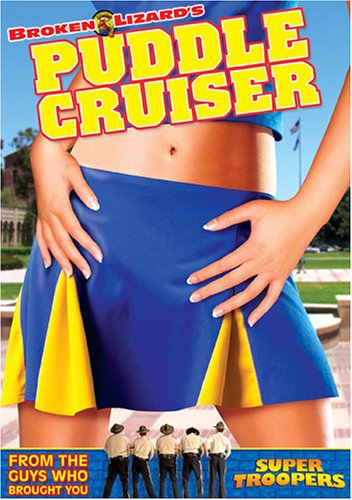
Broken Lizard’s Puddle Cruiser follows Felix Bean, a smitten young college student, whose entire life changes when he sees pretty Suzanne at a party. He immediately tries to impress her, but only ends up incurring the wrath of Traci Shannon, her rather large rugby-playing boyfriend from a rival school. He does manage to wiggle some of her affections away, enough so that she halts her go-nowhere relationship. Together, the two embark on a passionate love affair, but Suzanne still has difficulties letting go of ...er old connection. Felix knows the attraction is purely physical, and that Suzanne finds himself a more suitable companion, but he still has his pride, as he so defiantly states, “No guy wants to hear another guy can kick his ass.” Especially from the woman he loves. So begins Felix’s completely out-of-character attempts at machismo. He even goes so far as to join the rugby team and refuse Suzanne’s pleading for him to pull out as the big match against her ex-boyfriend’s school draws near.

As romantic comedies go, Puddle Cruiser sounds just as formulaic as anything else in the same vain. But looks are certainly deceptive with this one. The laughs are more intense and come with greater frequency than Wedding Crashers and The 40-Year Old Virgin. (However, the latter does have the one exception with its tear-inducing chest-wax scene.) No hilarity to that extent here, but what Broken Lizard gives its viewers is still very funny. What sets Puddle Cruiser apart is how authentic each character is, and how down-to-earth the situations are. I could have sworn I knew each and every one of these people personally in my own college experiences, and any time a film can capture that quality and connect with its viewers, it’s a winner. Another particularly noticeable difference is how Puddle Cruiser manages all of its accomplishments without resorting to set-pieces (as in the chest-wax scene from 40-YOV). While I like a good set-piece as much as anyone, I feel Puddle Cruiser prolongs its “funny” lifespan by not giving in to the temptation. Since all humor falls within the confines of story, there are probably some overlooked laughs, and I welcome the opportunity for a repeat viewing to confirm. In the realm of comedy, I can’t think of a better compliment a film can be paid than that.