HBO

"The darker picture is always the correct one. When you read the history of the world you are reading a saga of bloodshed and greed and folly the import of which is impossible to ignore. And yet we imagine that the future will somehow be different."

One thing that is absolutely different is HBO's The Sunset Limited. I can assure you that this film is unlike any movie you've ever seen before, or are likely to see again. There are a lot of reasons for this, of course. The most glaring difference is that the film is staged and performed very much like a live stage performance. You will get the feeling almost immediately that you are watching a play rather than a movie. It's a natural enough sensation when you consider the film has been written by Cormac McCarthy from his own stage play. The entire film takes place in a rather depressing and claustrophobic tenement apartment. The furniture is sparse and worn. The smell of poverty prevails in every inch of the small space. All of this brings us into more intimate contact with the players and enhances that feeling of watching a play.

Forgive the impending fun-with-words but, hot on the TAIL of the theatrical release of Red Tails is the Blu Ray release of this 1995 interpretation of the same story. Based on the actual group of airmen who were the first African-American fighter pilots in the United States Army Air Corps. This film follows the first cadets through their training and onto their various combat and mission in North Africa and Italy during World War II.

The true story that this film is based on is fascinating in its historical context. It is a shame that this film resorts to using overly staged scenes of corny drama to tell it. The lead cast is loaded with great talents, such as Laurence Fishburne and Cuba Gooding Jr, who certainly give good performances, but are stifled by cliched catchphrases instead of being given some deeper, character building, dialogue to perform.

"As you know, in less than two hours liquor will be declared illegal by decree of the distinguished gentlemen of our nation's Congress. To those beautiful, ignorant bastards. Rest assured that, dry though the country may be, I am in the midst of concluding arrangements that will keep Atlantic City wet..."

Lately, you might have heard a lot of folks talking about getting home for a little Nucky. Well... it's not what you think. They're talking about Nucky Thompson, played by Steve Buscemi on HBO's latest gangland series, Boardwalk Empire.

James M Cain wrote Mildred Pierce in 1941 and based the character on a woman he was seeing at the time. It's said that she offered much of the insight into women's plights of the depression era from undisclosed women. Not that Cain needed help in writing a compelling story. He's had a few hit novels that include The Postman Always Rings Twice. Mildred Pierce was an almost instant hit and was soon optioned for a film in 1945 staring Joan Crawford, for which she won an Oscar, and while she had been nominated three separate times, it would be her only win. The filmed did huge at the box office, and that's where the character and story have pretty much resided for over 60 years.

HBO is no stranger to quality series or mini-series. The John Adams production is considered one of the best period mini-series ever made. The list of Emmys is long and well deserved. So, it is in their hands that the long-dormant Mildred Pierce would make her resurrection in the form of Kate Winslet. The all-star cast also includes: Homicide's Melissa Leo, Guy Pearce, Mare Winningham, Evan Rachel Wood.

“I've gone and torn my family apart and I'm truly sorry.”

I have a confession to make; I first started watching Big Love for what I thought would be the salacious subject matter. Polygamy seemed tawdry and unnatural. I wanted to see how HBO handled it. Soon after watching I was touched by the depth of love and commitment this family had for each other. The underbelly of polygamy, religious compounds teaming in underage wives, forced submission, murderous vendettas and false prophets, certainly held a certain freak show quality to it, but what Bill Henderson (Bill Paxton) was attempting somehow seemed somehow precious and sacred.

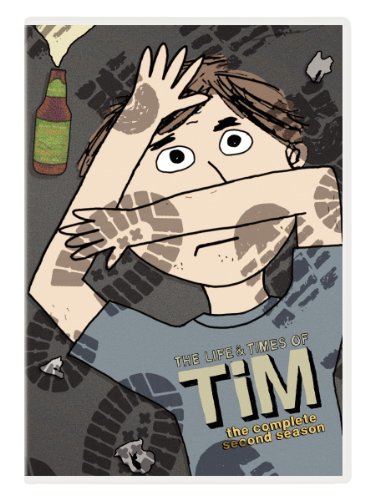
Tim is the lone passive, sane voice in an insane world that whirls around him. Take the kooky scenarios you might find in an episode of Seinfeld, animated them (barely) and pepper it with some HBO-acceptable crassness, and you're looking at this show. Done in a minimalist 2D animation, each episode consists of two separate stories. By splitting the episodes in half, the two chapters make the show resemble the current trend of 10 to 15 minute long cartoons, popularized by Cartoon Network's “Adult Swim” programs.

Stories often end without complete resolution, but always cap themselves off with a punchline. The conflicts he finds himself in range from the domestic, such as work or relationship issues, to the ridiculous, like Tim needing to break a bond he developed with a circus elephant.

"Soldiers, Sailors and Airmen of the Allied Expeditionary Force: You are about to embark upon the Great Crusade, toward which we have striven these many months. The eyes of the world are upon you. Good Luck! And let us all beseech the blessing of Almighty God upon this great and noble undertaking." - General Dwight D. Eisenhower, Supreme Commander of the Allied Forces."

World War II was a turning point in American history unlike any other in the 20th century. America went from being an industrial power to becoming a world superpower. It came at great sacrifice, and we lost almost half a million people in the effort. The war to end all wars didn't quite live up to its promise, but the sacrifices of the men and women who served shaped the world for the decades that would follow. There have been many films about the war. They run from the patriotic to the bravado. Steven Spielberg perhaps gave us the closest thing to actual combat with Saving Private Ryan. It shouldn't come as any surprise that he would team up with his Ryan star and develop what is perhaps the most important mini-series in television history ... twice.

“For what it’s worth, I read your first book. I'm not Jewish, but I liked it.”

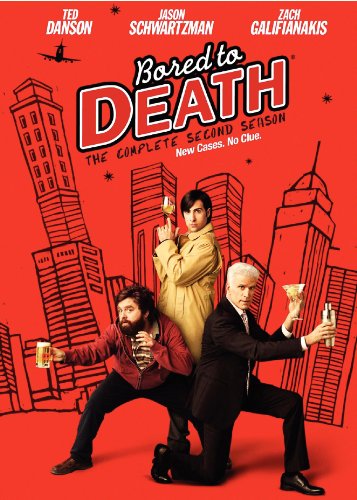
In the spirit of disclosure, the first time I tried watching Bored to Death, I gave up early in the first season. The title described the experience of this viewer. Jason Schwartzman has never really clicked with me. His schtick always seemed a little too precious and self-aware for my tastes.  Pressure from friends who insisted the show got better in the second half of the season got me back. I did find myself falling into sync with the stoner-noir rhythm of the series and laughing out loud at writer/creator/inspiration Jonathan Ames’ absurdist humor by the final third of the first season.

“I'm just a hard working man trying to get by.”

HBO has a way of making series that feature cities like one of the major characters, and How to Make it in America showcases New York City. Not the NYC of Sex and the City, which was all uptown preppie, How to Make it in America takes it to the streets. Not since Woody Allen have the boroughs been so lovingly represented. Much like the hustle of the NYC, How to Make it in America crackles with street-savvy vigor and style.

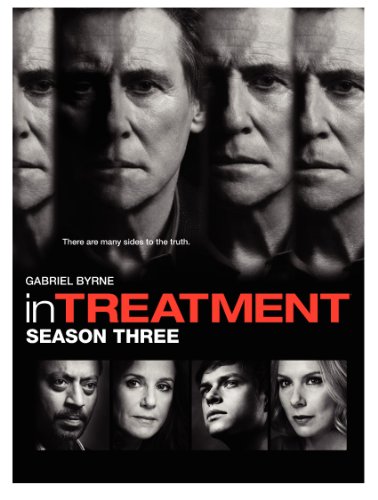
In Treatment is one of HBO’s least flashy and lowest profile series. That doesn’t prevent it from being amazing in many ways. Large parts of America are not used to a show that is essentially two people sitting in a room talking. Those kinds of people are considered to have short attention spans. HBO’s The Sopranos served up the idea of regular therapy sessions, but those shows were enlivened by brutal behavior and gruesome killings. That is no knock on The Sopranos, because it was a great and intellectually complex show. In Treatment is a special case that deserves to be nurtured because it is not flashy or easy. It is uncompromising in its way, and that is a good thing.
Psychotherapy is a mystery to many Americans. It is frequently treated as the butt of a joke, but don’t tell that to the millions of people who suffer countless forms of mental anguish. Of course, the therapy part is still discounted because so many people today are just shuffled drugs to cope. Therapy often just seems like a time-consuming waste. It is a labor-intensive job and, to some extent, it depends on who is doing the labor. How good the therapist is becomes essential. The therapist in In Treatment is very good. but that doesn‘t mean he doesn’t have problems.
Gabriel Byrne is the therapist, and he has his own therapist. This is an essential part of a psychotherapist’s process. He needs to be constantly audited by a colleague. This was a main part of a great Dudley Moore flick called Lovesick. He was a psychiatrist who was so messed up that his frequent therapy sessions were not enough. He also had to frequently talk to the ghost of Sigmund Freud. Freud and Carl Jung are the subject of a new movie by David Croenenberg called A Dangerous Method, which is something that is a long time coming. The work of Freud and Jung are long overdue to be examined by the general public. People like Tom Cruise and other members of Scientology certainly think so. They liken it to voodoo.
So the obvious question is, "Is therapy a good thing?" The answer is, it depends. It depends on the therapist. In Treatment is basically about the therapist that Byrne plays and the ways that he interacts. It becomes a question of whether he is a good therapist and can he balance all the personal problems in his life with his professional responsibilities.
Now is a good time to talk about the therapist’s problems. He had marital problems in the first two seasons, and now he is divorced. He is dealing with parenting issues and now is showing signs of what he believes to be Parkinson’s. His father died of Parkinson’s a couple of years before. He has been uprooted from Baltimore to Brooklyn. The therapist is also suffering from the oppressive weight of 25 years of trying to help people with problems that may be beyond help. He suffers from guilt that he may have failed many of his patients. So the therapist is under stress dealing with people under stress, but such is life. Byrne’s therapist has also changed from Diane Weist to Amy Ryan, and that change is also stressful.
The episodes generally play out in real time like a play. We get snippets of Byrne’s real life before we delve into a therapy session. The sessions usually are a ticking time bomb of increasing tension, and when the clock runs out, you’ll have to come back next week. That is the advantage of having the DVD. You don’t have to wait. There are 28 sessions on Season Three which should be enough for quite a marathon. These sessions are split between four people. Three are patients and one is a therapist, and each situation has its own arc and unpredictable moments. The show played four different sessions weekly for seven weeks when it was run on HBO.
The four segments are all different. The first is about an Americanized Bengali family that puts the father in therapy. They complain he is unresponsive and unhygienic. He turns out to be a very intelligent and thoughtful man. (I confess this is the most satisfying and intense of the extended sessions.)
The second is about a famous actress played by Debra Winger. She is the sister of a former patient who is now dying of breast cancer.
The third is with a gay teenage photographer who seems to have flippant anxiety about lots of subjects, most notably the out-of-the-blue contact from his unknown birth mother.
The fourth is his attempt to start with a new therapist while he starts to discover unsettling problems with his old psychoanalyst.
Some of us have gotten our information on psychiatrists from Woody Allen movies where his characters seemed to be perpetually in treatment and never seem to get to the bottom of their problems. Clearly with this show, there is some expectation that things will be brought to some form of conclusion by week 7.
What becomes evident is that the most important moments in these people’s lives become compressed in these short hours. These sessions come from real pain, and the purpose is to express that pain. The purpose is further to resolve that pain, hopefully before something cataclysmic happens in their lives.
The show is an acting showcase. It is a perfect place to show the depth and complexity of character. Only terrific actors can thrive here, and many have, most notably rising star Mia Wasikowska (Alice in Wonderland).
There are no specific extras on this 4-disc set. The show is not yet ready for an in-depth revisionist overhaul. At this point the show speaks for itself. The production is pristine and perfect in it’s own way. I will give Mark Wahlberg big props for adding to his impressive resume as executive producer.
This is probably the final season. It is obvious this show is not for everyone. The format was a bit unwieldy when it would play every night of the week. That’s a bit of a commitment for a show that is not about blowing things up or shooting people. It is a noble experiment that does demand that you invest yourself in these people’s lives. It expects you to be able to care. The guiding spirit of the show is the intense compassion the therapist displays. The therapist must cope with the struggle to guide these suffering individuals through this small window each week and then watch him wonder if he has lived up to his responsibilities.
I can only speak for myself in saying how much I enjoy this special show. This stands alone quite well, and I don’t think it is essential to have seen the earlier seasons. I would recommend the other seasons as well. It is educated, probing, and engrossing show. The show has won many awards in this incarnation and in its previous one on Israeli television. It has many devoted fans, but one can easily say that it is a cult audience. That’s another way of saying a small audience. So I recommend this show highly to a discriminating audience. That’s another way of saying a well-paid, highly educated audience. I know some people might be insulted by that kind of discrimination, so let’s just say that if you complain about the show being slow, then you are probably slow.
I do feel that it is necessary to warn people. I think I have taken pains to make sure you are the right kind of person for this show. If not, I can give you a referral to another show.
All that aside, I can only speak for myself. I agree with some people who call the show addictive. I found it difficult to put down. If it were a book, it would be a page turner. It is comforting and compelling to watch a humane and intelligent man show his compassion and attention to real people with real problems. More importantly, this therapist is a real person with real problems.