IFC Films

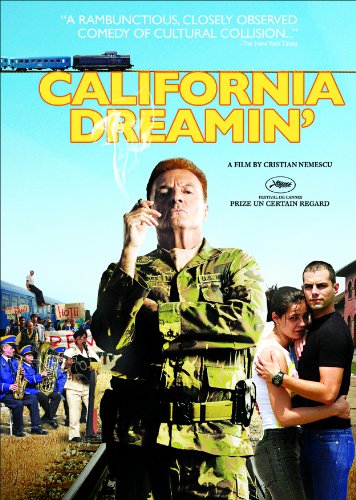
In 1999, a troupe of US marines must transport some equipment across Romania. Leading them is Captain Doug Jones (Armand Assante), a man so committed to his duty that he does a pretty convincing job of appearing passionate and proud about what is, on the face of it, a rather dull, two-bit assignment. As matters develop, the mission is far from dull, though it is not interesting in the way Jones might have hoped. The train is waylaid in the small town of Capalnita by the corrupt stationmaster, and a comical clash of cultures ensues.

Director (and co-writer) Cristian Nemescu was killed in a car accident before he had finished editing the film, and it is likely that his final version would have run less than the current 154 minutes, which is long for a comedy. Nonetheless, there has been no second-guessing of his artistic intent, and the film is presented as he left it, and if it isn't as tight as it probably would have been, had Nemescu been able to complete it, it's still a remarkable piece of work, with wonderful, finely observed (and performed) characters, and a sharp, wry sense of humour.

In my lifetime, I’ve really only liked five zombie movies. There is Shaun of the Dead, the three Resident Evil movies, and Zombieland. Most of the other zombie type films either belong in the “Way too Gory” or “Nonsense” designation. So, naturally when I receive a zombie movie like Dead Snow, there is some apprehension. However, in this case I can say that this movie belongs in both of those designations and delightfully so.

The movie opens with a lady (played by Ane Dahl Torp) and she is chased through the snowy mountains of Norway. The creatures ultimately corner her and eat her alive. We notice that the zombies have strange costumes as we fade to black. We re-open with seven medical students who are spending their vacation at a cabin up in what appears to be the same mountains.

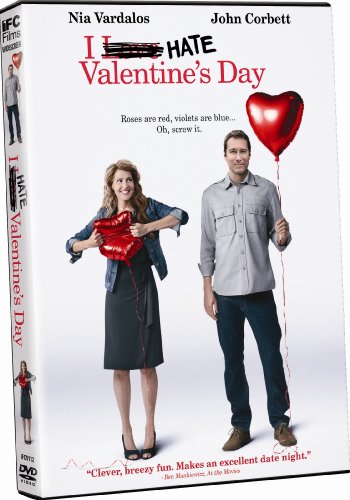
Nia Vardalos casts herself across from her My Big Fat Greek Wedding love interest James Corbett, in an attempt to rekindle the magic that was the unlikely Big Fat phenomenon. As star, writer, and director, the weight of the film falls onto her shoulders and thankfully she has enough carry to drag a rather sparse plot from beginning to end with a some genuine laughs.

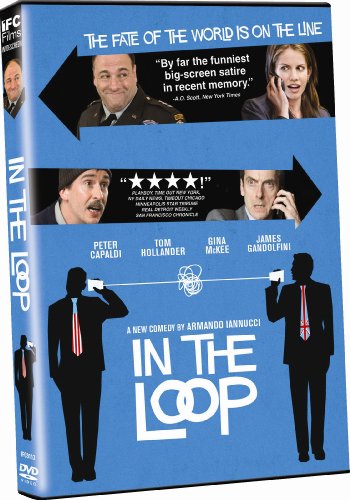
When the UK minister for International Development (Tom Hollander) has the nerve (not to mention lack of political acumen) to opine that war in the Middle-East is “unforeseeable,” all hell breaks loose. The pro- and anti-war bureaucrats in Washington see him as useful to their cause, and descend, talons outstretched. Meanwhile, the Prime Minister's Director of Communications (Peter Capaldi), a Scot who makes Don King look even-tempered and restrained, goes into apoplectic overdrive in his attempts to keep everything on-message.

Though this blistering satire leaves the precise nature, or even location, of the war-to-be is unspecified, it's pretty clear that what the film has in its sights is the collection of mangled information, doublespeak and unstoppable political agendas that led to all the fun and games in Iraq. Filled with sharply drawn characters, wonderfully creative profanity, and a bracingly cynical worldview. Not a film for the optimistic (or naïve, depending on your perspective), but the kind of black political farce that the British excel at – think Yes, Minister and House of Cards and you begin to have the idea.

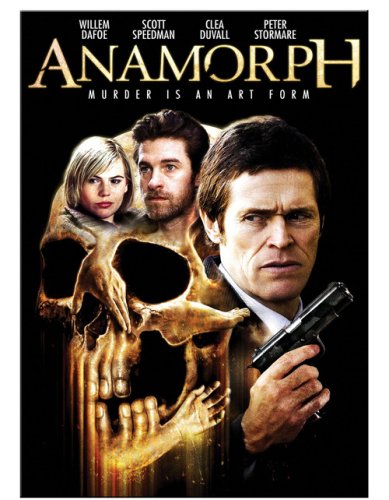
<>An-a-mor-pho-sis n. pl. An image distorted so that it can only be viewed without distortion from a certain angle or using specific instrumentation. 

In the case of this direct to video thriller, our serial killer is using the aforementioned technique in his murders. He dismembers bodies and reassembles them so that they appear differently depending on how you view them. Obviously the killer considers himself a kind or artist. He justifies killing by remarking that the sacrifice of a single human life to bring such a work of art to humanity is a reasonable trade-off In this case, however, our killer is targeting an audience of one.

Very much in the tradition of such other overheated Mexican emotional dramas as Amores Perros and Y Tu Mamá También, Drama/Mex gives us two intertwining plot strands, each dealing with relationships as tormented as they are sexual. In one, upper-class Fernanda’s bad boy ex-lover Chino resurfaces, takes her violently, but she doesn’t exactly hate it, and this has, as one might imagine, some awkward consequences for her relationship with current boyfriend Gonzalo. Meanwhile, a middle-aged man, guilt-ridden over what he has done to his daughter (take a guess), is contemplating suicide when he runs into a precocious teenage hustler. In other words, basically enough material to give Sarah Palin a fatal coronary.


Audio

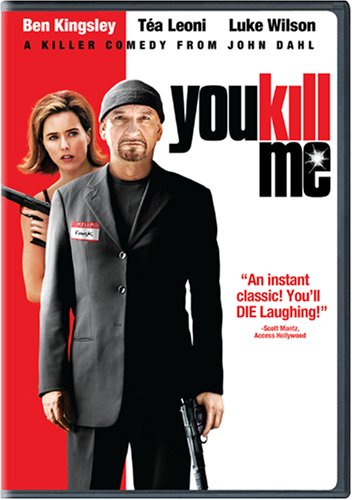
I only know Tea Leoni for a couple of things, the big thing being that she married David Duchovny (The X-Files) and grew a couple of demon seeds with him. But I guess she was bored and inexplicably took on the role of producer and actress in a film starring an Oscar winner, Sir Ben Kingsley (Gandhi), in a low budget independent film named You Kill Me, which was a script that had been kicked around Hollywood for a few years.

Written by Christopher Markus and Stephen McFeely (The Chronicles of Narnia) and directed by John Dahl (Rounders), Kingsley plays Frank, a hitman for a Polish crime family in Buffalo. He is quite the drinker, and drinking has been affecting his work lately. He sleeps through a job where he is supposed to off a rival crime boss (played by Dennis Farina, Midnight Run), so he is banished to San Francisco to dry out. A shady real estate agent named Dave (Bill Pullman, Independence Day) sets him up with an apartment and a job (dressing bodies at a funeral home), but at one of the services, he meets Laurel (Leoni), and decides to go to Alcoholics Anonymous, where he finds a sponsor named Tom (Luke Wilson, The Royal Tenenbaums) who helps him get started on the rehab process.

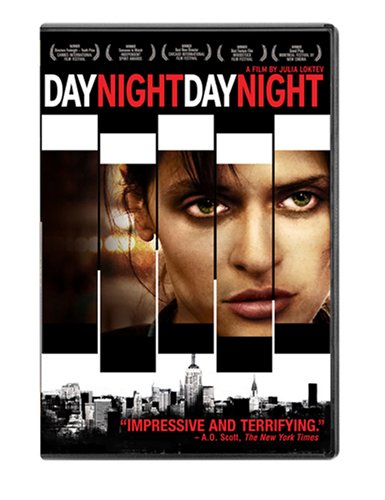
The premise of Day Night Day Night is relatively simple; a young woman decides to be a suicide bomber in Times Square. The motivations for her doing this, as in the outside forces who convince her to do it, aren’t really explained at all, so what makes it unique is that it focuses on the preparation the girl makes. She is portrayed by Luisa Williams, who appears in the film in her first role.

Written and directed by Julia Loktev (Moment of Impact), the film conveys some degree of tension and atmosphere, because you’re wondering what’s going to happen next, but the fact of the matter is that the level of activity that occurs here is almost nonexistent, and the context of the event borders on confusing. You watch the girl wait. And wait. And wait. And then her pseudo-presumably Islamic organizers who have American accents get her ready for it. Then she waits. And waits. And waits. And later on as we get closer to the actual event, she eats. And eats. And eats.

Mads Mikkelsen, whom we last saw taking a rope to James Bond’s family jewels, is here up to a far more praiseworthy activity: helping run a school for orphans in an impoverished region of India. The school is struggling to survive, and when a Danish businessman expresses an interest in providing stable funding, but only if Mikkelsen comes to Denmark for a meeting, the latter is reluctantly persuaded to leave India for the encounter. At said meeting, the tycoon (Rolf Lassgard) casually (it seems) invites Mikkelsen to his daughter’s wedding. Mikkelsen accepts, and at that wedding receives quite a shock. Lassgard, it turns out, has a very personal secret agenda at work.

To say more would be to spoil one among the many surprises the film unleashes upon both characters and audience. Most especially on the former, since the story also follows some twists familiar and predictable to any fan of the melodrama. And that is, essentially, what we have here, the modern inheritor of the likes of Stella Dallas and Dark Victory. That isn’t a bad thing. The big emotions are earned honestly, and Lassgard’s performance climaxes in a scene of such intensity that the word “raw” scarcely does it justice.

Synopsis

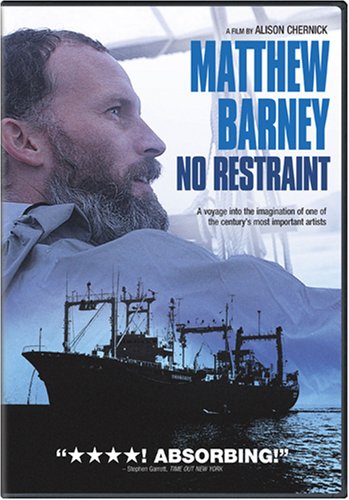
Famed for his obsessive love of petroleum jelly as a medium for sculpture, Matthew Barney uses 45 000 pounds of the stuff in the creation of Drawing Restraint 9. This film documents the making of that piece, which is both sculpture and film, done aboard a Japanese whaling vessel. Intimately involved in the production is Barney’s collaborator and partner Björk.