Studio

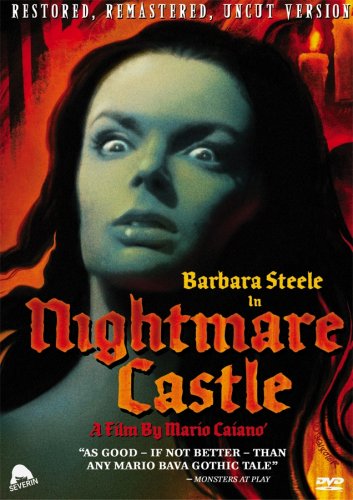
Dr. Stephen Arrowsmith is a haughty scientist who sees himself above such petty concerns as ethics. He has married his wife Muriel (Barbara Steele) for her money, and when he catches her in the arms of one of the servants (Rik Battaglia), he tortures and kills them both, cuts out their hearts, and uses their blood to create an elixir of youth for the maid/co-conspirator Solange (Helga Liné). He then marries the psychologically fragile Jenny (Steele again, now blonde), Muriel's heiress, planning to drive her insane and take control of the his dead wife's fortune. Sure enough, Jenny starts seeing things, but the ghosts she is seeing are real.

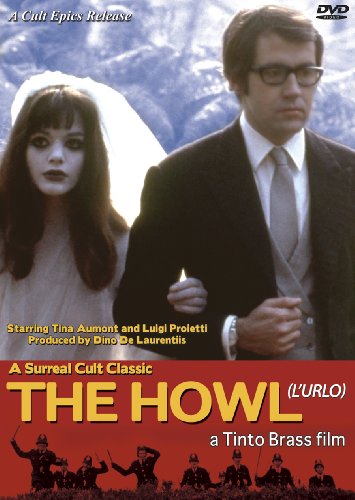
Cult Epics continues its love affair with director Tinto Brass, and here once again delves into one of his early works. For my money, for all that his later erotica is handsomely shot and produced, what I'm seeing of his 1960s output (so far Deadly Sweet and this) is far more interesting. If 1967's Deadly Sweet was demented, it at least followed a semi-recognizable mystery plot. The Howl (1969), on the other hand, defies description. It is basically a surreal picaresque, as a young woman (Tina Aumont) flees her wedding with a stranger (Luigi Proietti) who gives her a come-hither look. Already, this sounds far more sensible than the film really is. The couple race from one lunatic encounter to the next: a resort hotel apparently designed by Sade; a naked, cannibalistic philosopher and his family, and on we go.

Who doesn’t remember the original Witch Mountain films from Disney back in the 1970’s. They were clever family films. They were camp, to be sure. But, most of us remember them fondly, if not as particularly outstanding films. While Disney’s reimagining of the franchise doesn’t have a great deal in common with those earlier films, you can pretty much describe the reaction as being spot on. Race To Witch Mountain isn’t going to be breaking any box office records, but it is the kind of film you get a pretty warm feeling for, and like its predecessors, you’ll end up remembering it with fondness.

An ancient facility beneath Antarctica becomes the launching platform to the lost city of Atlantis. Atlantis is buried beneath an ocean in another galaxy and can only be reached with an additional symbol on the Stargate. Because of power limitations this trip, at least for the time being, is a one-way adventure. A crew of scientists and military officers from many countries assemble to explore the Pegasus Galaxy from the Atlantis gate. Led by scientist Dr. Weir (Higginson) and Maj. John Sheppard (Flanigan) they take over the Atlantian command center and begin to explore. In their initial investigations they accidentally awaken the area’s top bad guys, The Wraith. These vampire-like beings suck the life-force out of humans.

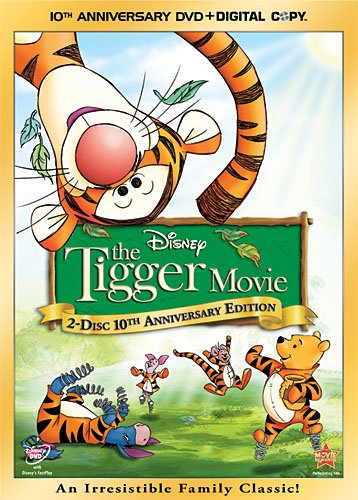
“Now this might be the room of any small boy, but it happens to belong to a boy named Christopher Robin, and like most small boys, Christopher Robin had toy animals to play with. And together they had many remarkable adventures in an enchanted place called The Hundred Acre Wood. But out of all of his animal friends, Christopher Robin’s very best friend was a bear called Winnie The Pooh.”

“Oh Bother”A.A. Milne was quite an eclectic writer. He wrote murder mysteries that even appeared on Alfred Hitchcock Presents. From that fertile mind would also come a place known as the Hundred Acre Wood.

“In a time before many can remember, our planet faced its greatest challenge. A warlord named Piccolo came from beyond the stars, bringing darkness and chaos to our once peaceful world. Aided by his disciple Oozaru, the evil pair brought the human race to the brink of annihilation. Cities and countries crumbled beneath them. Countless lives were lost, but finally a group of brave warriors created the Ma Fu Ba, a powerful enchantment that imprisoned Piccolo deep with in the Earth. With his master captured, Oozaru disappeared and balance was slowly restored to our world. And so it has remained for thousands of years…until now.”

Let me begin by stating that I have not had more than a passing exposure to the hugely popular Dragonball anime works.

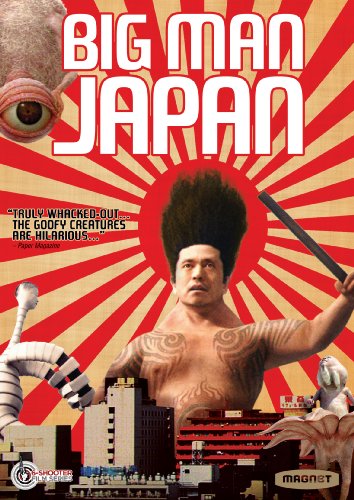
Daisato (director/co-writer Hitosi Matumoto) is having his daily life filmed by a TV crew. This life is pretty depressing. He doesn't make much money, his wife has left him, and his neighbours hate him. His job isn't exactly low-stress, either: he is Big Man Japan, a hereditary job that involves defending Japan against monster attacks. So whenever he gets the call, he has to run to the nearest power plant, get himself zapped until he grows into a 50-foot giant, and do battle with various bizarre creatures (one looks like a plucked chicken with a huge eyeball/penis appendage). But though he does his best, his ratings are down, his show is broadcast in the dead hours of the morning, his agent appears to be taking advantage of him, and there's a new monster in town that mops the floor with him on their first encounter.


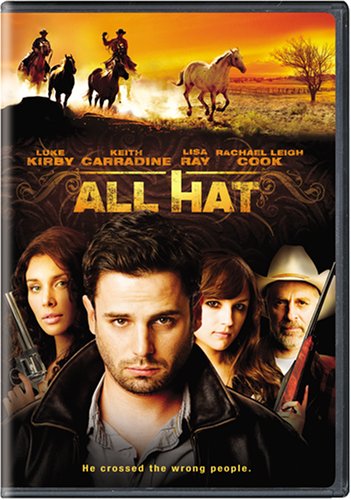
The story originally seems to set itself up to be that of redemption for a young man who is fresh out of jail. While this story is around, there seems to be parallel stories that arise as subplot but soon race alongside the original tale like proverbial track horses (and horses also just so happen to be the nexus for said plots). Just as one seems to buck into the lead, another comes along to grab the focus.

“Nobody has everything they want. It’s a survival pattern. You get what you want, you want something else, something more extreme, something more specific, something perfect….”

A Joss Whedon universe is always a strange and fantastical place to visit. It doesn’t matter if it’s populated by vampires and demons or space cowboys. If Whedon’s name appears anywhere on the credits, you know you’re going to be in for one hell of a ride. It’s been a little while since Whedon’s been back in the saddle. His most recent series, Firefly, was fraught with problems with the network. It was very badly handled, and the show died an undeserved swift death after just a few episodes.

This American Life, broadcast on the Showtime network, is a half-hour show based on, or more accurately, spun off from, the award-winning Chicago Public Radio show of the same name. Each episode is loosely based on a theme, which is then explored through stories about real people. The content and style varies from week to week, with stories ranging from light-hearted to incredibly sad.