Paramount

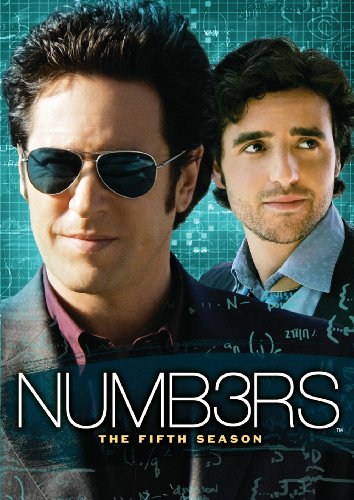
Do you believe that a numbers wizard can predict the most random of human actions with mathematical equations so accurately as to know where and when such a person will be? If so, then I suggest you put down that letter you are writing to Santa, finish eating that egg a bunny left for you, go to your pillow and pull together all of the loot you got from the tooth fairy, and plunk it down on season three of Numb3rs. No, that’s not a typo, apparently they believe that letters aren’t good enough to stand on their own, so they inserted a 3 where the e should be. Aren’t they so clever? Not. In the fairy tale world of Numb3rs, all you need is an almost obsessive knowledge of math and the crooks don’t stand a chance. It’s almost unfair, isn’t it? Those poor criminals go about their carefully plotted crimes, unaware that everything they do is controlled by math. They live their lives oblivious to the fact they are at the mercy of a diabolical equation which forces their every move. In fact, I suspect some clever attorney somewhere is already preparing the “math made me do it” defense at this very moment. Soon our justice system will be forced to account for this undeniable force on our very destinies. I would go on, but I can’t… must… fight… numbers

Don Eppes (Morrow) is a decorated FBI officer in charge of a unit of the local field office of the FBI. His brother, Charlie (Krumholtz) is a math professor at CalSci. His brilliant mathematical mind is called upon to help the Feds track killers and rapists. No matter how complicated the trail gets, when the going gets rough these guys call on Charlie. Agent David Sinclair (Ballard), the smart tough guy, and Agent Colby Granger (Bruno) the young upcoming agent. Charlie has professor Larry Fleinhardt (MacNicol) to guide him through his struggles. Both of the geeks are socially inept, and we are “treated” to their constant struggles to relate to others, particularly women. Why can’t they write an equation to fix that? Navi Rawat is Amita, a student of Charlie’s who remains to take a job at CalSci, possibly to remain near Charlie. Judd Hirsch is the father to the Eppes brothers. A new agent is added to the mix this year in Nikki Betancourt, played by Sophina Brown. The show is produced by brothers Ridley and Tony Scott, who have had far better luck on the big screen.

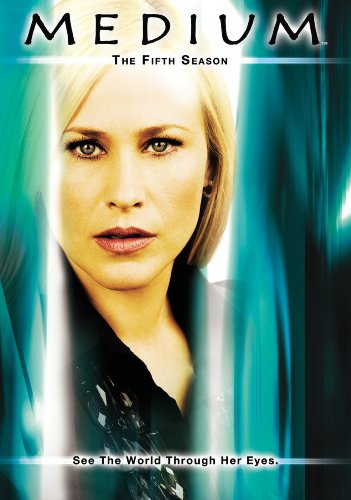
Medium made a jump in its 5th season. NBC axed the show, but the folks at CBS decided to pick it up and continue the series. It’s not a huge leap, actually. CBS was already showing the similar and better Ghost Whisperer, and the series was produced by the CBS parent company, Paramount. That means that the production team pretty much stays intact and the show doesn’t really suffer any kind of transition. The same can be said for the release. The packaging and production values are pretty much identical to the previous four years.

Medium was based on a real person with alleged psychic powers who apparently has helped out various law enforcement agencies in some actual cases. If you’ve seen the series, you might find that hard to believe, and the episodes are obviously fictional adventures and not based on the real Allison Dubois’s experiences. At first glance it might be easy to lump Medium in with Ghost Whisperer or The Dead Zone. Actually there are almost no similarities to any of those shows. Allison does not gain any understanding through touching, and while she does see ghosts at times, that aspect of the show has been made to play in only a small percentage of the episodes. Allison accesses her powers through dreams. These nightmares are usually vague and often provide additional clues with each recurring dream. The formula for the show is that she must interpret these images and signs in time to do whatever it is she needs to do. Now that her secret is out, she’s not able to continue her work at the DA’s office. Joe’s career is also in jeopardy, so the show is going through some changes here. The strike likely did some damage, so we may never know exactly what was in store.

Written by Alexis Quinn

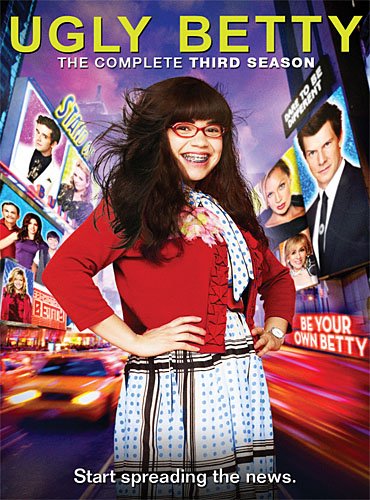
Despite the outrageous plotlines and mediocre acting, Ugly Betty is one of those shows you can’t help but watch—it’s so bad it’s almost good. And this season is no different. Even with a primetime budget and well-known cast, the show stays true to its telenovela roots as an adaptation of the Colombian telenovela Betty la fea, mimicking the production value of your everyday soap opera.

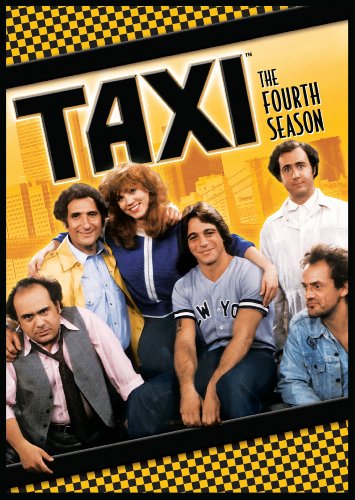
Few television situational comedies have produced the stable of A-list stars that this one did. Every one of these cast members were relatively unknown at the time that Taxi was taking fares on our television sets each week. Not so today. The cast was so remarkable that it is here that I decided to spend much of my review. The episodes were often funny, even more often hilarious. But after all of these years, it is the characters that are most remembered by the fans. Yeah, we all have our favorite moments. Many of them in this release. And, I’ll get to those moments, but first:

Playing the hard-nosed and lecherous dispatcher for The Sunshine Cab Company was Danny DeVito. He spent most of his Taxi days sitting in a cage barking orders and insults with equal frequencies to the crew of drivers in the garage. Each of them had dreams beyond the yellow sedans, and Louie took great pleasure in watching them try and ultimately fail to achieve their dreams. Of course, DeVito went on to star in a boatload of feature films and never looked back.

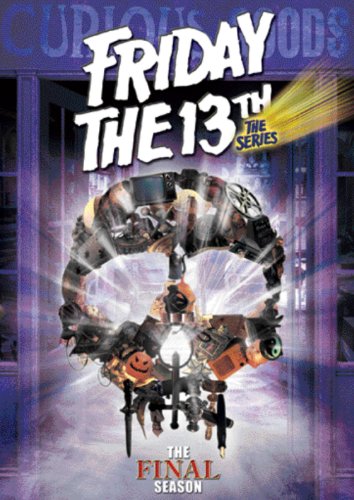
It all starts with antique dealer Uncle Lewis. He made a deal with the devil to help His Evilness to distribute cursed and evil objects through his store. Objects included Jack The Ripper’s scalpel. Finally Satan comes to collect Uncle Lewis and his tattered soul, leaving his niece Micki (Robey) to clean up the mess. She and cousin Ryan (Le May) have the unenviable task of tracking down these items and sealing them safely away so they can do no more harm. They were often assisted in their task by Jack (Wiggins) who knew something of the occult. The series ran from 1987 to 1990 and never made more than a ripple in the ratings. The show included Steve Monarque as Johnny Ventura starting in the second season.

The final season of this bizarre series begins with a two part European jaunt episode as Jack ends up in France searching for none other than Satan’s copy of the Bible. Other artifacts in the final year include: a cursed wheelchair, a hearing aid that allows the user to hear other people’s thoughts, a coin that can bring back the dead, a car radio that does double duty as a time machine (must have come from a Delorean), a cross that burns vampires alive, a film reel that can bring the movie’s femme fatale to life, a pen that turns a writer into one of his serial killer characters, an embalmer’s tool that trades one life for another, a necklace that allows one to switch bodies with someone else, and a dog leash that lets its owner merge his dog and wife into a single creature. The series ends with Micki going through a time portal and face to face with the Marquis de Sade. And that’s all folks. Series over.

When the later cartoon series ran starting in 1983, the show from time to time spoofed many of the popular films of the time. Over the years everything from Star Trek to Star Wars received the Chipmunk treatment. Collectively these episodes have often been released under the title Chipmunks Go To The Movies and have even appeared with Roger Ebert. One of the best of these spoofs is the hilarious Star Wreck. Actually, the disc comes with three episodes, each spoofing a different film.

“This is the Alvin Show, you’re positively gonna love the Alvin Show.
There's Dave Seville, and what is more here's the boy who giggles known as Theodore.
Now you see, on camera three, the brother known as Simon on the family tree.
And here's the star of the show… Alvin”

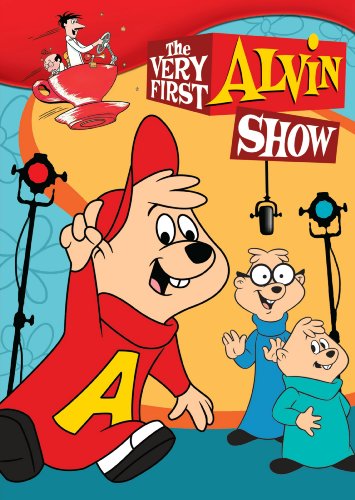
The hilarity continues with a second release: The Very First Alvin Show. This disc also contains three episodes. The spotlight piece here is the very first Chipmunk adventure ever from the 1961 series The Alvin Show. You’ll be amazed at just how little these guys have changed over the years. The three shows are:

In the first season, Melinda was joined by her friend and business partner Andrea (Tyler). At the end of that freshman season, Andrea was killed and became a pawn in a good vs. evil struggle between Melinda and a mysterious “wide-brimmed hat man”. I was sorry to see the character literally depart the show, but I thought that cliffhanger was one of the more effective moments I’ve seen. The sacrifice of the character provided an ending I’ll admit I never saw coming. To replace Andrea, Camryn Manheim from The Practice joined the cast as Melinda’s new partner Delia in the second season. The better addition to the second season cast was Jay Mohr as Professor Payne, who develops a very interesting chemistry with Melinda. He was only intended as a short arc character, but the relationship was quite a dynamic one from the start. But now Mohr has left the show. Jamie Kennedy has replaced him as Melinda’s professor answer man. Kennedy’s Eli James actually shares Melinda’s gift, somewhat. While he can’t see ghosts, he can hear them. His dynamic is not near as good as Mohr’s was, and I missed Mohr greatly in this season. That isn’t so much true for series star Jennifer Love-Hewitt, who ended up hooking up with Kennedy in real life.

The show’s most basic premise remains intact. Melinda Gordon is a newlywed and owns the antique shop in a quaint New England town. From childhood she has had the “gift” of being able to see the ghosts of those restless departed souls unable to cross over into the great beyond. If this sounds familiar, it should. Remember little Haley Joel Osment from The Sixth Sense? Like his character, Cole, Melinda takes the responsibility of helping these spirits accomplish some unfinished earthly business so that they can move into the light. The series almost always ends with some tearjerker moments as a loved one is connected, through Melinda, with the departed friend or family member.

“About this startling new show as a whole, we say this. When ordinary people of our real world encounter the chilling world of the unknown, when normal men and women take that one step beyond, that we think is incomprable drama, all the more memorable and amazing because these strange adventures are true, absolutely true.”

The stories from One Step Beyond were reportedly true, but to paraphrase a rather disingenuous former president, it all depends on what your definition of true is. In interviews many of the writers later admitted that much of the material came from a couple of reference books. The idea was a truly reported one, but the story was pretty much created. The series was directed and hosted by John Newland and ran from 1959 to 1961. The shows were half hour and sponsored by Alcoa. In syndication the series was often called Alcoa Presents: One Step Beyond. In 1978 the original creative team of creator Merwin Gerard and host/director Newland attempted to revise the series calling it The Next Step Beyond. But the show was not picked up.

"Space...The Final Frontier. These are the voyages of the Starship Enterprise. Its 5-year mission: to explore strange new worlds, to seek out new life and new civilizations, to boldly go where no man has gone before !"

Paramount was bold indeed when they undertook the remaster project of the original series. Not only did they clean up the prints, but they took the decidedly risky option of redoing most of the f/x shots from the original prints. We all know just how cheesy the old work looked when compared to today’s computer abilities. You could see a box around spacecraft that allowed the obvious cutout to maneuver through a cardboard star field. There were often mixups where phaser shots would be used for photon torpedo commands and the opposite. The planets often utilized matte paintings that look somewhat ridiculous now. We forgave these flaws with a complete understanding of the limitations the crew had at the time. While Star Trek showed us computers that were remarkably similar to the PC’s we use today, down to the floppy drives of our own yesteryear, the use of computers to create f/x was still many years away. So Paramount decided to “fix” these “flaws” and make much of the show look like it might have had it been produced today. It was a serious risk because of the extreme possessiveness fans have for these kinds of shows. Just ask George Lucas how much fans like their sci-fi tinkered with. The project encompassed a few years, and the results are quite attractive. But how do they stand up for the fans?