Paramount

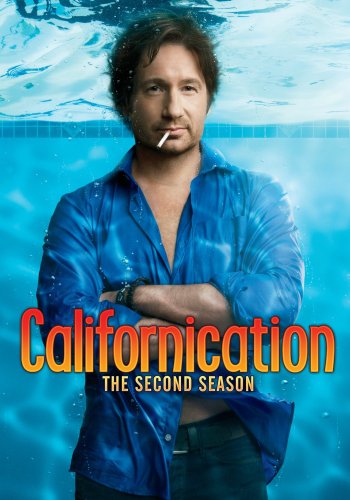
In the first season of Showtime’s Californication, we were introduced to David Duchovny’s character, bitter yet upbeat writer Hank Moody. Hank, after moving to Los Angeles on the heels of his first novel - a critical darling entitled “God Hates Us All” - has recently lost his long-time love and, by extension, his daughter, to a straight-arrow bore who makes his girlfriend Karen (Natascha McElhone) feel safe.

The first season told us the story of Hank’s attempts to win Karen back and his increasingly perilous relationship with a sixteen-year-old Lolita whose inclination for combining sex with a wicked right hook leads to one of television’s all-time great novel titles. Oh yeah, and it also featured lots and lots of raunchy sex between Hank and many gorgeous women. This was a major reason for the show’s notoriety, but what really makes the show work is Duchovny’s portrayal of Hank. He imbues him with a charming kind of good-natured nihilism and, even when he is being a grade-A jackass, we still like him.

You know, I was watching this episode of the popular Showtime series Dexter the other night. There was this murder victim who had taken off work early to go and see a romantic comedy with his girlfriend. He ended up getting his head bashed in and dead. Is it saying something about my own bias that the first thing that came to my mind was that it was a lucky thing he got his skull caved in before he had to go to the romantic comedy? Romantic comedies. Chick flicks. Date movies. Whatever it is that you want to call them, ladies, they are the stuff of nightmares for your significant others. It might appear to be harmless enough fun for you girls out there, but for your guy? I guarantee he’s squirming in his seat the entire time. You do know that he doesn’t really have a bladder problem, don’t you? There’s a reason he has to go to the bathroom 20 times in those 2 hours. It’s even worse when we’re watching them at home. Here’s a helpful dating tip: Don’t ask him if he wants you to put it on pause on one of those 20 bathroom breaks. It might also be advisable to keep any sharp objects, firearms, or prescription drugs out of reach of your guy during date movie nights. There isn’t a guy out there who wouldn’t opt for a painful visit to the emergency room over another hour watching a romantic comedy. We’ll do it; after all a guy’s gotta do what a guy’s gotta do. Just don’t forget the poor sap deserves to be amply rewarded when the film’s over. Now if you’re a guy and you find yourself, like me, watching this one by yourself…. not that there’s anything wrong with that… I hope you have a good reason. Mine is to write this here review. Just another bullet I take for you, my gentle readers.

Andie Anderson (Hudson) writes the “How To…” column for Composure Magazine, the fastest growing women’s magazine in the country. You know the kind of articles I’m talking about here: “How to talk your way out of a ticket”, “How to lose weight in 5 Days And Still Eat All You Want”. It’s those female lifestyle burning questions. But, Andi wants to write about more serious issues like politics and religion. Her editor (Neuwirth) promises her a shot at writing about what she wants if she turns in a killer article. She decides to call it “How To Lose A Guy In 10 Days”. It’s a kind of dating tips in reverse. She’ll get a guy into her and then begin to pull out all of those don’t do’s in a relationship: acting clingy, whining, feminizing his apartment, dragging him to a Celine Dion concert, and one she forgot: taking him to see How To Lose A Guy In 10 Days. Enter Ben Berry (McConaughey). He’s an ad executive who wants to land a hot new diamond account. He’s got to convince his boss and a couple of female coworkers that he understands women enough to lead the campaign. He makes a bet that he could get a woman to fall completely in love with him in just, you guessed it, 10 days. His coworkers will pick out a woman at random, and that’s Ben’s target. You already know where this is going, don’t you? The two hook up and begin their cross purposes campaigns, each without the other knowing. The usual romantic comedy moments ensue, and the two genuinely fall in love with each other. It’s all leading to the big diamond gala 10 days later. Both bosses are in attendance, and the secrets get out with the expected results.

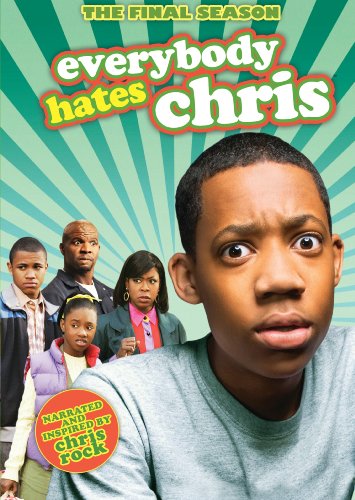
Chris Rock has been one of those comedians that either hits a home run or strikes completely out. I’ve seen quite a bit of his stand-up and found I loved it or hated it. He’s not afraid to play the race card. Hell, Chris plays the whole dang deck at times, and Everybody Hates Chris is no different. The comedy is based, loosely I’m sure, on the young adolescent life of Chris Rock. It’s a black comedy that will bring back memories of those 1970’s shows we all watched as kids. Like Good Times and even Sanford And Son, the show is loaded with stereotypes. All of the white characters are bumbling fools who are often played as racists themselves. Chris’s school teacher, Mrs. Morello (Mazarella), is the most obvious example. She’s constantly trying to talk “hood” with the boys and making politically incorrect observations loaded with outrageous clichés. Of course, it’s all in fun, and if you’re willing to overlook the often sensitive language and plots, you’re in for some laughs along the way. I like that the show never really takes itself seriously and challenges the viewer to simply lighten up. Basically, this ain’t no Cosby Show.

Chris Rock narrates each episode from his current place in life. The interjections are often humorous commentary on the pains of growing up, particularly black. At times Chris is just annoying, and he tries too often to be over the top. Tyler James Williams plays the young Chris. He kind of looks like him enough, and I can see some of Rock’s mannerisms in the boy. Terry Crews is the standout actor, playing Chris Rock’s father, Julius. The big guy always seems to mean well but doesn’t always have his stuff together. He could have been a young Fred Sanford. Tichina Arnold is Mom and the domineering force in the life of our young comedian to be. She’s best known for her excellent turn as Pamela in Martin, another stand-up sit-com vehicle. Chris’s siblings are played by Tequan Richmond and Imani Hakim. Hakim is absolutely hilarious and seems so much older than her age as an actor. She manages the little sister act, while all the while you know there is so much going on there. She’s a constant burst of energy and often exhausting to watch. A very promising young actress. Finally, Vincent Martella plays Greg, the token white dude. He’s Chris’s best bud and is honestly the most stereotypical white kid I’ve seen on television. Together it’s a good ensemble, and the show can be quite clever at its best, simply funny at its worst.

Imagine waking up one morning to find a newspaper on your front porch. Here in Tampa, the fact that the paper is actually on your front porch is miracle enough. Imagine further that this ordinary looking paper isn’t today’s paper at all, but rather tomorrow’s edition. If you could trust that what you held was the genuine article, so to speak, just think of the possibilities. For most of us our thoughts turn to the myriad ways in which we could enrich ourselves: sports scores, lottery numbers, even stock tips. If, however, you’re less selfish, there is an equally endless number of ways in which you could help your fellow man, or woman as the case may be. You would have advance knowledge of tragic accidents, crimes, and other unfortunate events about to befall your fellow human travelers. That’s the essence of Early Edition.

Gary Hobson (Chandler) is having some bad luck. His wife kicks him out of the house, on their wedding anniversary, no less. He ends up forced to live in a cheap hotel room. One morning he discovers that a mysterious orange tabby has left a gift by his door. Instead of the usual rodent surprise, Gary finds a copy of the local newspaper. This paper happens to be dated tomorrow. At first Gary doesn’t even notice the odd date as he attempts to go about his busy stockbroker life. It isn’t until Gary’s attempt to follow the price of wheat that he is finally alerted to his special edition of the paper. His buddy Chuck (Stevens) wants to use the paper to check out a few sports results. Gary avoids the temptation and refuses to allow his friend to have the paper. Instead he uses the information to assist another friend, Marissa (Davis – Williams), who’s in desperate need of a windfall. Together they become a team. As the event repeats itself, the three work to find ways to help others with their advance knowledge. There’s a little comedic tension, as Chuck is always trying to get his own taste out of the information. Marissa, grateful for the help she received, is far more keen on passing the good deed along.

“What is Echelon? It’s NSA’s central computer. It filters all global communications. Echelon’s a juggernaut. It can access any security system on the planet… Echelon’s been compromised.”

In 1948 British author George Orwell delivered a sobering science fiction novel about a future society where the State has become a parent figure to its people. It watches over everything that you say or do like a …big brother. That term originated with the novel 1984. The work has added such words as “big brother” and “Orwellian” to our lexicon. It was intended as warning against intrusions that weren’t yet possible. Today we’ve moved beyond 1984 both in linear time and in Orwellian technology. You’re not paranoid. Someone is pretty much always watching you. From ATM’s to supermarkets, you are on camera pretty much anytime you’re out in public.

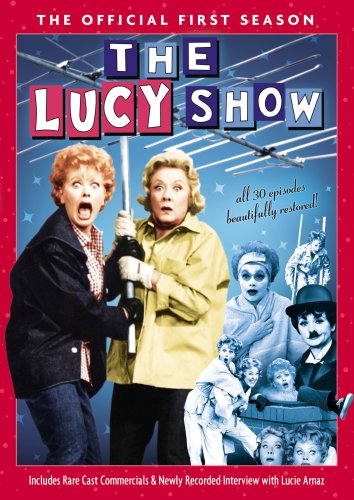
This was Lucille Ball's follow-up to I Love Lucy, and the first season is, apparently, the most highly regarded one. Here Ball is a widowed mother of two, sharing her home with best friend Vivian Vance, who is a divorced mother of one. All the other members of household are, of course, faced with the disasters triggered by Lucy. I screened this set immediately after viewing its close contemporary, Petticoat Junction, and the difference between the two was instructive. There are plenty of hoary gags and situations on The Lucy Show, but there is an enormous difference between the shows thanks to the comic genius of Lucille Ball. Her energy fills each episode, her timing is spot-on, but there is also her commitment to a type of physical comedy that to this day remains pretty much the exclusive domain of male performers. Not only does she make this style her own, she grounds it in a female reality. There is a reason she was so beloved a performer, and why her work still stands up today.


Though the image is a bit soft, with features losing definition in long shots, the picture is still looking remarkably good for television from 1962-63. The black-and-white tones are very warm, and the grain, though present, is minor. There is no edge enhancement to deal with. It is, frankly, very unlikely that these episodes have ever looked better.

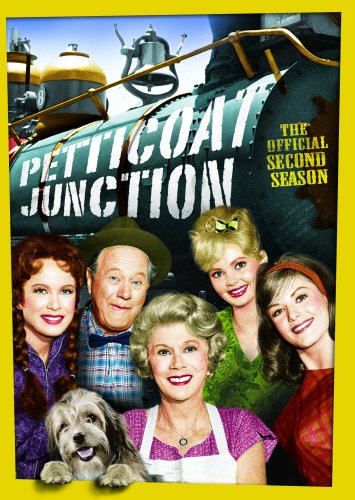
Once upon a time, there was an age of TV where hit shows where women in their 20s played high school students, and an entire episode could revolve around the burning crisis of whether the dog that followed one daughter home could stay. It is from this era that Petticoat Junction hails. This series about a widowed mother and her three daughters tending the Shady Rest Hotel ran for seven years, and begat both Green Acres and The Beverly Hillbillies, in that characters from all three series would interact with each other.

So our principle cast here consists of mother Kate Bradley (Bea Benaderet), daughters Billie Jo (the flirt, played by Jeannine Riley), Bobbie Jo (the bookworm, played by Pat Woodell, who would leave after this season), and Betty Jo (the tomboy, played by Linda Kaye Henning, daughter of series creator Paul Henning). Throwing in his two bits is lazy Uncle Joe (Edgar Buchanan). Joining the cast this season is Higgins the dog, who would subsequently star as Benji, and thus eclipse his human co-stars.

The third season of Matlock brought more of the same. If you’re a fan, that’s very good news indeed. What is that, you ask? Imagine Sheriff Andy Taylor older and now an attorney, and you pretty much have the setup for Matlock. Forget for a second that both characters were played by Andy Griffith. That’s not all they have in common. Matlock is every bit the “southern gentleman” that Taylor was. He might be a little smarter, but he walks and talks like Andy Taylor.

Matlock began life as a television movie from Dean Hargrove, who brought us Columbo. Hargrove would later work the same magic with Dick Van Dyke in Diagnosis Murder. In fact the two shows could easily have been companion pieces. Both featured sit-com stars from the 1950’s and 60’s that had become somewhat iconic characters. Both would don the role of professionals. Both shows would subscribe to the “formula” mode of storytelling. Diary Of A Perfect Murder would set up the Matlock formula. It’s simple, really. Matlock was a lawyer in Atlanta. Some wronged defendant, usually charged with murder, would show up asking for Matlock’s help. Matlock and his team would investigate the crime with an eye toward, as OJ Simpson is fond of saying, finding the real killer. His team consisted of his daughter Charlene, herself a competent lawyer, and Tyler Hudson (Holliday), his private investigator. In the pilot the Matlock character was less Andy Taylor and a little more slick at first. I’m sure that while it was intended to show Matlock’s prowess as a high priced attorney, somewhere along the line it became obvious that the show’s finest asset was Griffith himself and that southern charm he was already famous for. Whatever the reason, you can see the character soften significantly during the early episodes of the season. And that decision was a smart one, as Matlock would continue for nearly a decade.

As a Henry Mancini score swells with unapologetic cheese, we are swept into the world of the luxurious St. Gregory Hotel in San Francisco. Owned by aging matriarch Bette Davis (replaced, when she had to pull out due to illness, by Anne Baxter, as her sister-in-law), the Hotel's General Manager is James Brolin, who has lots of time to wander around the lobby greeting the various guest stars. In other words, he's Mr. Roarke to the St. Gregory's Fantasy Island. What follows is pure fromage of the Aaron Spelling variety, with every other guest star a fading Familiar Face, no end of improbable crises, painful comic relief, unintentional comedy gold in the dramatic moments, and much of the feel of a 1970s disaster movie minus, sadly, the disaster itself (but you can always re-watch The Towering Inferno to make yourself feel better).

The colours are strong, and the picture quality is generally what one would expect for a mid-80s television program. The grain is minimal, but the image is a bit soft – features and details tend to bleach out and disappear when in the middle distance. That said, the transfer gets the job done, and looks true to original broadcast quality.

“Just because our parents keep telling us that Jason was only a legend, doesn’t mean it wasn’t true. What if he did come back here looking for the camp counselor that caused him to drown as a boy, searching for the one that decapitated his vengeful mother? And you do know what today’s date is, don’t you?...Happy Friday the 13th.”

Legend or not, Jason’s back in the 6th Friday the 13th film, and he’s out for more blood than ever before. Filmed under the fake name of Aladdin’s Sane, in an overt tribute to director Tom McLoughlin’s favorite musician, David Bowie, the new film was a return to the franchise’s more established roots. Gone are the psychological thriller aspects of the previous disaster. Jason is back, and there’s no mistaking him for anyone else again. As the titles implies: Jason Lives.