Paramount

The set comprises the second half of the second season of Gunsmoke. The show was still in black and white and in the half hour format. Some of the best episodes of the set included Bloody Hands. For once a western dealt with conscience. When Dillon begins to have haunting dreams and pangs of guilt over killing three bad guys, he tries to back down from a fight. Has Dillon gone yellow? Arness does a better than average job on this rather thought provoking episode. When a man comes from Washington to question Dillon’s methods, he finds out who his friends really are in The Bureaucrat. A man turns up dead in Chester’s Murder just after a fight with Chester so bad Dillon had to break it up. Now Dillon’s got to prove Chester wasn’t the killer, but he’s the worst witness against him. Modern technology reaches Dodge City in The Photographer. Many residents get their first introductions to a camera. But is the stranger with the fancy new camera a killer? Ever notice how a story gets out of hand with each telling? In What The Whiskey Drummer Saw, a story gets out of hand when Dillon’s told he’s about to die. In The Man Who Would Be Marshall, an Army officer wants Dillon’s job; that is, until he finds out just what that job really entails. All in all, this is a solid collection of episodes and certainly won’t be a disappointment to fans who haven’t seen them in decades.


When last I reviewed a season of JAG, a couple of the show’s fans had a few problems which I will attempt to address here. The first was about knocking a show I wasn’t extremely fluent in. Unfortunately, when I’m called upon to review a season of any series there is no time, or money for that matter, to go back and watch several years of the show to get acquainted. Secondly, I believe that a series season needs to be able to stand on its own if I am to recommend it as something you should buy. If you’re already a big fan of the show, who knows all of the story threads, you have likely already decided to buy the set and don’t need my advice at all. While I do feel that the action sequences and courtroom drama are often compelling, I believe much of the personal lives of these characters muddles up the overall show, leaving guys like me feeling a bit left out. The second comment informed me that in later seasons the show spent more and more time in the courtroom and less on the soap opera elements of the show. That may well be true, but I don’t see evidence of it yet in year 6. Also, I am not reviewing those seasons, yet, so can’t really talk to how they will eventually play out. Of course, if you’re a fan, these stories have already run their course and you have, I freely admit, an entirely different perspective on the series as a whole. For those who have not read the season 5 review, I will repeat my unchanged observations of the series in general, followed by some specific season 6 information. Still, keep those comments coming, because agree or disagree, it’s good to hear what you have to say.

 

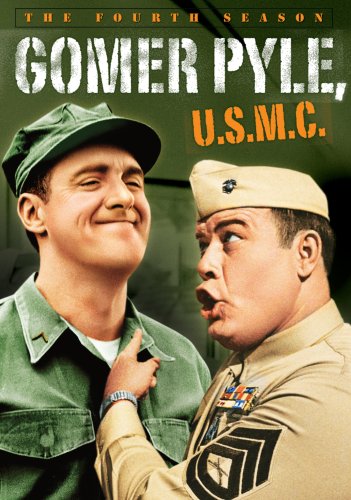
We’re in the US Marines, boys and who could have guessed that it would be so much fun? I often wondered how the real life members of The Corp think about Gomer Pyle. It would have made a great extra. I remember one of the F Troop sets offered a look at members of the real unit. With only another season to go I hope Paramount looks over the idea.


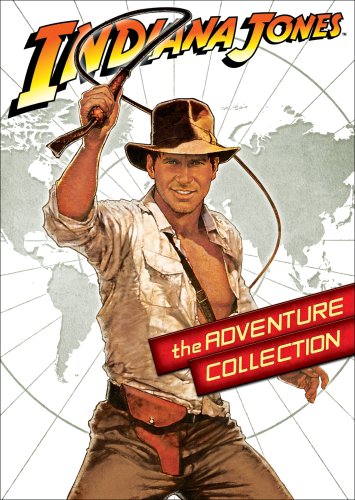
Just in time for the release of one of the most eagerly awaited films in years comes a new box set of the Indiana Jones Adventures. The problem is that these transfers are not upgrades so, aside from squeezing out a few extra bucks, what’s the point? I’m sure that The Kingdom Of The Crystal Skull will add hundreds of millions to the Paramount coffers, so this just looks like greed to me.


Jim Phelps (Graves) led his team in a fourth season of Mission Impossible starting in 1969. The show continued its trademark traditions. Jim would receive a mission from the “self destructing” tape and would gather his IMF (Impossible Mission Force) team. The team was necessarily eclectic in nature, and it changed significantly in the fourth season. Gone were Martin Landau in his signature role of Rollin Hand and Barbara Bain as Cinnamon Carter, model and the team’s chief seductress  Still in the team we had Barney Collier, the gadget man, played by Greg Morris. The muscle was still supplied by Willy Armitage, played by brute Peter Lupus. Leonard Nimoy joined the team in season four as Paris, who also had a skill for disguise. He was a magician, so his sleight of hand skills came in … well, handy. Together they took on missions that the government could not be officially a part of. They were always admonished that should they be caught “the secretary would disavow any knowledge” of them.  Usually they were sent somewhere to put some evil mastermind out of business. Their tactics ranged from scams to outright theft. Sometimes they were a rescue team, while other times they would infiltrate a group of bad guys. There were certainly cold war elements to the whole thing. Each week the team concocted some convoluted con to play on their mark, walking away at the end of each episode often without getting any credit or congratulations.


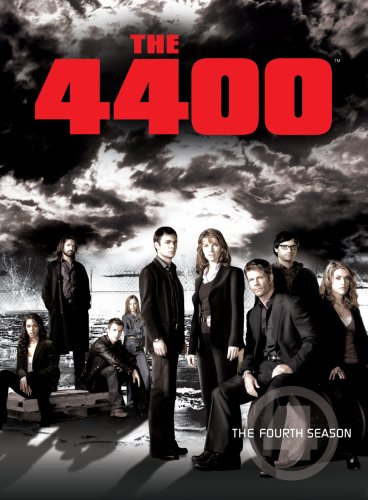
In the first season of The 4400 we are introduced to 4400 people who, we are led to believe, have recently returned from being abducted by aliens. Before you can look for Samantha Mulder among the group, we eventually discover that it was in reality the future that abducted these hundreds for nefarious reasons of their own. Some abductees have returned with mysterious powers and abilities. No, this is not Heroes or X-Men; in fact it’s a lot more like The X-Files than anything else, particularly in this the final season. Up to this point the government has developed a vaccine that inhibited these powers. Again we seem to be treading on X-Men territory here, don’t we. When the third season left us we were introduced to another drug that can reverse the effects of the inhibitor, but it carried an almost even chance of death. It is here that season four begins its likely final stories to tell.

Who says no one likes a guy who’s negative all he time? Becker has got to be one of the most cynical, grumpy, and negative characters to grace our sit-com screens. He’s a guy you probably love to hate, and he’s also hilarious. Ted Danson spent over a decade behind the bar at Cheers and could have easily called it a career. You know, stop while you’re ahead. Instead he climbed right back into the television saddle and reemerged as Dr. Becker. This time he’s a medical doctor who hates everything and everyone around him. Refusing to display that little bit of a heart we all know he has, Becker spends most of his life complaining about everything. Never before has it been so much fun to watch a guy moan and groan for twenty minutes at a time. Fortunately for him, Becker is truly a dedicated doctor, and while he’s likely to complain about it the whole time, he’ll go to any extreme to help a patient.


So here we are again with a third collection of episodes from The Young Indiana Jones Chronicles television series. This final series is called Years Of Change. Most of the episodes and features deal with the span of years between the World Wars. The 20’s were indeed an inventive time when people like Thomas Edison were at their peak. Peace was at hand, and no one really knew for how little time it would last. Most people had extra money and life was one big party. From our 21st Century hindsight, we know it was all doomed to come crashing down before the decade ended, but for most people at that moment life was good. Indy gets himself in some rather unlikely positions in this set. I can’t imagine him getting involved in a film production, but there it is. This set completes the trilogy of releases, and you now have every Young Indy adventure filmed. This is also the set you’ve been waiting for, as it features Harrison Ford’s single appearance in the show as Indy at 50 years old. It’s a bookend type of appearance, but it sure is nice to see old Harrison Ford as Indiana Jones for what we expected back then was the final time.


If you’re a fan of Perry Mason you need to approach this 50th Anniversary collection with mixed feelings. With no new announcements of future season or half season releases, this set does have the look of finality to it. The last set was the second half of season 2 released November of 2007. With this commorative release you get 12 episodes spread out from the remaining seasons starting with the third. While Paramount has made no such announcement, I get the feeling the powers that be are at least pondering the idea of stopping the run. I hope that is not the case, because this show deserves to be released in its entirety including the over 30 television films that followed.

Cheers was that kind of place that songs have been written about. Billy Joel’s Piano Man describes such a place where the patrons are, for the most part, regulars and pretty much family. In the days before huge screen televisions and satellite networks, Cheers would likely have been considered a sports bar. In those days the sports was more the talk of the place and not merely gathering to watch 127 games at a time. The bar’s owner was Sam Malone (Danson). Sam was a washed up baseball player for the local Boston Red Sox. He was a pitcher who liked to drink a bit too much. So, what does he do? He buys a bar. Actually the character has kicked the drinking and is always seen sporting a bottle of water. At first his bartender was his old baseball coach, until Nicholas Colasanto passed away after 3 years. Coach was replaced by Woody, played by Woody Harrelson. Woody was a farm boy with naiveté and small town charm reminiscent of Radar from MASH. His innocence was often the butt of the jokes. In a strange coincidence, the show’s popular theme song, performed by Gary Portnoy, sounded a lot like Harrelson’s voice, and for years it was believed by anyone too lazy to read the credits that Harrelson sang the tune. The barmaid was Carla, played by Danny DiVito’s wife Rhea Perlman. She reminded us a lot of her husband’s Louie character from Taxi. She was abrasive, sarcastic, and more than willing to kick a guy when he was down. She had a soft spot for Sam, however, and was often protective of him. Kirstie Alley played Rebecca Howe, an on again off again romantic interest for Sam and also on again off again owner of Cheers in later years. She replaced Shelly Long who played Sam’s romantic interest and barmaid Diane for the first half of the show’s run. The steady customers offered most of the stories for Cheers. Cliff, played by John Ratzenberger, was a postman who spent more time nursing a beer than actually delivering the mail. He often joked about how hard it was to fire a civil service employee. He was a knowitall and too often bored his comrades with longwinded explanations for even the simplest concepts. His best friend was Norm (George Wendt). Norm was one of the more popular patrons, greeted with shouts of “NORM” whenever he entered the bar. He sat in the same stool, usually griping about his life but unwilling to move off his seat and actually do anything about it. He was married to an unseen wife who worked while he loafed at Cheers. Finally Kelsey Grammer played psychiatrist Dr. Frasier Crane. You might recognize that character the most because he got his own show after 9 years on Cheers which lasted another decade. Frasier was the elitist who acted superior to the others but deep down just wanted to be one of the guys.