Paramount

I was just a kid when Laverne and Shirley became a successful spinoff from Happy Days in the 1970’s, and while I remember that it was on often in our home I could not have recited any episodes from memory. Like most of my generation, I remembered the enigmatic opening rhyme from the show’s opening segment, and like most kids then I couldn’t pronounce it and still can’t; don’t even ask me to spell it here. The Cyndi Grecco saccharine ballad was a hit for a while, playing far too often during the summer pool months.


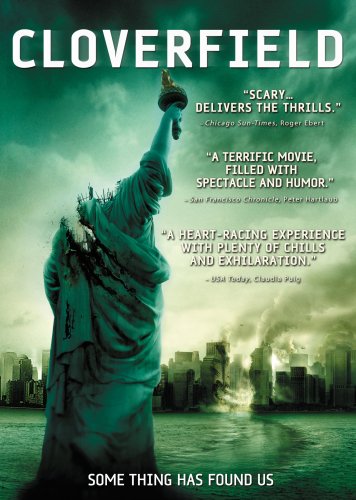
Does ultra realism make for a better movie? There have certainly been examples of startling realistic moments in cinema that have been quite effective, but mostly because they create an experience for us that actually reaches us in a way that we’ll never be able to forget. The storming of Normandy in Saving Private Ryan was one such incidence. Those of us who have never been to war walked away from that scene feeling like we’ve now experienced the closest thing possible without actually being there. It was the kind of movie moment that brought tears to men who had really been there. That’s the kind of visceral moviemaking J.J. Abrams might have been hoping for when he made Cloverfield.

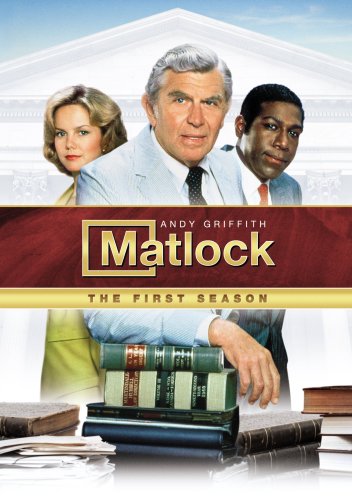
Imagine Sheriff Andy Taylor older and now an attorney, and you pretty much have the set up for Matlock. Forget for a second that both characters were played by Andy Griffith. That’s not all they have in common. Matlock is every bit the “southern gentleman” that Taylor was. He might be a little smarter, but he walks and talks like Andy Taylor.


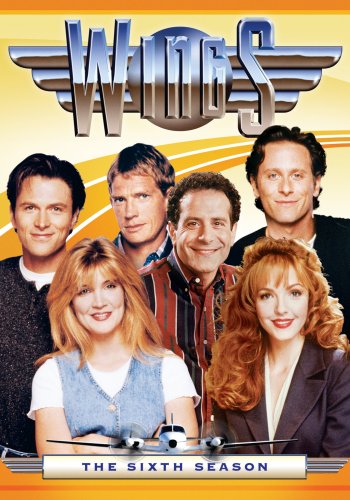
Wings was one of those unusual sitcoms that depended more on the characters than the situations they were in. While the setting was a small Nantucket airline owned by two brothers, most of the episodes had very little to do with flying. Rather, the writers populated this small airline with very distinctive personalities and let these interactions be fodder for the funny. The characters were played by more than competent actors, many of whom have proven themselves beyond this quaint sitcom. Timothy Daly played Joe Hackett, the older, more responsible brother who was often the show’s straight man. His rather adolescent sibling Brian was played by Steven Weber. I wouldn’t exactly say this was Oscar Madison and Felix Unger, but their conflicts over maturity fueled the characters. The airline’s love interest was Helen Chappel, played by Crystal Bernard. She was an aspiring symphony cellist who worked the airport’s lunch counter. For much of the show’s run she had an on again off again romance with Joe. By far the most animated character was mechanic Lowell Mather, played by Thomas Haden Church. It’s still amazing to me that this rather unintelligent character was played by the same guy who brought us Sandman in the latest Spider-Man film. Finally there was cabbie Antonio Scarpacci, played by the current Adrian Monk, Tony Shalhoub. Antonio is an Italian immigrant who has trouble understanding things most of the time, leading to some of the better moments in the series. Fay, played by Rebecca Shull, is the mothering member of the cast. And Roy Biggins (Schram) runs the rival airline and is often engaged in one underhanded scheme or another.


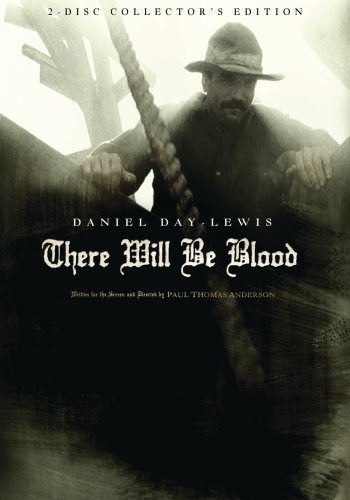
He might not have been “shootin’ at some food” but for Daniel Plainville it’s all about that “bubblin’ crude. Oil that is. Black Gold. Texas Tea”. Our story begins in 1898 before the world would really become so completely addicted to oil. Plainville is a miner looking for silver when an accident that nearly kills him leads to an even more valuable discovery. The film actually begins quite slowly, which doesn’t exactly bode well for a film over two and a half hours long. It will be 10 minutes and 4 years in film time before we witness the significance of Plainville’s chance discovery. It will be over 14 minutes before the first words of dialog are heard, a sales pitch by Plainville that serves as a near perfect prologue for the events to come.

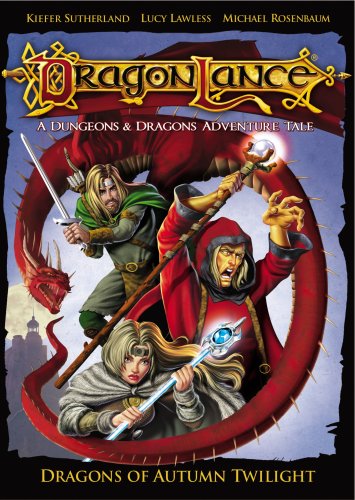
My college life was usually spent doing two things. Okay, actually three things. One, studying (nearly unsuccessful) . Two, trying to get women to sleep with me (mostly unsuccessful). Three, playing Dungeons & Dragons. I owned a good dozen dice from a D3 to many assorted D20's. Want to scare a fellow gamer? As DM, roll for damage and bring out 5 D20's. Anyhow, around this time I also discovered D&D adventure books. I read primarily the works of R.A. Salvatore & Ed Greenwood (Drizzt & Elminster). So needles to say, I was a little intrigued when I saw a Dragonlance movie in my pile. The original book was published in 1984, a few years before I really got into D&D. But with dragons, elves & a mad mage; it was a surefire recipe for something wonderful.


Tanis (voiced by Michael Rosenbaum), a half-elf comes upon his old friend, a dwarf named Flint Fireforge. The two are also joined by a kinder named Tasslehoff Burrfoot. They decide to go to their local hometown tavern where they meet up with their other friends. First there is a knight named Sturm Brightblade. Beside him are two brothers, one a warrior named Caramon Majere. The other, a young mage named Raistlin Majere (voiced by Kiefer Sutherland). Off in the corner, an older mage named Fizban is telling tales of long ago (what he can remember anyways)about the gods of light and their ultra powerful healing magic that has since left this world.

Beowulf is one of the oldest written stories known. The story began as a heroic tale passed from generation to generation only by word of mouth. Naturally there’s no way to know how much the story changed during those years of oral tradition. The author of the piece is unknown, and it is likely several persons contributed to the work. By the 8th Century an epic poem was written that forms the story as it is remembered today. Several translations have followed over the years, resulting in many variations of the story. This very impressive history makes Beowulf a natural to be filmed. There are so many versions that there is little worry about following a beloved canon. Second, the story is flourishing with wonderfully imaginative creatures that can now be savored ever so much more with the development of CG technology over the last 20 years. I’m honestly quite surprised that it has taken this long for this kind of a movie to find its way into release.


I am a huge John Woo fan, especially his earlier classics like Hard Boiled. I’ll admit it’s been several years since I last seen Face/Off, but I don’t have a reason why, as I remember really liking this movie then. At either rate now I have a copy of the movie to call my own, and a special two disc release at that. Let’s just hope that it is what I remember, but as a big fan of Nick Cage I don’t think I’ll be let down.

In order to catch him, he must become him. I couldn’t put it any better myself, Face/Off tells quite the eccentric story of revenge, devotion, and of course crime. Sean Archer (John Travolta, Wild Hogs) is an extremely devoted FBI agent, obsessed with catching terrorist Castor Troy (Nicholas Cage, Ghost Rider). Several years earlier Troy killed Archer’s son, since then it’s been his goal in life to put Troy to justice. He gets the opportunity one day when Troy ends up in a coma after boasting about a massive terrorist attack he has planned on Los Angeles.

There was a new Cowboy in Dallas, and he wasn’t throwing touchdown passes. But Walker was almost gone before he could really get started. After just four episodes, the show’s production company suffered financial collapse and the show was rescued at the last minute by CBS Productions, who would continue to run the show for its nearly decade-long run. For nine years Norris brought us the ultimate Texas Ranger in a formula cops and robbers show. The show often became a parody of itself, but maintained a solid viewer ship throughout. Hell, Norris even sings the theme song. Truthfully, what started as a one man show (it was originally called Chuck Norris Is Walker, Texas Ranger) had become a good working ensemble that probably kept the train going for so long. Walker (Norris) is a tough guy Texas Ranger. He is partnered with Sydney Cooke (Peebles) and Jimmy Trivetti (Gilyard) who’s an ex-jock with a brain. Walker had a love interest and eventual wife in the local assistant district attorney Alex Cahill (later Walker) Together they fight the evils that come to the high plains of Texas armed with their fists, six-shooters, and Stetsons. After starting with the final season, CBS is finally halfway through the series back from the beginning.

There is a discrepancy in the season numbers that I should explain here. Most episode guides will refer to this collection of episodes as the fifth season. The first season of Walker was really only 3 episodes long, running in April and May of 1993. CBS included those episodes along with the complete “second” season run in a release they called The Complete First Season. While I applaud their inclusion in that set, the release more appropriately should have been entitled The Complete First and Second Seasons. What that did in reality is put their release numbers one behind, so that the second season DVDs are in reality season three, and so on. There are 27 episodes in this collection, so it is quite a value no matter what number it might be. You just need to be aware if you are consulting an episode guide and looking for a specific episode.

Family Ties is likely remembered most as the series that launched the career of Michael J. Fox. There’s no question that he owes a great debt to Alex Keaton. It’s almost a bit awkward now to watch him as this young, extremely conservative teenager after Fox has spent so much of his life as a liberal poster boy in the last couple of elections. Politics aside, it’s hard not to credit his performances in Family Ties and the Back To The Future films for launching him into a well deserved lucrative career. The Michael J. Fox issue, however, might hide some of the other assets the show had going for it in its time. For one of the first times parents were portrayed as humanly flawed, and families were not the perfectly functional institutions most of these shows described. Up until Family Ties, these households were either perfect little examples of American ideal or they were so dysfunctional that they could hardly be considered families at all. This show obviously went for a bit of realism.