Paramount

Here we are again with a semi-themed collection of SpongeBob cartoons (seven in all, for a brief 77 minute running time). Food is the recurring theme here, with the title episode seeing SpongeBob creating a Krabby Patty so perfect that he falls in love with it, and keeps it with him until Patty can be charitably described as “festering.” Collections like this don’t exactly have the same value as a complete season, but that doesn’t change the fact that the nautical nonsense at work here is, as ever, pretty damn funny.

Audio

PBS and producer Steve Boettcher have put together a rather nice time capsule. This four part series looks at four aspects of television: Late Night, Game Shows, Sit Coms, and Variety Shows. Each hour-long entry looks backward to the very infancy of the medium of television. The pieces examine the pioneers who gave birth to these genres and the innovative people who followed. There’s no question that some of the vintage clips alone are priceless, more than worth the value of a single DVD. You’ll see vintage and more recent interviews with the likes of: Dick Van Dyke, Bob Barker, Johnny Carson, Monty Hall, Merv Griffin, Andy Griffith, Betty White, and literally 100 early television personalities. From the days of live talk shows to the quiz show scandals, the series covers a lot of ground in a short amount of time. It is there that the series faces its most fatal flaw. Each of these segments will leave you wanting to know more. You’ll leave each one feeling like you’ve only heard a small part of the story.


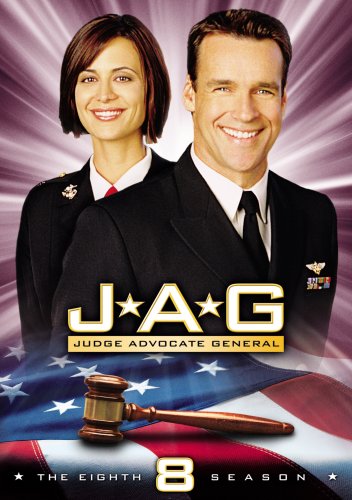
JAG or Judge Advocates General might have gone silent on our television screens in 2005, but it really remains with us in its spin-off NCIS. Both shows explore the world of military justice. Both shows are also the masterworks of successful television producer David P. Bellisario, who also brought us Magnum PI and Quantum Leap. The idea behind JAG was likely inspired by the film A Few Good Men. Most of us remember the “You can’t handle the truth” rant that Jack Nicholson delivers from the stand, but fans of the film rather enjoyed the rare look behind the Judge Advocate General’s office in our military. Like that film, JAG spends its time pretty much split in three directions.


Let me start off by saying that if you are a Neil Gaiman fan, you likely should skip this review. I’m going to take the probably unpopular stand in this review that the film was not a very good one. I did not ever read the book that this world and characters come from, but if the film truly represents that world, I think I’ll pass. To begin with, the idea had tremendous potential. I liked the overall concept, and hopefully that is more Gaiman’s doing than the film’s. I entered this land with the expectation that I would be swept away by a larger than life epic tale of fantasy. What I got instead was a script and collection of performances that fought me the entire way. Each time I attempted to embrace this universe, something rudely pulled me back.

”A philosopher once asked, ‘Are we human because we gaze at the stars, or do we gaze at them because we are human?’ Pointless, really...’Do the stars gaze back?’ Now that's a question.”

They do more than gaze in Stardust, a quirky, enjoyable film that’s not the epic tale it’s made out to be. The film adaptation of Neil Gaiman’s graphic novel of the same name, Stardust is a tale about a young man from a small English village who gets caught up in a magical adventure in another realm. With evil witches, fratricidal princes and a cross-dressing sky-pirate, there’s a lot of fantasy in Stardust, but director Matthew Vaughn’s penchant for Lord of the Rings-style sweeping cinematography creates a canvas much too grand for this simple fairy tale.


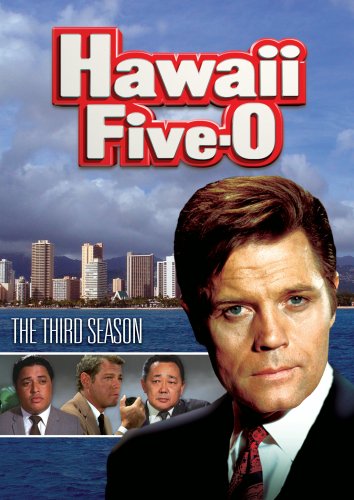
Have you ever walked down the street and heard a chorus of “Five Oh” making the rounds? In street lexicon that means the police. It’s a warning to the drug dealers and any other illegal activities that the police are on the way. That’s just one of the ways that Hawaii Five-0 has invaded our pop culture. Who hasn’t heard the phrase, “Book him Danno”? It’s no surprise, because until Law & Order, Hawaii Five-0 was the longest running crime drama on television. It started in 1968 and didn’t end until 1980 when the production staff and facilities were immediately retooled to produce Magnum P.I., which was an unofficial spin-off of Hawaii Five-0. While he never actually appeared on Magnum, Five-0’s McGarrett was often referred to by characters on the series. The series continued for a few years in syndication where the episodes were all mixed up. These DVD’s allow the first chance since their original broadcast for these episodes to air complete and in the correct order. While continuity wasn’t huge, as there were few actual story arcs beyond the episodes, there were minor changes that made the show look strange in syndication. The final season was aired under the title, McGarrett.


What started as a Neil Simon play and eventual film became one of ABC’s most endearing comedies of the 1970’s. One could credit the clever premise of putting a neat freak and a slob under the same roof. One might look to the fact that both the film and play were considerable hits to explain the success of the series. The truth is, it was none of these things. Plenty of hit films have spawned crappy shows. Remember That Big Fat Greek Wedding? Even Neil Simon plays have been the starting point for bad television. Remember Barefoot In The Park? My point exactly. Even The Odd Couple was attempted again in the 1980’s with Ron Glass and Demond Wilson. If you remember that one, you should get some help for those bad dreams you’re having. The simple truth is that it was Tony Randall and Jack Klugman that made this series fire on all cylinders. Before watching this set, I tried to think back on my favorite episodes, and I made a rather interesting discovery. I couldn’t remember even one plot. What I could recall were many moments between these two gifted comedic actors. Long after the stories themselves had been forgotten, it was Felix and Oscar, Tony and Jack that remained. It’s almost too horrific a thought that these were not the actors the show was created for. It was Art Carney and Martin Balsam that were expected to fill these parts when Gary Marshall began to construct The Odd Couple for television. Whatever happened, I don’t know the story; what I do know is that the television gods intervened and what was likely going to be a one season and out comedy ended up lasting 5 seasons.


So from time to time, I get television shows to review that frankly I don't really follow. However, my wife does, so she grabbed the tenth season of Frasier from me quicker than a crackhead getting a fix at the methadone clinic. I encourage you to peruse and enjoy her literary stylings.

For about 20 years, the character of psychiatrist Frasier Crane gave us awkward humor, taught us about Freud, and was the only character on television who tried to get sherry promoted from cooking liquor to a regular drink.

Gunsmoke is the longest running scripted live action television show in history. The series ran from 1955 to 1975. At first it was a half hour black and white show that evolved into a color hour by 1967. It actually started before the days of television, premiering on radio in 1952. Then it was William Conrad as the tough as nails Marshall Matt Dillon. When television came into its own, Gunsmoke made the jump to the bright living room box and made history. Westerns would ride across our small square screens for the next 3 decades, making it the most successful genre of that time, and it was Gunsmoke that started it all. The television version of Gunsmoke was originally conceived as a vehicle for John Wayne, who opted to remain in movies. Yet, it was Wayne himself who suggested James Arness, and it turned out to be a career for the once “carrot” monster from The Thing. Gunsmoke started before all of the big westerns and was around when most of them had departed.

In the late 1960’s Northern California was being terrorized by the actions of a serial killer. This murderer was not content with his brutal slayings, but taunted the communities with cryptic letters and ciphers. He demanded these codes be published and promised more horrifying violence if his wishes were not carried out. Serial killers were actually quite common during those years. 1968-1980 produced more confirmed serial killers than any other time in our nation’s history. Of course, most of them get caught. What makes the story of The Zodiac killer a far more interesting case is that he was never caught. Like Jack The Ripper before him, his unsolved crimes allow for wonderful speculation and theorizing. All of us consider ourselves amateur sleuths, and we just can’t resist an unsolved mystery. The problem here is that the film doesn’t really engage our fantasy of finding clues and observing suspects. The film does settle on a suspect, but there isn’t enough on-screen evidence for us to play out the scenarios in our own mind. Director David Fincher does a good job of reproducing that era on the screen, and he certainly can’t be accused of not delivering a compelling story. The trouble is, this happens to be a nearly three hour film that doesn’t need to be half that long.