Posted in: Disc Reviews by David Annandale on November 22nd, 2007
Severin unleashes three more entries from Italy’s long-running sexploitation saga, and the result is another fascinating collection. The quality of the movies themselves up and down, but the good stuff is very good, and the collective result is something that is completely fascinating. Exploitation fans should be over the moon.
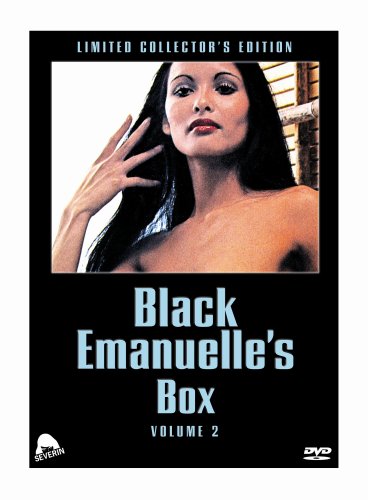
I’ve already gone on at length about Black Emmanuelle/White Emmanuelle (1976) elsewhere, so I won’t rehash everything again. Briefly, though, the set-up has Laura Gemser as Emanuelle (let’s stick to the single “m” version to avoid confusion with Sylvia Kristel), here a model instead of a journalist, arriving with SOB photographer boyfriend at the palatial home of some friends in Egypt. Much aristocratic ennui ensues, until Laure (Annie Belle) arrives to tear down everyone’s comfortable illusions. The most nicely shot and intelligently scripted of the films, there is something absolutely mesmerizing about the display of decadent self-loathing proposed here. Writer/director Brunello Rondi’s effort is emphatically a high point of the series, and invites repeated viewings.
Posted in: Disc Reviews by David Annandale on November 14th, 2007
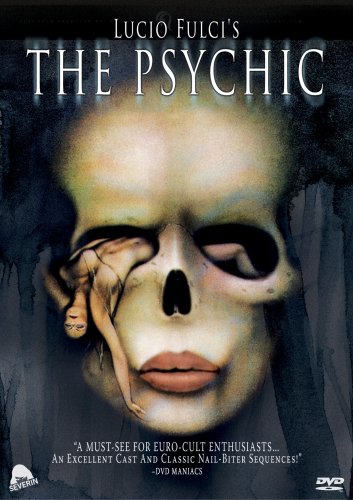
As a woman commits suicide by leaping to her death on the English seacoast, her daughter in Italy has a vision of her fall. Years later, the now-grown Virginia (Jennifer O’Neill) is married to a wealthy businessman, and is suddenly plagued by visions again. Following the evidence, she discovers the skeleton of a young woman who has been walled up in her husband’s ancestral home for years. He is immediately arrested. Virginia works to prove his innocence by investigating the other mysteries of her visions, but she is letting herself in for more than she bargained for.
Having made quite a name for itself as a purveyor of lovely editions of classic European sexploitation, Severin branches out in spectacular fashion with this 1977 effort by Lucio Fulci. Fans of the director who know him exclusively for films such as Zombie and The Beyond will no doubt be disappointed by the lack of extreme gore. (Exception: the opening suicide, which delivers a nasty jolt as we see the woman’s face smash against the rocks as she falls. Unfortunately, Fulci has to show us the effect more than once, and it loses its effectiveness as its artificiality becomes clear.) But, as clearly derivative as it is of both Nicholas Roeg’s Don’t Look Now and Dario Argento’s Deep Red, this is still evidence that Fulci was more than capable of assembling a film that is gripping at the level of narrative and suspense. Unlike Don’t Look Now, where we are kept as much in the dark as its protagonist as to what the visions mean, here Fulci makes sure we are a few steps ahead of Virginia. We realize quite early that what she saw was a vision of the future, not the past, and watch helplessly as the strands of fate wind inexorably around her. There may not be much to her character, but her plight is so clearly articulated and so unstoppable that we cannot help but feel a soul-deep dread. A excellent slice of Eurohorror.
Posted in: Disc Reviews by David Annandale on October 26th, 2007
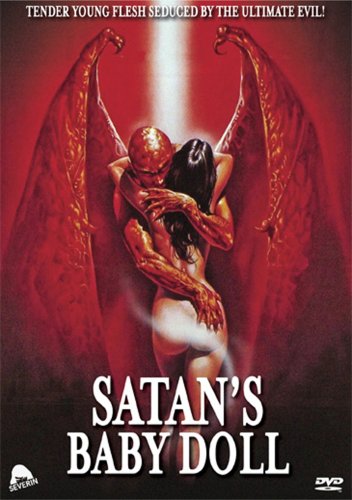
Mario Bianchi’s film is a 1982 remake of the recently reviewed Malabimba. The spirit of a newly deceased woman possesses her daughter, and proceeds to wreak havoc in the gothic castle that is the family’s domicile. Of course, given that the father is a murderous drug-addict, there isn’t that much for the possessed teen to do, as far as the plot itself is concerned. Curiously, this effort is less lurid than its predecessor (barring a couple of insanely OTT performances), with less nudity and taboo-busting, and also a rather less interesting deconstruction of respectable society. Plotting and motivation are haphazard at best. Still, it’s a not-unentertaining late-period Italian gothic, blessed with handsome sets.
Audio
Posted in: Disc Reviews by David Annandale on October 19th, 2007
Connoisseurs of Eurosleaze will be pleased with this nasty little variation on the gothic. In an isolated castle, a fractious, failing aristocratic family has gathered. There is no more money in the family, except indirectly: one brother, now in a vegetative state, is married to a rather wanton woman, who now holds the purse strings. The matriarch suggests that her other son marry her, even though his brother is still alive. The man is properly horrified by the suggestion, and he is also still in mourning for his wife. But then something – the spirit of his wife? a demon? – invades his teenage daughter, who then starts acting out sexually and recreating scenes from The Exorcist.
Nothing hugely original here, and many scenes are SO blatant in copying The Exorcist that one might as well assume that Friedkin’s film was the last word on possession symptoms. What is interesting, though, is that, unlike Friedkin’s film, the connection between the possession and the hypocrisy of the upper class is made perfectly explicit (in every sense). In fact, much of the misbehaviour on display has nothing whatever to do with the demon – it serves primarily to force the characters into a realization of what they really are.
Posted in: Disc Reviews by David Annandale on September 27th, 2007
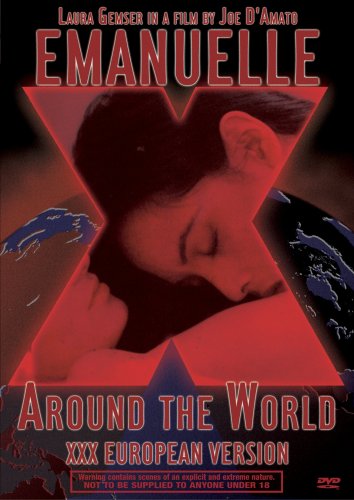
This is a second release of the film already available in Severin’s fine Black Emanuelle’s Box collection. What I said about the film in that review still holds, to whit: “Emanuelle Around the World (1977) has a bit more of a storyline, though it is still very picaresque in nature. Picturesque as well. Our heroine becomes outraged by the sex traffic of women, and so travels from location to location, exposing the evildoers. D’Amato (who also directed the previous entry) here rather unconvincingly dons a pseudo-feminist stance, but there are moments actually approaching suspense. The sex scenes of both these films are, for the most part, laughable, though occasionally well shot. Any sense of eroticism is thanks to Laura Gemser, whose ethereal beauty and grace are such that she moves through the film as an almost divine presence, above and untouched by the events around her.”

This is the “XXX European Version,” which doesn’t make a whole heck of a lot of difference. The running times are essentially identical. The only scene where I noticed any real increase in explicitness is in the creepy sequence where a captured Emanuelle is forced to watch rape by snake and dog. The scene is still, I think (and devoutly hope and keep telling myself), simulated, but most unpleasant, and makes the film’s pseudo-feminist stance even harder to buy than before.
Posted in: Disc Reviews by David Annandale on September 20th, 2007
If it’s 1977, this must be softcore, and so it is. Vanessa is a another lush sexual travelogue, dug up from the archives and given a rather spiffy release from Severin. Yet another product cast in the Emmanuelle mould, Vanessa has its titular heroine leave her convent home (gee, what sort of nonsense do you think we find out happened there?) after she comes into a large inheritance. Flying to Hong Kong, she finds out that this inheritance consists of a chain of high-end brothels. Cue the exotic locations and varied sexual encounters. There’s nothing hugely striking or original about any of this, but as an example its type, it’s quite handsomely mounted, makes some eyebrow-raising use of classical music, and has a couple of scenes that (almost) reach a (kind of) frenzy (all proportions maintained).
Audio
Posted in: Disc Reviews by David Annandale on May 4th, 2007
When Just Jaeckin's glossy exercise in softcore, Emmanuelle, earned boffo box office in 1974, imitators piled on, and no imitators anywhere were as shameless as the Italians, who began the Black Emanuelle series (note the missing "m"). Laura Gemser starred, and Joe D'Amato directed many of the entries (though not the first). This set offers three.Both the double-"m" and single-"m" series were characterized by the heroine having sex in exotic locales, and the travelogue aspect is most dominant in Emanuelle in Bangkok (1977). Plot here is almost nonexistent. Photojournalist Emanuelle begins to run afoul of political skullduggery in Thailand, but before anything really develops there, she leaves town. The film is little more than pretty landscapes interrupted by frequent nudity.
Emanuelle Around the World (1977) has a bit more of a storyline, though it is still very picaresque in nature. Picturesque as well. Our heroine becomes outraged by the sex traffic of women, and so travels from location to location, exposing the evildoers. D'Amato (who also directed the previous entry) here rather unconvincingly dons a pseudo-feminist stance, but there are moments actually approaching suspense. The sex scenes of both these films are, for the most part, laughable, though occasionally well shot. Any sense of eroticism is thanks to Laura Gemser, whose ethereal beauty and grace are such that she moves through the films as an almost divine presence, above and untouched by the events around her.
Posted in: Disc Reviews by David Annandale on December 7th, 2006
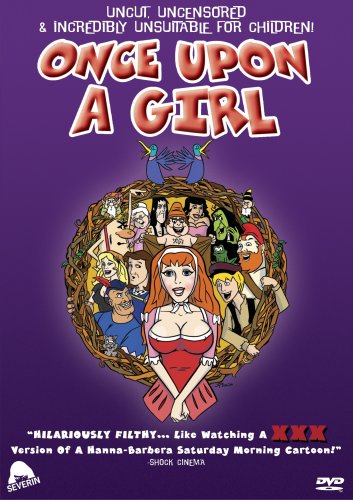
In a live action sequence, Mother Goose (Hal Smith in drag) is hauled before the court to account for herself. She proceeds to inflame the passions of those present with a series of raunchy tales. These are animated, and we find out what Jack really found up on that beanstalk, how Cinderella really impressed the Prince, and what sort of, er, encounters a not-so-Little Red Riding Hood had on her way to Grandma's house.There is some wit here (see the coda to Cinderella's story, for instance), but for the most part, the film is (surprise, surprise) crude in every sense of the word. The animation is roughly on the caliber of "Rocket Robin Hood," though given the nature of the acts depicted, limited repetitive motion isn't as much of a handicap as it might be, and seeing something like this in the Hanna-Barbera style is seriously weird. The characters are for the most part engagingly drawn, and as a curiosity, this is absolutely priceless. This had theatrical dates (albeit limited) in 1976. Hard to imagine the same thing today.
Audio
Posted in: Disc Reviews by David Annandale on November 28th, 2006
Four young women (including Lina Romay in her Candy Coster persona) arrive at beach resort. They plan to pick up plenty of men for sex, but if none are available, as they're in a Jess Franco film, they'll make do with each other. They see no one else around, except for the odd manager (Robert Foster) and the even more bizarre gardener. At first they think nothing of the town's deserted nature, but gradually they realize something is wrong, and it has to do with the nearby monastery, where undead Cathars vent their frustration with their cursed state by raping and killing our heroines.The plot is rather more confusing than I've laid out here. The inspiration for the film is pretty clearly Amando De Ossorio's Blind Dead series, though these are pretty talkative bunch of living dead. Silly sexploitation (the first half of the movie is like a depopulated sex comedy) mixes with jerky camerawork, some very nicely spooky shots in the hotel and a completely bizarre amour fou subplot involving a woman chained up in another room. This is far from Franco's best, but it is a film that still has ideas in its head, and the scene set in empty, windswept streets are quite eerie.
Audio
Posted in: Disc Reviews by David Annandale on November 27th, 2006
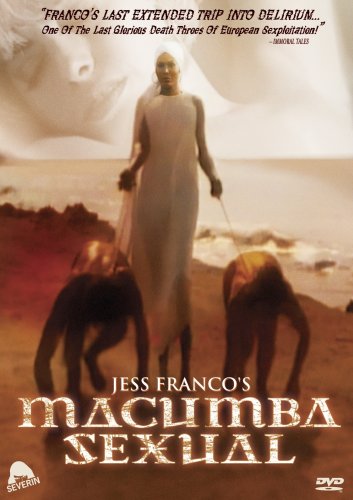
Alice (Lina Romay under her blonde pseudonym "Candy Coster") is haunted by erotic nightmares involving the Princess Obongo (the Amazonian Ajita Wilson). She therefore has her misgivings when she is ordered by her boss to travel to a remote island and sell some real estate to that very person. Doubts notwithstanding, off she goes (got up in an outfit I've never seen a real estate agent wear before) to play Jonathan Harker to Obongo's Dracula. On the island, she falls under the Obongo's spell, and becomes emmeshed in a web of sex, rituals and magic.Director Jess Franco here is reworking the plot from his Vampyros Lesbos, and even reuses some of that film's sun-bleached supernatural-by-daylight tricks. The zoom lens isn't quite as badly overused as in some of his other work, though it definitely makes its presence known. Some of the camera placements are decidedly odd (did he really want us to see Wilson's fillings as she writhes in orgasmic frenzy?), but there are plenty of very lovely shots, too, that manage to conjure a real sense of surreal beauty and mystery on a ridiculously small budget. The studied pace might well put off fans of either sex or horror, but then, that's typical Franco for you, but the film does have an oddly mesmeric effect.
Audio