Posted in: Disc Reviews by J C on January 4th, 2017
“America is the only industrialized nation with a higher murder rate than countries at civil war.”
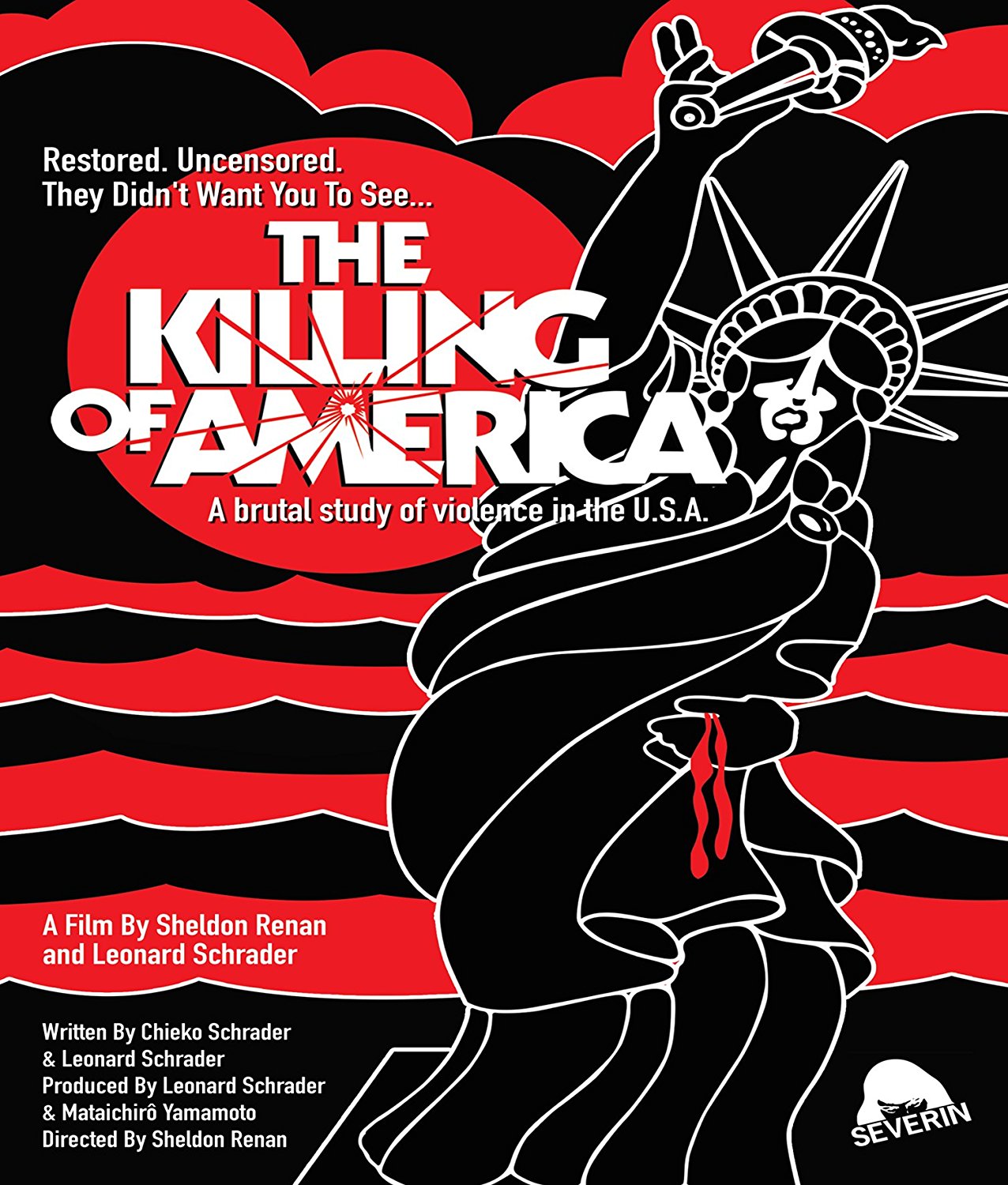
2016 might technically be in the rearview mirror, but it feels like last year left an indelible mark on the psyche of the United States. In addition to the most polarizing presidential election in a very long time, last year was marked by the deadliest shooting in U.S. history about an hour away from where I’m currently sitting, along with other highly-publicized instances of gun violence. So it feels like an appropriate time to revisit The Killing of America, a 1981 documentary that was never granted a commercial U.S. release after being deemed too exploitative.
Posted in: Disc Reviews by Jeremy Butler on March 26th, 2013
I tend to shy away from films that have come out before I was born. It’s not a rule, just a habit. The reason for that being because not being from the generation that movie was produced in, I fear that there will be a lot of cultural reference that I will be unfamiliar with and I will have to Wikipedia them all. I also feel that because I am from a different era I am not qualified to render a sound opinion of an older film, because I may judge it too harshly due to my growing up within a time of special effect advancement. Of course I am well aware that this aversion causes me to miss out on quality films like Raiders of the Lost Ark, Apocalypse Now, and as it turns out, Zulu Dawn. Thank goodness for this job for introducing me to films I wouldn’t normally see of my own volition.
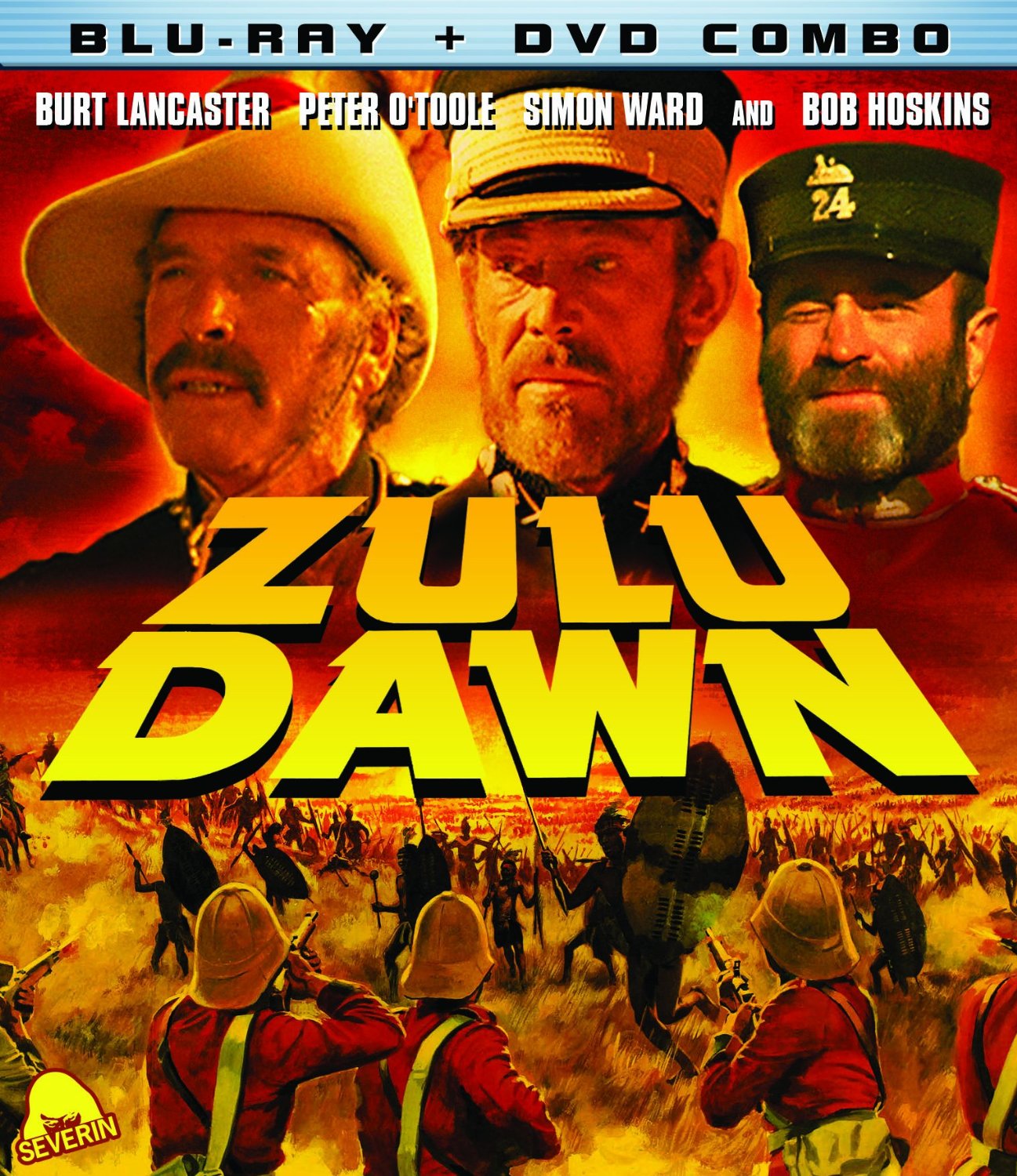
Zulu Dawn is a war film covering the Battle of Isandlwana, the first major encounter in the Anglo-Zulu War between the British Empire and Zulu Kingdom in 1879. The film is told mainly from the perspective of the British soldiers and features Hollywood household names Burt Lancaster, Peter O’Toole, Simon Ward, and Bob Hoskins on that side. The film starts off with Lord Chelmsford (Burt Lancaster, Lawrence of Arabia), a commander of British forces stationed in South Africa who is eager for advancement, and Sir Henry Bartle Frere (John Mills, Ryan’s Daughter), the High Commissioner of South Africa issuing a ultimatum to King of the Zulu Empire, King Cetshwayo: dissolve his empire or face the British forces that were looking to expand the ever-growing industrial economy. The King refuses and rallies his people to prepare for war.
Posted in: No Huddle Reviews by Michael Durr on December 30th, 2012
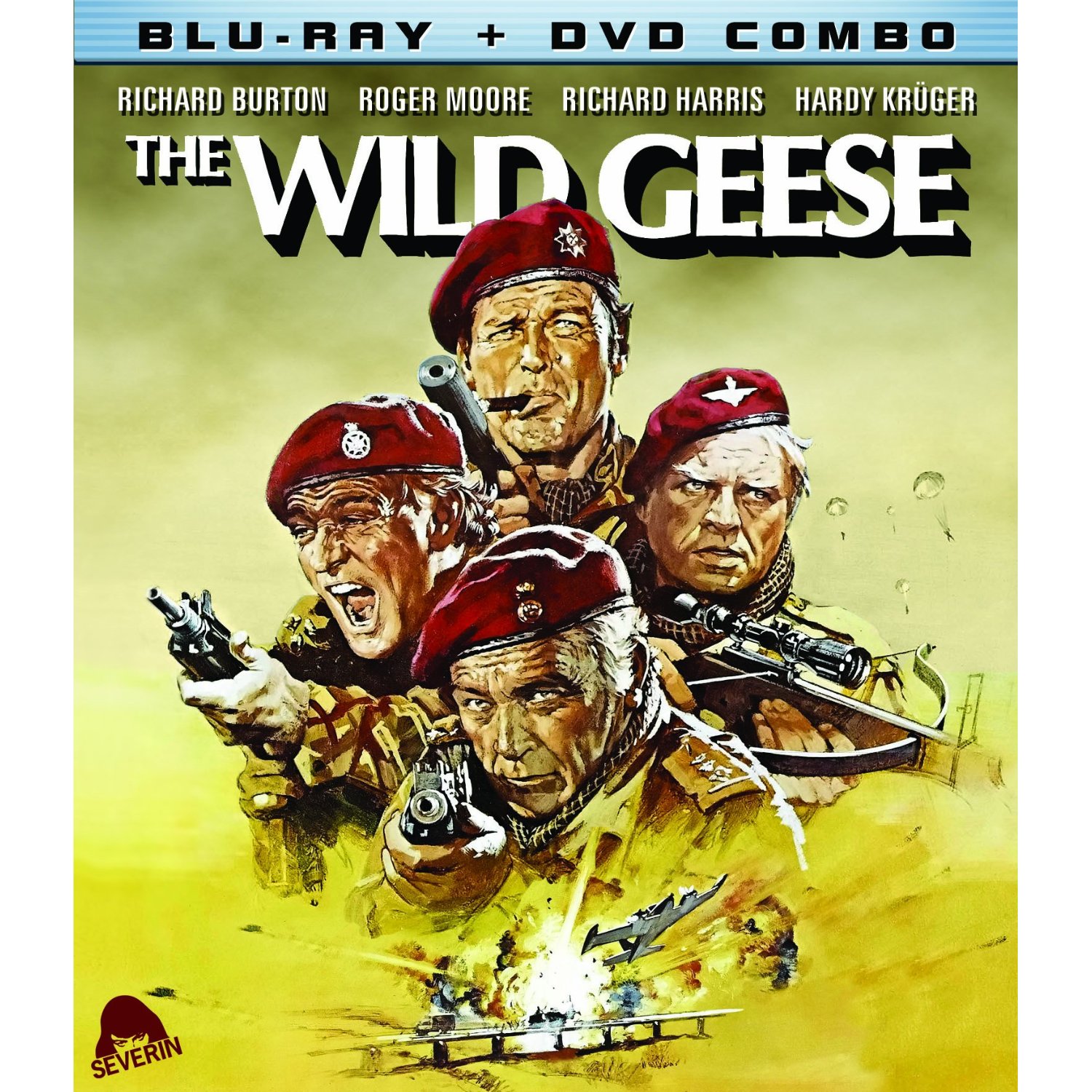
In my youth, I watched a healthy dose of A-Team. Four men who branded as war criminals for a crime they did not commit doing odd jobs for money. Perhaps that is over simplifying things, but it did provide me with tons of fun hours cheering for explosions and witnessing the genius known as Murdoch for my viewing pleasure. Today, we take a look at a film which might be in the vein of what the four guys of A-Team might have been like if they were transported to Africa during the turbulent 60's. We have today, the film called: The Wild Geese.
A plane flies into London and we find ourselves seated at an airport. Colonel Allen Faulkner (played by Richard Burton) sits at the airport lounge and drinks his whiskey until he is picked up by a driver and transported to a giant white house where a merchant banker Sir Edward Matherson (played by Stewart Granger) lives. Faulkner is met at the door by Matherson's assistant, Thomas Balfour (played by Barry Foster) and immediately led to the den where the banker is waiting for him.
Posted in: Disc Reviews by David Annandale on August 4th, 2011
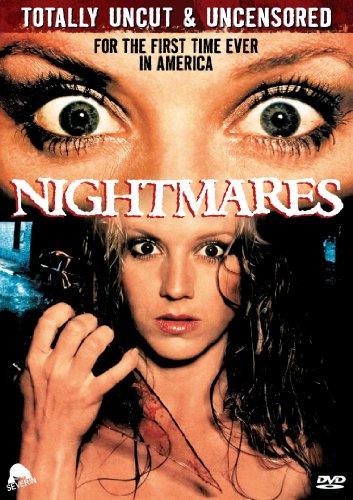
Having accidentally caused the death of her mother, Helen (Jenny Neumann) develops an unhealthy fixation with broken glass. Now an adult and an aspiring actress, she auditions for a role in an absurdist play. She gets the part, and also the attention of her handsome co-star. But then someone starts killing off the cast and crew of the play. Is it Helen?
It isn’t really venturing into spoiler territory to reveal that the answer to that question is “yes.” It is just one of the many odd aspects of this Australian slasher flick that the murders are staged in such a way (often, though not always, in first person) as to conceal the identity of the murderer, while the story makes it clear that there is only one person who could be responsible for the deaths. It then has the nerve to reveal Helen as the killer, right at the end of the film, as if this is some kind of surprise. Imagine if Halloween had concluded with the statement that “The murderer is... Michael Meyers!” and you have the idea. Meanwhile, the editing is frequently disorienting, with the 180-degree rule being violated on a number of occasions, and any sense of geography going right out the window (unless we really are supposed to believe that the critic’s home is an annex of the theatre itself). The storytelling is extremely choppy, with the film being broken up into short, barely developed scenes that have very little connective tissue between them. And as far as the plot itself goes, it’s a typical 1980 slasher in every way, just with Australian accents.
Now having said all that, the theatrical setting does add a measure of interest, and there are moments that call to mind Michele Soavi’s later Stagefright (1986). While the latter is by far the better movie, Nightmares (which was also, by coincidence, known as Stagefright) really comes alive in the rehearsal and performance scenes, with some genuinely witty barbs thrown out at the theatrical world, and some striking camera compositions tossed into the mix. So while this film will remain of interest primarily to fans of the 80s slasher movie, said fans will find just enough different here to make the film worth checking out.
Posted in: Disc Reviews by David Annandale on August 1st, 2011
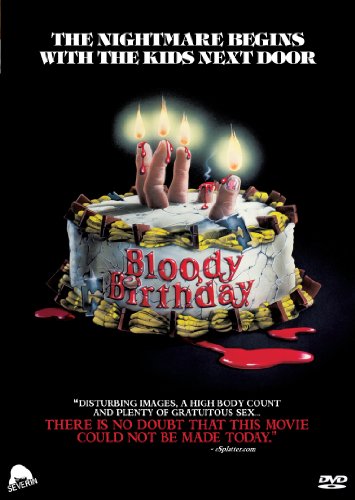
Three children are born at the moment of a total solar eclipse. On the even of their tenth birthday party, we discover that these kids, for astrological reasons, are complete sociopaths, and are having a merry time offing anyone in the community who even vaguely annoys them. The only ones who even gradually suspect that something is going on are high school senior Joyce (Lori Lethen) and her little brother Timmy (K. C. Martel). They soon become the target of the psycho kids’ wrath.
As slasher films flooded the screens in the early eighties, every conceivable minor variation was tried, while the rigid narrative formula was religiously observed. So if the variation wasn’t in the date (Halloween, Friday the 13th, New Year’s Evil, My Bloody Valentine, etc., etc., etc.), the change-up was in the the killer. And so here we have kids, though the elements remain otherwise familiar: prologue opening, young couples get naked and die, the Good Girl is the Final Girl, and so on. Though there is a bit of a nasty little punch in having the kids be murderous, this was hardly new in 1981 (The Bad Seed anyone?). The world of the film is a very difficult one to buy: the rash of murders has very little effect on the community, the junkyard features gassed-up and fully functional cars, astrology is apparently a for-credit subject at the high school, and everyone is very, very, very stupid. And while there is a certain demented pleasure in seeing tiny, WTF turns by the likes of Jose Ferrer (on-screen for maybe 30 seconds) and Susan Strasberg, this is a film that, in the final analysis, is nowhere as sick as it should be, unable to follow through on its own premise, as demonstrated by the singularly anti-climactic finale. Had this been an Italian or Spanish movie from the same era, I venture to think things would be a bit different.
Posted in: Disc Reviews by David Annandale on July 30th, 2011
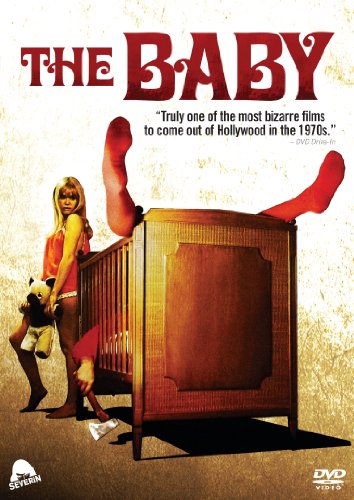
Ann Gentry (Anjanette Comer) is a social worker with a new case, one that she specifically sought. She has been assigned to the Wadsworth family. It consists of a terrifying matriarch (Ruth Roman), sexpot daughters Germaine (Marianna Hill) and Alba (Suzanne Zenor), and Baby (David Mooney, credited as David Manzy), a grown man with, apparently, the mental development of an infant. But Ann suspects Baby is capable of more, and that there is something fundamentally wrong going on at the Wadsworth residence. The Wadsworths, meanwhile, do not take kindly to Ann’s prying, and will stop at nothing to preserve their way of life.

Viewers lured by the promise of the film’s poster (Baby in crib, hatchet in hand) will no doubt be disappointed. This is not a body-count film, and there is very little that is overtly horrific for most of the movie. But make no mistake: this is a horror film. The horror is primarily conceptual, and the more we see of Baby’s life, the more we squirm. The performances are universally strong, and we buy into the characters, no matter how grotesque they are, and believe me, they are grotesque. The climax is exquisitely sick, as only the denouement of a movie made in 1972 can be, and is meticulously set up by everything that came before. This is a screwed-up movie, and I mean that as a term of extremely high praise. Absolutely not to be missed.
Posted in: Disc Reviews by David Annandale on April 13th, 2011
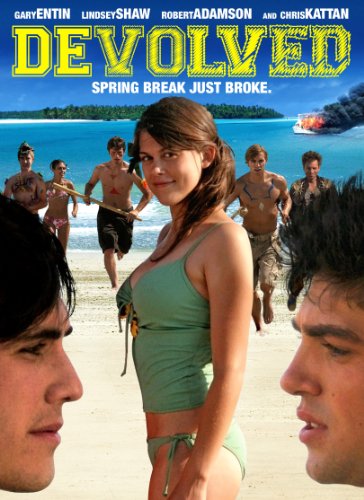
A Spring Break whale-watching cruise goes off-course and then blows up, thanks to the stupidity of the popular kids, and two groups of high schoolers find themselves washed up on a deserted island. The aforementioned populars, led by the egomaniacle The Rog (Robert Adamson) immediately establish their dominance, squandering supplies and tormenting the unpopulars. These unfortunates turn to reluctant leader Flynn (Gary Entin), who begins planning a revolution. Pulled between the two groups is Peggy (Lindsey Shaw), cheerleader and girlfriend to Rog who nonetheless has too much intelligence and self-respect to remain satisfied with either role.
The feature-length directorial debut of Severin's own John Cregan sheds new light on that company's interest in 80s teen comedies. But Cregan's touchstones go deeper than that. Obviously, the proceedings are very Lord of the Flies, but there is also a hint of Massacre at Central High (1976) with the idea that deposing one tyrant might simply lead to the rise of another. Devolved doesn't go all the way in plumbing those depths of darkness, though. It is, first and foremost, a comedic satire, and its touch is quite assured. The writing is sharp, and the action is frequently interrupted by a reality-TV-style narrator who portentously comments on the events, occasionally providing helpful animated diagrams.
Posted in: Disc Reviews by David Annandale on March 23rd, 2011
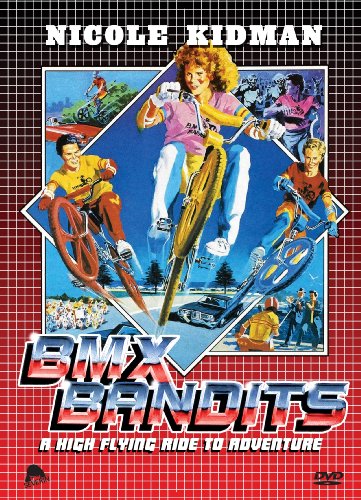
The more famous a star, the more curious their early, pre-icon efforts become. Thus, we watch agog as Humphrey Bogart plays a murderous, blood-thirsty zombie in The Return of Doctor X (1939). And here, a 16-year-old Nicole Kidman makes her debut as a BMX-obsessed teen who runs afoul of a group of not-very-competent gangsters. Once again, one watches agog.
Kidman, Angelo D'Angelo and James Lugton are the trio of teens who need to raise funds to buy new bikes. They happen across a cache of walkie-talkies that are supposed to allow a gang of bank robbers to hear the police while being unheard themselves (though, as matters develop, the opposite is true), and sell them. Understandably irked, the thieves pursue our heroes, and all sorts of car vs BMX chase scenes ensue.
Posted in: Disc Reviews by David Annandale on October 29th, 2010
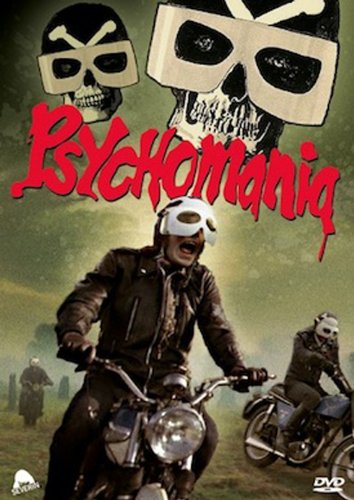
Nicky Henson plays Tom, the leader of a hellraising biker gang known as the Living Dead. His goal is to make that moniker absolutely literal, and it helps that his mother (Beryl Reid) is a medium who has made some sort of Satanic pact, and the butler (George Sanders, in his final role just before his suicide) might well be an infernal power himself (his precise nature is never made clear). At any rate, all it takes to come back from the dead, apparently, is to kill oneself while firmly believing that one will return. Tom proves this formula to be correct, and soon almost all the other gang members follow suit. The one member who might hold out is his girlfriend Abby (Mary Larkin). Meanwhile, as the Living Dead embark on a reign of terror, will anyone be able to stop them?
This is a pretty odd duck of a film, and quite delightful for precisely that reason. In the first place, the Living Dead are hardly the most threatening biker gang ever to grace the silver screen, and though they do rack up quite the body count of policemen and civilians, many of their other bits of misbehaviour are not so much atrocities, but more in the line of shenanigans (as a fellow viewer aptly put it, the gang don't become flesh-eating zombies, only unkillable twits). The precise nature of Reid's motivation is never made clear, Abby is so whiny and callow that one is hard-pressed to feel any sympathy for her, and there's this strange preoccupation with the idea of the frog as an embodiment of evil. But these very oddities contribute to, rather than detract from, the film's off-kilter entertainment value. There's a wealth of incident, so the viewer is never bored, there are some very fun chase scenes, and (which is a good thing) there is a rather knowing sense of humour about the whole affair. Definitely one of the odder horror films to emerge from England in the 1970s, and an engaging rediscovery.
Posted in: Disc Reviews by David Annandale on October 24th, 2010
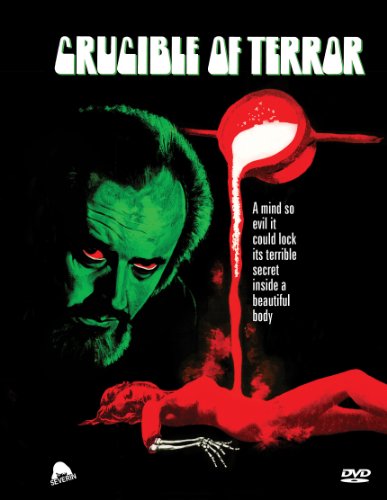
Former pirate radio DJ Mike Raven plays Victor Clare (a case where the actor has a scarier name than the character he plays), reclusive artist who, one strongly suspects, has the unpleasant House-of-Wax-y propensity to pour molten metal on his models in order to bronze them. A group of characters with varying agendas gather at his Cornwall abode: his senile wife; his sexually ambivalent model; his weak, alcoholic son (Ronald Lacey, a long way from the menacing Nazi he would later play in Raiders of the Lost Ark) and impatient daughter-in-law; a neophyte art dealer and his girlfriend, Millie (Mary Maude). Victor becomes obsessed with Millie, determined make her his artistic muse. Meanwhile, the cast is being gruesomely bumped off one after the other.
Raven comes across very much as a poor man's Christopher Lee. He has the height (more or less), he has a deep voice, and he even looks not unlike Lee. But he has none of the master's screen presence, and isn't as frightening as he clearly should be. Most of the film is a rather dull plod, with characters wandering about, flirting or sniping at each other, and repeating conversations ad nauseum. The murders come along every so often to spice things up, but given Victor's obvious villainy, one might well wonder why the film is being so coy about the killings, and refusing to show us the killer.