Shout Factory

"In our findings on Gamera, we've ascertained that: Firstly, it is attracted to and consumes fire. Secondly, it also seems to possess an internal power plant, of sorts. This emits a signal frequency that can jam radio communications. In order to store up energy reserves, Gamera consumes inorganic resources. Not only does it consume petroleum as well as other mineral and fossil fuels, but Gamera may also seek out atomic bombs."

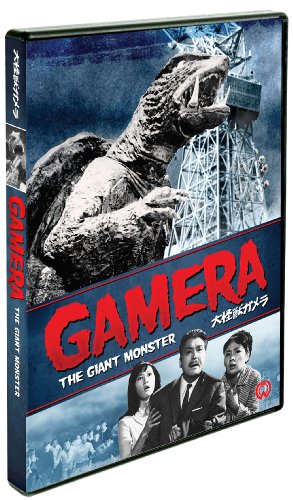
Ask anyone about Japanese monster movies and Gamera usually won't be the first name that comes into their minds. Godzilla would likely dominate the conversation, and for most of the last 60 years the folks at Toho have been synonymous with large monsters. But they didn't exactly hold a monopoly on the big beasts. Kadokawa Pictures had their own little monster franchise going on. It all started in 1954 with Gamera: The Giant Monster. From 1965 through the 1970's the studio would produce 8 Gamera films in all.

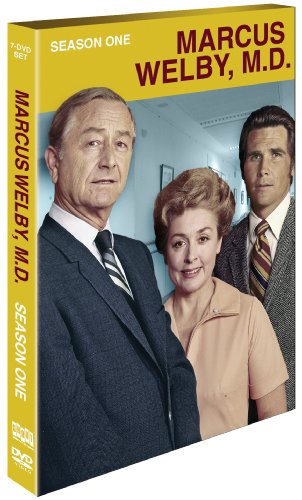
Perry Mason did it for lawyers. Marcus Welby did it for doctors. From 1969 to 1976 and beyond Robert Young was the face of the television doctor. The actor was so identified with his part that he dealt with fans and their medical questions his entire life following his portrayal of Marcus Welby. In those days there wasn't a medical doctor on the planet, real or fictional, who was more recognizable than Welby. The show pretty much wrote the book on the television medical drama. It doesn't matter if your a fan of House, ER, Grey's Anatomy, or any of a hundred other medical dramas that have come and gone since that time, each of those shows owes more than a little of it's existence to Marcus Welby, MD.

In the 1950's Robert Young was that model parent in Father Knows Best. It's likely that audiences first fell in love with his wise and caring style. There was something about both the character and in the man himself that just caused America to trust him. It was no surprise that when the Marcus Welby creators were looking for a doctor that could, above all, exhibit those same qualities that Robert Young would get the call. And it didn't matter that Young considered himself retired from show business for the last 6 years. But Marcus Welby was a role he just couldn't turn down. It was another gentle character with wisdom and common sense beyond his years. The Doc was a general practitioner in California. To him his patients were people. He would treat the individual as well as whatever ailment was proving to be the problem. He took the tough cases, often seeing some slight symptom that others would miss. That's because he paid attention to his patients, and they couldn't help but trust him with their lives. More times than not, that trust was rewarded with a full recovery. But, even when Welby couldn't beat a disease or injury, he always added something to the patient’s life. It might be helping them to come to terms with their own mortality. He might heal a family rift. Sometimes he just offered a kind word at just the right time.

In September of 1993, an animated series using the wonders of stop-motion animation was broadcast on ABC. The name of the series was called Bump in the Night. It would run for twenty six episodes, spanning over two seasons. It was created and directed by Ken Pontac and David Bleiman. It also featured the vocal stylings of Jim Cummings, a man perhaps most famous for his Winnie the Pooh performance.

Mr. Bumpy (for his warts) is a small, green and purple monster who lives under the bed of a ten year old boy. He loves to eat socks, dust bunnies, snot filled tissues and other assorted things most people would consider disgusting. His disposition can be easily described as vile but yet easy going. Oh yeah, if you haven’t figured it out yet, he doesn’t brush his teeth.

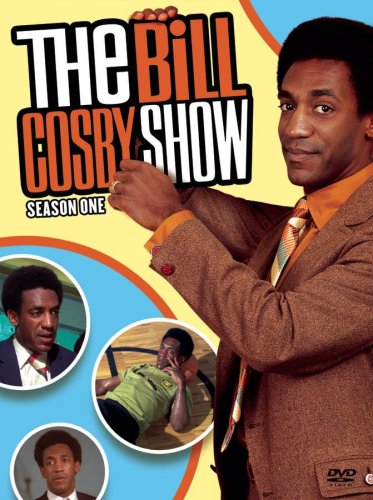
I grew up on Bill Cosby. He was everywhere when I was a kid. Fat Albert And The Cosby Kids were on my television every Saturday morning. My parents had all of his records, and I can remember borrowing them when I finally got a player of my own. I played Chicken Heart so often I think I wore away the grooves on the track. Of course, you youngsters out there have no idea what I'm talking about when I mention grooves and wearing them out. That also means that you remember a very different Bill Cosby show. Most of us think about that huge hit in the 80's. Cosby played a doctor, and he was married to a lawyer and this wealthy family had a ton of kids. The show was an instant hit. But it wasn't the first attempt at situation comedy from Bill Cosby. Back in 1968 he was the star of a very different comedy series on television. It was The Bill Cosby Show.

In this series Cos played Chet Kincaid, a high school gym teacher and athletic coach. It wasn't really a stretch, you see, because The Cos actually studied PE at Temple University with his eye toward just such a possible career. Of course, stardom interfered with those plans, and I don't think anyone has been complaining too much. The series is too eclectic for its own good. While Chet's career should be the focus, many of the episode take him out of the school and place him in oddball situations. Episodes deal with his aunt's will and a missing Abe Lincoln letter, a flood while Chet deals with a neighbor in labor, and Chet leading a group of inner-city kids on a failed attempt to get out and camp in nature. From the start, you can see that Cos is trying to bring a more intimate approach to his comedy, but it usually misses the mark completely. His natural charm and demeanor carry the day, but there's a reason why the series only lasted three seasons. He would hone those skills later to deliver one of the biggest shows in television history.

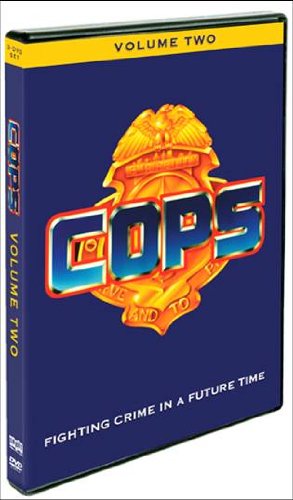
C.O.P.S aired in 1988, one year after the debut of Robocop, and the future-cop theme and design is clearly influenced by Verhoven's violent satire. As a child I caught onto this influence immediately and a part of me always saw it as derivative (along with some Judge Dredd influence). Watching it now I get an eery knot in my stomach as I realize just how silly and loaded with slapstick this cartoon really is, and yet cannot help but still recognize the design influence of Robocop. Throughout there is this strange paradox of immensely threatening looking characters doing terribly silly things. One should expect these various behemoths to be murderers, rapists or just violent thugs (just look at the caricature grins most of them have and tell me I'm wrong) and yet they're stealing fur coats and cavemen and all have goofy voices....my brain takes a while to process all of this.

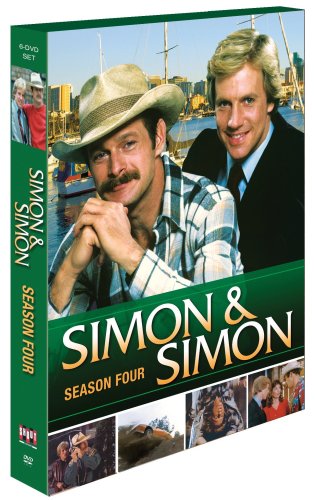
Think of it as The Odd Couple Private Investigation Agency. These guys might be brothers, but they have only one thing in common, and that’s their skills as private investigators. Otherwise they are as far apart as night and day. A.J.’s (Parker) the clean cut, nearly anal member of the sibling pair. He sees the detective game more in the mainstream world and tries to play things straight and by the book. Rick (McRaney), on the other hand, is a slob of a guy. He’s the kick back let life come to him sort of chap. He doesn’t pick up very much after himself. He lives a Bohemian lifestyle complete with houseboat and Sanford and Son beat up pick ‘em up truck. Neither of them are pulling in very much money and have to deal with Mom’s (Carver) disapproval of their chosen profession. The two treat everything like a competition and take sibling rivalry to new heights. They were also in heated competition with the detective agency on the same block, run by crotchety old Myron Fowler (Barth) and his daughter Janet (Wilson). Janet eventually becomes a district attorney and really gets under the brothers’ skin. Unfortunately she’s absent on all but a couple of the third season’s cases. The pair  worked with rather off-the-wall detective Downtown Brown played by WKRP’s own Venus Flytrap, Tim Reid. He was one of those “end justifies the means” kind of a guy.

The cases were always just a little over their heads and often led them into various traps, gunfights, and car chases. The real charm of the show was watching the brothers working together. They would fight and argue about pretty much everything. Still, when the chips were down, they could always each depend on the other to have his back. They weren’t the brightest of detectives and fell into as many clues by dumb luck as through good investigation technique. It was most definitely a lighter show than most of the detective shows of the 80’s. Miami Vice this was not. The pair went against the mold in almost every aspect. They were not very good with the ladies. They didn’t drive hot fast cars. They were almost always out of money. And they carried themselves as immature frat boys most of the time. The appeal was their Joe Public image. It must have worked, because the show ran for nearly a decade.

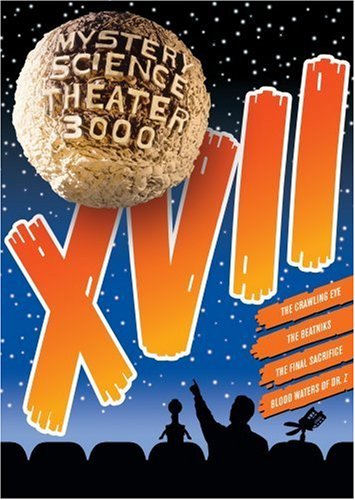
This series from Comedy Central began as a low budget film hosting show in a small television station in Minnesota. It was the brainchild of Joel Hodgson. It ended up running for 11 years and a feature film version.

Mystery Science Theatre is an acquired taste. For me, I’ve really got to be in that certain mood to watch it. That’s the beauty of these DVDs. You pop them in when you’re ready. The idea is pretty whacked. Depending on the season you’ve got, Joel or Mike is trapped in space on the “Satellite of Love”. Doomed to spend his life watching very bad films, our hero makes the best of a bad situation. He uses his resources to construct a couple of robot pals. There's Crow T. Robot (Beaulieu), Tom Servo (Murphy), and Gypsy (Mallon). Part of an experiment together, they watch the films from the front row, constantly ranting throughout. If you’re like me, you’ve invited a few friends over to watch a schlock festival. The movies weren’t as important as the banter you created while watching. That’s exactly what you see here. The silhouettes of our host and his robots dominate the lower portion of the screen, where they provide alternative dialog and sometimes witty commentary on the action. The two evil station owners/mad scientists send them a new bad film each week to observe their reactions to the bombs. The films are broken up by off-the-wall skits and fake commercials to alleviate the tedium. This DVD collection is better than some because it includes films from four different seasons to give you a good sample of the overall series.

In the realm of family sitcoms, My Two Dads is sort of ahead of its time. While sitcoms today break stereotypes with ethnic and racial diversity, this show was the first to cover same-sex parenting. Premiering the same year as the film Three Men and a Little Baby, this Michael Jacobs (Boy Meets World) creation chronicles the struggles of two single, hetero fathers (Mad About You’s Paul Reiser and B.J and the Bear’s Greg Evigan) sharing custody of their teenage daughter, Step By Step’s Staci Keanan. Financial advisor Michael (Reiser) is the more conservative of the two; Joey (Evigan) is the artistic lothario. Their conflicting ideologies present them with a few comical communication breakdowns along the way.

The show debuted in September of 1987 and lasted for three seasons on NBC. The second season continues daughter Nicole’s emergence as a young woman entering the dating world while her fathers seek advice from friends—Judge Margaret Wilbur (Florence Stanley) and football legend Dick Butkus as café owner Ed Klawicki—to help raise her along the way.

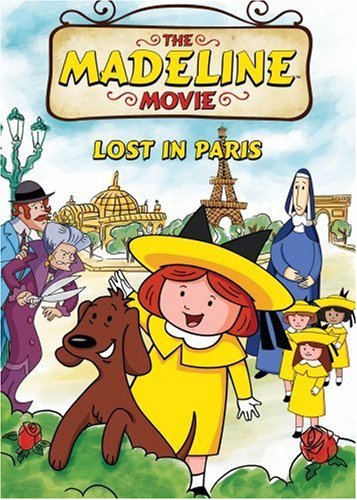
“In an old house in Paris that was covered in vines lived twelve little girls in two straight lines.” That simple opening rhyme has wooed children around the world for more than 70 years. Author Ludwig Bemelmans’ Madeline books have been reincarnated as Academy Award-nominated animated shorts, syndicated cartoons, soundtracks and a live-action film. Madeline: Lost in Paris celebrated its 10th anniversary in 2009 and continues the party with a Shout! Factory DVD release.

Our story begins when a letter for Madeline from a stranger named Henri Horst (Jason Alexander) arrives at the boarding school. The man claims to be her only surviving relative and announces his intention on visiting his orphaned niece. Horst is, of course, a fraud only interested in kidnapping Madeline so he and the decrepit Madame Lacroque (Lauren Bacall) can collect her inheritance. Before Madeline can figure out the truth, it’s too late—she’s whisked away onto the Metro to a sketchy neighborhood harboring a child-labor camp masquerading as a lace shop. When Miss Clavel (Louise Vallance) catches wind that something’s up, she enlists the help of the police—and all of Madeline’s friends—to find her.

What good would come from me panning a series that ended over 15 years ago? Would personal satisfaction be enough? I hope so because I'm moving forward with this.