Sony Pictures

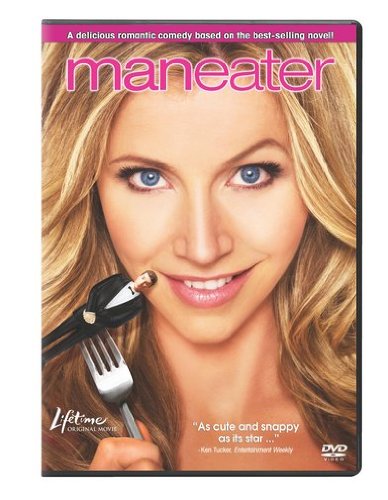
If there was a recipe book for the modern romantic comedy, it would undoubtedly include a checklist of the following: group of girlfriends in their late twenties/early thirties with neurotic ideologies revolving around dating and clothes, a writer’s quota of at least one catch phrase per scene, product placement, and the charming leading man. Maneater receives checks across the board, and so much more.

Based on the novel of the same name by Gigi Levangie Grazer, Maneater is a two-part Lifetime movie that follows vapid Hollywood socialite Clarissa Alpert (Sarah Chalke) on her search for a wealthy man to secure her future. She’s gone through the ringer of one-night stands—a reaction to, what else, her daddy issues—and decides to plan her own wedding without even having a groom. Never mind that minor technicality, because through a little coercion and scheming, Clarissa manages to woo up-and-coming film producer, Aaron Mason (Philip Winchester) into marrying her within a matter of weeks.

"Let me know when the Governor gets here."

Well, he's in the house, and I'm going to get a lot of razzing for this review of Last Action Hero. The person who thought I should see a shrink for looking forward to the next Saw film is going to be calling for my outright commitment to an institution dedicated to covering walls with nice padding so we won't hurt ourselves. I know this film is generally considered "bad" by critics and moviegoers alike. It swept the Razzies in 1993 and has since been only the kind of film 10 year olds would really like to see. Me, I've always simply loved this film. From the first time I saw it at the box office, I was hooked. It was one of the first new laserdiscs I bought back in the day, and I watched the heck out of that disc. I'm not ashamed to admit it. I love this movie.

Sylvester Stallone returned to his roots with 1993's Cliffhanger. No, I'm not talking about his iconic Rocky role here. I'm talking about his ancestral roots. The movie was filmed high in the Italian Alps to achieve many of these incredible vistas and the snow capped mountains. Believe it or not, this was June at the location, and several of the crew were stranded for a time because of a sudden and powerful blizzard.

However, it wasn't really the location along with its harsh weather conditions that caused this film the most trouble. The script was plagued from the beginning with several drafts and many writers. There were so many hands in the stew that lawsuits went on for some time afterwards, leading to several writers getting a paycheck they otherwise weren't getting. I've heard that as many as 12 people had a pass at the script in some form or another. Actor Christopher Walken was set to play the bad guy in the film but left the production just before shooting began. You will also notice that the film is dedicated to Wolfgang Gullich. Gullich was one of the best stunt climbers in the business. He did a lot of those climbs where you see a character without a harness or safety line. He managed to achieve all of this quite safely, only to be killed in an automobile accident in August of 1992, almost a year before the film actually opened. Finally, the film was forced to acknowledge that the harness which is seen to malfunction in the film’s opening scene was rigged to fail and that the actual harness was quite safe. All in all it was a troubled film from start to finish. It did get a lot of hype from Sony and went on to bring in a respectable $85 million at the domestic box office, but it was a much larger hit overseas pulling in almost $200 million. It's still considered much more of a hit in Europe than it has ever been in America.

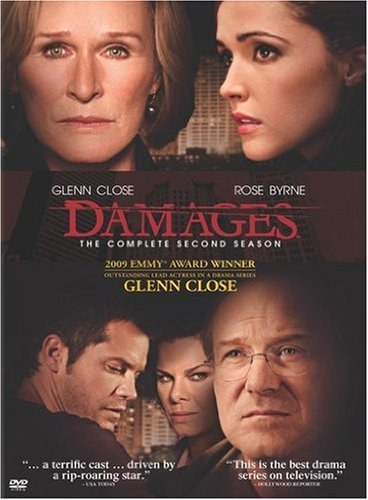
I made a huge mistake when I sat down to watch this release so that I could write this review. It sometimes happens that one in this business must watch a series from somewhere other than the beginning. In most cases, particularly with older more traditional shows, that isn't very much of a problem at all. Once you get the premise down and learn who the important players are, you can sit back and watch without much concern at all about what you might have missed. Today, however, that is becoming a more and more difficult proposition. In an effort to increase viewer loyalty, and develop more intricate and engaging plots and show mythology, shows are getting that much harder to follow if you miss even one episode. If you've missed a season or more, your odds of understanding get that much worse. If you missed the genesis of the show, those odds slip to near zero. I made a huge mistake when I sat down to watch this release so that I could write this review. Like so many heroes in these action thrillers that have become all the rage, I decided to go up against odds that were, you guessed it, nearly zero. If you are considering watching Damages from the second season, even with the provided season one recap, you're making a huge mistake, too.

The season begins with the immediate aftereffects of the first season's big case and all of the baggage that went with it. While it's true that the case is over, most of the vital things that happen here constantly reference the events of that season. Patty (Close) is using her cut of the billion dollar settlement to start a not-for-profit foundation to feed New York City's homeless. But that foundation is just another way to flex her power. She'll willingly frame a prominent candidate for governor by setting up his daughter for a cocaine bust, just to have him and his money come crawling her way. Most of the episodes give you a short look at the ending, which appears to have a potentially fatal showdown between Patty and Ellen. The rest of the season would be nearly impossible to recount without giving stuff away. Suffice it to say that it's a never-ending series of betrayals, fortune reversals, strange bedfellows, and twisted relationships. Everybody appears to be using everybody else for their own agenda. There are no good guys. Finally, the show travels a lot in time. Each episode builds through short glimpses that take place earlier or later. It messes up your orientation, making it even harder to just drop in for a visit without having seen what occurred previously.

"Have you ever felt like you were a little bit different. Like you had something unique to offer to the world, if only you could just get people to see it? Then you know exactly how it felt to be me."

The title is taken from a very short children's book written by Judi and Ron Barrett. I say the title and not the story because this movie takes only the most basic concept from the book to create the movie. Most of the characters are brand new creations, and the plot of the entire film deals with events not covered in the book. You have to credit Phil Lord and Chris Miller for pretty much everything you see happen in this film. I have only a passing familiarity with the kiddie book, but have now had the chance to see the movie in this Blu-ray high definition release.

"To everyone's surprise, the ship didn't come to a stop over Manhattan or Washington or Chicago, but instead coasted to a halt directly over the city of Johannesburg. The doors didn't open for months. Nobody could get in. They eventually decided, after much deliberation, that the best thing to do would be to physically cut their way in. We were on the verge of first contact. The whole world was watching, expecting, I don't know, music from Heaven and bright shining lights..."

It all started when Peter Jackson's long anticipated Halo project went belly up. You might recall it was that project which had Jackson deferring directorial duties on the upcoming Hobbit films, electing to act as producer instead. But Halo didn't happen. Jackson was in search of an ambitious project to fill the void. Enter Neil Blomkamp, a native of South Africa, who had come up with the basic imagery for District 9. A short film was the end result, but it would be far from the end for the idea. Blomkamp incorporated his own firsthand experiences as a boy living in the infamous days of South Africa's apartheid. It's completely impossible to see this film in any other light than an allegory to that era. Teaming together, Jackson and Blomkamp have taken these very basic ideas that were at best loosely held together by the concept and worked them into the most provocative science fiction film of the last decade.

Believe it or not, Robert Langdon did not make his debut in the Da Vinci Code novel. He was actually introduced in an earlier, but far less known novel, Angels & Demons. When Hollywood came a knockin’ they weren’t interested in that earlier work. The Da Vinci Code was tearing up the literary world, and Hollywood wanted a piece of that overstuffed pie. That meant a strange series of circumstances for Dan Brown and Robert Langdon. In print, The Da Vinci Code is the sequel to Angels & Demons, but in the cinema Angels & Demons is now the sequel to The Da Vinci Code. You might consider it a trivial point, but it’s not. If you’ve read The Da Vinci Code, you know that this isn’t Langdon’s first dance with a murder mystery. He’s much more comfortable around the cops and corpses than the film version appears, by necessity. This first film requires him to be quite the novice and led around the ins and outs by the other characters. That creates an almost new character for fans of the novel. Add that to the incredibly complicated world the novel explores, and you are bound to disappoint fans of the original work. And disappoint fans, the film did. But, the film was still a financial success, breaking the necessary $200 million mark. So, even amid some harsh criticism, Howard and the gang now tackle the actual first novel in Brown’s Langdon series.

Robert Langdon (Hanks) has been called in by the Vatican to help solve a crisis. The Pope has died, and the Cardinal College is about to enter Conclave to select the next Holy Father. A radical group using the name of the ancient Illuminati has kidnapped the top four cardinals in line for the job. They have also stolen a canister of antimatter from the CERN collider labs. They plan to use the antimatter to fulfill an ancient threat against the Vatican to destroy it in light. With little time before the kidnapped cardinals are scheduled to be killed one every hour, Langdon must locate the churches where they are to be executed using clues from the Vatican Archives and the taped threat by the radical group. All the while the Vatican is trying to select a leader. If Langdon can’t solve the clues in time, the entire Vatican City will be destroyed in the largest blast the world has yet seen.

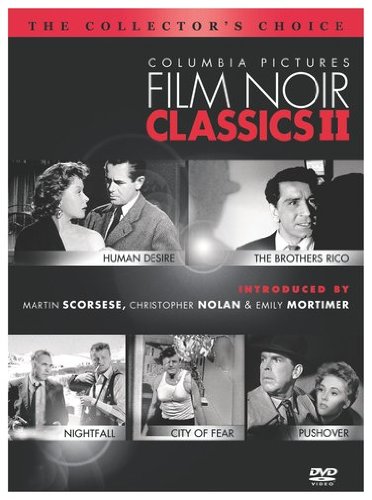
“In the 1940’s, a new genre – film noir – emerged from the world of hard boiled pulp magazines, paperback thrillers and sensational crime movies. These films, tough and unsentimental, depicted a black and white universe at once brutal, erotic, and morally ambiguous.”

And so Sony collects 5 of these films as part of what looks like is going to be an ongoing series. But what exactly is film noir? You hear the word used from time to time, but what does it mean?


This new version of The Taking Of Pelham 123 falls under the category of unnecessary remakes, reimaginings, reboots, or retellings. That’s not to say that it’s a bad movie. In fact, it’s a pretty good movie. I guess my big problem is that this latest trend to redo so many things that have come before suggests a lack of originality in today’s artists. I don’t believe there is a lack of creativity in this generation. I do, however, think there is a laziness that pervades almost every aspect of our society, and this endless chain of copies is a symptom of that disease. Don’t get me wrong here. I’m not one of these critics who believes that films and television shows can’t or should not occasionally be redone. There’s a lot to be said for reintroducing current generations to the ideas of the past in new and exciting ways. I just think it shouldn’t be the most common form of expression in Hollywood, but lately it is just that. Lecture over.

The story first appeared as a novel by John Godey. It was made into a film many of us consider a classic in 1974. The leads in that effort were the unlikely pair of Walter Matthau and Robert Shaw. In this film they are replaced by Denzel Washington and John Travolta. Both are exceptional actors and deserve credit for delivering solid performances here. In both films the overall plot was the same.

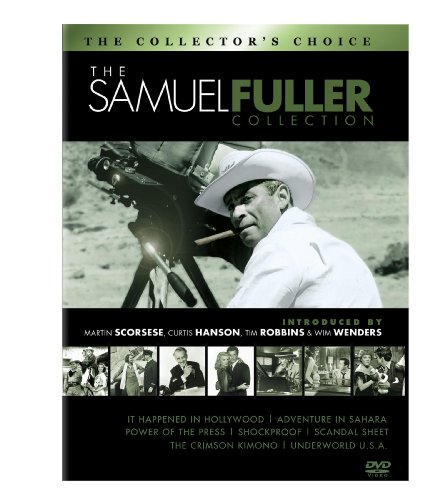
Sam Fuller lived quite a life before he ever even thought about working in the film industry. He was a crime beat reporter at 17 years old. He served in the infantry in World War II, turning down a cushy press corps assignment. Both of these experiences would shape the man, writer, and filmmaker he was to become. His newspaper experience gave him access to a lifetime of stories, an understanding of the newspaper business, and a honed writing skill. That ability would serve him most. Fuller was a writer more than a filmmaker, and it was with his typewriter that he most excelled. The war would emotionally scar him. He may have entered with the typical young ideas of glory in the battlefield, but he left with visions of death and gore that he could never forget. It hardened the man. Instead of turning bitter, he found a way to exorcise those demons and ultimately made a heck of a living in the process.

His films are, if nothing else, quite unique. He wasn’t raised in the same studio environment as most filmmakers, and there was always a kind of docudrama feel to almost everything he wrote or created. He was excessively patriotic in his younger years, but at the end of his life he became disillusioned and moved to Europe. His films were almost always steeped in the film noir of the early 30’s and 40’s, even his later works. Everything from the characters to the words they spoke had a decidedly Fuller reality to it. Known mostly for smaller budget films, Fuller was prolific and could work quickly.