Universal


Synopsis

This box set has restored my faith in television. I actually don’t have cable or satellite or anything, and if you ask anyone that knows me, they’ll tell you that I’m a steadfast refusenik when it comes to watching TV. Law & Order, however, is intelligent, well-cast, and has very high production values – all the ingredients of a winning series, as its ridiculously long run (14+ years) is testament to. Each episode has a well thought-out plot, usually with some sort of twist – and generally without any glaring plot ho...es. The interplay between characters is fantastic too – the division between the police on the street and the prosecuting attorneys makes for great characterizations, and interesting interactions when the two halves are bought together. The other thing that struck me about the series was relevance - issues in each episode coincide with events actually taking place in the real-world (SARS, for instance, in the episode “Patient Zero”), which lends the entire series credibility and ratchets the interest level up one notch higher.

One thing that struck me while watching a few episodes was how different shows can have an impact on society, or not. Consider the original Star Trek for instance – a three year run with horrible production values that somehow spawned a subculture, many movies, and however many spin off series. Law & Order, despite all of its general greatness (11 Emmy nominations and one win) hasn’t quite penetrated society to the same degree – no one attends Law & Order conventions, and there aren’t any Law & Order fanzines. Perhaps is the day-to-day nature of the subject matter (culled from newspaper headlines) doesn’t lend itself to cult followings, or perhaps the fact that there isn’t much soap-opera to the show keeps the characters at arms length – hard to say. Or maybe I’m just off-base here – if you’re a member of a Law & Order fan club, by all means post a comment and correct me.

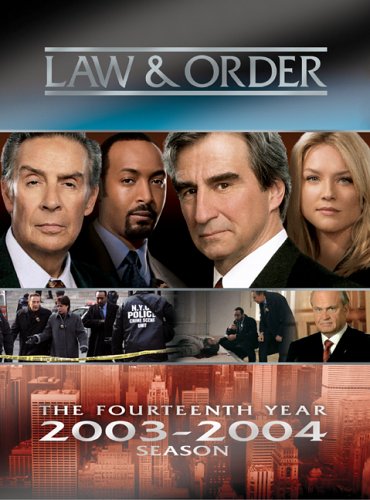
This box set has restored my faith in television. I actually don’t have cable or satellite or anything, and if you ask anyone that knows me, they’ll tell you that I’m a steadfast refusenik when it comes to watching TV. Law & Order, however, is intelligent, well-cast, and has very high production values – all the ingredients of a winning series, as its ridiculously long run (14+ years) is testament to. Each episode has a well thought-out plot, usually with some sort of twist – and generally without any glaring plot ho...es. The interplay between characters is fantastic too – the division between the police on the street and the prosecuting attorneys makes for great characterizations, and interesting interactions when the two halves are bought together. The other thing that struck me about the series was relevance - issues in each episode coincide with events actually taking place in the real-world (SARS, for instance, in the episode “Patient Zero”), which lends the entire series credibility and ratchets the interest level up one notch higher.

One thing that struck me while watching a few episodes was how different shows can have an impact on society, or not. Consider the original Star Trek for instance – a three year run with horrible production values that somehow spawned a subculture, many movies, and however many spin off series. Law & Order, despite all of its general greatness (11 Emmy nominations and one win) hasn’t quite penetrated society to the same degree – no one attends Law & Order conventions, and there aren’t any Law & Order fanzines. Perhaps is the day-to-day nature of the subject matter (culled from newspaper headlines) doesn’t lend itself to cult followings, or perhaps the fact that there isn’t much soap-opera to the show keeps the characters at arms length – hard to say. Or maybe I’m just off-base here – if you’re a member of a Law & Order fan club, by all means post a comment and correct me.

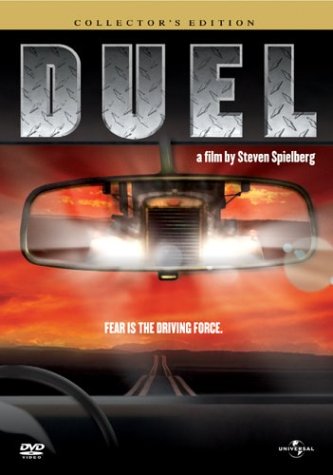
Duel was the first “ made for television” movie directed by Steven Spielberg. This thriller could best be described as a cross between the Rutger Hauer classic, “ The Hitcher,” and the Steven King inspired “Maximum Overdrive.” Dennis Weaver plays David Mann, a salesman on his way home from a cross state trip. During his return, he passes a rusted out old gasoline truck on the highway without giving it much thought. As the film unfolds, the truck begins to pursue him and initially just appears to annoy him on the r...ad, however, by the end of the first thirty minutes of the film, the truck driver has made an attempt on Mann’s life.

The pace and intensity of the film increases as it moves on with a total of 3 serious attempts on Mann’s life. Dennis Weaver does a fantastic job portraying a normal guy who comes to the startling realization that his survival can only come at the cost of his pursuer’s life. The anxiety and paranoia are visceral in his performance, particularly the scene in the lounge where he tries to identify his pursuer. Spielberg does a masterful job of increasing the intensity using very basic techniques – lots of first person perspective and quick cuts during the chase scenes. The most effective tool used in the film was the fact that he never reveals the identity of the truck driver – the truck itself is the bad guy (very reminiscent of “Maximum Overdrive” without the cool Green Goblin face on the front).

While Sliders may not rank in the upper echelon of sci-fi/fantasy series like Buffy the Vampire Slayer, Angel or its predecessor Quantum Leap, it is a very watchable show with endearing characters and witty writing at times. Quinn (Jerry O'Connell), a brainy San Francisco physics student, has perfected a device – in his mom's basement, no less – that opens up a temporary wormhole between alternate Earths. By leaping into the wormhole, one can "slide" between worlds; but of course there's ... catch, which is the foundation of the show's appeal. It seems there's no way to return back from whence you came, so Quinn, along with his college professor Maximillian Arturo (John Rhys-Davies), Wade (Sabrina Lloyd), and, through an odd turn of events, fading R&B singer Rembrandt "Crying Man" Brown (Cleavant Derricks), are left to slide from alternate world to alternate world each week, finding themselves in some very strange places trying to find their way home.

Each episode finds our heroes exploring alternate realities - What if the Americans lost to the British during in 1776, what if the atomic bomb was never invented, what if modern medicine never discovered penicillin—those are some of the scenarios Quinn, Arturo, Wade, and Crying Man find themselves in; once you get past the all too convenient plot reliance on having one of the main characters just happening to be a key character in the alternate world (or one of their friends), you can focus on the fact that the writing is generally a whole lot smarter than most if the sci-fi series out there.

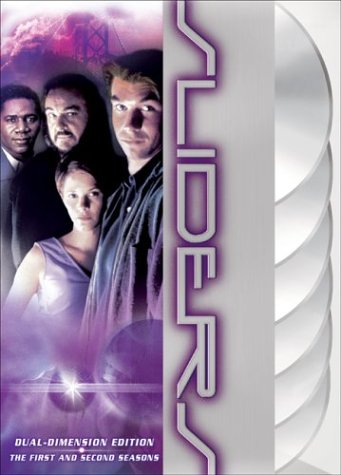
While Sliders may not rank in the upper echelon of sci-fi/fantasy series like Buffy the Vampire Slayer, Angel or its predecessor Quantum Leap, it is a very watchable show with endearing characters and witty writing at times. Quinn (Jerry O'Connell), a brainy San Francisco physics student, has perfected a device – in his mom's basement, no less – that opens up a temporary wormhole between alternate Earths. By leaping into the wormhole, one can "slide" between worlds; but of course there's ... catch, which is the foundation of the show's appeal. It seems there's no way to return back from whence you came, so Quinn, along with his college professor Maximillian Arturo (John Rhys-Davies), Wade (Sabrina Lloyd), and, through an odd turn of events, fading R&B singer Rembrandt "Crying Man" Brown (Cleavant Derricks), are left to slide from alternate world to alternate world each week, finding themselves in some very strange places trying to find their way home.

Each episode finds our heroes exploring alternate realities - What if the Americans lost to the British during in 1776, what if the atomic bomb was never invented, what if modern medicine never discovered penicillin—those are some of the scenarios Quinn, Arturo, Wade, and Crying Man find themselves in; once you get past the all too convenient plot reliance on having one of the main characters just happening to be a key character in the alternate world (or one of their friends), you can focus on the fact that the writing is generally a whole lot smarter than most if the sci-fi series out there.